• Home
  • Latest
  • Fortune 500
  • Finance
  • Tech
  • Leadership
  • Lifestyle
  • Rankings
  • Multimedia

Trendingnow

1

Corporate America has been draining the world's water. Matt Damon's new campaign calls on Gap, Starbucks, and Amazon to help give it back

2

Current price of oil as of June 12, 2026

3

Gen Z fled San Francisco for Texas and Florida. Now they’re turning ‘welcomer cities’ into the next big tech towns

1

Corporate America has been draining the world's water. Matt Damon's new campaign calls on Gap, Starbucks, and Amazon to help give it back

2

Current price of oil as of June 12, 2026

3

Gen Z fled San Francisco for Texas and Florida. Now they’re turning ‘welcomer cities’ into the next big tech towns
EnvironmentInflation
Europe

Climate change could increase inflation by 1% a year over the next decade, but it’s your food that’s going to get really expensive

By
Tristan Bove
Tristan Bove
Contributing Reporter
Down Arrow Button Icon
By
Tristan Bove
Tristan Bove
Contributing Reporter
Down Arrow Button Icon
May 31, 2023, 4:57 PM ET
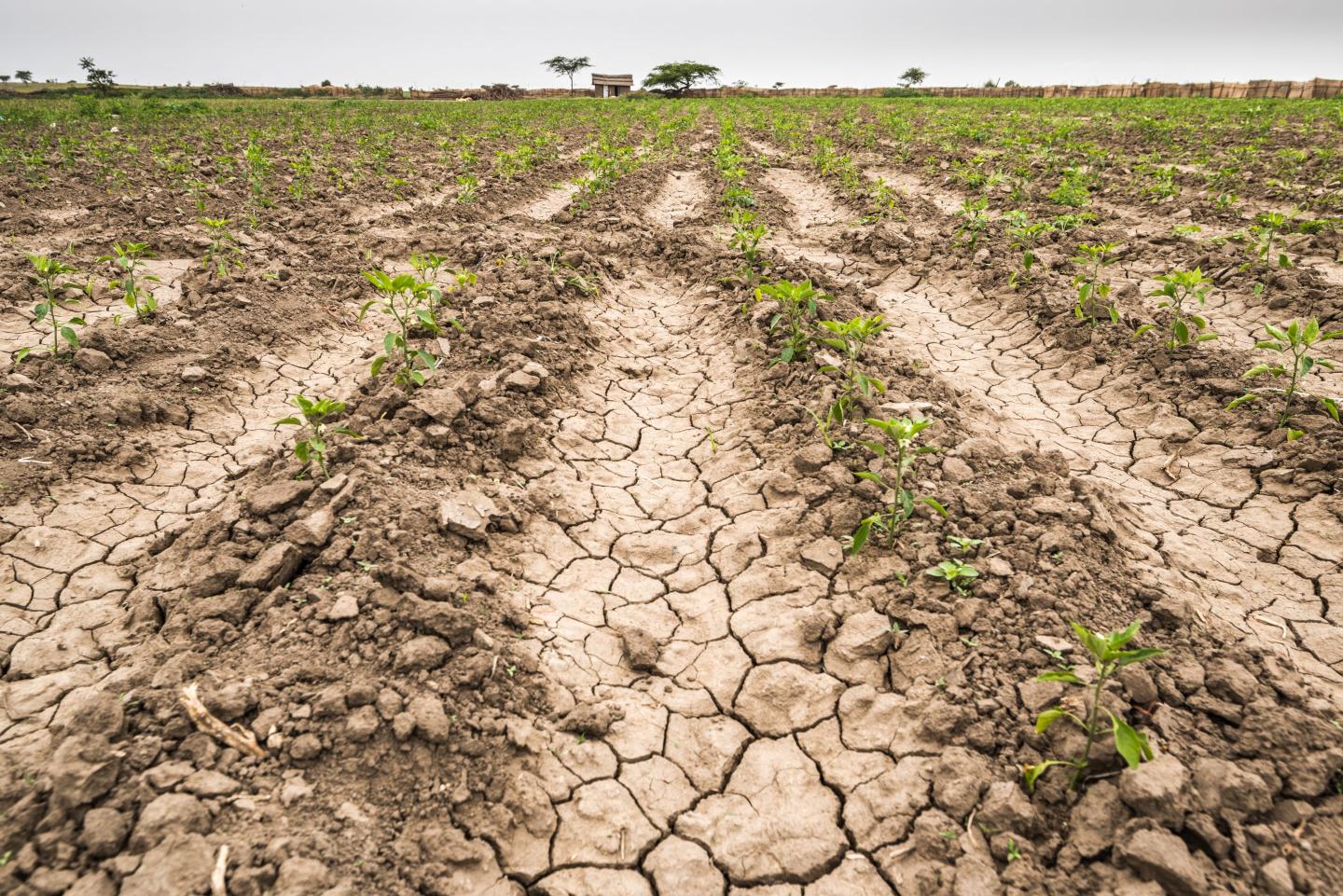
A dry, cracked field in Ethiopia.
A dry, cracked field in Ethiopia.Edwin Remsberg via Getty Images

Last summer, a blistering heat wave in Europe caused crops to wilt, rivers to dry up, and workers to stay indoors to escape scorching temperatures. The economic blow was expected to cause prices to rise even further, magnifying inflation sparked by the Ukraine war, although experts at the time were reluctant to quantify by how much. The numbers are in now, but even though climate change had a measurable impact on prices last year, it’s nothing compared to how much warmer temperatures, natural disasters, and unpredictable weather patterns will affect inflation a decade from now.

Recommended Video

Europe’s high temperatures last summer increased food inflation on the continent by 0.67 percentage points, but the same conditions would be amplified by 50% in 2035 under current projections for weather extremes a decade from now, according to a report published last week by the European Central Bank and the Potsdam Institute for Climate Impact Research.

It gets worse: Without unprecedented investments to adapt to the new reality through innovation to create more resistant agricultural systems, climate change could add one percentage point to global inflation every year between now and 2035. The worst effects would be reserved for food prices, which could rise by over 3% every year as higher temperatures decimate the world’s crops.

“The heat extremes of the 2022 summer in Europe is a prominent example in which combined heat and drought had widespread impacts on agricultural and economic activity,” the report said. “Future climate change will amplify the magnitude of such heat extremes, thereby also amplifying their potential impacts on inflation.”

Inflation’s hidden driver

From the Ukraine war’s disastrous effect on supply chains to corporate price gouging, the list of causes of modern inflation is long, varied, and often open to partisan debate. Climate change should now be added to the list, the ECB report recommends, as higher temperatures are not only making us sicker and poorer, they might soon be the reason groceries are more expensive.

For the report, the ECB analyzed monthly consumer price indices from 121 countries and cross-referenced it with historical climate data over the past 30 years. One of the resulting data sets documented Europe’s inflation and temperature data last year.

During Europe’s sweltering summer, major rivers dried up, affecting shipping companies’ ability to move goods around the continent. Europe’s agricultural industry also came to a standstill, as heat waves caused output of staple crops including maize, sunflower, and soybean yields to plunge as much as 9%.

After accounting for factors such as the Ukraine war and COVID-19’s lingering effect on supply chains, the ECB report estimated that extreme heat on the continent during the three summer months had a cumulative effect of 0.67% on food inflation.

The researchers then combined the data with the latest climate models that project future warming, finding that the inflation persistently exacerbates inflation regardless of a country’s income level, although the effects are stronger in hotter countries and during warmer times of the year.

“[I]nflation goes up when temperatures rise, and it does so most strongly in summer and in hot regions at lower latitudes, for example the global south,” Maximilian Kotz, a scientist at the Potsdam Institute and lead author of the paper, said in a statement.

Climate’s finance and economic risk

Europe wasn’t the only region affected by hot temperatures and high food prices last year. Searing heat waves also hit the U.S. and China last summer, with big consequences for agricultural output. In the U.S., output dropped as Texas cotton, California tomatoes, and Kansas wheat suffered from drought. And in July, Chinese officials warned the country’s farmers were facing “extreme meteorological disasters” after a year of record temperatures and record-high rainfall that created “more and more challenges to agricultural production.”

But while rich nations were given a taste last year of climate change’s devastating effects on food production, developing nations have been living with climate-induced food scarcity for years. In East Africa, for instance, the worst drought in 40 years, which has displaced over a million people, is obliterating agricultural production, with the United Nations warning that extreme food insecurity is paving the way for conflict and instability.

In addition to higher food and material prices, climate change could exacerbate future inflation by dampening worker productivity, which studies show can have a direct effect on higher inflation. Extreme heat already leads to fewer daylight hours worked worldwide, affecting economic output, according to a 2016 UNDP report, while a 2018 University of Chicago study of manufacturing workers in India found that productivity declined 4% for every degree when temperatures exceeded 80° F. 

Central banks and financial institutions have started looking closer at climate change as a cause of economic instability and inflation. Last year, the Federal Reserve announced that the six largest U.S. banks would participate in a pilot program designed to assess how different climate scenarios affect financial and economic risk.

Subscribe to Fortune Gulf Brief. Every Tuesday, this new newsletter delivers clear-eyed, authoritative intelligence on the deals, decisions, policies, and power shifts shaping one of the world’s most consequential regions, written for the people who need to act on it. Sign up here.
About the Author
By Tristan BoveContributing Reporter
LinkedIn iconTwitter icon
See full bioRight Arrow Button Icon

Latest in Environment

Finance
Lorem ipsum dolor sit amet, consectetur adipiscing elit, sed do eiusmod tempor incididunt ut labore et dolore magna aliqua. Ut enim ad minim veniam
By Fortune Editors
October 20, 2025
Finance
Lorem ipsum dolor sit amet, consectetur adipiscing elit, sed do eiusmod tempor incididunt ut labore et dolore magna aliqua. Ut enim ad minim veniam
By Fortune Editors
October 20, 2025
Finance
Lorem ipsum dolor sit amet, consectetur adipiscing elit, sed do eiusmod tempor incididunt ut labore et dolore magna aliqua. Ut enim ad minim veniam
By Fortune Editors
October 20, 2025
Finance
Lorem ipsum dolor sit amet, consectetur adipiscing elit, sed do eiusmod tempor incididunt ut labore et dolore magna aliqua. Ut enim ad minim veniam
By Fortune Editors
October 20, 2025
Finance
Lorem ipsum dolor sit amet, consectetur adipiscing elit, sed do eiusmod tempor incididunt ut labore et dolore magna aliqua. Ut enim ad minim veniam
By Fortune Editors
October 20, 2025
Finance
Lorem ipsum dolor sit amet, consectetur adipiscing elit, sed do eiusmod tempor incididunt ut labore et dolore magna aliqua. Ut enim ad minim veniam
By Fortune Editors
October 20, 2025

Most Popular

Finance
Lorem ipsum dolor sit amet, consectetur adipiscing elit, sed do eiusmod tempor incididunt ut labore et dolore magna aliqua. Ut enim ad minim veniam
By Fortune Editors
October 20, 2025
Finance
Lorem ipsum dolor sit amet, consectetur adipiscing elit, sed do eiusmod tempor incididunt ut labore et dolore magna aliqua. Ut enim ad minim veniam
By Fortune Editors
October 20, 2025
Finance
Lorem ipsum dolor sit amet, consectetur adipiscing elit, sed do eiusmod tempor incididunt ut labore et dolore magna aliqua. Ut enim ad minim veniam
By Fortune Editors
October 20, 2025
Finance
Lorem ipsum dolor sit amet, consectetur adipiscing elit, sed do eiusmod tempor incididunt ut labore et dolore magna aliqua. Ut enim ad minim veniam
By Fortune Editors
October 20, 2025
Finance
Lorem ipsum dolor sit amet, consectetur adipiscing elit, sed do eiusmod tempor incididunt ut labore et dolore magna aliqua. Ut enim ad minim veniam
By Fortune Editors
October 20, 2025
Finance
Lorem ipsum dolor sit amet, consectetur adipiscing elit, sed do eiusmod tempor incididunt ut labore et dolore magna aliqua. Ut enim ad minim veniam
By Fortune Editors
October 20, 2025
Fortune Secondary Logo
Rankings
  • 100 Best Companies
  • Fortune 500
  • Global 500
  • Fortune 500 Europe
  • Most Powerful Women
  • World's Most Admired Companies
  • See All Rankings
  • Lists Calendar
Sections
  • Finance
  • Fortune Crypto
  • Features
  • Leadership
  • Health
  • Commentary
  • Success
  • Retail
  • Mpw
  • Tech
  • Lifestyle
  • CEO Initiative
  • Asia
  • Politics
  • Conferences
  • Europe
  • Newsletters
  • Personal Finance
  • Environment
  • Magazine
  • Education
Customer Support
  • Frequently Asked Questions
  • Customer Service Portal
  • Privacy Policy
  • Terms Of Use
  • Single Issues For Purchase
  • International Print
Commercial Services
  • Advertising
  • Fortune Brand Studio
  • Fortune Analytics
  • Fortune Conferences
  • Business Development
  • Group Subscriptions
About Us
  • About Us
  • Press Center
  • Work At Fortune
  • Terms And Conditions
  • Site Map
  • About Us
  • Press Center
  • Work At Fortune
  • Terms And Conditions
  • Site Map
  • Facebook icon
  • Twitter icon
  • LinkedIn icon
  • Instagram icon
  • Pinterest icon

Latest in Environment

ravi
CommentaryWeather and forecasting
I spent 8 years flood-proofing a city. Capital markets are running out of time to take El Niño seriously
By Ravi S. BhallaJune 13, 2026
4 hours ago
fla
EnvironmentInsurance
Florida’s insurance exodus is triggering a 2008-style chain reaction — with one critical difference
By The ConversationJune 12, 2026
22 hours ago
pattie
LawCopyright
Patagonia sues drag queen Pattie Gonia, seeking $1 for trademark infringement
By Brittany Peterson and The Associated PressJune 12, 2026
1 day ago
albania
Europeprotests
Ivanka called it captivating. Protesters call it destruction: What to know about the Kushner unrest in Albania
By Zana Cimili and The Associated PressJune 12, 2026
1 day ago
lula
EnvironmentTariffs
Trump turned environmentalist to slap new tariffs on Brazil, so why are deforestation rates down?
By Gabriela Sa Pessoa and The Associated PressJune 12, 2026
1 day ago
A ‘MAGA Warrior’ Texas ag chief is publicly blasting the USDA over a flesh-eating pest threatening America’s beef supply
North AmericaUSDA
A ‘MAGA Warrior’ Texas ag chief is publicly blasting the USDA over a flesh-eating pest threatening America’s beef supply
By Marco Quiroz-GutierrezJune 10, 2026
3 days ago

Most Popular

Corporate America has been draining the world's water. Matt Damon's new campaign calls on Gap, Starbucks, and Amazon to help give it back
Environment
Corporate America has been draining the world's water. Matt Damon's new campaign calls on Gap, Starbucks, and Amazon to help give it back
By Catherina GioinoJune 9, 2026
4 days ago
Current price of oil as of June 12, 2026
Personal Finance
Current price of oil as of June 12, 2026
By Joseph HostetlerJune 12, 2026
1 day ago
Gen Z fled San Francisco for Texas and Florida. Now they’re turning ‘welcomer cities’ into the next big tech towns
Real Estate
Gen Z fled San Francisco for Texas and Florida. Now they’re turning ‘welcomer cities’ into the next big tech towns
By Sydney LakeJune 13, 2026
6 hours ago
American taxpayers have spent $33 billion on sports stadiums. They got fewer seats—and higher prices
Success
American taxpayers have spent $33 billion on sports stadiums. They got fewer seats—and higher prices
By Catherina GioinoJune 11, 2026
2 days ago
U.S. energy secretary says 7 million barrels of oil exiting Persian Gulf daily, but Chevron CEO rebuts the claim
Energy
U.S. energy secretary says 7 million barrels of oil exiting Persian Gulf daily, but Chevron CEO rebuts the claim
By Jordan BlumJune 12, 2026
20 hours ago
Anthropic disables Fable and Mythos AI models after U.S. government bars it from giving foreigners access
AI
Anthropic disables Fable and Mythos AI models after U.S. government bars it from giving foreigners access
By Jeremy KahnJune 13, 2026
12 hours ago

© 2026 Fortune Media IP Limited. All Rights Reserved. Use of this site constitutes acceptance of our Terms of Use and Privacy Policy | CA Notice at Collection and Privacy Notice | Do Not Sell/Share My Personal Information
FORTUNE is a trademark of Fortune Media IP Limited, registered in the U.S. and other countries. FORTUNE may receive compensation for some links to products and services on this website. Offers may be subject to change without notice.