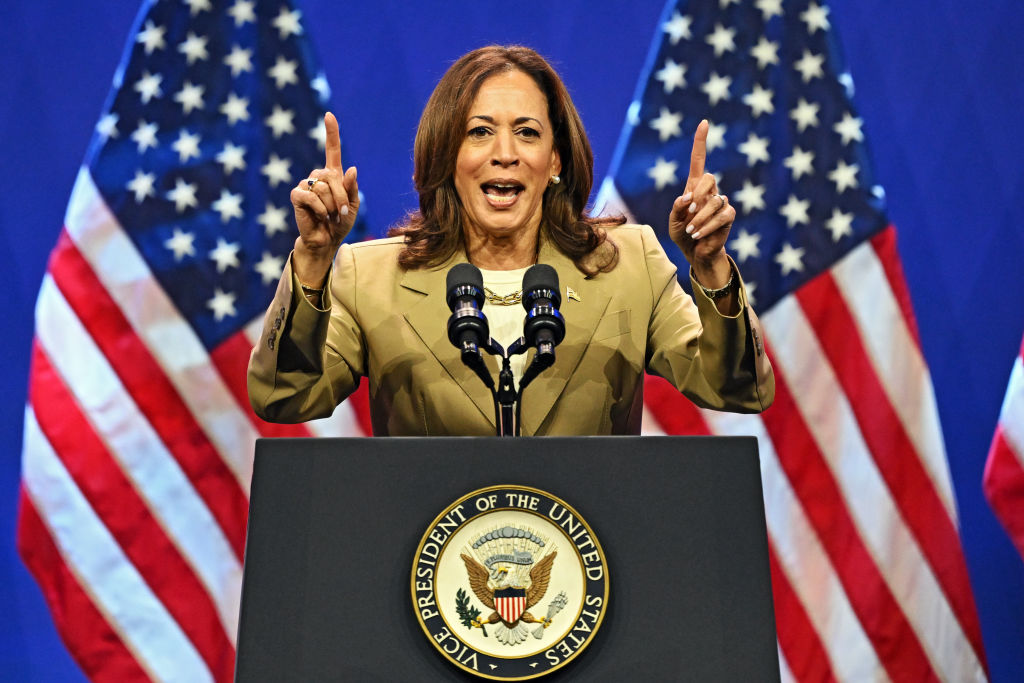
The recent shift in the Democratic presidential race, with President Joe Biden’s withdrawal and endorsement of Vice President Kamala Harris, presents more than just a change in leadership. It offers a critical moment for the Democratic Party to reassess its stance on a range of issues, particularly its approach to emerging technologies and innovation.
For too long, there has been a growing perception – often justified – that the Democratic Party is overly cautious, even resistant, to new technologies. This stance, characterized by a rush to regulate and a tendency to preserve the status quo, risks positioning Democrats as obstacles to progress rather than its champions.
The challenges and opportunities presented by emerging technologies demand a nuanced, forward-thinking approach. From artificial intelligence and cryptocurrency to green technology and beyond, these innovations will reshape our economy, improve society, and – if we lean into them – bolster America’s global leadership in the 21st century. The Democratic Party’s approach to these technologies will be pivotal in determining not just the rate of economic growth over the coming decades but also in addressing critical issues like climate change and financial inclusion.
Take, for example, the party’s current stance on cryptocurrency. While there have been positive steps, such as Rep. Ro Khanna’s recent roundtable bringing together industry leaders and policymakers, the overall approach, particularly from regulatory bodies like the SEC, has created an impression of vitriolic opposition. This stance risks alienating a growing segment of voters who see crypto as a critical issue for the future, with recent polling indicating that one in five swing state voters consider it an important factor in the upcoming election.
But the issues of perception, regulation, and enforcement extend far beyond crypto. As we stand on the brink of an AI revolution, what is the Democratic vision for harnessing this technology’s potential while mitigating its risks? How can we support green tech investment and streamline the necessary permitting reforms to accelerate our transition to clean energy? These are the questions that demand thoughtful, balanced answers from Democratic leadership and an embrace of technology’s benefits rather than a focus on its flaws.
The party’s approach to these issues should be guided by core Democratic values of inclusion, innovation, and economic opportunity. However, it must also recognize that excessive caution and over-regulation can stifle the very progress we seek to achieve. The reflexive impulse to regulate new technologies as soon as they emerge is neither practical nor popular, especially among younger voters. It’s past time for a reassessment of both the practical and rhetorical approach to tech policy.
This is not to say that regulation has no place in this reinvigorated approach. On the contrary, smart, balanced regulation is crucial for protecting consumers and ensuring fair markets. But such regulation should be developed in closer collaboration with industry experts, with a deep understanding of the technologies involved, and with an eye towards fostering innovation rather than stifling it.
As Democrats rally behind a new potential nominee, there’s an opportunity to redefine the party’s relationship with technology and innovation. This could involve a few, actionable ideas, including a commitment to developing more explicitly forward-looking tech policy that balances innovation with necessary safeguards; engaging more openly and frequently with tech industry leaders and innovators; and streamlining regulatory processes to allow for faster deployment of new technologies, particularly in critical areas like green tech.
By embracing a more balanced, pro-innovation stance, Democrats can position themselves as leaders in shaping America’s technological future. This approach not only aligns with core Democratic values but also has the potential to appeal to key demographics, including younger, diverse voters and those in tech-centric swing states. Much has been written about Silicon Valley’s shift to the right in recent years. If Republicans become the pro-tech party and the Democrats stand in the way of technological development, society at large will lose.
In the 90s, the Clinton administration recognized the vast potential of the internet, and crafted policies that would pave the way for the U.S. to become the undisputed global leader of the Information Age. We should again focus our priorities on shared prosperity and the role that new technology plays in raising living standards for everyone.
As we enter this new chapter, it’s time for the Democratic Party to move beyond the perception of being the party of “no” when it comes to new technologies. Instead, it should strive to be the party that says “yes, and” – yes to innovation, and yes to responsible development. The future is being written now, and it requires the best ideas from across the political spectrum to ensure it’s a future that works for everyone. It’s not too late to come to the table and lead the way in embracing the technologies that will define America’s future for this generation and generations to come.
Kristin Smith is executive director of the Blockchain Association. The opinions expressed in Fortune.com commentary pieces are solely the views of their authors and do not necessarily reflect the opinions and beliefs of Fortune.