• Home
  • News
  • Fortune 500
  • Tech
  • Finance
  • Leadership
  • Lifestyle
  • Rankings
  • Multimedia
Some Fortune Crypto pricing data is provided by Binance.
CommentaryCryptocurrency

How crypto could put Donald Trump over the top in November

By
Anthony Scaramucci
Anthony Scaramucci
and
Kristin Smith
Kristin Smith
Down Arrow Button Icon
By
Anthony Scaramucci
Anthony Scaramucci
and
Kristin Smith
Kristin Smith
Down Arrow Button Icon
June 5, 2024, 6:30 AM ET
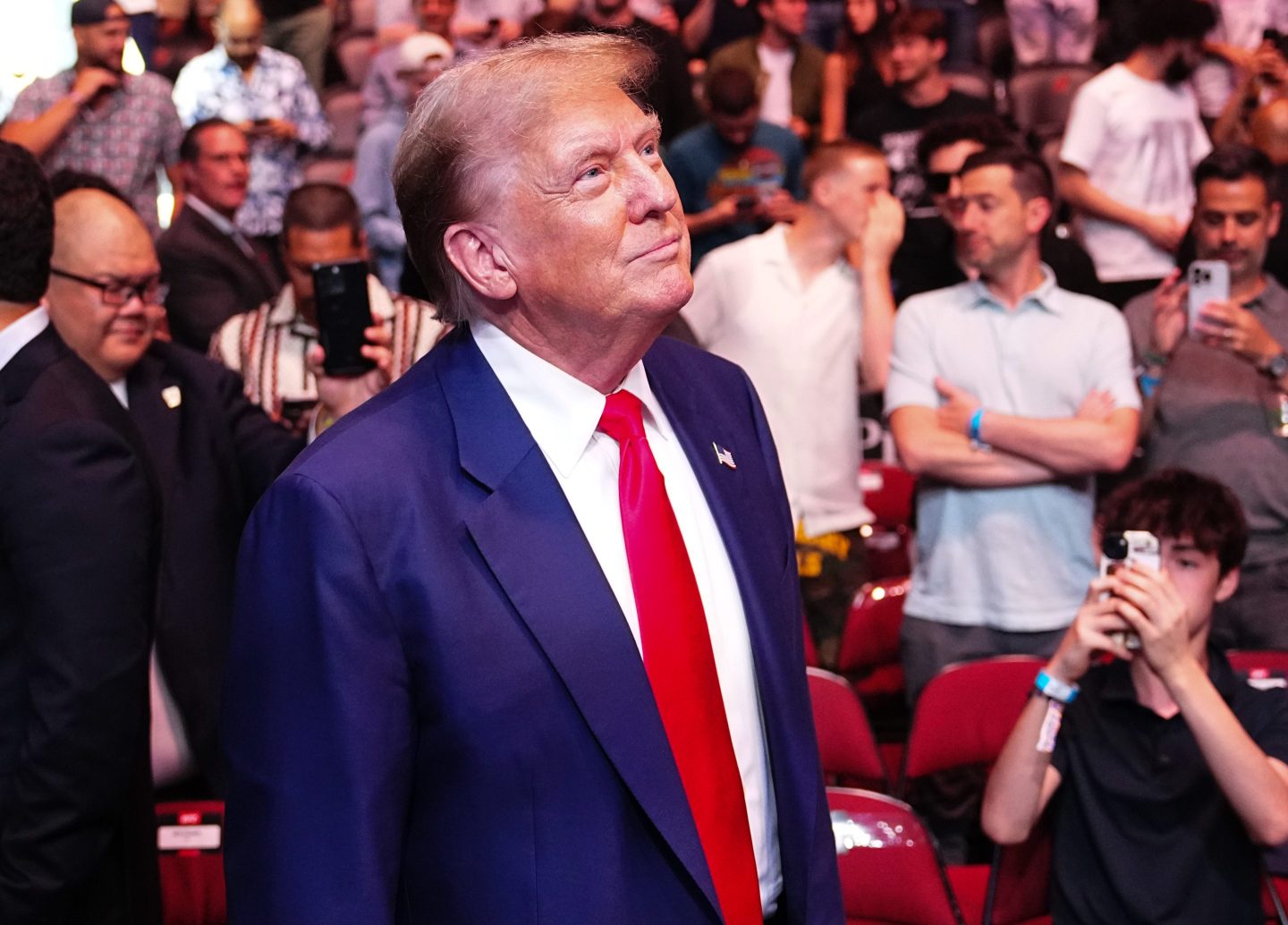
Donald Trump is seen in attendance at UFC 302 on June 1, 2024, at Prudential Center in Newark.
Donald Trump is seen in attendance at UFC 302 on June 1, 2024, at Prudential Center in Newark.Jeff Bottari—Zuffa LLC via Getty Images

Anthony Scaramucci is founder and managing partner of SkyBridge Capital and founder and chairman of SALT. Kristin Smith is CEO of the Blockchain Association.

Last month, in remarks to a crowd of supporters, former President Donald Trump added a new dynamic to November’s election—and reignited debate about the future of the digital asset industry in the U.S.—by declaring, “…if you are in favor of crypto, you better vote for Trump.” It wasn’t subtle, but it was acknowledgement of crypto’s growing importance as a hot-button political issue. Other elected officials and candidates for office should pay attention.

According to recent polling from DCG and The Harris Poll, Americans are eager for candidates to discuss crypto more substantively. One in five registered voters in battleground states believe crypto will be a major issue in the upcoming election—a percentage no one could call fringe.

Trump must’ve been listening as he moved to embrace this growing group of voters. On the same day, President Joe Biden threatened to veto legislation to repeal a harmful anti-crypto provision from the SEC, a promise he followed through on last week. The divergent views on the future of crypto in the U.S. could be an important lever in key swing states in November.

More than 50 million Americans own crypto, but despite the groundswell of America’s interest in and support of digital currencies, the current administration seems intent on stamping out digital asset innovation and sending jobs offshore. Crypto is a natural nonpartisan issue—elected officials on both sides of the aisle can, and have, found ways to embrace the technology. Progressives, in particular, should hail the devolve-power-to-the-people nature of decentralized systems that erode the overbearing power of Big Banks and Big Tech. Yet, the current administration and certain left-leaning members of Congress, including Sen. Elizabeth Warren (D-Mass.), are making it harder for the digital asset voter to be heard across both sides of the aisle.

Crypto is a network of services that’s inherently nonpartisan and has the potential to solve many of the problems both parties identify in the current financial system. Conservatives generally support crypto for the libertarian promise of decentralization—the ability for individuals to have complete autonomy over their own assets and to exchange them without needing financial intermediaries or sacrificing privacy to an intrusive government. Meanwhile, progressives should embrace the fact that crypto is a potential antidote to the power that commercial monopolies have over our lives. Decentralized networks can provide services at a lower cost to millions of those who aren’t treated fairly by the current financial system.  

Crypto presents a rare opportunity for legislators trying to build lasting relationships and goodwill with a largely untapped block of the voting base. Crypto users tend to be younger, diverse, and forward-thinking—all of which would, you could argue, make crypto adopters a natural constituency for Democrats. By engaging on the substance of crypto’s potential, Democrats could reap rich rewards in November.

However, the majority of the Democratic congressional caucus opposes, in broad strokes, supporting the growth of the homegrown crypto ecosystem. There are exceptions within the party, but many in positions of power continue to vilify the technology, framing the industry as an unregulated “Wild West,” an unfortunate and untrue characterization. Their recent skepticism largely lies in concerns surrounding consumer protection and illicit finance, two areas where the crypto industry is willing to collaborate with our partners in government.

Democratic thinking must change—and evolve. Happily, there are early signs that this message is breaking through. Despite the veto from Biden, Democrats in Congress nevertheless joined in the repeal of SAB 121, the SEC’s punitive, anti-crypto accounting guidelines, and 71 members of the Democratic House delegation voted for the FIT21 market structure bill. These are positive developments that should be cheered, all while imploring Democrats to do more.

Democrats have an opportunity to safeguard the next generation of American innovation—and reach a new set of voters. In the excessively polarized political climate we find ourselves in today, the ability to attract an expanding community—such as the crypto ecosystem—can mean the difference between winning and losing narrow elections.

The digital asset industry feels unfairly targeted and backed into a corner, a situation that may push the industry overseas, robbing the U.S. of any current advantages. Trump’s remarks to a roaring crowd at Mar-a-Lago should be a wake-up call to Democrats: Embrace crypto and its young, tech-savvy voters—or someone else will.

The opinions expressed in Fortune.com commentary pieces are solely the views of their authors and do not necessarily reflect the opinions and beliefs of Fortune.

Fortune Brainstorm AI returns to San Francisco Dec. 8–9 to convene the smartest people we know—technologists, entrepreneurs, Fortune Global 500 executives, investors, policymakers, and the brilliant minds in between—to explore and interrogate the most pressing questions about AI at another pivotal moment. Register here.
About the Authors
By Anthony Scaramucci
See full bioRight Arrow Button Icon
By Kristin Smith
See full bioRight Arrow Button Icon

Latest in Commentary

Google.org
CommentaryTech
Nonprofits are solving 21st century problems—they need 21st century tech
By Maggie Johnson and Shannon FarleyDecember 8, 2025
9 hours ago
Will Dunham is President and Chief Executive Officer of the American Investment Council
CommentaryRetirement
Private equity is being villainized in the retirement debate — even as it provides diversification and outperforms public markets long-term
By Will DunhamDecember 8, 2025
9 hours ago
Justin Hotard, CEO of Nokia
CommentaryGen Z
Nokia CEO: The workforce is becoming AI-native. Leadership has to evolve
By Justin HotardDecember 8, 2025
12 hours ago
Alex Amouyel is the President and CEO of Newman’s Own Foundation
Commentaryphilanthropy
Following in Paul Newman and Yvon Chouinard’s footsteps: There are more ways for leaders to give it away in ‘the Great Boomer Fire Sale’ than ever
By Alex AmouyelDecember 7, 2025
1 day ago
Amit Walia
CommentaryM&A
Why the timing was right for Salesforce’s $8 billion acquisition of Informatica — and for the opportunities ahead
By Amit WaliaDecember 6, 2025
2 days ago
Steve Milton is the CEO of Chain, a culinary-led pop-culture experience company founded by B.J. Novak and backed by Studio Ramsay Global.
CommentaryFood and drink
Affordability isn’t enough. Fast-casual restaurants need a fandom-first approach
By Steve MiltonDecember 5, 2025
3 days ago

Most Popular

placeholder alt text
Real Estate
The 'Great Housing Reset' is coming: Income growth will outpace home-price growth in 2026, Redfin forecasts
By Nino PaoliDecember 6, 2025
2 days ago
placeholder alt text
Politics
Supreme Court to reconsider a 90-year-old unanimous ruling that limits presidential power on removing heads of independent agencies
By Mark Sherman and The Associated PressDecember 7, 2025
1 day ago
placeholder alt text
AI
Nvidia CEO says data centers take about 3 years to construct in the U.S., while in China 'they can build a hospital in a weekend'
By Nino PaoliDecember 6, 2025
2 days ago
placeholder alt text
Economy
The most likely solution to the U.S. debt crisis is severe austerity triggered by a fiscal calamity, former White House economic adviser says
By Jason MaDecember 6, 2025
2 days ago
placeholder alt text
Uncategorized
Transforming customer support through intelligent AI operations
By Lauren ChomiukNovember 26, 2025
12 days ago
placeholder alt text
Investing
Netflix’s $5.8 billion breakup fee for Warner among largest ever
By Elizabeth Fournier and BloombergDecember 6, 2025
2 days ago
Rankings
  • 100 Best Companies
  • Fortune 500
  • Global 500
  • Fortune 500 Europe
  • Most Powerful Women
  • Future 50
  • World’s Most Admired Companies
  • See All Rankings
Sections
  • Finance
  • Leadership
  • Success
  • Tech
  • Asia
  • Europe
  • Environment
  • Fortune Crypto
  • Health
  • Retail
  • Lifestyle
  • Politics
  • Newsletters
  • Magazine
  • Features
  • Commentary
  • Mpw
  • CEO Initiative
  • Conferences
  • Personal Finance
  • Education
Customer Support
  • Frequently Asked Questions
  • Customer Service Portal
  • Privacy Policy
  • Terms Of Use
  • Single Issues For Purchase
  • International Print
Commercial Services
  • Advertising
  • Fortune Brand Studio
  • Fortune Analytics
  • Fortune Conferences
  • Business Development
About Us
  • About Us
  • Editorial Calendar
  • Press Center
  • Work At Fortune
  • Diversity And Inclusion
  • Terms And Conditions
  • Site Map

© 2025 Fortune Media IP Limited. All Rights Reserved. Use of this site constitutes acceptance of our Terms of Use and Privacy Policy | CA Notice at Collection and Privacy Notice | Do Not Sell/Share My Personal Information
FORTUNE is a trademark of Fortune Media IP Limited, registered in the U.S. and other countries. FORTUNE may receive compensation for some links to products and services on this website. Offers may be subject to change without notice.










