As the dust cleared from Tuesday’s contentious brawl between Securities and Exchange Commission Chair Gary Gensler and House Financial Services Committee Republicans, Wednesday’s scheduled hearing on stablecoin legislation held the potential for a more robust discussion on the future of crypto regulation.
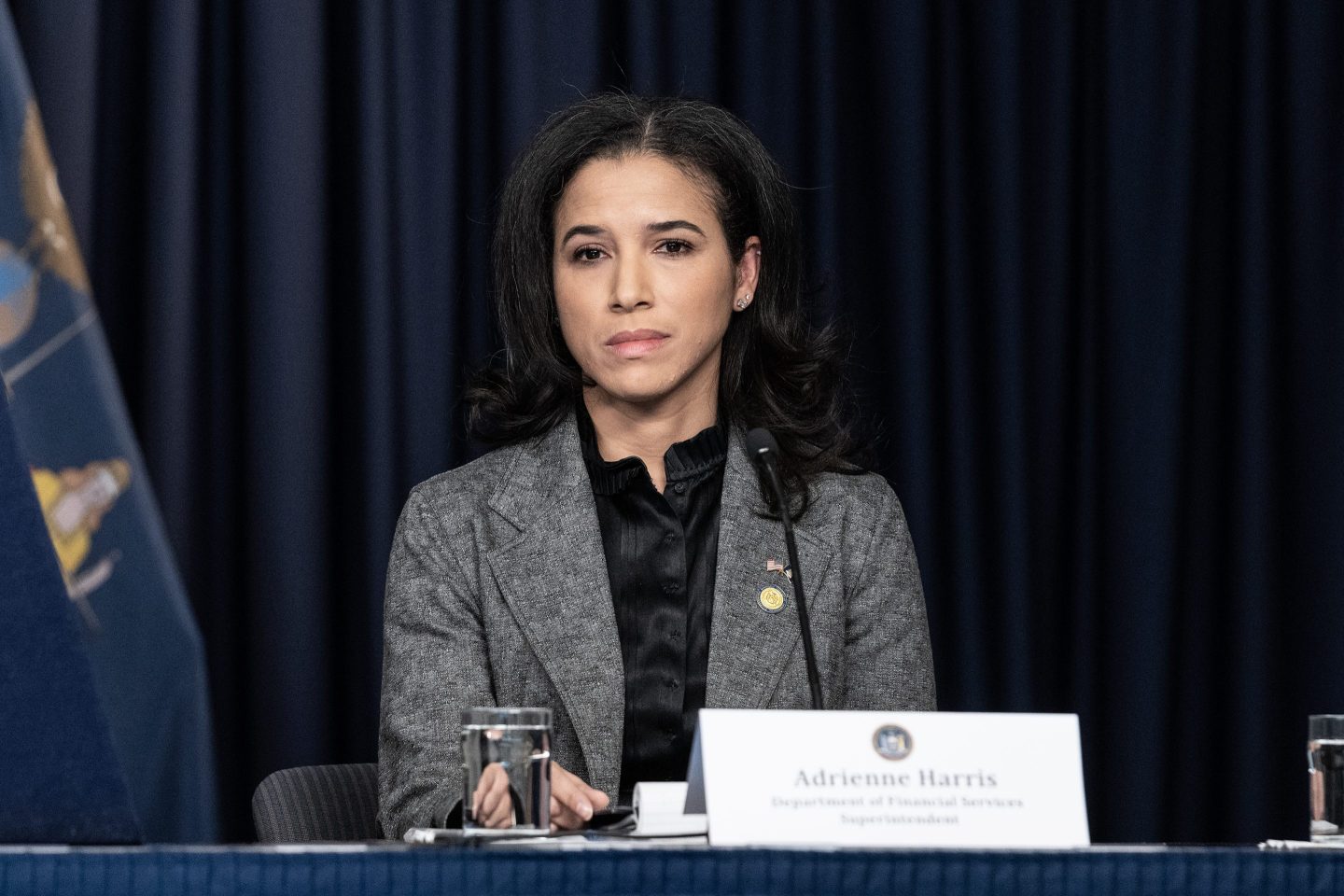
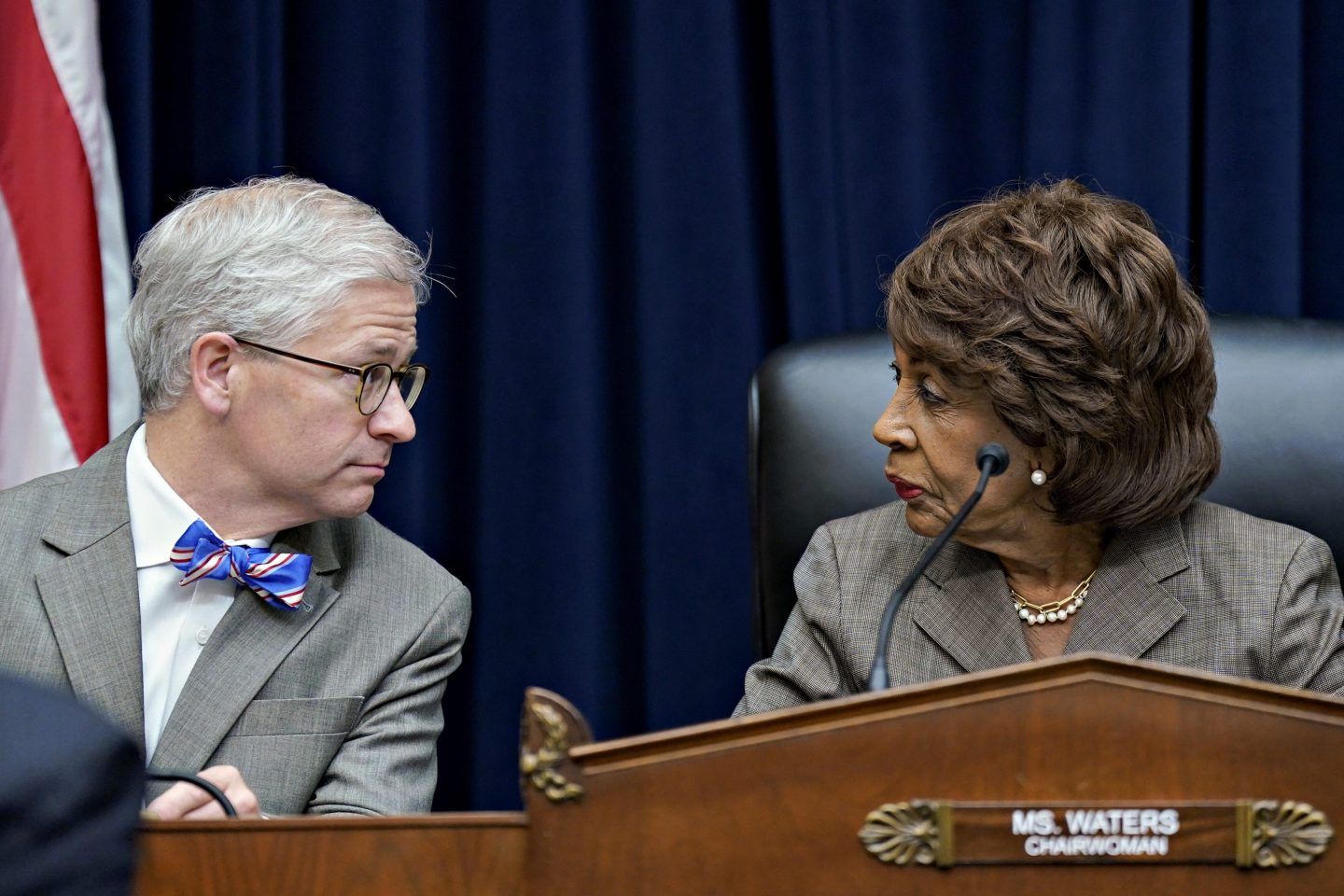
Ahead of the event, the committee posted a 73-page bill with the same text of draft legislation authored by then-Chair Maxine Waters (D-Calif.) and ranking member Patrick McHenry (R-N.C.), whose roles are now flipped, that had circulated during last year’s congressional session. The hearing also included a number of star witnesses central to the U.S. stablecoin ecosystem, including Dante Disparte, chief strategy officer for USDC issuer Circle, and Austin Campbell, former chief risk officer for stablecoin firm Paxos. Also invited was Adrienne Harris, superintendent of the New York Department of Financial Services—the only agency in the United States to introduce a regulatory regime around stablecoins.
Despite the bipartisan promise of the hearing, it quickly became apparent that Democrats and Republicans still have a gulf between them when it comes to crypto legislation. When Waters took her turn to speak, she noted that the bill had been written before the collapse of FTX and that the two sides had never completed negotiations over disagreements in the draft legislation, including on the issue of state versus federal oversight.
“It does not represent any final product of any kind,” she said. “We’re starting from scratch to deal with stablecoins.”
A vacuum still exists at the federal level when it comes to crypto regulation, and Wednesday’s hearing illustrated that legislation is likely still months away. In the wake of FTX’s failure, experts agreed that stablecoins represented the most likely course of action for lawmakers, especially given the field’s bipartisan support in the House Financial Services Committee, the recent run and depegging of USDC precipitated by the collapse of Silicon Valley Bank, and the increased market share of offshore stablecoin Tether.
The bill introduced by Republicans, while representing only the start of negotiations, still includes provisions likely to last throughout the process, including those on reserves and attestations that would disqualify Tether as a regulated entity and strengthen the prospects of U.S.-based options like USDC and Paxos’s array of stablecoins.
Even though Wednesday’s hearing represented a restart of the legislative marathon, rather than a sprint to the finish line, Circle’s Disparte expressed optimism.
“There is a healthy debate about how to do it, but, in a bipartisan manner, Republicans and Democrats have made significant headway on a federal framework,” he told Fortune in a statement following the hearing.
Indeed, Waters expressed the need to fill the vacuum, even if it means starting from square one.
“We should move very quickly to establish a stablecoin bill and get that legislation going,” she said.
There were agreements over the fact that stablecoins likely fell outside the security-versus-commodity debate plaguing the rest of cryptocurrency, as well as the fact that stablecoins could offer an evolution of current payment systems in the U.S.
“Our financial system has a problem,” said Jake Chervinsky, chief policy officer of the trade group Blockchain Association and one of the witnesses. “It is stuck in the analog era of the last century, constrained by intermediaries who act as gatekeepers and middlemen to outdated infrastructure that has failed to keep pace with the digital age.”
Fault lines emerged as expected, especially on issues of state and federal preemption, as well as national security and whether stablecoin-issuing entities would need banking charters. Numerous legislators, including Warren Davidson (R-Ohio) and Ritchie Torres (D-N.Y.) praised the NYDFS approach to crypto regulation and voiced their intent to ensure that the state’s authority would not be undermined by federal legislation. Waters, however, expressed surprise that New York even had a regulatory framework for stablecoins, with Harris responding that her department had instituted a “robust one.”
Waters also asked Harris about the failure of New York–regulated Signature Bank, which NYDFS seized in March. Many have continued to speculate that seizure was related to its crypto deposits, which Harris once again denied, describing the buildup to the takeover as a “new-fashioned bank run” exacerbated by social media.
When Democratic lawmakers expressed concerns over the ransomware risks posed by stablecoins as a payment method, former Paxos chief risk officer Campbell replied that public blockchains, combined with “freeze and seize capabilities,” could prevent such a threat.
“Anyone who’s involved in crypto, anyone who wants to get something done, walks away from that hearing like, ‘Oh great, more of the same,’” said Collin McCune, head of government affairs for Andreessen Horowitz Crypto and a former staffer for McHenry.
Even so, he said the takeaway from today should be the desire for legislation from both sides.
“The argument that was had within the committee today was more about process than it was actually about product,” he told Fortune.