• Home
  • Latest
  • Fortune 500
  • Finance
  • Tech
  • Leadership
  • Lifestyle
  • Rankings
  • Multimedia
Some Fortune Crypto pricing data is provided by Binance.
CommentaryCryptocurrency

Ethereum, Arbitrum, and why L2 solutions are such a mess

By
Kathleen Breitman
Kathleen Breitman
Down Arrow Button Icon
By
Kathleen Breitman
Kathleen Breitman
Down Arrow Button Icon
April 5, 2023, 1:56 PM ET
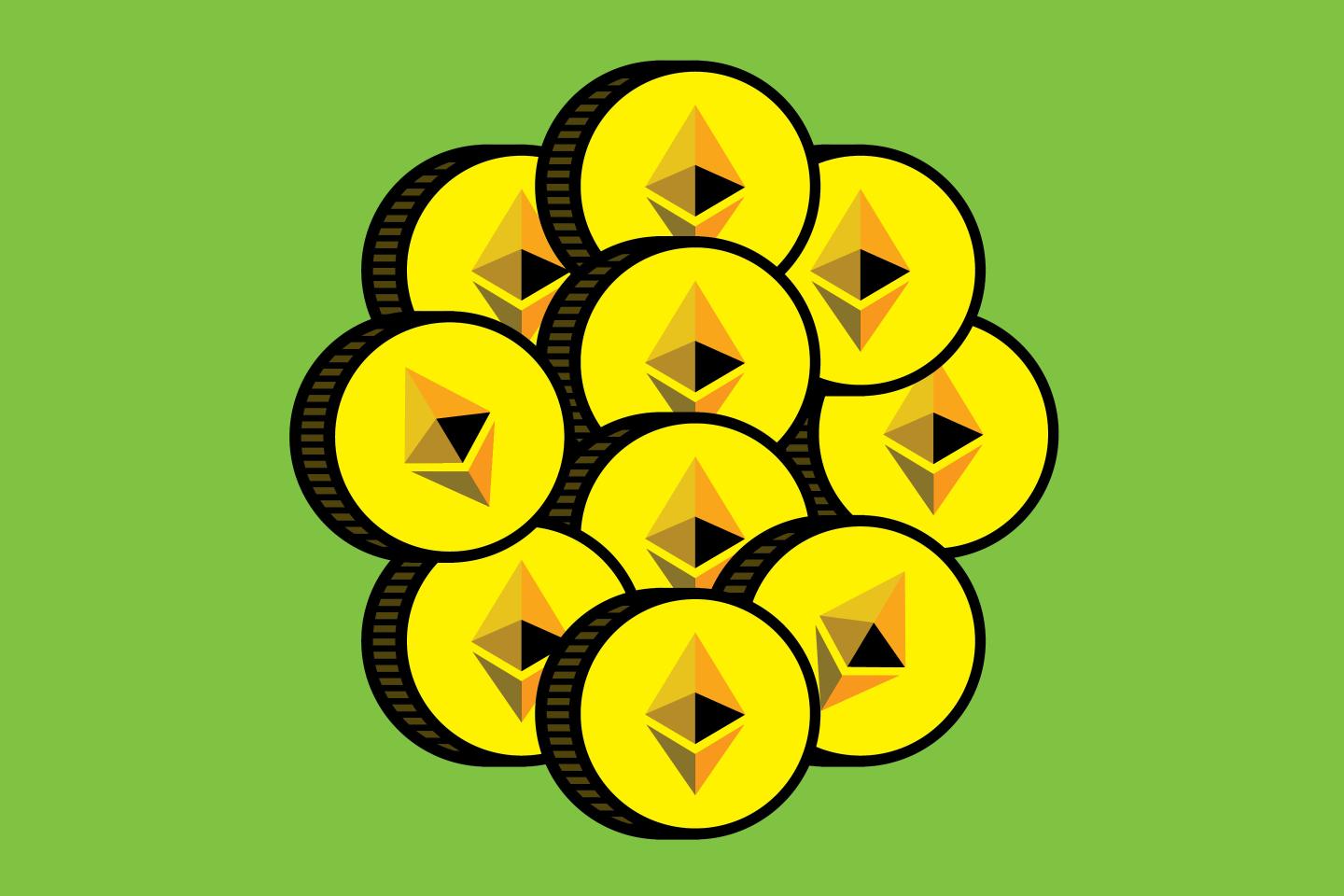
Ether coins on a green background
Exactly what are Ethereum scaling solutions solving?Illustration by Fortune
Add Fortune on Google for similar content.

A hot topic in crypto circles these days is how to process more transactions on a blockchain, leading many pundits to say it can’t be done in a decentralized fashion. This opinion is a popular one but also belies a superficial understanding of the problem with Ethereum’s scaling solutions in particular—a problem that stems from the financing models driving these solutions.

For those unfamiliar with the debate, Ethereum and Bitcoin have for years struggled with congestion and high fees arising from their failure to keep up with demand on their blockchains. This has in turn created opportunities for projects offering “on-top” solutions as a means to handle that extra demand. The result is a plethora of so-called layer-2, or L2, sidechains—Arbitrum, Optimism, and Polygon among them—that are intended to increase transaction capacity while keeping the chain orderly.

In the Bitcoin network, these efforts have largely focused around Lightning, a system of secured peer-to-peer channels that allow for quick and cheap transactions. In the case of Ethereum, developers have taken a more baroque approach that typically looks like this: A technical team claims to have a novel solution to scale Ethereum by capturing transactions on their network, and that idea is pitched to venture capitalists. But instead of integrating this software directly into the main protocol, so Ethereum as a network can scale, a new token—an L2 token—is issued to transact using this new software.

Does this have to happen? Well, no. Strictly speaking, there is nothing stopping Ethereum leadership from incorporating scaling solutions at the protocol level to lower its costs and make the network more efficient. But instead of working to make the scaling happen directly, the Ethereum crowd has instead relied on the L2 route. (It’s worth noting that Tezos, the blockchain I cofounded, recently deployed an L2 solution without introducing a token.)

While L2 solutions on Ethereum have succeeded in offering faster and cheaper transactions, their insistence on adding their own proprietary tokens add friction. To make matters worse, the L2 projects often rush to market with underdeveloped solutions, creating a reliance upon Ethereum contracts under their control and centralized oversight to address security issues later. While this tokenized approach funds development and generates hype, it quickly leads to disillusionment as inflated token market capitalizations fail to meet expectations.

So why does Ethereum continue to embrace these half-baked L2 solutions? Look no further than Sand Hill Road.

Traditionally, venture capitalists offer financing for new businesses—the word “venture” connoting newer, riskier investments, unlike those perhaps preferred by other private equity firms. VCs typically look to exit their positions through IPOs or acquisitions, often on five- or seven-year time horizons.

If VCs had a chance speed up their exits—the big moment everyone gets paid—to an order of months, you can bet they would leap on it. And so enter a new model facilitated by crypto.

In Crypto VC speak, exit strategies don’t come from the creation of a useful, flourishing business. Since 2018 or so, VCs have acted as providers of bridge capital to teams until a token is created and sold. It’s about short-term storytelling because, ultimately, the value of the token isn’t defensible. Often, it’s a solution in search of a problem or, in the case of scaling, a source of additional friction. The last two months have served as testament to the instability of L2 tokens for a variety of business reasons.

Last month, Coinbase announced it was launching an L2 solution based on Optimism. This was poetic: Optimism already has an unnecessary token and a staking mechanism for its distribution. Unfortunately, it lacks fraud proofs, or the basic security ingredient that makes a scaling solution more secure than a hope and a prayer. What we have here is a token in search of its own technology.

More recently, Arbitrum, an L2 on Ethereum that’s raised over $100 million from VCs such as Lightspeed, issued a governance token called ARB to justify its place outside the base Ethereum protocol. As part of its first “governing” act, the community was asked to vote on a proposal that would send 750 million of its tokens, worth around $1 billion, to its nonprofit foundation. When rank-and-file community members balked at this plan, the Arbitrum Foundation clarified that these funds were already being allocated—and, indeed, had been spent. It was a lucky day for those folks who gave them money last year in a private transaction, and virtually nobody else who bought into the gold-plated resumes of its founding team and the characterizations of their project.

Quite the arbitrage, indeed.

Scaling solutions that create more costs and hoops to jump through for users by issuing pernicious tokens aren’t solutions at all. Ethereum will evolve once it weens off venture capitalists and embraces a model that seeks to disintermediate, rather than subsidize, the well-heeled financiers of Web2.

Kathleen Breitman is a cofounder of Tezos. The opinions expressed in Fortune.com commentary pieces are solely the views of their authors and do not necessarily reflect the opinions and beliefs of Fortune.

Subscribe to Well Adjusted, our newsletter full of simple strategies to work smarter and live better, from the Fortune Well team. Sign up today.
About the Author
By Kathleen Breitman
See full bioRight Arrow Button Icon
Add Fortune on Google for similar content.

Latest in Commentary

Finance
Lorem ipsum dolor sit amet, consectetur adipiscing elit, sed do eiusmod tempor incididunt ut labore et dolore magna aliqua. Ut enim ad minim veniam
By Fortune Editors
October 20, 2025
Finance
Lorem ipsum dolor sit amet, consectetur adipiscing elit, sed do eiusmod tempor incididunt ut labore et dolore magna aliqua. Ut enim ad minim veniam
By Fortune Editors
October 20, 2025
Finance
Lorem ipsum dolor sit amet, consectetur adipiscing elit, sed do eiusmod tempor incididunt ut labore et dolore magna aliqua. Ut enim ad minim veniam
By Fortune Editors
October 20, 2025
Finance
Lorem ipsum dolor sit amet, consectetur adipiscing elit, sed do eiusmod tempor incididunt ut labore et dolore magna aliqua. Ut enim ad minim veniam
By Fortune Editors
October 20, 2025
Finance
Lorem ipsum dolor sit amet, consectetur adipiscing elit, sed do eiusmod tempor incididunt ut labore et dolore magna aliqua. Ut enim ad minim veniam
By Fortune Editors
October 20, 2025
Finance
Lorem ipsum dolor sit amet, consectetur adipiscing elit, sed do eiusmod tempor incididunt ut labore et dolore magna aliqua. Ut enim ad minim veniam
By Fortune Editors
October 20, 2025

Most Popular

Finance
Lorem ipsum dolor sit amet, consectetur adipiscing elit, sed do eiusmod tempor incididunt ut labore et dolore magna aliqua. Ut enim ad minim veniam
By Fortune Editors
October 20, 2025
Finance
Lorem ipsum dolor sit amet, consectetur adipiscing elit, sed do eiusmod tempor incididunt ut labore et dolore magna aliqua. Ut enim ad minim veniam
By Fortune Editors
October 20, 2025
Finance
Lorem ipsum dolor sit amet, consectetur adipiscing elit, sed do eiusmod tempor incididunt ut labore et dolore magna aliqua. Ut enim ad minim veniam
By Fortune Editors
October 20, 2025
Finance
Lorem ipsum dolor sit amet, consectetur adipiscing elit, sed do eiusmod tempor incididunt ut labore et dolore magna aliqua. Ut enim ad minim veniam
By Fortune Editors
October 20, 2025
Finance
Lorem ipsum dolor sit amet, consectetur adipiscing elit, sed do eiusmod tempor incididunt ut labore et dolore magna aliqua. Ut enim ad minim veniam
By Fortune Editors
October 20, 2025
Finance
Lorem ipsum dolor sit amet, consectetur adipiscing elit, sed do eiusmod tempor incididunt ut labore et dolore magna aliqua. Ut enim ad minim veniam
By Fortune Editors
October 20, 2025
Fortune Secondary Logo
Rankings
  • 100 Best Companies
  • Fortune 500
  • Global 500
  • Fortune 500 Europe
  • Most Powerful Women
  • World's Most Admired Companies
  • See All Rankings
  • Lists Calendar
Sections
  • Finance
  • Fortune Crypto
  • Features
  • Leadership
  • Health
  • Commentary
  • Success
  • Retail
  • Mpw
  • Tech
  • Lifestyle
  • CEO Initiative
  • Asia
  • Politics
  • Conferences
  • Europe
  • Newsletters
  • Personal Finance
  • Environment
  • Magazine
  • Education
Customer Support
  • Frequently Asked Questions
  • Customer Service Portal
  • Privacy Policy
  • Terms Of Use
  • Single Issues For Purchase
  • International Print
Commercial Services
  • Advertising
  • Fortune Brand Studio
  • Fortune Analytics
  • Fortune Conferences
  • Business Development
  • Group Subscriptions
About Us
  • About Us
  • Press Center
  • Work At Fortune
  • Terms And Conditions
  • Site Map
  • About Us
  • Press Center
  • Work At Fortune
  • Terms And Conditions
  • Site Map
  • Facebook icon
  • Twitter icon
  • LinkedIn icon
  • Instagram icon
  • TikTok icon
  • YouTube icon

Latest in Commentary

Can Bangkok future-proof itself against the heat?
CommentaryThailand
Can Bangkok future-proof itself against the heat?
By Curtis S. Chin and Ella TanJuly 23, 2026
9 hours ago
mm
CommentaryLeadership
Michael Muthukrishna: The ‘lone genius’ myth is wrong and it’s holding back your business
By Michael MuthukrishnaJuly 23, 2026
18 hours ago
Paul Keary (L) and Mike Sutcliff (R).
CommentaryAI agents
Teneo & Thoughtworks CEOs: the AI race will be won with governance, not speed 
By Paul Keary and Mike SutcliffJuly 23, 2026
18 hours ago
marks
CommentaryNational Security
General James ‘Spider’ Marks: there’s a strategic risk hidden inside closed AI systems
By James MarksJuly 23, 2026
18 hours ago
glp
Commentaryobesity
The GLP-1 paradox: too expensive to cover, too effective to cut
By Bryan Sivak and Elina OnitskanskyJuly 23, 2026
18 hours ago
data
CommentaryData centers
The hidden cost of AI: Why your town is negotiating with Amazon and Microsoft
By Melody BirminghamJuly 23, 2026
19 hours ago

Most Popular

The millennial generation has split, new Fed research shows: Those over 35 are edging toward boomer-style wealth, while everyone else falls behind
Real Estate
The millennial generation has split, new Fed research shows: Those over 35 are edging toward boomer-style wealth, while everyone else falls behind
By Nick LichtenbergJuly 22, 2026
2 days ago
Spain lifted the World Cup, but the IRS still gets a cut of its $50 million pay day as players, coaches and refs all face complex U.S. “jock taxes”
Personal Finance
Spain lifted the World Cup, but the IRS still gets a cut of its $50 million pay day as players, coaches and refs all face complex U.S. “jock taxes”
By Joshua HongJuly 23, 2026
23 hours ago
Scott Bessent casually says the U.S. has more than $1 trillion in gold—and that it doesn’t matter for the dollar
Economy
Scott Bessent casually says the U.S. has more than $1 trillion in gold—and that it doesn’t matter for the dollar
By Sasha RogelbergJuly 22, 2026
1 day ago
Mark Cuban says he has the solution to growing income inequality, and it's to reward every employee—from CEO to janitor—with company stock
Success
Mark Cuban says he has the solution to growing income inequality, and it's to reward every employee—from CEO to janitor—with company stock
By Sasha RogelbergJuly 20, 2026
4 days ago
Current price of oil as of July 23, 2026
Personal Finance
Current price of oil as of July 23, 2026
By Joseph HostetlerJuly 23, 2026
20 hours ago
The $39 trillion U.S. national debt isn’t as high as Japan’s and Singapore’s relative to economy size—and yet it's still worse somehow
Economy
The $39 trillion U.S. national debt isn’t as high as Japan’s and Singapore’s relative to economy size—and yet it's still worse somehow
By Sasha RogelbergJuly 23, 2026
15 hours ago

© 2026 Fortune Media IP Limited. All Rights Reserved. Use of this site constitutes acceptance of our Terms of Use and Privacy Policy | CA Notice at Collection and Privacy Notice | Do Not Sell/Share My Personal Information
FORTUNE is a trademark of Fortune Media IP Limited, registered in the U.S. and other countries. FORTUNE may receive compensation for some links to products and services on this website. Offers may be subject to change without notice.