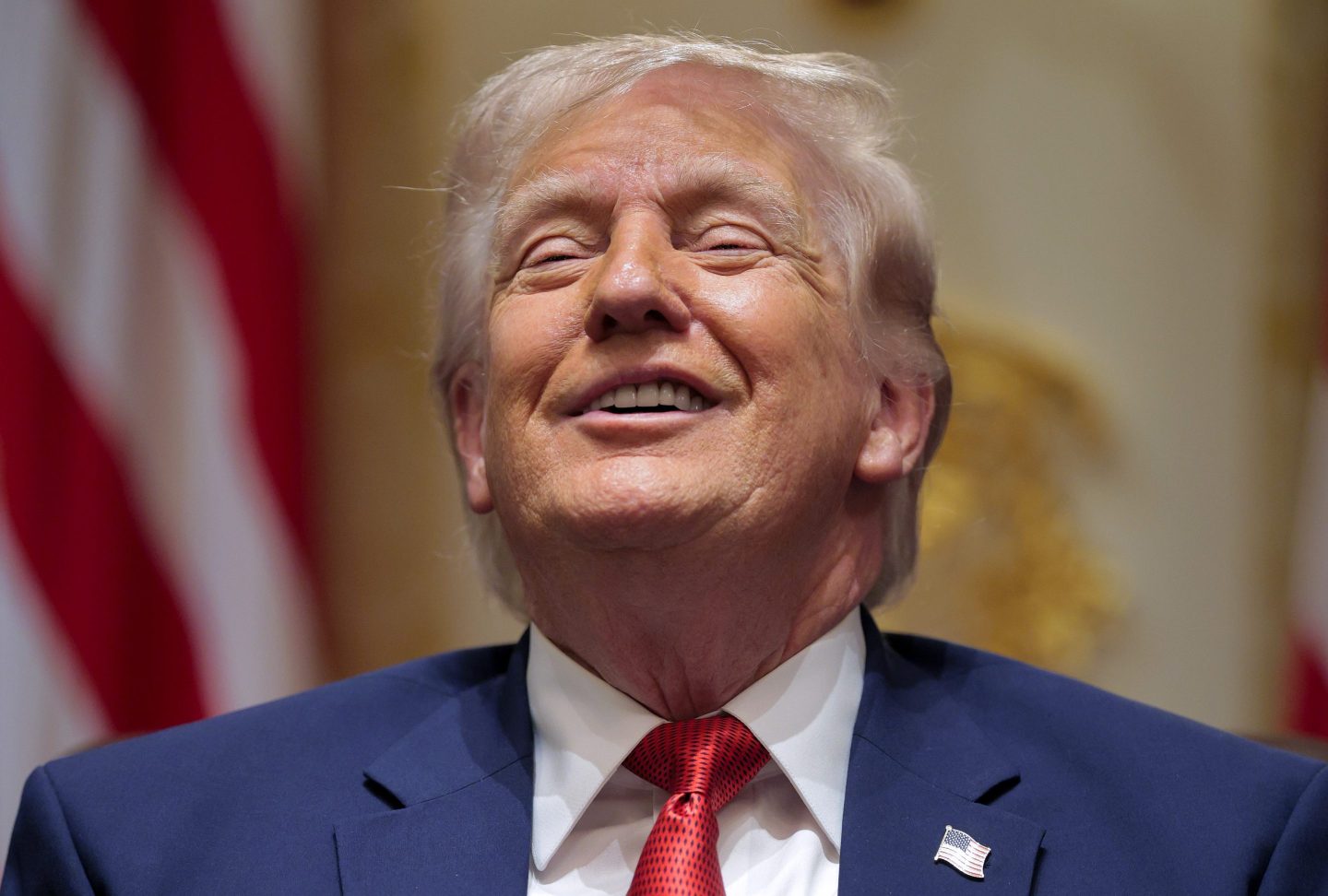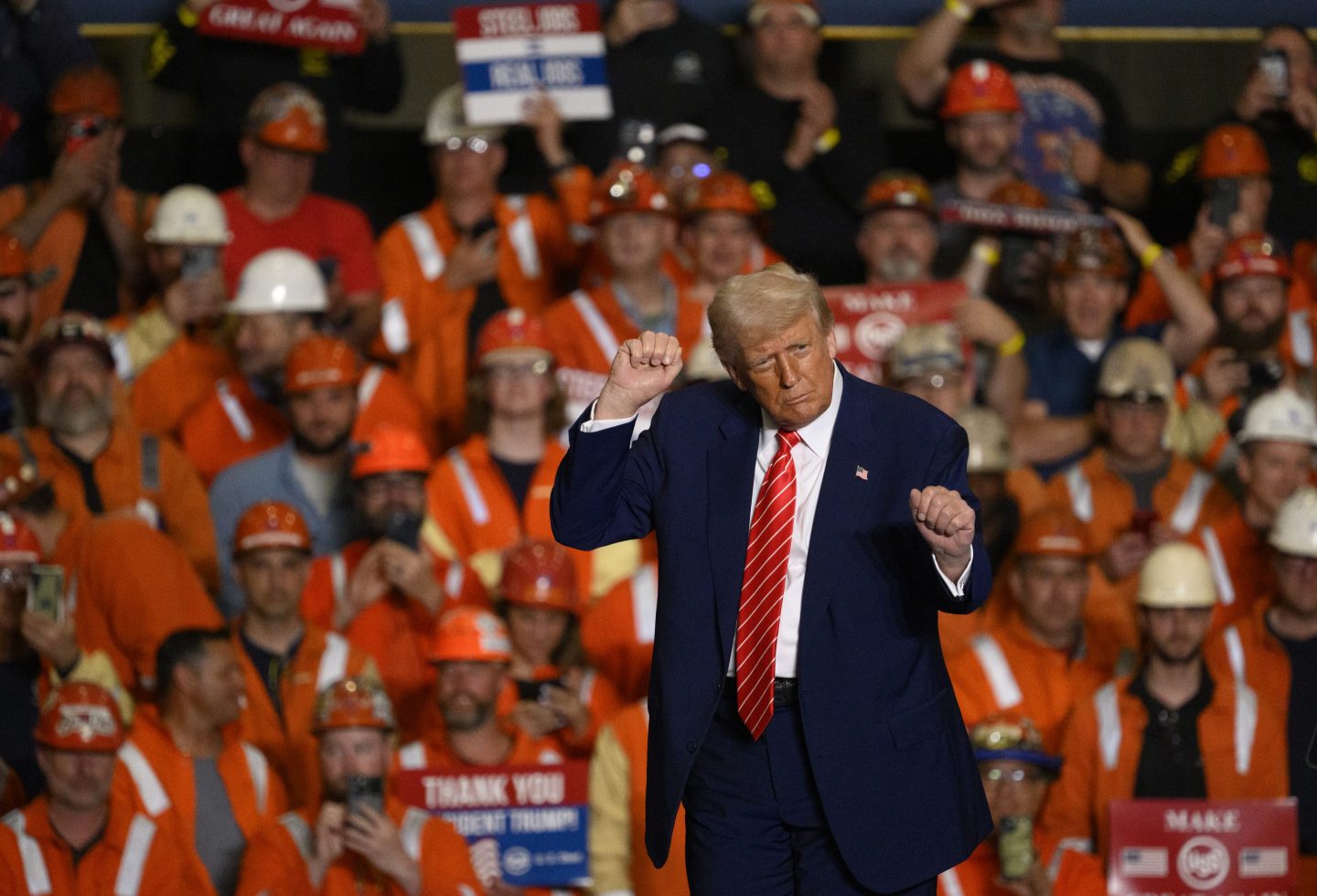
U.S. President Donald Trump turned to a little-used mechanism—the “golden share”—to ensure that a Japanese-owned U.S. Steel doesn’t become a threat to national security. Nippon Steel, the U.S. steelmaker’s soon-to-be owner, is granting Washington special authority over the company’s operations, though the extent of those powers remains unknown.
Yet while the practice is almost unheard of in the U.S., the “golden share” has popped up in other economies as a way to ensure government oversight—or control—over a company’s operations.
On June 13, Trump issued an executive order clearing Nippon Steel’s takeover of U.S. Steel, which had remained in limbo since the deal was first announced in 2023. Both the preceding Biden administration and the Trump administration had expressed concerns about foreign investment and ownership of a key U.S. industry.
To mitigate these worries, the order announces that both Nippon Steel and U.S. Steel have agreed to enter into a National Security Agreement that gives the U.S. government a perpetual “golden share” in the newly acquired company.
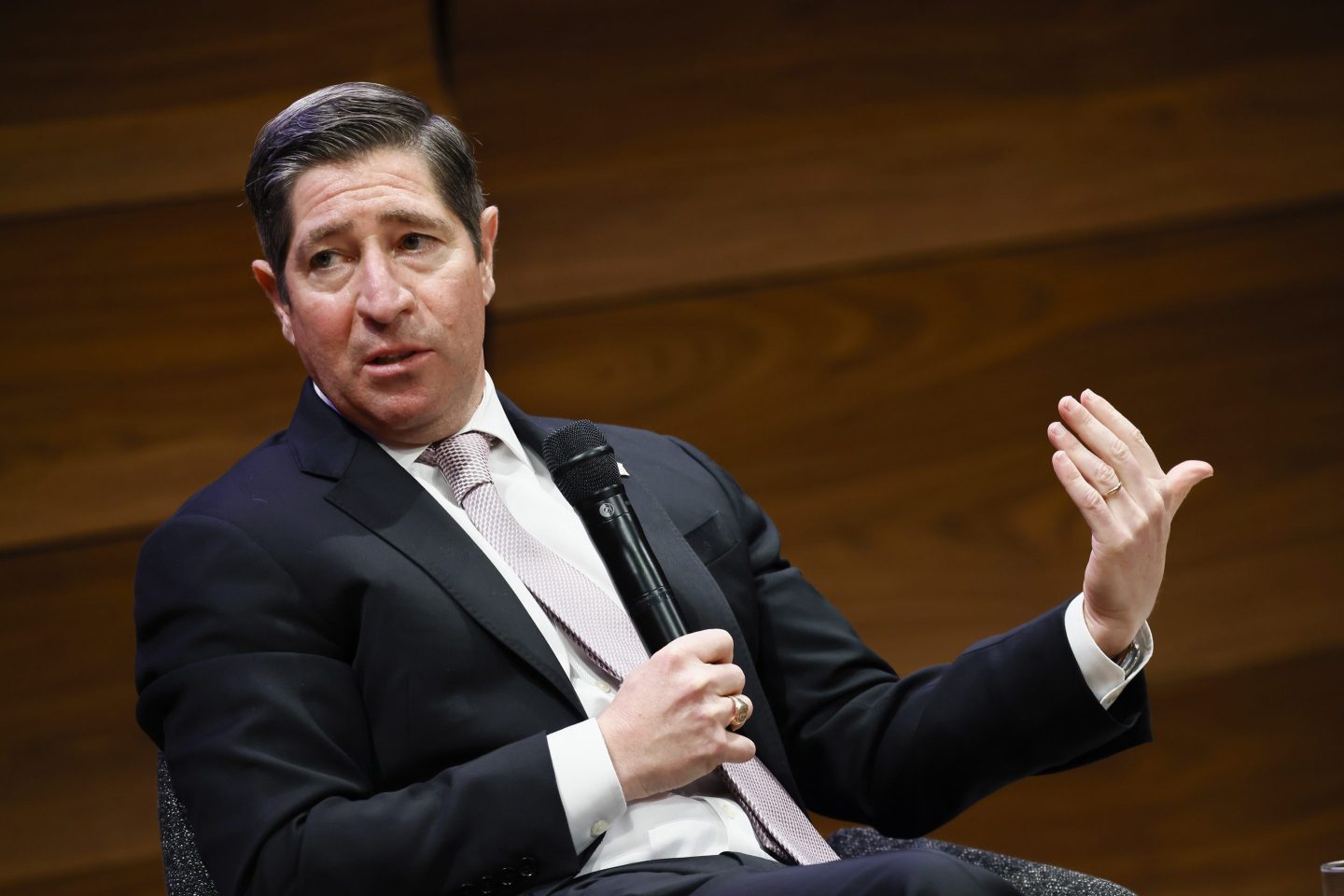
In a late May interview with CNBC, U.S. Senator Dave McCormick (R-Penn.) said a Nippon Steel-owned U.S. Steel would have a “U.S. CEO [and] a U.S. majority board,” and that the government would have to approve major structural changes to the company, such as to production levels or factory locations.
Nippon Steel on Wednesday confirmed that it had granted the U.S. a “golden share,” and said it also granted Washington the power to block production and jobs being transferred outside the U.S. The full terms of the National Security Agreement have not been released to the public.
A golden share doesn’t quite amount to “total control,” as Trump advertised to reporters last week. But it does give the holder—whether a government or some other entity—the ability to outweigh all other shareholders in certain circumstances.
Where are golden shares used?
McCormick, in his May interview, noted that the Nippon Steel control structure would be “somewhat unique.” The U.S. government has not, historically, taken up ownership interest in private companies outside of moments of financial crisis. Even then, the arrangements have been temporary, such as in 2008, when Washington took a controlling share in major auto companies as part of its emergency bailouts.
Yet the practice is more common outside the U.S.
The term “golden share” first appeared in the 1980s, when the Thatcher administration began a campaign to privatize many of its state-owned enterprises. The share was meant to be a compromise solution, allowing the U.K. government a continued say in how these newly privatized companies were to be run.
As the privatization bug spread to mainland Europe, many European governments also took special governance rights to retain state influence in previously nationalized companies.
But the European Court of Justice struck down several of these arrangements in the early 2000s, ruling that golden shares constituted unjustified “restrictions on the free movement of capital,” contravening the Maastricht Treaty, the European Union’s founding document.
In 2003, the UK was ordered to give up its golden share in the British Airports Authority. Spain relinquished its governance rights over an array of businesses in telecoms, banking, and tobacco. And in 2007, Germany sold its golden share in Volkswagen.
Still, the UK has retained golden shares in its defense sector, namely in Rolls-Royce, BAE Systems, and two Babcock dockyards. And Westminster may be considering the practice once again, recently acquiring a golden share in Royal Mail as a condition of its sale to the Czech EP Group finalized this April.
China embraced something similar to the “golden share” in the early 2010s to exert some state oversight over the country’s budding tech sector. So-called special management shares granted state-backed entities authority over key decisions without requiring full state ownership (as is common in several other sectors of the Chinese economy, such as media).
The Chinese government has taken small stakes in companies like Sina Weibo, which offers an X-like microblogging service, and Kuaishou, a livestreaming platform. It’s also reportedly taken small stakes of units in Chinese tech giants like e-commerce giant Alibaba, gaming publisher Tencent, and TikTok parent ByteDance.
Russia has also welcomed the golden share, which again arose during a domestic privatization drive. In 2019, Yandex, the most popular search engine in Russia, granted its golden share to a “Public Interest Foundation,” which outside observers view as a proxy for government oversight. The Foundation has the authority to temporarily replace Yandex’s management.
What about the U.S.?
In his late May interview, McCormick suggested that the Nippon Steel arrangement could “be a model for transactions that really affect our national security.”
Industrial policy is quickly becoming a bipartisan issue in the U.S., with both Democrats and Republicans supporting measures to protect U.S. manufacturing (even if they differ on the best policies to achieve that). Both sides of the political divide criticized Nippon Steel’s original bid for U.S. Steel as a threat to national security.
Other economists have suggested golden shares could be a way to maintain oversight of sectors that pose a systemic risk to the U.S. economy. In 2023, amid concerns that troubles at Silicon Valley Bank could spiral into a broader financial crisis, Saule Omarova, a onetime Biden nominee for a senior Treasury position, suggested that the U.S. government consider a golden share in systemically important banks.
“It would be structured to serve a single purpose: to give the American public a seat at the table where banks make decisions on how to manage—or perhaps not manage—the risks we ultimately may have to bear,” she suggested in an opinion piece for the New York Times.
U.S. Steel’s new owner isn’t too worried about how Washington’s special powers will affect the business. “We retain sufficient managerial freedom,” Nippon Steel Eiji Hashimoto said to reporters on Thursday, and added that the “golden share” was his company’s idea. “We won’t be constrained in pursuing anything we do.”
Nippon Steel shares are down about 8% for the week so far.