• Home
  • Latest
  • Fortune 500
  • Finance
  • Tech
  • Leadership
  • Lifestyle
  • Rankings
  • Multimedia
CommentaryChina
Asia

U.S. tariffs will hasten, not slow, China’s drive for tech self-sufficiency

By
Grace Shao
Grace Shao
Down Arrow Button Icon
By
Grace Shao
Grace Shao
Down Arrow Button Icon
April 28, 2025, 8:00 PM ET

Grace Shao is the founder of AI Proem, an industry newsletter offering insights into China’s AI and technology developments, and has worked with both large tech companies and AI startups across Asia-Pacific. 

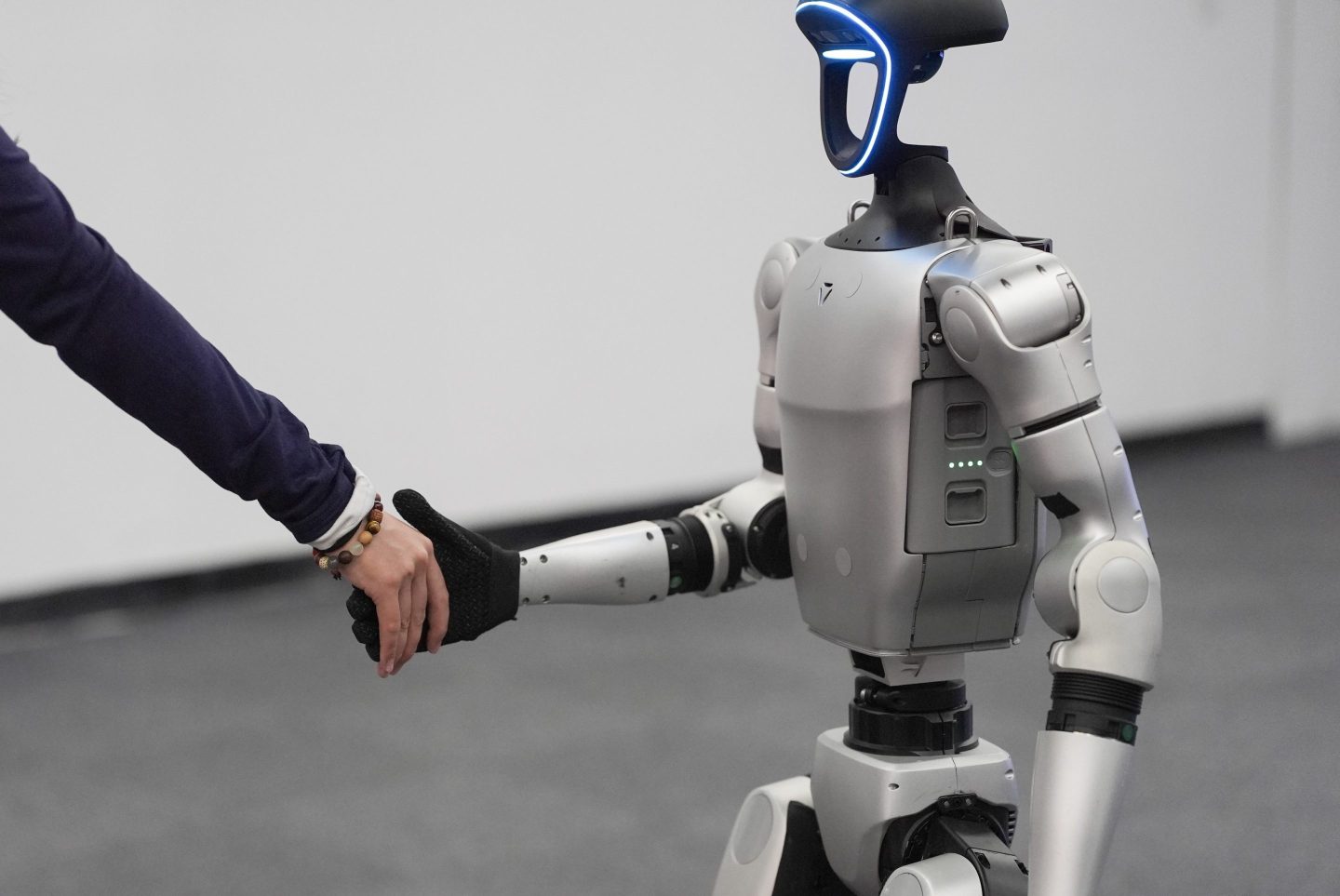
Beijing isn’t trying to out-compete U.S. innovation in AI infrastructure. Instead, it’s leveraging its manufacturing expertise and doubling down on physical AI, like robotics and AI-enabled EVs.
Beijing isn’t trying to out-compete U.S. innovation in AI infrastructure. Instead, it’s leveraging its manufacturing expertise and doubling down on physical AI, like robotics and AI-enabled EVs.Huang Zongzhi—Xinhua via Getty Images

Donald Trump’s “Liberation Day” tariffs are shocking global markets and rekindling fears of a prolonged trade war. The U.S. president may be reconsidering some of his most disruptive tariffs as he floats the possibility of a deal—but he also continues to threaten new measures on goods like semiconductors and pharmaceuticals as he tries to shake up the global trading system.

How will the tariffs affect China’s tech sector which—even just a month ago—was riding high on the success of DeepSeek’s AI model? 

China has been preparing since Trump first imposed tariffs back in 2018. Beijing has long anticipated a second round with the U.S. Faced with tighter restrictions on its access to advanced technology, China has methodically built out its technology supply chains. It’s not just constructing local chip plants: Beijing’s measures include bolstering renewable energy capacity, building out cloud computing capabilities through national projects like East Data West Compute, and investing in lidar technology and batteries.

Beijing isn’t trying to out-compete U.S. innovation in AI infrastructure. Instead, it’s leveraging its manufacturing expertise and doubling down on physical AI, like robotics and AI-enabled EVs.

China’s chip industry still lags the cutting-edge. But it’s far more self-sufficient today than it was five years ago, when the U.S. first started tightening the screws on chip exports. The country’s strength goes beyond hardware, as DeepSeek’s open-source AI models make affordable LLMs possible.

The U.S. will likely continue to constrain China’s tech sector, even if Trump pulls back on his tariffs threats. Measures like the chip export controls now enjoy bipartisan support in Washington.

AI companies like Alibaba, ByteDance and DeepSeek previously relied heavily on the contentious Nvidia H20 chip, until recently the most cutting-edge processor that could be legally sold in China, were vital to. A full ban will force China’s Big Tech companies to rethink their chip strategy—and maybe consider alternatives, like those made by Huawei.

Analysts suggest Huawei’s revenue will likely see a big jump in revenue as customers turn to its AI systems instead of Nvidia’s. One recent report from SemiAnalysis suggests Huawei’s latest product might even surpass Nvidia’s in some configurations.

Export controls, targeted tariffs and industrial policy may make sense for a U.S. worried about strategic competition and a need for more resilient supply chains. And that’s why China has done the same.

Supply chain moves

Since 2018, companies large and small have moved manufacturing and sourcing to countries like Vietnam, Bangladesh and Thailand. But companies can’t cut out China completely. As Apple CEO Tim Cook noted in 2015, it’s hard to match China’s combination of scale, labor skill, and infrastructure, at least in the short term. More than 80% of iPhones are still made in China.

Trump’s punitive tariffs don’t just raise costs for consumers. They’ll force U.S. Big Tech to rethink supply chain strategies that have taken decades to build. Unpredictability, not tariffs, is the real tax for global firms that rely on long-term planning and stable conditions. Each policy tweak, whether its tariffs, export bans, blacklists or exemptions, ripples through global markets.

For some Chinese firms, it’s translating into a cautious and risk-averse “wait-and-see” stance, pausing U.S. business and focusing on non-U.S. business for now. Chinese companies are already quietly hedging against trade disruption: building for the domestic market first, rethinking their expansion strategies, or rerouting development and sales to friendlier jurisdictions. 

Tariffs also affect China’s AI plans, albeit indirectly. China’s AI startups serve the broader tech sector; Executives rethinking AI plans will have a downstream effect on China’s AI startup ecosystem.

AI, cloud computing and semiconductors aren’t isolated sectors. They’re built on academic, commercial and governmental collaboration across borders. Technological progress still benefits from openness, whatever the value of strategic autonomy.

Making matters worse is a rising tide of anti-Chinese sentiment around the world. The conflation of ethnicity, nationality, and geopolitics has become much more common since the COVID pandemic. Rising fears about China erodes a sense of trust and safety and damages the social fabric that underpins global innovation. And it can be self-defeating, as shown by the steady return of Chinese academics, worried about prejudice, back to China.

What happens next?

The U.S. may hope that the right mix of tariffs, subsidies and export controls can preserve its tech leadership. But instead, the continued push to cut off China’s access to advanced technology is going to make it more self-sufficient out of necessity. The trade war, even if it leads to a deal, will push China to invest in its tech sector even more. The next time the U.S. tries something like the H20 chip ban, it may mean very little to the China AI ecosystem.

Competition can be healthy, but doesn’t need to mean collapse. The challenge for both the U.S. and China is to draw clear guardrails to support national security without shutting down collaboration entirely. Climate tech, healthcare, AI safety and open-source development could still present real possibilities for cooperative leadership.

The opinions expressed in Fortune.com commentary pieces are solely the views of their authors and do not necessarily reflect the opinions and beliefs of Fortune.

Join us at the Fortune Workplace Innovation Summit May 19–20, 2026, in Atlanta. The next era of workplace innovation is here—and the old playbook is being rewritten. At this exclusive, high-energy event, the world’s most innovative leaders will convene to explore how AI, humanity, and strategy converge to redefine, again, the future of work. Register now.
About the Author
By Grace Shao
See full bioRight Arrow Button Icon

Latest in Commentary

Finance
Lorem ipsum dolor sit amet, consectetur adipiscing elit, sed do eiusmod tempor incididunt ut labore et dolore magna aliqua. Ut enim ad minim veniam
By Fortune Editors
October 20, 2025
Finance
Lorem ipsum dolor sit amet, consectetur adipiscing elit, sed do eiusmod tempor incididunt ut labore et dolore magna aliqua. Ut enim ad minim veniam
By Fortune Editors
October 20, 2025
Finance
Lorem ipsum dolor sit amet, consectetur adipiscing elit, sed do eiusmod tempor incididunt ut labore et dolore magna aliqua. Ut enim ad minim veniam
By Fortune Editors
October 20, 2025
Finance
Lorem ipsum dolor sit amet, consectetur adipiscing elit, sed do eiusmod tempor incididunt ut labore et dolore magna aliqua. Ut enim ad minim veniam
By Fortune Editors
October 20, 2025
Finance
Lorem ipsum dolor sit amet, consectetur adipiscing elit, sed do eiusmod tempor incididunt ut labore et dolore magna aliqua. Ut enim ad minim veniam
By Fortune Editors
October 20, 2025
Finance
Lorem ipsum dolor sit amet, consectetur adipiscing elit, sed do eiusmod tempor incididunt ut labore et dolore magna aliqua. Ut enim ad minim veniam
By Fortune Editors
October 20, 2025

Most Popular

Finance
Lorem ipsum dolor sit amet, consectetur adipiscing elit, sed do eiusmod tempor incididunt ut labore et dolore magna aliqua. Ut enim ad minim veniam
By Fortune Editors
October 20, 2025
Finance
Lorem ipsum dolor sit amet, consectetur adipiscing elit, sed do eiusmod tempor incididunt ut labore et dolore magna aliqua. Ut enim ad minim veniam
By Fortune Editors
October 20, 2025
Finance
Lorem ipsum dolor sit amet, consectetur adipiscing elit, sed do eiusmod tempor incididunt ut labore et dolore magna aliqua. Ut enim ad minim veniam
By Fortune Editors
October 20, 2025
Finance
Lorem ipsum dolor sit amet, consectetur adipiscing elit, sed do eiusmod tempor incididunt ut labore et dolore magna aliqua. Ut enim ad minim veniam
By Fortune Editors
October 20, 2025
Finance
Lorem ipsum dolor sit amet, consectetur adipiscing elit, sed do eiusmod tempor incididunt ut labore et dolore magna aliqua. Ut enim ad minim veniam
By Fortune Editors
October 20, 2025
Finance
Lorem ipsum dolor sit amet, consectetur adipiscing elit, sed do eiusmod tempor incididunt ut labore et dolore magna aliqua. Ut enim ad minim veniam
By Fortune Editors
October 20, 2025
Fortune Secondary Logo
Rankings
  • 100 Best Companies
  • Fortune 500
  • Global 500
  • Fortune 500 Europe
  • Most Powerful Women
  • Future 50
  • World’s Most Admired Companies
  • See All Rankings
Sections
  • Finance
  • Fortune Crypto
  • Features
  • Leadership
  • Health
  • Commentary
  • Success
  • Retail
  • Mpw
  • Tech
  • Lifestyle
  • CEO Initiative
  • Asia
  • Politics
  • Conferences
  • Europe
  • Newsletters
  • Personal Finance
  • Environment
  • Magazine
  • Education
Customer Support
  • Frequently Asked Questions
  • Customer Service Portal
  • Privacy Policy
  • Terms Of Use
  • Single Issues For Purchase
  • International Print
Commercial Services
  • Advertising
  • Fortune Brand Studio
  • Fortune Analytics
  • Fortune Conferences
  • Business Development
About Us
  • About Us
  • Editorial Calendar
  • Press Center
  • Work At Fortune
  • Diversity And Inclusion
  • Terms And Conditions
  • Site Map
Fortune Secondary Logo
  • About Us
  • Editorial Calendar
  • Press Center
  • Work At Fortune
  • Diversity And Inclusion
  • Terms And Conditions
  • Site Map
  • Facebook icon
  • Twitter icon
  • LinkedIn icon
  • Instagram icon
  • Pinterest icon

Most Popular

placeholder alt text
Success
Japanese companies are paying older workers to sit by a window and do nothing—while Western CEOs demand super-AI productivity just to keep your job
By Orianna Rosa RoyleFebruary 27, 2026
1 day ago
placeholder alt text
Success
Walmart exec says U.S. workforces needs to take inspiration from China where ‘5 year-olds are learning DeepSeek’
By Preston ForeFebruary 27, 2026
1 day ago
placeholder alt text
Law
China's government intervenes to show Michigan scientists were carrying worms, not biological materials
By Ed White and The Associated PressFebruary 26, 2026
2 days ago
placeholder alt text
Personal Finance
Current price of gold as of February 27, 2026
By Danny BakstFebruary 27, 2026
1 day ago
placeholder alt text
Commentary
'The Pitt': a masterclass display of DEI in action 
By Robert RabenFebruary 26, 2026
2 days ago
placeholder alt text
Economy
Come 2030, the U.S. deficit will be worth 5.9% of GDP—more than spending on Social Security, and equal to major health programs
By Eleanor PringleFebruary 26, 2026
2 days ago

© 2026 Fortune Media IP Limited. All Rights Reserved. Use of this site constitutes acceptance of our Terms of Use and Privacy Policy | CA Notice at Collection and Privacy Notice | Do Not Sell/Share My Personal Information
FORTUNE is a trademark of Fortune Media IP Limited, registered in the U.S. and other countries. FORTUNE may receive compensation for some links to products and services on this website. Offers may be subject to change without notice.


Latest in Commentary

world's fair
CommentaryRobots
Something big is happening in AI, but panic is the wrong reaction
By Peter CappelliFebruary 28, 2026
7 hours ago
putin
CommentaryRussia
Exclusive analysis: we looked at the 400 western firms still in Russia. Their paltry size strips Putin’s bluff bare naked
By Jeffrey Sonnenfeld, Stephen Henriques, Jake Waldinger and Giuseppe ScottoFebruary 27, 2026
1 day ago
roth
CommentaryLeadership
The AI resource reallocation challenge: How can companies capture the value of time?
By Erik RothFebruary 27, 2026
1 day ago
will
CommentaryAdvertising
I’m one of America’s top pollsters and I’ve got a warning for the AI companies: customers aren’t sold on ads
By Will JohnsonFebruary 27, 2026
1 day ago
the pitt
CommentaryDEI
‘The Pitt’: a masterclass display of DEI in action 
By Robert RabenFebruary 26, 2026
2 days ago
david booth
CommentaryMarkets
3 lessons from investing’s ‘moneyball’ moment
By David BoothFebruary 25, 2026
3 days ago