The U.S. innovates, China iterates. That aphorism—or its less flattering version, “China imitates”—dominates many conversations about the relative strengths of the world’s largest and second-largest economies. The U.S., the narrative goes, sits on the technological frontier, creating groundbreaking products and services that chart the course of the world economy. China takes those ideas and builds on them, spitting out cheaper—and perhaps inferior—versions.
In AI, that cliché seemed for years to be based in fact, as Chinese companies struggled to keep up with free-spending, talent-rich U.S. tech giants. But this January, a Chinese startup undercut that narrative.
Hangzhou-based DeepSeek—not even a tech company, strictly speaking, but an offshoot of a hedge fund called High-Flyer—released R1, a “reasoning” large language model (LLM) that matched the performance of OpenAI’s o1, which had been released just a few months earlier. Not only had R1 seemingly come out of nowhere, it was both remarkably innovative and astoundingly cheap. The final “training run” for its predecessor, V3, had cost a mere $6 million, according to DeepSeek—“a joke of a budget,” in the words of former Tesla AI scientist Andrej Karpathy, compared with the tens or hundreds of millions spent on some of its U.S. rivals.
The impact of the news was enormous: As R1 rocketed to the top of most-popular download lists, Big Tech investors panicked, wiping out over $1 trillion in value from tech stocks like Nvidia and Microsoft. Leaders like OpenAI CEO Sam Altman agonized in public and mused about converting to open-source—as DeepSeek had done, making its model publicly available and modifiable, and therefore cheaper to use.
“A lot of us, including myself, got this wrong, in terms of China’s ability to develop these cutting-edge breakthroughs,” says Jeffrey Ding, assistant professor of political science at George Washington University and author of the ChinAI newsletter.
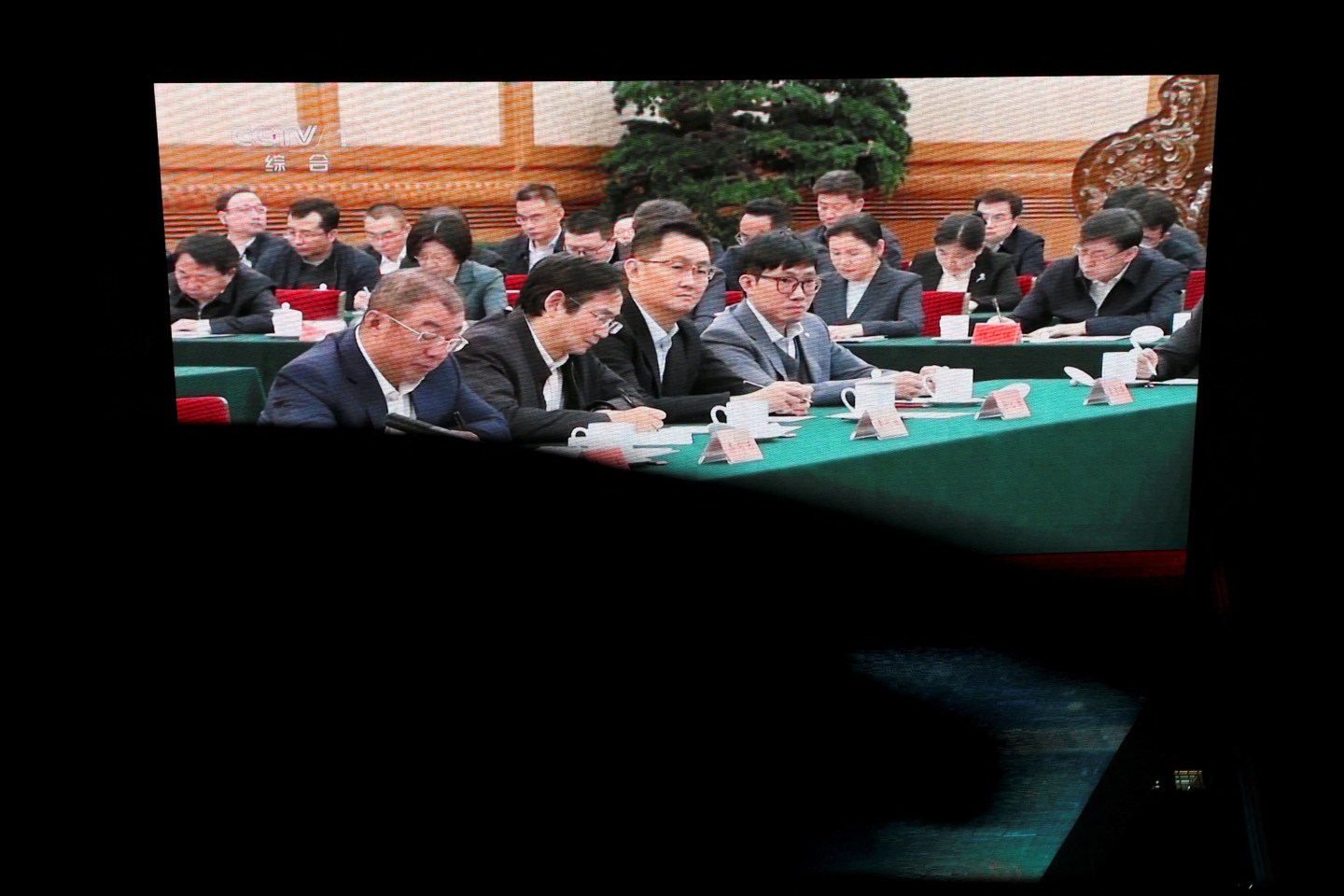
U.S. unease has been matched by Chinese glee. DeepSeek founder Liang Wenfeng got a coveted seat at a February meeting with Chinese President Xi Jinping and private-sector leaders—alongside luminaries like Alibaba founder Jack Ma and Huawei founder Ren Zhengfei. Major Chinese companies like EV maker BYD and home-appliance maker Midea are rushing to integrate DeepSeek’s model into their own products.
It’s been a jolt of optimism in a China where pessimism reigned. “DeepSeek could single handedly jump-start the economy in ways the government could never figure out how to do,” says Paul Triolo, technology policy lead at advisory firm DGA–Albright Stonebridge Group.
But DeepSeek is just one player in a vibrant Chinese AI sector to which many U.S. CEOs have been oblivious. Big Tech companies like Alibaba and ByteDance (the parent of TikTok) are releasing AI models that have beaten Western products on reasoning benchmarks. And a new wave of smaller “AI dragons” are putting China’s cheap and efficient AI to work in the real world, through mobile apps, AI agents, and robots.
Investors, meanwhile, have rushed back into Chinese tech stocks. The Hang Seng Tech Index, which tracks tech companies listed in Hong Kong, is up 35% year to date—led by stocks like Alibaba; Kuaishou, which created the text-to-video AI model Kling; and SMIC, China’s “national champion” chipmaker, which is helping Huawei make AI chips.
While investors were taken aback by DeepSeek’s arrival, few longterm observers of China’s economy were surprised. AI could become the latest of many industries in which being a “fast follower” helped the country achieve parity, or even dominance. Chinese solar panels and wind turbines are already powering the world’s transition to renewable energy. Chinese electric vehicles have helped make China the world’s largest car exporter—and even non-Chinese EVs are powered by Chinese batteries. And in areas like drones, robotics, and biotechnology, Chinese companies are global leaders.
Some Western CEOs are dismissive of these achievements, attributing them to government subsidies, IP theft, smuggling, and export control violations. But the factors that have enabled China to keep up in various technological races have proved to be both durable and powerful: a massive manufacturing base; an eagerness to imitate foreign competitors; a deep pool of talent; and a government that’s able to act as backer and cheerleader.
China’s innovators may be more focused on “tailor-made problem-solving” rather than the “breakthrough, systemwide thinking” found in the U.S., explains Keyu Jin, an economist and author of The New China Playbook. But that style of targeted, “good enough” innovation enables China to mass-produce technology that can be priced affordably even when, like DeepSeek, it approaches the cutting edge. And as Western business leaders worry about how they’ll foot the bill for AI advances, China could soon be selling what the rest of the world wants.
A quick rebound
As recently as two years ago, China appeared to be doomed to fall far behind in Al. In 2020, Beijing embarked on an extended campaign to curb China’s tech sector, which some political leaders viewed as both too powerful and too irresponsible. A once-steady flow of Chinese tech IPOs dried up as Beijing imposed stricter rules around data privacy.
OpenAI’s ChatGPT rollout in 2022 made the breadth of the AI gap clearer. Subsequently released Chinese-made LLMs generally performed worse than ChatGPT—even when operating in the Chinese language. Meanwhile, U.S. export controls stopped Chinese companies from acquiring Nvidia’s AI chips, which were key to training and running LLMs.
Ding points to the fall of 2024 as the time when the narrative shifted. “You started to see the gap closing,” he says, particularly in the open-source space, where “Chinese companies were starting to optimize for smaller-size models that could be trained more efficiently.”
China’s AI sector, meanwhile, had been hatching waves of new startups. First were the “little dragons,” machine learning and computer vision companies like SenseTime and Megvii that attracted global attention. When energy shifted to generative AI, attention moved to the “AI tigers”—Baichuan, Moonshot, MiniMax, and Zhipu. Now, they’ve been overshadowed by the newest set of “dragons”: six Hangzhou-based startups, including DeepSeek.
Hangzhou, the home of Alibaba, is the hotbed of China’s AI innovation. “It has the strength of being far away from Beijing to avoid all kinds of bureaucratic procedures; the benefit of being so close to Shanghai to access international capital and talent; and an extremely strong talent pool thanks to Alibaba, NetEase, and others,” explains Grace Shao, founder of Proem, an AI consultancy. Alibaba itself has been a booster of opensource creators: The top 10 LLMs ranked by performance on Hugging Face, an open-source AI community, are trained on Alibaba’s Tongyi Qianwen models.
Among the city’s buzzy new dragons are Unitree, whose dancing robots performed at this year’s televised Spring Festival Gala, watched by hundreds of millions of Chinese viewers; Game Science, the studio whose Black Myth: Wukong was one of 2024’s fastest-selling video games; and Manycore, a “spatial intelligence” firm that focuses on 3D rendering.
How has China’s AI sector managed to catch up so quickly? One reason is that China is, well, really big. Shao notes that DeepSeek’s user base took a major leap when Tencent, operator of the ubiquitous WeChat platform, offered DeepSeek’s LLM to its more than 1 billion users—and immediately made the startup one of the biggest names in China’s AI sector.
Government plays a key role in determining how to leverage that scale. Through policies, regulations, and subsidies, officials nationwide create a “state-coordinated” innovation system, and the private sector tends to rally around that system’s priorities. The government plays a “cheerleading” role, Triolo says: “When Liang Wenfeng meets with Premier Li Qiang and President Xi Jinping, that’s a signal.” Indeed, that high-level February meeting unleashed China’s DeepSeek hype: First, Chinese telecom companies embraced and promoted its LLMs, then tech and consumer companies followed suit, and then finally local officials.
Ironically, U.S. export controls on semiconductors may have accelerated China’s innovation. “Money has never been the problem for us; bans on shipments of advanced chips are the problem,” Liang told Chinese media last year. For years China’s chip industry had struggled to get off the ground, as manufacturers could buy better chips from overseas. But the U.S. trade restrictions “mobilized the entire nation to go after the cutting edge,” says Jin, the economist.
Huawei, the telecom giant, is now at the forefront of China’s advanced-chip supply chain. Its Ascend AI chips—while still not as powerful as Nvidia’s—are being used by startups like DeepSeek for “inference,” or the running of AI models in real-world situations once they’ve been trained.
The final element is talent: China’s universities are churning out passionate engineers whom AI startups can tap. While some DeepSeek engineers are Western-trained, Triolo notes that “Liang Wenfeng went out and recruited these top people—young people who didn’t have experience in the West, who weren’t trained at MIT and Stanford.” CEOs, he adds, are “blown away by the quality of people coming out of second-, third-, and fourth-tier universities in China. You can’t find those kinds of people, in those numbers, at U.S. universities.”
Some observers also see a sea change in attitudes among founders from China’s “’90s generation.” Older tech founders thought it was “okay to copy, but make it better,” Shao suggests. “Now [entrepreneurs] talk about open-source being a philosophical choice. China can innovate and not just copy.”
Hurdles to clear
As disruptive as DeepSeek’s success has been, it doesn’t necessarily presage that China will gain the dominance in AI that it currently holds in, say, solar panels or EVs.
Among other hurdles, Chinese tech startups lack the capitalization opportunities that can give their counterparts in the U.S. copious funding and a clear exit strategy. The tech crackdown of the early 2020s slowed China’s already sluggish venture capital space to an almost complete halt. There are few VC firms based in China itself, and foreign venture investors pulled back as geopolitical tensions rose with the U.S. (DeepSeek, notably, had no venture backing, instead relying on the deep pockets of its hedge fund parent company.)

Chinese stock exchanges have taken a dim view of unprofitable startups. For a while, China’s startups went to New York for their IPOs, but scrutiny from Washington and Beijing has choked off that flow. “The capital markets are just so underdeveloped, immature, and illiquid,” Triolo says. “It’s a big problem. It’s keeping people up late at night in Beijing.”
At March’s so-called Two Sessions political gathering, where Beijing unveiled its economic priorities for the year, Chinese leaders said they would start a “national venture capital guidance fund” that would mobilize 1 trillion Chinese yuan ($138 billion) toward “hard technology”—a tacit admission that the private sector would need a boost from the state.
But as DeepSeek’s accomplishments suggest, Chinese AI startups may not need enormous sums to become globally competitive. Chinese officials now support the relatively cheap open-source development of AI models as a way to encourage broader adoption of Chinese-made technology. And companies like Alibaba argue that open-source models will encourage more customers to use their ecosystems.
The AI models that emerge may not earn wide adoption in the U.S. under an increasingly protectionist Trump administration. But they could win customers in the rest of the world. DeepSeek’s focus on efficiency and openness may be a better fit than expensive, OpenAI style proprietary technology in emerging markets that are long on ingenuity but short on computing power and capital.
Chinese companies have already showed the massive inroads they can make in foreign markets with cheap-but-reliable solar panels, cheap EVs, and cheap phones. If the likes of DeepSeek and Alibaba can continue to lower the need for the costliest kinds of computing power, the so-called Global South could well pass up the best AI in the world for the best AI it can afford.
This article appears in the April/May 2025 issue of Fortune with the headline “China launches an AI comeback.”