On Jan. 23, a fierce—and rare—corporate takeover battle in South Korea will come to an end. Shareholders in Korea Zinc will vote on whether to elect a whole suite of new board directors proposed by the metal smelter’s largest shareholder and its private-equity partner.
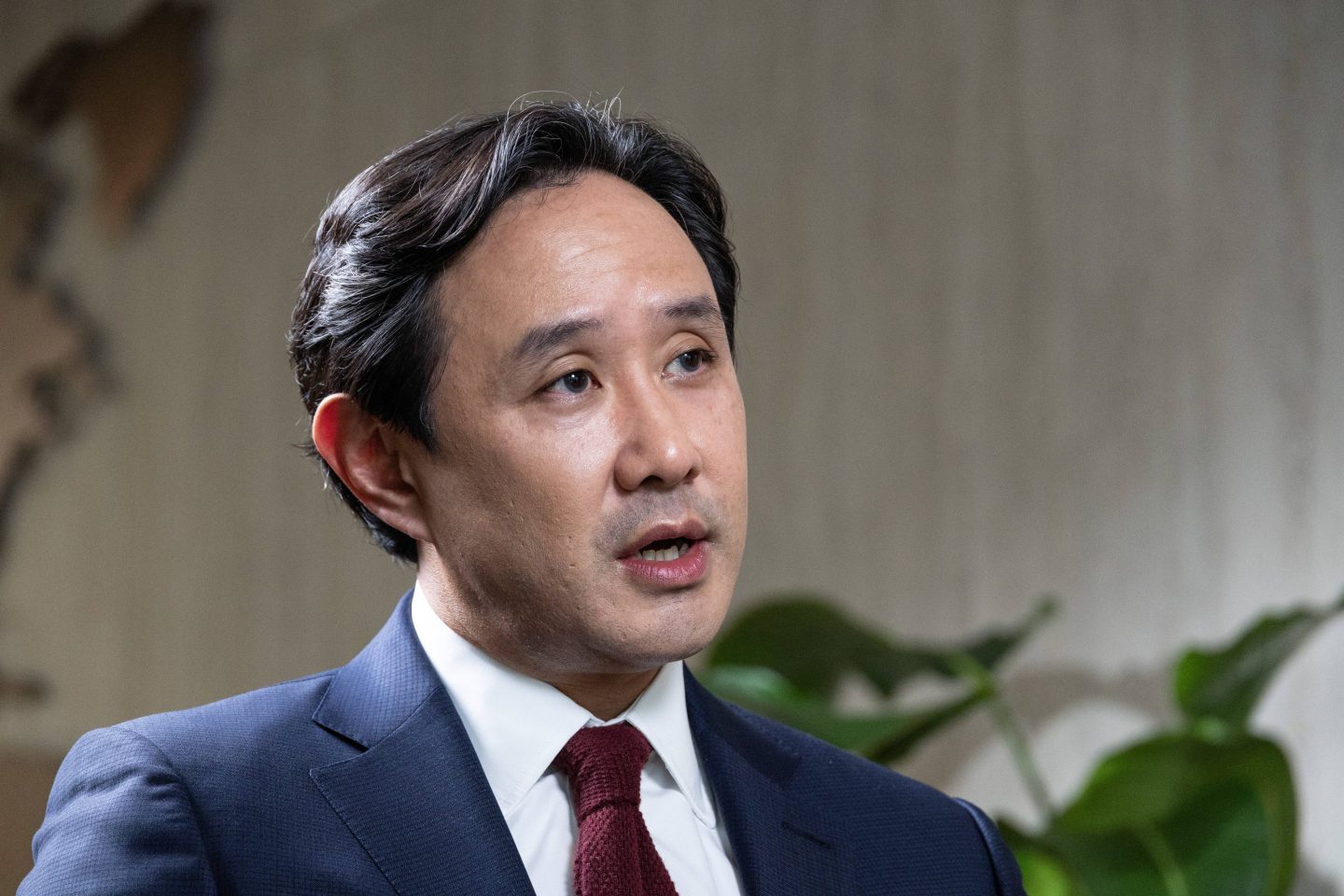
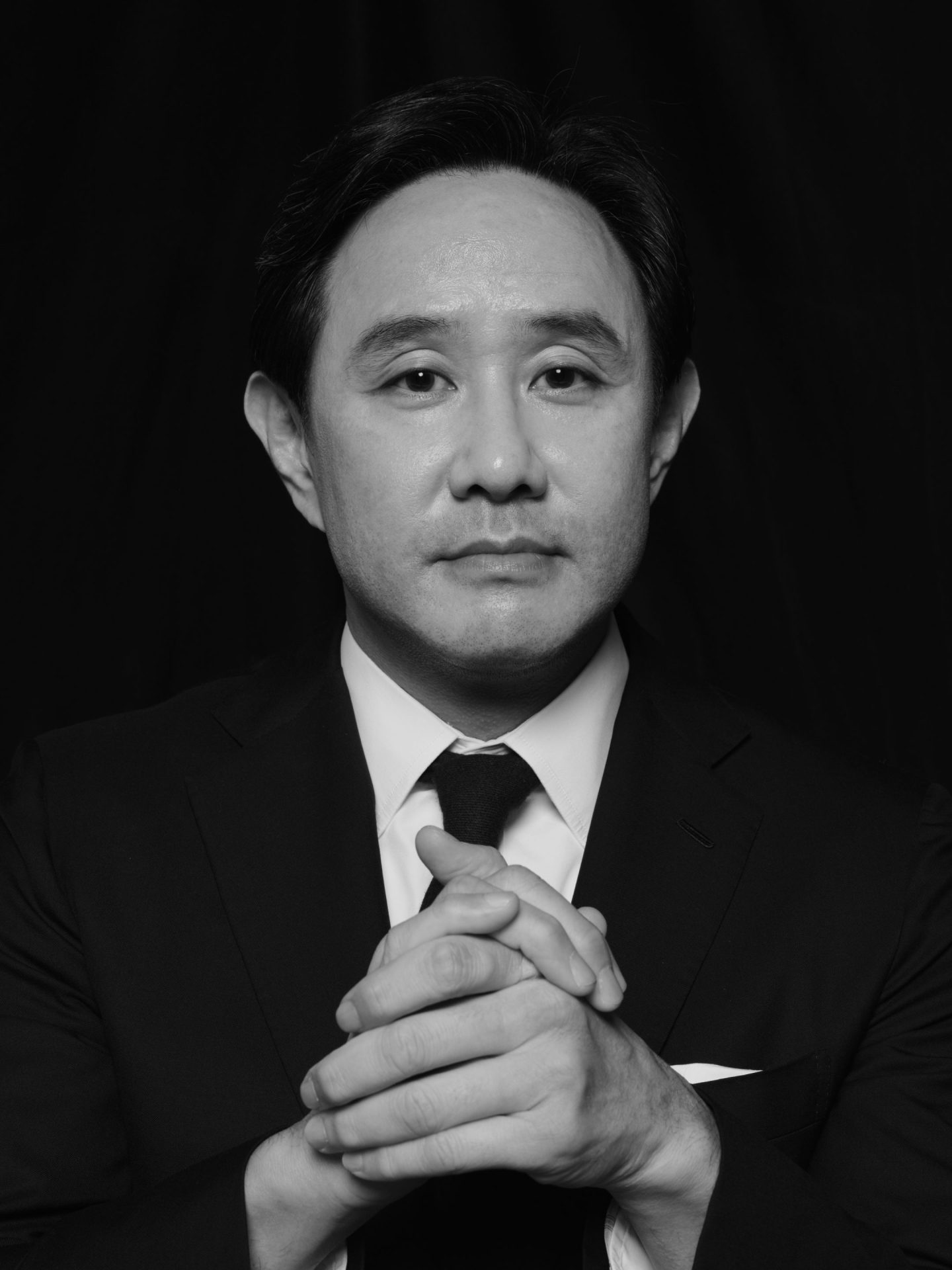
It’s been a long few months for the company’s chairman and CEO, Yun B. Choi, who’s led the company since 2022. “It’s definitely a taxing experience, and it’s a soul-searching experience,” Choi admits in an interview with Fortune.
Currently, a sizable part of the world’s metal production is either based in China or controlled by Chinese companies. And Beijing is increasingly leveraging that production power to exert pressure on other countries, such as by limiting the export of critical chipmaking materials like gallium and germanium to the U.S. That opens up an opportunity for a metal smelter that sits outside of China.
“Our technology is going to be Chinese-free, our supply chain will be Chinese-free,” Choi says, talking about the company’s plans to expand into nickel, used in EV batteries.
He just needs to make it through this week first.
What is Korea Zinc?
Korea Zinc, just over a half-century old, is the world’s largest smelter of zinc, a key metal used in products like stainless steel and batteries. The company’s refinery in Ulsan, in South Korea’s southeast, produces about 650,000 tons of zinc a year; it also produces 450,000 tons of lead, as well as dozens of other metals and minerals.
The company also owns Sun Metals, a zinc refinery, and Ark Energy, a renewable-energy company, both based in Australia.
Yun B. Choi, grandson of company cofounder Choi Ki-ho, took over as chairman and CEO in 2022. Choi, 49, has tried to focus Korea Zinc on a three-prong strategy he calls “Troika Drive.” Two prongs focus on renewable energy and EVs, while the final prong is about sustainability or, as Choi describes it, taking greater advantage of minerals and metals that might normally be ignored during the smelting process.
Nominations are now open:
Fortune is now accepting nominations for the 2025 Southeast Asia 500—the definitive ranking of the region’s largest companies. Start your nomination here.
Choi suggests he had to expand the business due to the difficulties of operating in the company’s home base. “Korea is not the most hospitable place for non-ferrous refining facilities,” he says. The high cost of land means that, unlike smelters in more spacious environments, Korea Zinc doesn’t have a lot of room to store its residue. That’s pushed the company to figure out what to do with impurities that, normally, would just be thrown away.
That might open up some interesting new avenues for Korea Zinc. Last week, the company announced it was courting U.S. buyers for antimony, a metal used in chipmaking. China, the source of around half the world’s antimony, recently barred exports of the metal to the U.S. in retaliation for the Biden administration’s export controls on China’s tech sector.
Choi told Fortune that antimony was not initially on the company’s radar. “Antimony was never one of the five most important things we care about in any given year,” he says. But geopolitics has changed the equation. “We are the only producers of antimony in a U.S.-friendly jurisdiction,” he continues.
More broadly, Choi thinks Korea Zinc is well-placed to tap into growing concerns about supply-chain diversification and an overreliance on China. That means expanding its production of metals like nickel and copper, currently not major parts of the company’s output.
“The reason China dominates the entire nickel supply chain is not because it mines a lot of nickel. The lynchpin is their ability to process it,” Choi says. He points to the growth of Indonesia’s nickel industry; the Southeast Asian country now produces about 60% of the world’s nickel, up from less than 5% about eight years ago. “That huge increase is probably all Chinese driven,” Choi says, referring to huge Chinese investments in Indonesia-based nickel refineries.
In 2023, Korea Zinc signed a deal with Trafigura, the global commodity trader, to build a new nickel refinery in Ulsan, with planned production of up to 40,000 tonnes per year. Choi, in his interview with Fortune, claims the new refinery will be “the biggest nickel refinery in the non-Chinese world.”
“We have a very good shot at being a very good, very competitive, and very unique nickel producer in the world,” he hopes.
Korea Zinc generated 8.6 trillion Korean won ($5.6 billion) in revenue in the first three quarters of 2024. The company has warned of a “very bad” 2025, citing increased competition from Chinese smelters and higher electricity costs.
A pressure-cooker takeover battle
But Choi has a more pressing problem. Both he and Korea Zinc have been locked in a takeover battle with Young Poong, a fellow metal smelter and one of Korea Zinc’s top shareholders, and MBK Partners, a private-equity firm. It’s a rare instance of private equity shaking up the world of corporate Korea, where massive conglomerates, known as chaebols, control large and diversified parts of the economy.
The fight has been particularly nasty, with both sides trading harsh accusations against the other.
Young Poong and MBK point to governance issues, a board that relies heavily on insiders, and delays in implementing Choi’s business strategy as reasons for their takeover bid.
“The key problem is that the board of directors is unable to check or stop Chairman Choi’s tyranny,” a spokesperson for MBK Partners told Fortune in an email. “MBK Partners and Young Poong Group…are demanding that Korea Zinc’s board of directors be reorganized and that CEO Choi take responsibility for his mistakes and step down from his CEO position.”
For its part, Korea Zinc argues Young Poong hopes to siphon off cash from the company, and that MBK has little experience running a smelter. The company’s defense had the support of Bain Capital, and has even had help from U.S. Representative Eric Swalwell (D-Calif.), who sent a letter to the U.S. State Department warning of MBK’s ties to China. (When asked about Swalwell’s letter, an MBK spokesperson called the allegation “slander,” and claimed that Chinese entities made up less than 5% of its investors)
The battle will come to a close on Jan. 23 where Young Poong and MBK will ask shareholders to vote in 14 new directors, outnumbering Choi and his fellow board members. Shareholders will also vote on governance changes proposed by Korea Zinc’s current board.
“The shareholders need to ask: Who is a better fit to run this company? The current management, or the consortium of Young Poong and MBK?” Choi says. “I still have not heard any viable business plan that explains why they think they can do a better job at running this extremely complicated business.”
Still, Choi and Korea Zinc have stumbled in their efforts to defend themselves. In early October, Korea Zinc launched a $1.5 billion share buyback, in the hope of denying shares that could be snapped up by the Young Poong-MBK alliance. Then, two days after confirming the results of the buyback in late October, the company announced that it would issue $1.8 billion of new shares.
Choi hastily scrapped the sale, and later admitted it was a “tactical error” in an interview with Bloomberg. He also agreed to step down as board chair and appoint an independent director in his place, though he will remain as CEO.
In early January, Korea’s market watchdog referred the matter to prosecutors, the Korea Economic Daily reported.
Still, Choi notes the pressure cooker atmosphere fostered by the takeover bid had “a few benefits.”
“One byproduct of the past 100 days has been that we were able to ask some really hard questions to ourselves, and maybe make some changes that are better for the governance of our company,” he says. For example, he’s proposed a cumulative voting scheme that allows shareholders to allocate their votes to a single candidate.
Choi’s suggestions haven’t mollified Young Poong and MBK Partners. The two cite analysis from proxy advisory firm Institutional Shareholder Services that suggests, in Korea Zinc’s case, cumulative voting may “dilute the impact of the changes” sought by the consortium.
Battle lines continue to be drawn in the battle’s final days. On Friday, Korea’s National Pension Service, a major shareholder in Korea Zinc, announced it will vote to support the current board’s measures. Other shareholders, like CalPERS and Norway’s sovereign wealth fund, have come out against Korea Zinc’s proposed changes, according to local media.
Another crisis in the background
Korea Zinc’s takeover battle is currently being overshadowed by a much larger political crisis.
In early December, President Yoon Suk Yeol declared martial law, then quickly abandoned it hours later. The legislature, controlled by Yoon’s opposition, impeached the president, then impeached the acting president, Han Duck-soo. On Jan. 15, South Korean police were finally able to arrest Yoon after a weeks-long standoff.
South Korean economic officials are closely watching if the coup will have a broader economic impact. In early January, economists projected Korea’s economy will grow by just 1.8% in 2025, down from an earlier projection of 2.2%.
“The events of the past month or so certainly are very chaotic,” Choi says, “and it certainly produces a lot of uncertainty, not only in the market, but in our everyday lives.” But he’s optimistic that Korea—a “very mature democratic society” with an “established business community”—will figure it out.
“We will keep making zinc,” Choi says. “I’m sure other members of the business community will do the same.”
Clarification, Jan. 20, 2025: This article clarifies the timeline around Korea Zinc’s share buyback and proposed share sale in October 2024.
The interview was conducted in collaboration with Fortune Korea.