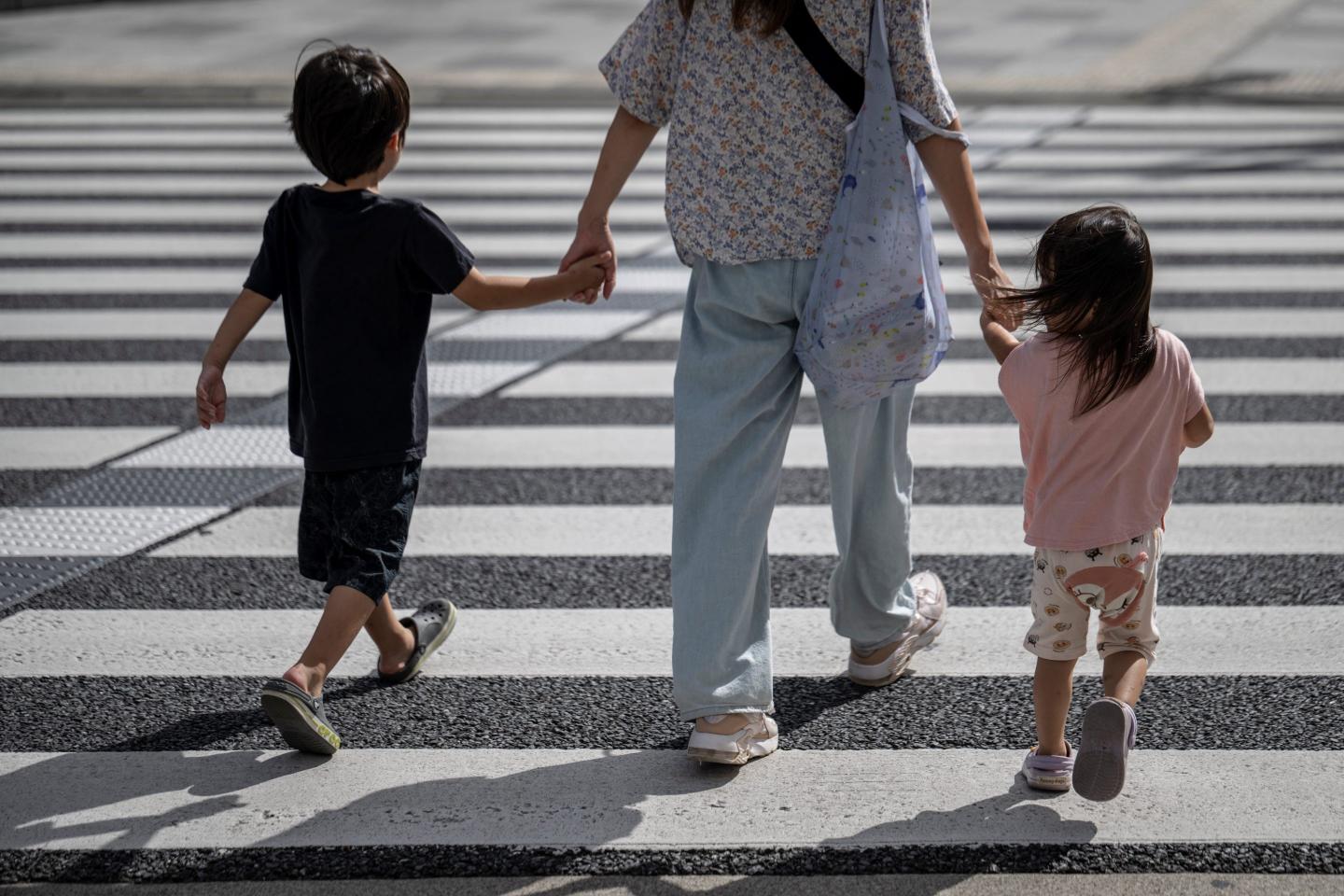
Japan is dealing with a demographic crisis. The country’s total fertility rate (TFR), which measures the average number of children a woman will have during her life, dropped to 1.2 last year, a new low. It’s even worse for Tokyo, the nation’s capital, where the TFR dropped below one for the first time ever in 2023.
Now, the city of Tokyo is dangling another incentive for prospective parents to consider: free day care.
Earlier this week, Tokyo Gov. Yuriko Koike announced that the city plans to make day care free for all preschool children starting from September, expanding a policy that only offered the benefit to second-born children and beyond.
“Japan is facing the crisis of a declining number of children, which isn’t going away,” Koike said as she announced the plan. “There is no time to spare.”
According to Japanese media, Tokyo’s policy is the first of its kind to be offered at the prefecture level. Koike had promised to expand the free day care policy ahead of last July’s gubernatorial election. (Koike has served as the city’s governor since 2016, winning three elections.)
It’s the second family-friendly policy to come from Tokyo in as many weeks. Last week, the Tokyo Metropolitan Government said it will allow employees to work just four days a week, starting next April. It’s also introducing a “childcare parental leave” policy that will allow some employees to work two fewer hours a day.
Nominations are now open:
Fortune is now accepting nominations for the 2025 Southeast Asia 500—the definitive ranking of the region’s largest companies. Start your nomination here.
At the time, Koike said the policy changes will help parents be more able to balance childcare and work.
At the national level, Japan’s government has already passed several pronatalist policies, including lump sum monetary payments for newborns and monthly stipends for families with children up to the age of two.
Yet such incentives, as of now, have failed to move the needle in the right direction, as Japan’s fertility rates continue their decline.
It’s not just Japan
Several other East Asian economies are trying to reverse declining birth rates.
South Korea, Singapore, and Hong Kong also offer “baby bonuses,” or cash incentives to new parents. But experts have suggested that “throwing a bit of money” at the problem is not going to fix Asia’s demographic crisis, and that low birth rates instead reflect broader institutional and structural problems.
East Asian societies have some of the world’s lowest birth rates. Without immigration to fill the shortfall, falling birth rates will lead to a smaller workforce. That, in turn, means less economic activity, a drop in government revenue, and finally fewer resources to provide the social safety net to care for a growing elderly population.
Companies are already starting to adapt their strategies in preparation for a potentially shrinking population. Jay Lim, founder of South Korean startup Gopizza, told Fortune earlier this year that his decision to head overseas was motivated by Korea’s low birth rate.
Seon Hee Kim, CEO of Korea-based Maeil Dairies, said in July that she was pivoting the dairy company to focus more on older women instead of children.
Atsushi Katsuki, CEO of Japanese brewer Asahi, credits Japan’s declining population with his push to expand the company to new markets like Europe. Asahi bought the Italian beer brand Peroni in 2016.
Countries outside Asia are also struggling with low birth rates. Nordic countries, which have long offered generous pro-child policies, reported a drop in fertility rates after the COVID pandemic. That has unnerved some experts, who worry that a decline in birth rates may have more to do with modern lifestyles than concerns about affordability.