• Home
  • Latest
  • Fortune 500
  • Finance
  • Tech
  • Leadership
  • Lifestyle
  • Rankings
  • Multimedia

Trendingnow

1

The heiress of $10 billion Perdue Farms and the $12 billion Sheraton Hotels empire wore hand-me-downs, still rides the subway, and flies economy

2

31-year-old millionaire has zero sympathy for unemployed Gen Z's ‘excuses’—he says 'it is scarily easy' to build a business and get rich right now

3

Iran's president admits 'we have many problems' and missiles 'are of no use' as the U.S. chokes its economy while weakening Tehran's grip on Hormuz

1

The heiress of $10 billion Perdue Farms and the $12 billion Sheraton Hotels empire wore hand-me-downs, still rides the subway, and flies economy

2

31-year-old millionaire has zero sympathy for unemployed Gen Z's ‘excuses’—he says 'it is scarily easy' to build a business and get rich right now

3

Iran's president admits 'we have many problems' and missiles 'are of no use' as the U.S. chokes its economy while weakening Tehran's grip on Hormuz
TechBrainstorm AI
Asia

It’s too soon to tell whether AI is making us more productive: ‘People are underestimating the long-term impact of AI at scale’

By
Lionel Lim
Lionel Lim
Asia Reporter
Down Arrow Button Icon
By
Lionel Lim
Lionel Lim
Asia Reporter
Down Arrow Button Icon
August 8, 2024, 4:15 AM ET
Updated August 9, 2024, 1:49 AM ET
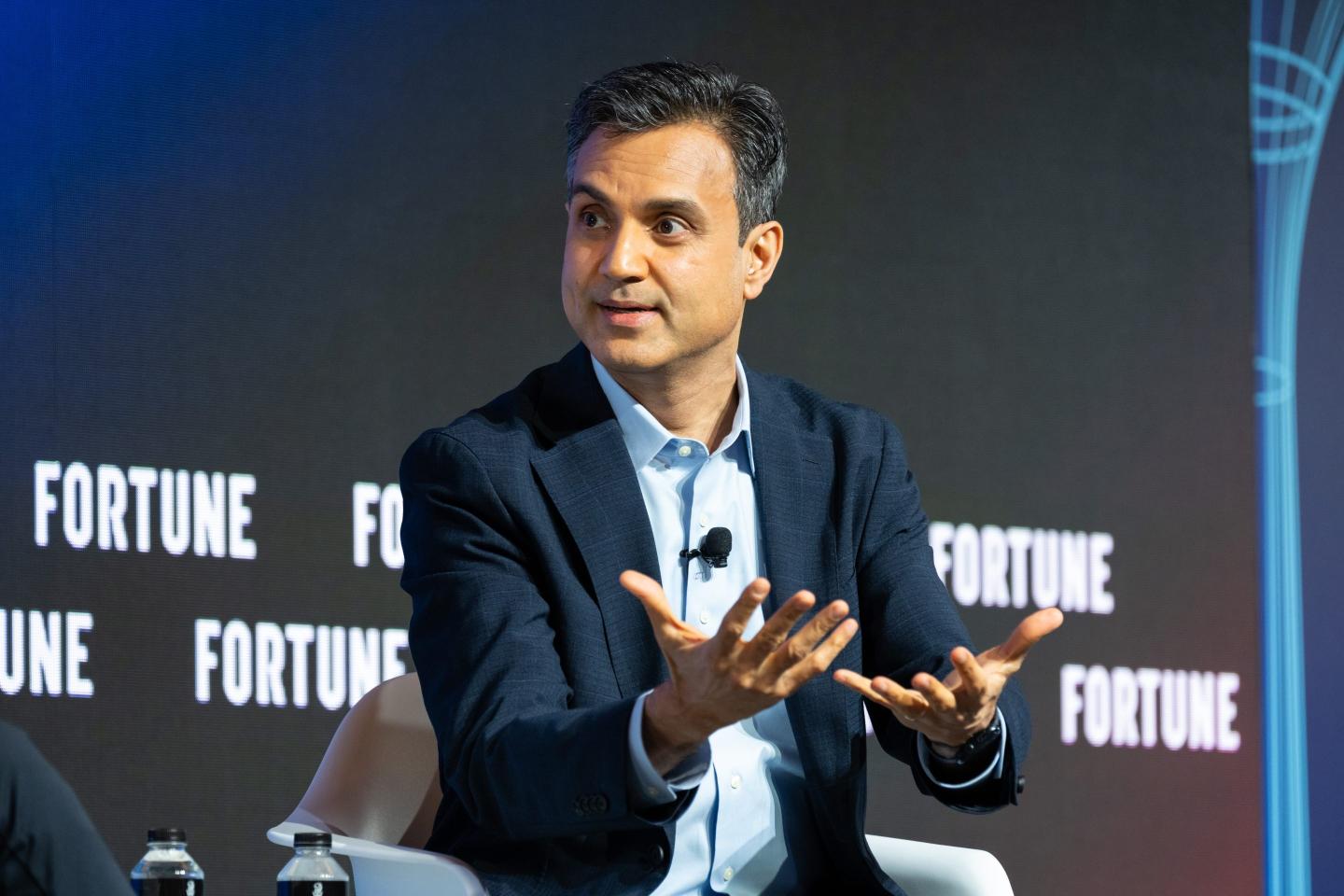
Anant Maheshwari, president and CEO for global high-growth regions at Honeywell, speaking at Brainstorm AI Singapore on July 31, 2024.
Anant Maheshwari, president and CEO for global high-growth regions at Honeywell, speaking at Brainstorm AI Singapore on July 31, 2024.Graham Uden for Fortune
Add Fortune on Google for similar content.

Is AI more like electricity, or the PC? To optimists, AI could unleash a wave of productivity gains, much like mass electrification did in the late 19th and early 20th centuries. Last year, Goldman Sachs researchers predicted that AI could add as much as 7% to the world economy by 2033.

Recommended Video

Yet not everyone buys into the hype: MIT economist Daron Acemoglu, in an April research paper, argued that AI’s boost to the GDP will be much more modest, at just 1.1% over the next decade. Previous technological advancements, like the PC or the internet, had more limited productivity gains compared with previous “industrial revolutions.”

But speakers at Fortune Brainstorm AI Singapore last week tried to reassure attendees that AI really could lead to productivity improvements—at least, after a while. 

“People are underestimating the long-term impact of AI at scale, and overestimating the short term,” said Panos Madamopoulos-Moraris, founding managing director of industry programs and partnerships at Stanford University’s Human-Centered AI Institute. 

Companies could end up having an unrealistic expectation of when they might see a return on their AI investment, he warned. Large corporations will take time to get their AI operations fully online, he said.

Anant Maheshwari, president and CEO for global high-growth regions at Honeywell, suggested that aviation could be an industry revolutionized by AI.

He admitted that most people would be uncomfortable taking a fully autonomous plane for a long-haul flight. But AI could augment the capabilities of human pilots, allowing airlines to fly planes with fewer people—and thus allow more flights overall.

“Today, it’s regulation two pilots in the aircraft to fly you. Will it get down to zero? Maybe not. But can it get down to one with the power of AI and therefore have a lot more aviation going? That’s possible,” Maheshwari said.

Inversely, Maheshwari suggested that AI could also help with the opposite problem: countries dealing with a labor surplus, rather than a shortage. Developing countries “need to train up a lot of people for these new industries,” he said. “That’s again where you need AI to help that labor come up the learning curve very quickly.”

Some commentators worry that AI could drive mass unemployment, as white-collar workers are automated out of a job. Last year, Goldman Sachs warned that AI could put 300 million full-time jobs at risk.

And companies are already using AI as a reason to lay off workers. In January, United Parcel Service cut 12,000 managers, potentially the largest layoff in the company’s history. At the time, CEO Carol Tomé said the cuts were possible thanks in part to AI, citing an example where salespeople no longer needed to consult pricing experts to create proposals.

Yet Stanford’s Madamopoulos-Moraris wasn’t too worried about AI entirely replacing humans. He cited the concept of complementarity, saying that humans are better than AI in tasks that require emotional intelligence, creative problem-solving, and contextual understanding. 

And he noted that, for many industries, the problem is having too few workers to do the job, not having a lot of inefficient human workers. 

“There was a lot of talk in the health care community about radiologists and how radiologists are going to be replaced. Well, guess what? The U.S. doesn’t have enough. There are two times the number of postings to people who are actually available to work as radiologists,” Madamopoulos-Moraris said. 

Correction, August 9, 2024: An earlier version of this article misspelled the surname of Panos Madamopoulos-Moraris.

About the Author
By Lionel LimAsia Reporter
LinkedIn icon

Lionel Lim is a Singapore-based reporter covering the Asia-Pacific region.

See full bioRight Arrow Button Icon
Add Fortune on Google for similar content.

Latest in Tech


Most Popular

Fortune Secondary Logo
Rankings
  • 100 Best Companies
  • Fortune 500
  • Global 500
  • Fortune 500 Europe
  • Most Powerful Women
  • World's Most Admired Companies
  • See All Rankings
  • Lists Calendar
Sections
  • Finance
  • Fortune Crypto
  • Features
  • Leadership
  • Health
  • Commentary
  • Success
  • Retail
  • Mpw
  • Tech
  • Lifestyle
  • CEO Initiative
  • Asia
  • Politics
  • Conferences
  • Europe
  • Newsletters
  • Personal Finance
  • Environment
  • Magazine
  • Education
Customer Support
  • Frequently Asked Questions
  • Customer Service Portal
  • Privacy Policy
  • Terms Of Use
  • Single Issues For Purchase
  • International Print
Commercial Services
  • Advertising
  • Fortune Brand Studio
  • Fortune Analytics
  • Fortune Conferences
  • Business Development
  • Group Subscriptions
About Us
  • About Us
  • Press Center
  • Work At Fortune
  • Terms And Conditions
  • Site Map
  • About Us
  • Press Center
  • Work At Fortune
  • Terms And Conditions
  • Site Map
  • Facebook icon
  • Twitter icon
  • LinkedIn icon
  • Instagram icon
  • TikTok icon
  • YouTube icon

    Latest in Tech


    Most Popular

    © 2026 Fortune Media IP Limited. All Rights Reserved. Use of this site constitutes acceptance of our Terms of Use and Privacy Policy | CA Notice at Collection and Privacy Notice | Do Not Sell/Share My Personal Information
    FORTUNE is a trademark of Fortune Media IP Limited, registered in the U.S. and other countries. FORTUNE may receive compensation for some links to products and services on this website. Offers may be subject to change without notice.