• Home
  • Latest
  • Fortune 500
  • Finance
  • Tech
  • Leadership
  • Lifestyle
  • Rankings
  • Multimedia
LeadershipMars Inc
Asia

Mars wants to sell more chocolate in Southeast Asia—and that means dealing with extreme heat and consumers who ‘want content every minute’

By
Lionel Lim
Lionel Lim
Asia Reporter
Down Arrow Button Icon
By
Lionel Lim
Lionel Lim
Asia Reporter
Down Arrow Button Icon
July 18, 2024, 5:00 PM ET
Mars Wrigley's Regional General Manager for Asia, Kalpesh Parmar thinks there's room for growth in Southeast Asia because chocolate consumption is still low.
Mars Wrigley's Regional General Manager for Asia, Kalpesh Parmar thinks there's room for growth in Southeast Asia because chocolate consumption is still low.Courtesy of Mars Wrigley Asia

Southeast Asia is hot—even barring its record-breaking extreme heatwaves this year.

Recommended Video

Average temperatures in cities like Manila and Bangkok routinely break 100 degrees Fahrenheit and over 75% humidity in the middle of summer. 

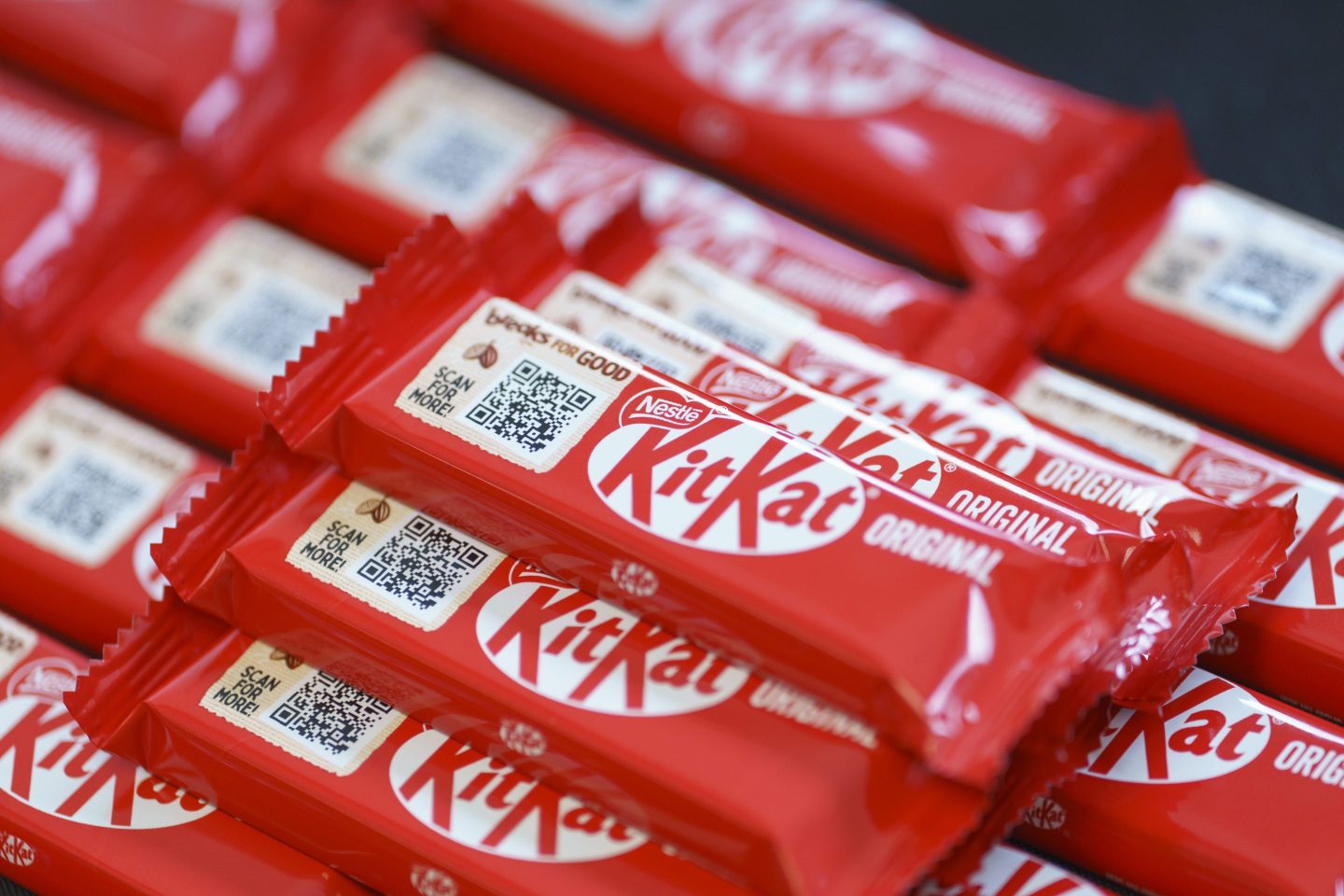
So what do you do when your key product is something that melts? It’s a problem Mars Wrigley, the producer of snacks like Mars and Snickers chocolate bars, has to deal with.  

Mars needs to make sure “the experience of Snickers is the same, even if you’re in a Tesco [a U.K. supermarket chain], or a mom-and-pop store in Vietnam,” says Kalpesh Parmar, the general manager for Mars Wrigley Asia. He says the company is working with retailers, providing chillers to keep chocolates fresh. And there’s technological solutions too, with Mars working towards developing heat-resistant chocolate. (Mars patented a process that replaces cocoa butter, which normally has a melting point of 37 degrees Celsius, with a sugar replacer with a higher melting point)

The treats and snacks category in Asia (excluding China, Japan, and India) is worth about $32 billion and continues to grow, Parmar estimates. The region is key to Mars’s goal of doubling the annual revenue of its snacking division to $36 billion in the next decade. 

Mars is targeting the Philippines, Vietnam and Indonesia as growth markets. Future Market Insights, a market research firm, predicts Indonesia’s chocolate confectionery market will have a compound annual growth rate of 7.2% through 2034, thanks to continued urbanization and exposure to Western lifestyles. 

Mars needs to be fast to win over consumers. Shoppers in countries like Indonesia, the Philippines and Vietnam “want content every minute, every hour,” on live-shopping and e-commerce platforms, Parmar says—and they don’t care if the content is well-produced.

Yet Mars isn’t ignoring more traditional retail channels. Consumers are also shopping more at small businesses, which tend to be closer to residential areas than larger supermarkets. 

That was a surprise to Mars, which expected that stalls would slowly disappear. Instead, mom-and-pop stores carved a niche for themselves by partnering with e-commerce companies, offering fulfilment services and working with food delivery startups like Grab and Foodpanda. 

There’s a lot of opportunity for growth. Chocolate consumption in Southeast Asia is still relatively low, with many consumers seeing them as an infrequent treat. Parmar thinks the way to get the region to eat more chocolate is to sell them smaller portions—or as he terms them, “smaller packs of happiness.”


Join us at the Fortune Workplace Innovation Summit May 19–20, 2026, in Atlanta. The next era of workplace innovation is here—and the old playbook is being rewritten. At this exclusive, high-energy event, the world’s most innovative leaders will convene to explore how AI, humanity, and strategy converge to redefine, again, the future of work. Register now.
About the Author
By Lionel LimAsia Reporter
LinkedIn icon

Lionel Lim is a Singapore-based reporter covering the Asia-Pacific region.

See full bioRight Arrow Button Icon

Latest in Leadership

Nicholas Thompson
C-SuiteBook Excerpt
I took over one of the most prestigious media firms while training for an ultramarathon. Here’s what I learned becoming CEO of The Atlantic
By Nicholas ThompsonDecember 13, 2025
9 hours ago
Lauren Antonoff
SuccessCareers
Once a college dropout, this CEO went back to school at 52—but she still says the Gen Zers who will succeed are those who ‘forge their own path’
By Preston ForeDecember 13, 2025
10 hours ago
Asiathe future of work
The CEO of one of Asia’s largest co-working space providers says his business has more in common with hotels
By Angelica AngDecember 12, 2025
18 hours ago
Donald Trump
HealthHealth Insurance
‘Tragedy in the making’: Top healthcare exec on why insurance will spike to subsidize a tax cut to millionaires and billionaires
By Nick LichtenbergDecember 12, 2025
1 day ago
three men in suits, one gesturing
AIBrainstorm AI
The fastest athletes in the world can botch a baton pass if trust isn’t there—and the same is true of AI, Blackbaud exec says
By Amanda GerutDecember 12, 2025
1 day ago
Brainstorm AI panel
AIBrainstorm AI
Creative workers won’t be replaced by AI—but their roles will change to become ‘directors’ managing AI agents, executives say
By Beatrice NolanDecember 12, 2025
1 day ago

Most Popular

placeholder alt text
Economy
Tariffs are taxes and they were used to finance the federal government until the 1913 income tax. A top economist breaks it down
By Kent JonesDecember 12, 2025
1 day ago
placeholder alt text
Success
Apple cofounder Ronald Wayne sold his 10% stake for $800 in 1976—today it’d be worth up to $400 billion
By Preston ForeDecember 12, 2025
1 day ago
placeholder alt text
Success
40% of Stanford undergrads receive disability accommodations—but it’s become a college-wide phenomenon as Gen Z try to succeed in the current climate
By Preston ForeDecember 12, 2025
1 day ago
placeholder alt text
Economy
The Fed just ‘Trump-proofed’ itself with a unanimous move to preempt a potential leadership shake-up
By Jason MaDecember 12, 2025
23 hours ago
placeholder alt text
Economy
For the first time since Trump’s tariff rollout, import tax revenue has fallen, threatening his lofty plans to slash the $38 trillion national debt
By Sasha RogelbergDecember 12, 2025
1 day ago
placeholder alt text
Success
Apple CEO Tim Cook out-earns the average American’s salary in just 7 hours—to put that into context, he could buy a new $439,000 home in just 2 days
By Emma BurleighDecember 12, 2025
1 day ago
Rankings
  • 100 Best Companies
  • Fortune 500
  • Global 500
  • Fortune 500 Europe
  • Most Powerful Women
  • Future 50
  • World’s Most Admired Companies
  • See All Rankings
Sections
  • Finance
  • Leadership
  • Success
  • Tech
  • Asia
  • Europe
  • Environment
  • Fortune Crypto
  • Health
  • Retail
  • Lifestyle
  • Politics
  • Newsletters
  • Magazine
  • Features
  • Commentary
  • Mpw
  • CEO Initiative
  • Conferences
  • Personal Finance
  • Education
Customer Support
  • Frequently Asked Questions
  • Customer Service Portal
  • Privacy Policy
  • Terms Of Use
  • Single Issues For Purchase
  • International Print
Commercial Services
  • Advertising
  • Fortune Brand Studio
  • Fortune Analytics
  • Fortune Conferences
  • Business Development
About Us
  • About Us
  • Editorial Calendar
  • Press Center
  • Work At Fortune
  • Diversity And Inclusion
  • Terms And Conditions
  • Site Map

© 2025 Fortune Media IP Limited. All Rights Reserved. Use of this site constitutes acceptance of our Terms of Use and Privacy Policy | CA Notice at Collection and Privacy Notice | Do Not Sell/Share My Personal Information
FORTUNE is a trademark of Fortune Media IP Limited, registered in the U.S. and other countries. FORTUNE may receive compensation for some links to products and services on this website. Offers may be subject to change without notice.