As a substitute teacher in her mid-20s, Lindsey Puls was delighted to discover the fashion world of Shein more than 10 years ago, lured in by its super-low prices — with tops selling for a few dollars, dresses under $10, and free shipping on orders over $29.
Puls, who has a blog called “Have Clothes, Will Travel,” joined other influencers in modeling her low-priced but trendy purchases on social media like Instagram and TikTok, contributing to a surge in popularity for Shein. The company, which was founded in China and sells clothing manufactured there, is now the top fast fashion retailer in the U.S.
“From my experience, they have pretty good designs for the price and extensive varieties,” said Puls, who lives in Shiocton, Wisconsin. “The U.S. is in this phase where ‘more is better.’ Many people want to get as much clothing as money can buy.”
How can stylish imports from the other side of the Pacific be so cheap? The answer has much to do with a trade rule known as the de minimis exception, which allows parcels valued under $800 to enter the U.S. duty-free per person per day.
With the explosion of global online shopping, that rule is now coming under scrutiny. While America’s Gen Z shoppers may celebrate their online bargains, lawmakers from both parties are questioning whether the rule allows manufacturers to avoid tariffs aimed at protecting American companies and bypass laws barring the imports of products made by forced labor, illicit drugs or unsafe materials.
On Thursday, a group of 40 lawmakers asked Homeland Security Secretary Alexander Mayorkas to crack down on the de minimis trade, which they said also facilitates the flow of deadly drugs like fentanyl into the U.S.
Rep. Earl Blumenauer of Oregon, top Democrat on the House Ways and Means trade subcommittee, has introduced legislation to exclude non-market economies like China from the rule. A bill introduced in the Senate would make the practice reciprocal. China, for example, sets the de minimis threshold at about $7.
“The de minimis loophole is a threat to American competitiveness, consumer safety and basic human rights,” Blumenauer said in December.
But the de minimis rule also has powerful defenders. The National Foreign Trade Council, whose members include major shippers such as FedEx, UPS and DHL as well as online retailers like Amazon and eBay, argue that restricting its use would make purchases more expensive for American consumers and small businesses. The cost of a $50 package would double, according to the council.
Shein, now based in Singapore, said in a statement it has made it a priority to comply with the customs and import laws of the countries where it operates, including the U.S. requirements for de minimis packages.
Introduced in 1938, the de minimis exception was intended to facilitate the flow of small packages valued at no more than $5, the equivalent of about $106 today. The threshold increased to $200 in 1994 and $800 in 2016. At the time, Sen. John Thune, a South Dakota Republican, said the bill would “empower more Americans to engage in global commerce.”
In 2023, for the first time, more than 1 billion de minimis packages came through U.S. customs, up from 134 million packages in 2015. China is the biggest source of retail packages entering the U.S., accounting for the bulk of the nearly 3 million small parcels that come through every day under the de minimis rule, according to Customs and Border Protection data.
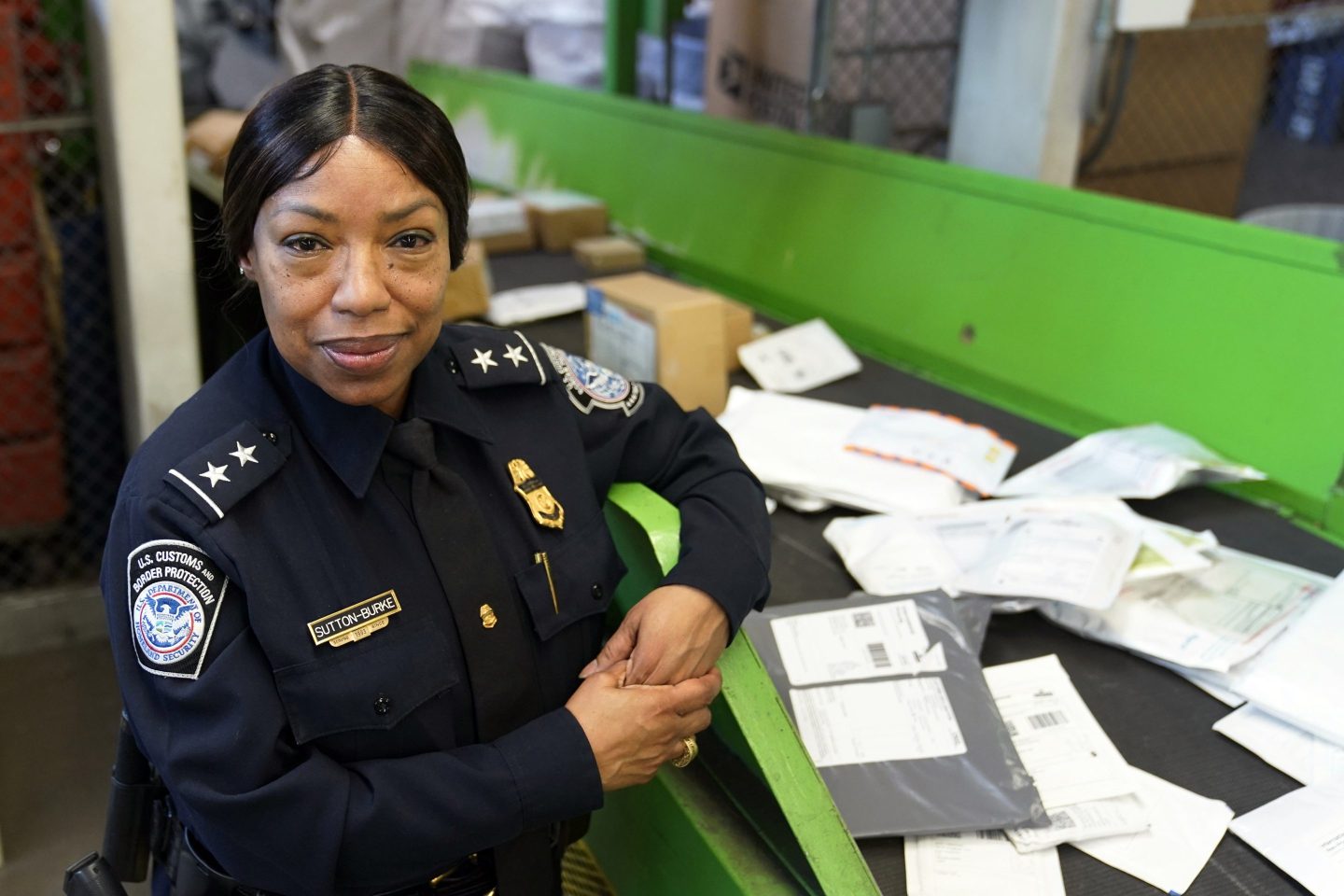
“That’s approximately a 646% increase over just eight years,” said LaFonda Sutton-Burke, director of field operations for Custom and Border Protection’s Chicago field office, which oversees one of the nation’s busiest ports for de minimis parcels. Behind the surge is the explosive growth in e-commerce, she said.
A June 2023 report by the House Select Committee on China’s Communist Party found that Shein and Temu, a low-cost online retailer of clothing and household goods, alone accounted for more than 30% of all packages shipped to the U.S. daily under the de minimis exemption.
China’s exports grew only 0.6% last year, but the bright spot was cross-border e-commerce, which includes but is not limited to the de minimis packages. These online sales expanded nearly 20% in 2023 to reach 1.83 trillion yuan, or $257 billion, nearly 8% of the country’s total exports. The U.S. is the biggest market, accounting for more than a third of Chinese goods bought online and shipped internationally in 2022, the last year for which China’s official customs data are available.
The United States does not include these direct online retail sales in its import figures, so it is difficult to know the true dollar value of the de minimis parcels. Charles Benoit, trade counsel for the Coalition for a Prosperous America, said an estimated $188 billion worth came into the U.S. from other countries in 2022.
A repeal of the provision could add $20 to $30 to each transaction, which would make it financially impossible for businesses such as Shein and Temu to sell to American consumers at the low prices they are offering now, Benoit said.
In a January meeting with Mayorkas, the National Council of Textile Organizations complained about unfair trade practices, including the de minimis rule.
“The industry has lost eight plants in three months,” the council said. “Plants that survived the Great Depression, the Great Recession and COVID aren’t surviving the economic environment due to demand destruction exacerbated by unfair trade practices.” It called for better enforcement of laws forbidding the import of goods produced by forced labor and the closing of the de minimis loophole, which it said “is facilitating millions of unchecked packages a day into our market and hurting our industry.”
Law enforcement agencies also complain about the de minimis provision, which they say has helped fuel the drug crisis.
The National Association of Police Organizations testified in December before the House Ways and Means trade subcommittee that much of the fentanyl seized last year came into the country in de minimis packages. It is unclear how much fentanyl and other illicit drugs may be slipping undetected into the country in the small packages.
On a recent Friday morning at Chicago’s O’Hare airport, small parcels that had arrived by mail from overseas were on conveyor belts going through X-ray machines for inspection. Officers occasionally stopped the belt to pick out and open a suspicious parcel. Among the items they seized were replica guns and illicit drugs.
Sutton-Burke said Customs and Border Protection uses a “layered security approach” and works with multiple partners to manage shipments, but resources have “literally remained static” in the face of explosive growth of de minimis parcels.
Investments in infrastructure and technology would be helpful, she said, as would updating U.S. rules and laws to allow the agency to obtain more information about the small parcels coming in to help customs agents identify high-risk shipments.