• Home
  • Latest
  • Fortune 500
  • Finance
  • Tech
  • Leadership
  • Lifestyle
  • Rankings
  • Multimedia
CommentaryTariffs and trade
Asia

De-risking and friendshoring won’t get governments supply chain security. Putting their economic house in order will

By
Ken Heydon
Ken Heydon
Down Arrow Button Icon
By
Ken Heydon
Ken Heydon
Down Arrow Button Icon
February 24, 2024, 5:30 PM ET
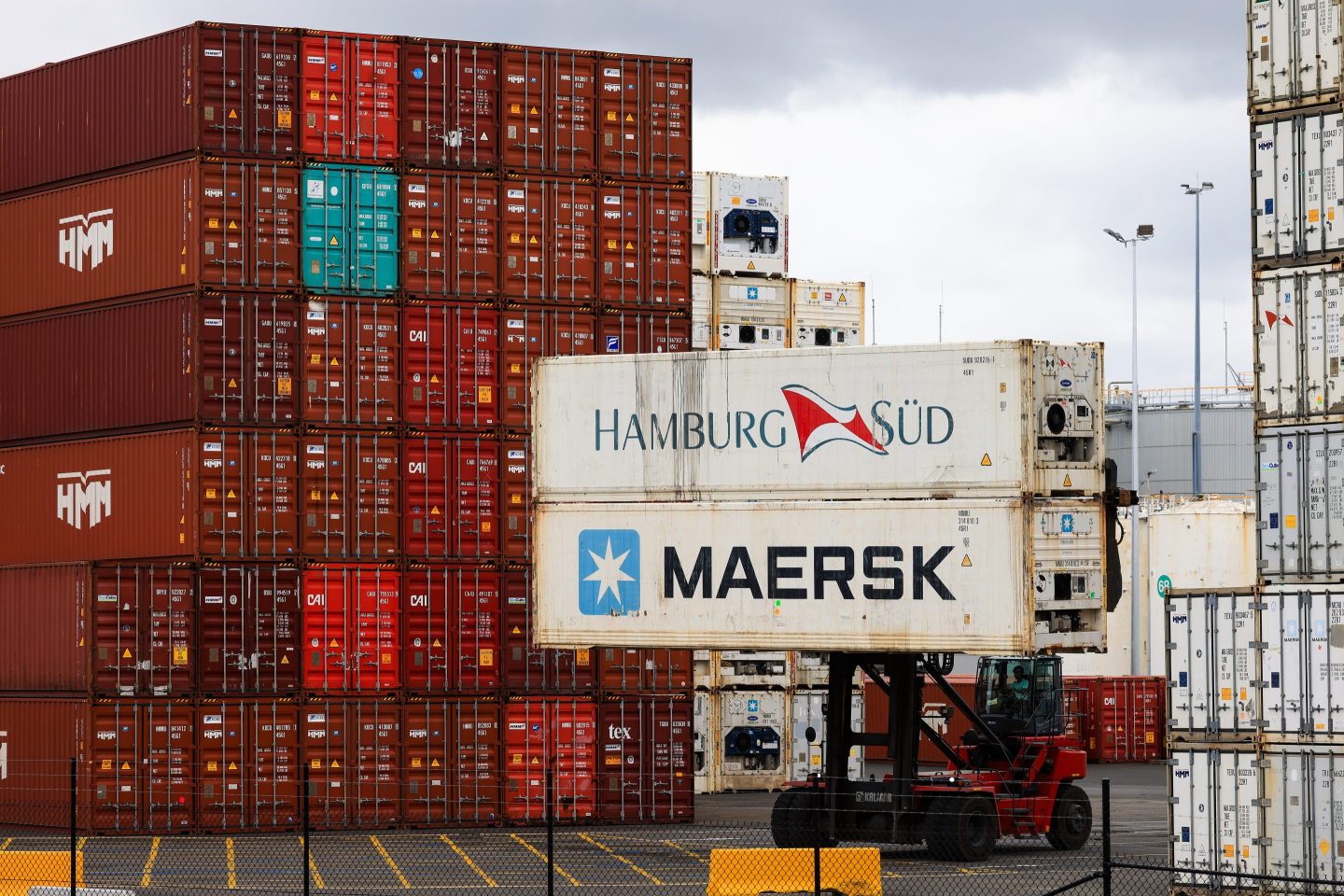
De-risking is in vogue—but it's not likely to give governments the supply chain security they want.
De-risking is in vogue—but it's not likely to give governments the supply chain security they want.Jenny Evans—Getty Images

De-risking is in vogue. At the recent World Economic Forum in Davos, both European Commission President Ursula von der Leyen and French President Emmanuel Macron spoke of the dangers of “overdependence” on global supply chains. Policymakers may now speak of de-risking rather than de-linkage, but the goal is unchanged—self-reliance within the global value chain (GVC).

A goal that may come at a price.

The pursuit of security within the supply chain is understandable, especially with geopolitical tensions, particularly the rivalry with China, and international supply chain disruptions stemming from the COVID-19 pandemic and the war in Ukraine.

The key is how it’s done. There’s a right way, and a wrong way—and most countries are choosing the latter.

The U.S.–and imminently Europe’s–decision to use tech export controls on China is clearly on the wrong path. They are self-defeating, perversely accelerating the development of China’s own technological capacity, starkly evident in the cutting-edge Kirin semiconductor used in Huawei’s latest smartphone. Such controls also deny U.S. firms, like Intel, the opportunity of growing through exports to China. And they force countries such as Indonesia, Thailand, and Vietnam to make the invidious choice between U.S.- and China-centric supply chains.

Massive state subsidies are just as problematic, distorting international competition at the expense of poorer developing countries. They disrupt the international trading system while running the risk of regulatory capture as the companies that benefit from subsidies become dependent on them.

Nor is friend-shoring a clear path forward. The ultimate logic of trading with friends, however defined, would split the world into rival trade blocs. Recent research from the International Monetary Fund and the World Trade Organization highlights that such a split would entail serious financial fragmentation and major losses in GDP, as high as 12% in some regions.

So what is the right path to dealing with supply chain disruption and vulnerability? There are two pointers.

The first is recognizing that the World Trade Organization, despite efforts by governments in the West and elsewhere to hobble it, is still the best place to tackle supply concerns over China’s practice of state capitalism. Within the auspices of the WTO, Beijing could agree to end subsidies for state-owned enterprises operating in overseas markets, in exchange for more tolerance for those supplying public services within China.

Countries can also build on the cooperation within the WTO negotiations on e-commerce, covering issues such as data protection, that brings together key players, including the U.S. and China, offering a welcome opportunity for constructive engagement between Washington and Beijing. (We might expect progress at the WTO’s ministerial conference, which starts Feb. 26)

The second and perhaps most critical pointer is the need for overall national policy frameworks that generate genuine resilience to shocks by fostering innovation and export diversification.

The scope to get domestic policies right can usefully be demonstrated by taking the countries engaged in the Supply Chain Resilience Initiative (SCRI), a trilateral endeavor by Japan, India, and Australia—and prospectively the United States—to secure supply chains and reduce dependence on China.

Rather than picking winners, the SCRI countries need to get the basics right. For Japan, this includes rebuilding fiscal space by increasing the consumption tax while improving productivity—lowest of all G7 economies—via enhanced corporate governance; for India, improving health and education infrastructure, modernizing labor laws to remove disincentives for firms to create jobs and further reducing restrictions to trade; for Australia, avoiding over rigid production systems based on the worst and most infrequent of predicted events; and for the United States, returning to more open policies of technological development, enabling it to “run faster” rather than seeking to hobble the opposition.

What these policies share is their focus—not narrow, in trying to defy comparative advantage through misplaced targeted trade-distorting interventions in the name of self-reliance, but broad, addressing economic fundamentals to foster genuine resilience.

In other words, countries seeking greater security within the global value chain should concentrate, above all, on putting their own economic house in order.

Ken Heydon is a former Australian government and OECD official and visiting fellow at the London School of Economics. He is the author of The Trade Weapon: How Weaponizing Trade Threatens Growth, Public Health and the Climate Transition.

The opinions expressed in Fortune.com commentary pieces are solely the views of their authors and do not necessarily reflect the opinions and beliefs of Fortune.

Join us at the Fortune Workplace Innovation Summit May 19–20, 2026, in Atlanta. The next era of workplace innovation is here—and the old playbook is being rewritten. At this exclusive, high-energy event, the world’s most innovative leaders will convene to explore how AI, humanity, and strategy converge to redefine, again, the future of work. Register now.
About the Author
By Ken Heydon
See full bioRight Arrow Button Icon

Latest in Commentary

Julian Braithwaite is the Director General of the International Alliance for Responsible Drinking
CommentaryProductivity
Gen Z is drinking 20% less than Millennials. Productivity is rising. Coincidence? Not quite
By Julian BraithwaiteDecember 13, 2025
12 hours ago
carbon
Commentaryclimate change
Banking on carbon markets 2.0: why financial institutions should engage with carbon credits
By Usha Rao-MonariDecember 13, 2025
13 hours ago
Dr. Javier Cárdenas is the director of the Rockefeller Neuroscience Institute NeuroPerformance Innovation Center.
Commentaryconcussions
Fists, not football: There is no concussion protocol for domestic violence survivors
By Javier CárdenasDecember 12, 2025
1 day ago
Gary Locke is the former U.S. ambassador to China, U.S. secretary of commerce, and governor of Washington.
CommentaryChina
China is winning the biotech race. Patent reform is how we catch up
By Gary LockeDecember 12, 2025
1 day ago
millennial
CommentaryConsumer Spending
Meet the 2025 holiday white whale: the millennial dad spending $500+ per kid
By Phillip GoerickeDecember 12, 2025
1 day ago
Sarandos
CommentaryAntitrust
Netflix, Warner, Paramount and antitrust: Entertainment megadeal’s outcome must follow the evidence, not politics or fear of integration
By Satya MararDecember 12, 2025
2 days ago

Most Popular

placeholder alt text
Economy
Tariffs are taxes and they were used to finance the federal government until the 1913 income tax. A top economist breaks it down
By Kent JonesDecember 12, 2025
2 days ago
placeholder alt text
Success
Apple cofounder Ronald Wayne sold his 10% stake for $800 in 1976—today it’d be worth up to $400 billion
By Preston ForeDecember 12, 2025
1 day ago
placeholder alt text
Success
40% of Stanford undergrads receive disability accommodations—but it’s become a college-wide phenomenon as Gen Z try to succeed in the current climate
By Preston ForeDecember 12, 2025
1 day ago
placeholder alt text
Economy
The Fed just ‘Trump-proofed’ itself with a unanimous move to preempt a potential leadership shake-up
By Jason MaDecember 12, 2025
1 day ago
placeholder alt text
Economy
For the first time since Trump’s tariff rollout, import tax revenue has fallen, threatening his lofty plans to slash the $38 trillion national debt
By Sasha RogelbergDecember 12, 2025
1 day ago
placeholder alt text
Success
Apple CEO Tim Cook out-earns the average American’s salary in just 7 hours—to put that into context, he could buy a new $439,000 home in just 2 days
By Emma BurleighDecember 12, 2025
1 day ago
Rankings
  • 100 Best Companies
  • Fortune 500
  • Global 500
  • Fortune 500 Europe
  • Most Powerful Women
  • Future 50
  • World’s Most Admired Companies
  • See All Rankings
Sections
  • Finance
  • Leadership
  • Success
  • Tech
  • Asia
  • Europe
  • Environment
  • Fortune Crypto
  • Health
  • Retail
  • Lifestyle
  • Politics
  • Newsletters
  • Magazine
  • Features
  • Commentary
  • Mpw
  • CEO Initiative
  • Conferences
  • Personal Finance
  • Education
Customer Support
  • Frequently Asked Questions
  • Customer Service Portal
  • Privacy Policy
  • Terms Of Use
  • Single Issues For Purchase
  • International Print
Commercial Services
  • Advertising
  • Fortune Brand Studio
  • Fortune Analytics
  • Fortune Conferences
  • Business Development
About Us
  • About Us
  • Editorial Calendar
  • Press Center
  • Work At Fortune
  • Diversity And Inclusion
  • Terms And Conditions
  • Site Map

© 2025 Fortune Media IP Limited. All Rights Reserved. Use of this site constitutes acceptance of our Terms of Use and Privacy Policy | CA Notice at Collection and Privacy Notice | Do Not Sell/Share My Personal Information
FORTUNE is a trademark of Fortune Media IP Limited, registered in the U.S. and other countries. FORTUNE may receive compensation for some links to products and services on this website. Offers may be subject to change without notice.