• Home
  • Latest
  • Fortune 500
  • Finance
  • Tech
  • Leadership
  • Lifestyle
  • Rankings
  • Multimedia
Semiconductors
Asia

Japan’s chipmaking companies can’t quit the China chip market, despite Washington and Tokyo’s controls

By
Lionel Lim
Lionel Lim
Asia Reporter
Down Arrow Button Icon
By
Lionel Lim
Lionel Lim
Asia Reporter
Down Arrow Button Icon
December 18, 2023, 3:57 AM ET
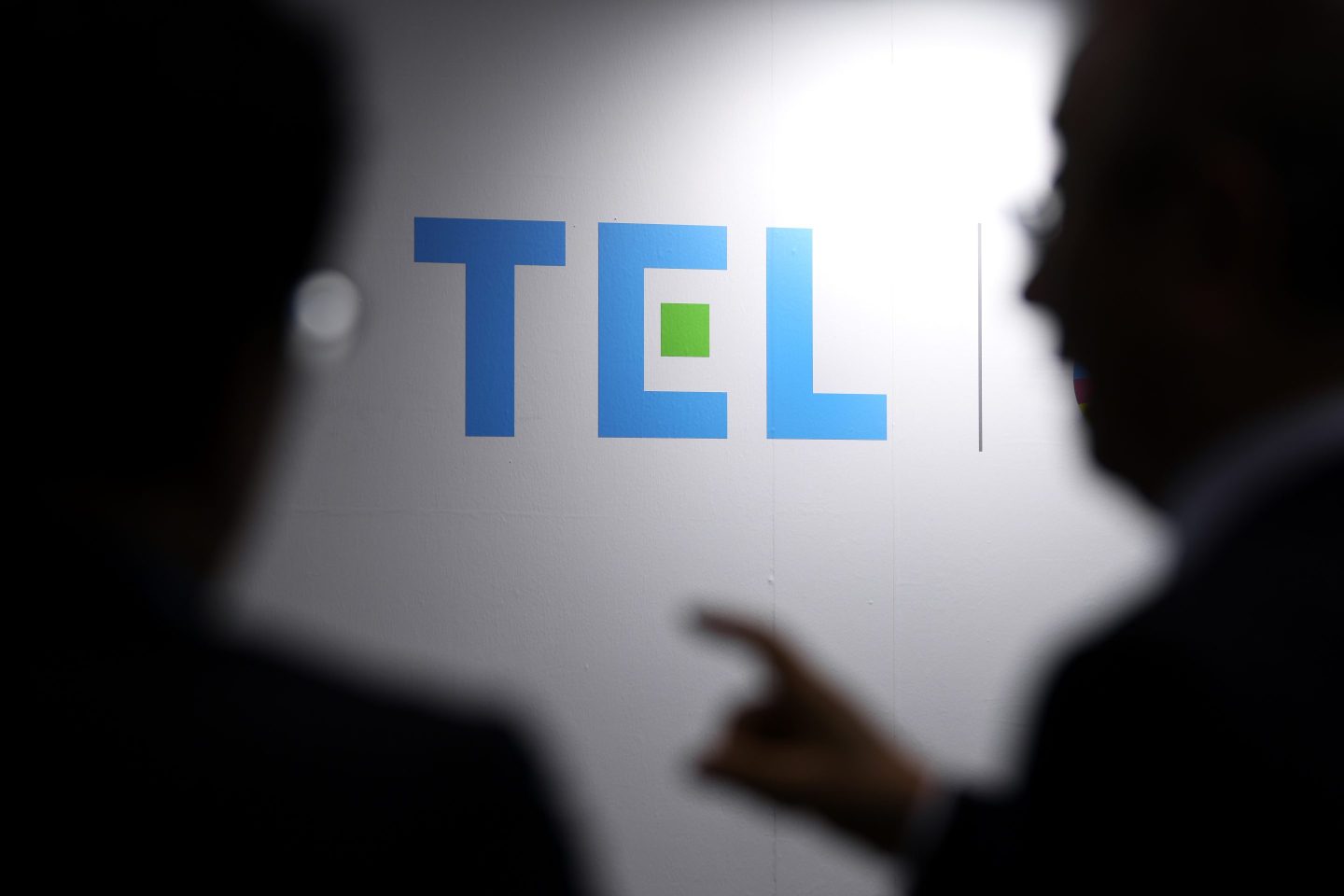
The Tokyo Electroc Ltd. logo displayed at Semicon Japan in Tokyo on Dec. 13, 2023. Japanese chip equipment makers like Tokyo Electron are seeing interest for older chipmaking gear from China.
The Tokyo Electroc Ltd. logo displayed at Semicon Japan in Tokyo on Dec. 13, 2023. Japanese chip equipment makers like Tokyo Electron are seeing interest for older chipmaking gear from China.Kiyoshi Ota—Bloomberg via Getty Images

U.S. President Joe Biden may be stopping Japanese companies from selling high-end chipmaking equipment to China, but there’s still a lot of money to be made on the low-end.

Tokyo Electron, one of Asia’s largest makers of semiconductor equipment, is finding the effect of American and Japanese controls, which bar the sales of cutting-edge chips and chipmaking equipment to China, to be smaller than expected, thanks to surging Chinese demand for less advanced machinery. The company generated 43% of its sales from China last quarter, up from 24% a year ago, head of investor relations Junko Takagi told the Financial Times.

Kokusai Electric Corp., another Japanese equipment maker, is also expanding its presence in China to match an expected increase in demand. China could soon make up just under 50% of the company’s revenue, up from over 40% and above the historical level of 30%, CEO Fumiyuki Kanai forecast in an interview with Bloomberg. Kanai expects investments across memory, logic, and power chips at 28-nanometers and larger.

“Countless small-scale fabrication plants are springing up like mushrooms in China,” Kanai said.

While Japan’s chip manufacturing is decades behind its competitors like Taiwan and South Korea, the country is still a major producer of the machinery used to make the chips themselves. This equipment enables companies like Taiwan Semiconductor Manufacturing Company or Samsung to make the tiny semiconductors that power our electronic devices.

Earlier this year, Japan and the Netherlands, another major producer of chipmaking equipment, agreed to join the U.S. in limiting sales of cutting-edge chipmaking equipment to China.

China has been investing in so-called legacy chips as the U.S. puts the screws on more advanced semiconductors. Many devices use mature chips larger than 28 nanometers, while high-end consumer electronics and data centers rely on the cutting-edge chips made by companies like TSMC, Intel and Samsung. The market for 28-nanometer chips will be worth $28 billion by 2030, estimates consulting firm International Business Strategies.

Chinese companies may also be using older chipmaking equipment to secretly make more advanced semiconductors. Huawei blindsided Washington in August by unveiling its new 5G phone, the Mate 60 Pro, that featured an advanced Chinese-made processor. Experts believe that Huawei and its supplier, Semiconductor Manufacturing International Corporation (SMIC), may have been able to use older-generation equipment to make the advanced chip, though are unsure whether the Chinese firms can make them at scale and at reasonable cost.

Huawei’s achievement is now pushing U.S. lawmakers to call for even stricter export controls. Representative Mike Gallagher (R-Wis.), co-chair of the House Select Committee on China, suggested in September that the U.S. block all technology exports to Huawei and SMIC. Other politicians and think tanks have proposed extending chip controls to older chips and equipment as well. (The Biden administration expanded its chip controls to cover more advanced semiconductors used for AI development in October)

Still, in mid-October, the Biden administration allowed TSMC, Samsung and Korean firm SK Hynix to keep supplying legacy equipment to their Chinese chip plants indefinitely. At the time, analysts told Fortune that Washington may want to keep some foreign presence in China’s chip industry; if foreign companies left, demand would shift to local Chinese companies, leading to “less control and visibility” for the U.S.

Join us at the Fortune Workplace Innovation Summit May 19–20, 2026, in Atlanta. The next era of workplace innovation is here—and the old playbook is being rewritten. At this exclusive, high-energy event, the world’s most innovative leaders will convene to explore how AI, humanity, and strategy converge to redefine, again, the future of work. Register now.
About the Author
By Lionel LimAsia Reporter
LinkedIn icon

Lionel Lim is a Singapore-based reporter covering the Asia-Pacific region.

See full bioRight Arrow Button Icon

Latest in

Donald Trump
AIElections
AI is powering Trump’s economy, but American voters are getting worried
By Mark Niquette, Nancy Cook and BloombergDecember 12, 2025
59 seconds ago
SuccessHow I made my first million
Hinge CEO says he bribed students with KitKats to get the $550 million-a-year business off the ground: ‘I had to beg and borrow a lot’
By Orianna Rosa RoyleDecember 12, 2025
31 minutes ago
AIdigital transformation
How classic digital transformation lessons apply to AI—and what’s different this time around
By Sage LazzaroDecember 12, 2025
36 minutes ago
Steve Jobs, Steve Wozniak, and Ronald Wayne's signatures on the bottom of Apple's founding contract.
SuccessWealth
Apple cofounder Ronald Wayne sold his 10% stake for $800 in 1976—today it’d be worth up to $400 billion
By Preston ForeDecember 12, 2025
38 minutes ago
Dr. Javier Cárdenas is the director of the Rockefeller Neuroscience Institute NeuroPerformance Innovation Center.
Commentaryconcussions
Fists, not football: There is no concussion protocol for domestic violence survivors
By Javier CárdenasDecember 12, 2025
1 hour ago
Gary Locke is the former U.S. ambassador to China, U.S. secretary of commerce, and governor of Washington.
CommentaryChina
China is winning the biotech race. Patent reform is how we catch up
By Gary LockeDecember 12, 2025
1 hour ago

Most Popular

placeholder alt text
Success
At 18, doctors gave him three hours to live. He played video games from his hospital bed—and now, he’s built a $10 million-a-year video game studio
By Preston ForeDecember 10, 2025
2 days ago
placeholder alt text
Success
Palantir cofounder calls elite college undergrads a ‘loser generation’ as data reveals rise in students seeking support for disabilities, like ADHD
By Preston ForeDecember 11, 2025
23 hours ago
placeholder alt text
Investing
Baby boomers have now 'gobbled up' nearly one-third of America's wealth share, and they're leaving Gen Z and millennials behind
By Sasha RogelbergDecember 8, 2025
4 days ago
placeholder alt text
Economy
‘We have not seen this rosy picture’: ADP’s chief economist warns the real economy is pretty different from Wall Street’s bullish outlook
By Eleanor PringleDecember 11, 2025
1 day ago
placeholder alt text
Uncategorized
Transforming customer support through intelligent AI operations
By Lauren ChomiukNovember 26, 2025
16 days ago
placeholder alt text
Success
What it takes to be wealthy in America: $2.3 million, Charles Schwab says
By Sydney LakeDecember 11, 2025
1 day ago
Rankings
  • 100 Best Companies
  • Fortune 500
  • Global 500
  • Fortune 500 Europe
  • Most Powerful Women
  • Future 50
  • World’s Most Admired Companies
  • See All Rankings
Sections
  • Finance
  • Leadership
  • Success
  • Tech
  • Asia
  • Europe
  • Environment
  • Fortune Crypto
  • Health
  • Retail
  • Lifestyle
  • Politics
  • Newsletters
  • Magazine
  • Features
  • Commentary
  • Mpw
  • CEO Initiative
  • Conferences
  • Personal Finance
  • Education
Customer Support
  • Frequently Asked Questions
  • Customer Service Portal
  • Privacy Policy
  • Terms Of Use
  • Single Issues For Purchase
  • International Print
Commercial Services
  • Advertising
  • Fortune Brand Studio
  • Fortune Analytics
  • Fortune Conferences
  • Business Development
About Us
  • About Us
  • Editorial Calendar
  • Press Center
  • Work At Fortune
  • Diversity And Inclusion
  • Terms And Conditions
  • Site Map

© 2025 Fortune Media IP Limited. All Rights Reserved. Use of this site constitutes acceptance of our Terms of Use and Privacy Policy | CA Notice at Collection and Privacy Notice | Do Not Sell/Share My Personal Information
FORTUNE is a trademark of Fortune Media IP Limited, registered in the U.S. and other countries. FORTUNE may receive compensation for some links to products and services on this website. Offers may be subject to change without notice.