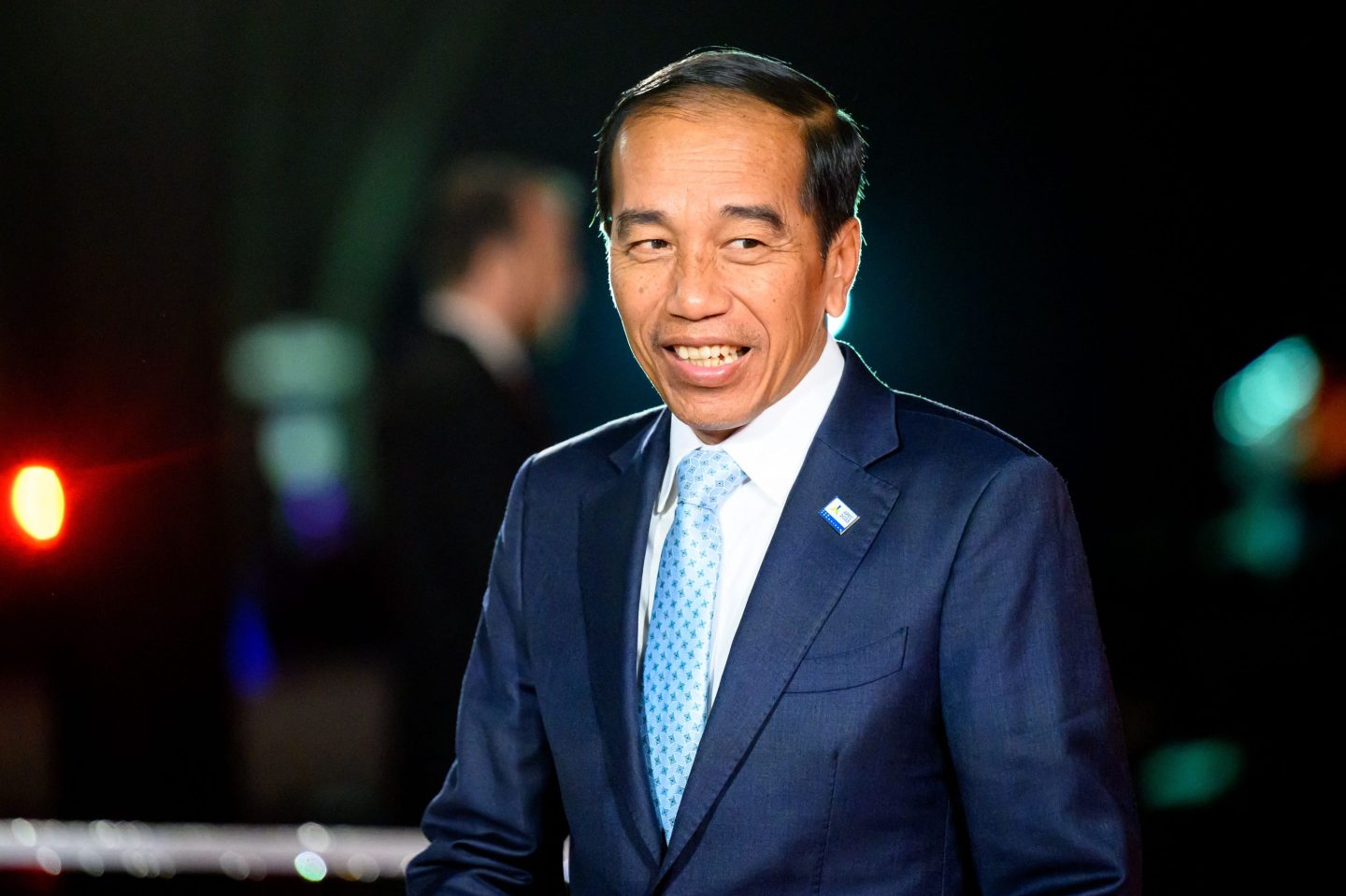
Outgoing Indonesian President Joko Widodo—or “Jokowi” to many Indonesians—is leaving office on a high. Jokowi is extremely popular, at times boasting an 80% approval rating. He’s boosting Indonesia’s profile, taking part in high-profile summits around geopolitical crises like the wars in Ukraine and Israel. And the leading candidates to replace him in next February’s election have signaled they will continue his development-focused policies, at times labeled as protectionist by other governments.
One such policy has proved surprisingly successful. The Jokowi administration banned nickel ore exports in January 2020 in a bid to establish more domestic smelters. Nickel is a product that is used in making stainless steel or batteries, and the government wanted to sell more value-added nickel products instead of just exporting raw nickel.
Since the export ban, foreign investment flowed into Indonesia to gain access to the country’s large reserves of nickel. Companies are investing in smelters producing nickel pig iron, used in stainless steel, according to a report from Oxford Economics. South Korea–based POSCO Holdings, Chinese firm Ningbo Richin, and BASF are among the companies pledging to invest more in Indonesian nickel production.
Most analysts expect Indonesia to continue its nickel policy even under a new president. “The next administration will likely continue the Jokowi administration’s policy of export restrictions on raw materials,” says Brian Lee, an economist at Maybank Investment Banking Group. “Nickel exports have risen multifold since the ban on nickel ore exports in 2020.”
Speeches from Indonesia’s three major presidential candidates—Defense Minister Prabowo Subianto, Central Java Gov. Ganjar Pranowo, and Jakarta Gov. Anies Baswedan—imply that all will continue the country’s downstreaming policies, predicts Maria Sare, who heads BowerGroupAsia Indonesia’s energy and natural resources practice.
Part of the success Indonesia has enjoyed since the ban could be down to the country’s hold on the market. Indonesia produces 37% of the world’s nickel and accounts for 22% of global reserves.
And Jakarta has even bolder plans: It wants to leverage its nickel resources to move up the EV supply chain, eventually fostering a local battery industry and even an EV industry.
“We will create a large ecosystem so that other countries will depend on us because we already have nickel, copper, bauxite, and tin,” Jokowi said at a business event in Jakarta in December last year. “The investors will come in as in the future of the automotive industry, electric motorcycles and cars will replace maybe more than 50% of the existing market demand.”
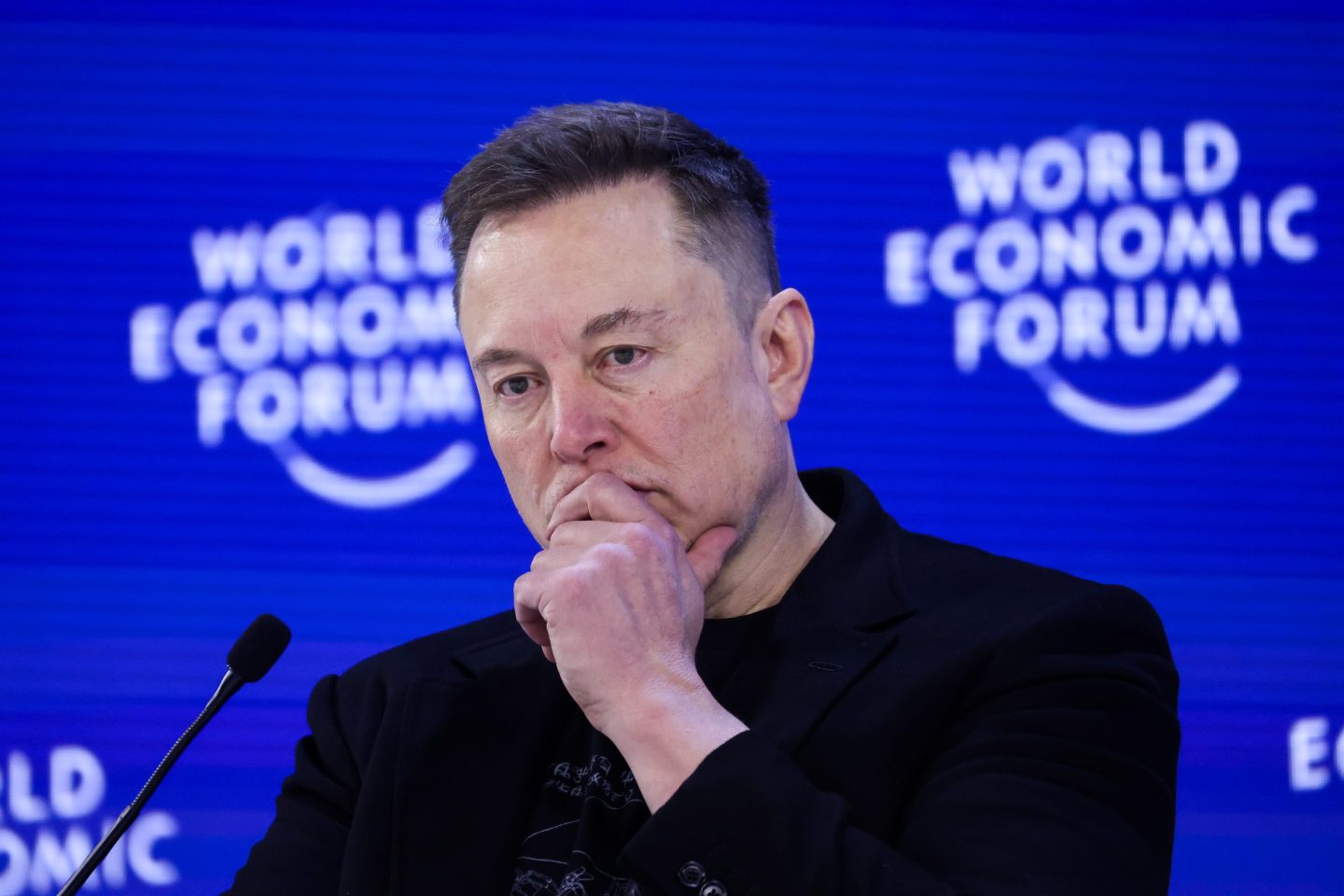
And Indonesia’s president has hit the road to encourage companies to invest. Last year, he made a personal trip to see Tesla CEO Elon Musk at SpaceX’s launch site in Texas, extending an invitation to the billionaire entrepreneur to visit the Southeast Asian country. (As of now, Musk has yet to visit, and the company has gone with Malaysia as the home of its regional headquarters.)
“What the Indonesian government is trying to do is invite more high-end manufacturing as well. They’re trying to invite more battery making, or car assembling, and stuff like that. There will be high investment domestically, it’s going to create lots of employment, and there will be technological spillover that’s going to benefit other sectors as well,” says Makoto Tsuchiya, an economist at Oxford Economics who looks at Indonesia and the Philippines.
But moving from being a nickel powerhouse to a battery or EV powerhouse is a big jump—and potentially challenging for Indonesia to pull off.
First is hassle, as foreign companies see Indonesia as a more difficult place to do business than its Southeast Asian neighbors. Indonesia is notorious for changing processes often, and investors may be challenged with new policies frequently, notes Sare.
Indonesia also can’t build a battery industry without importing raw materials. While Indonesia has large reserves of nickel, a key EV battery component, it does not have the same amount of lithium reserves, another important battery metal. Sare notes that Jakarta is trying to shore up its access to lithium by seeking deals with lithium-rich countries in Africa, as well as nearby Australia.
The flood of foreign investment flocking into Indonesia also comes from a problematic source. In 2022, about a quarter of the foreign money flowing to the country’s metals industry came from China, according to an Oxford Economics report using government data. That’s a point of concern for the U.S., which is trying to deny Chinese-made batteries and EVs from qualifying for subsidies and tax credits under the Inflation Reduction Act.
On Dec. 1, the Biden administration released new rules that would disqualify a vehicle from receiving credits if the vehicle contains battery materials from China. Even suppliers based outside of China are under threat, as being as little as 25% owned by Chinese interests would mean being disqualified as well.
The final issue is consumer demand: “At the moment, the [EV] market is very small,” Tsuchiya says. While consumers acknowledge EVs as the more environmentally friendly option, doubts persist of infrastructure to support the charging of EVs and maintenance costs according to a survey released by PwC in October.
Indonesia’s surprising success in resource protectionism may have helped to jump-start the country’s metal processing industry. But if Indonesia doesn’t climb the value chain, then where might it end up?
Tsuchiya warns that the Southeast Asian country may get stuck in handling low-end manufacturing and metal refining. Companies “will just export this low value-added nickel to other countries to create batteries, cars, and stuff like that.”
“It might still be better than exporting raw nickel, but it’s not going to be as successful as becoming an auto hub in the region.”