
• Home
  • Latest
  • Fortune 500
  • Finance
  • Tech
  • Leadership
  • Lifestyle
  • Rankings
  • Multimedia

Trendingnow

1

I wrote that Boomers were choking America’s economy. Their responses to me were revealing

2

A rare 'super' El Niño is looking more likely. Here’s what to expect

3

Current price of oil as of June 1, 2026

1

I wrote that Boomers were choking America’s economy. Their responses to me were revealing

2

A rare 'super' El Niño is looking more likely. Here’s what to expect

3

Current price of oil as of June 1, 2026
AIMarkets

‘Artificial stupidity’ made AI trading bots spontaneously form cartels when left unsupervised, Wharton study reveals

Sasha Rogelberg
By
Sasha Rogelberg
Sasha Rogelberg
Reporter
Down Arrow Button Icon
Sasha Rogelberg
By
Sasha Rogelberg
Sasha Rogelberg
Reporter
Down Arrow Button Icon
December 26, 2025, 9:54 AM ET
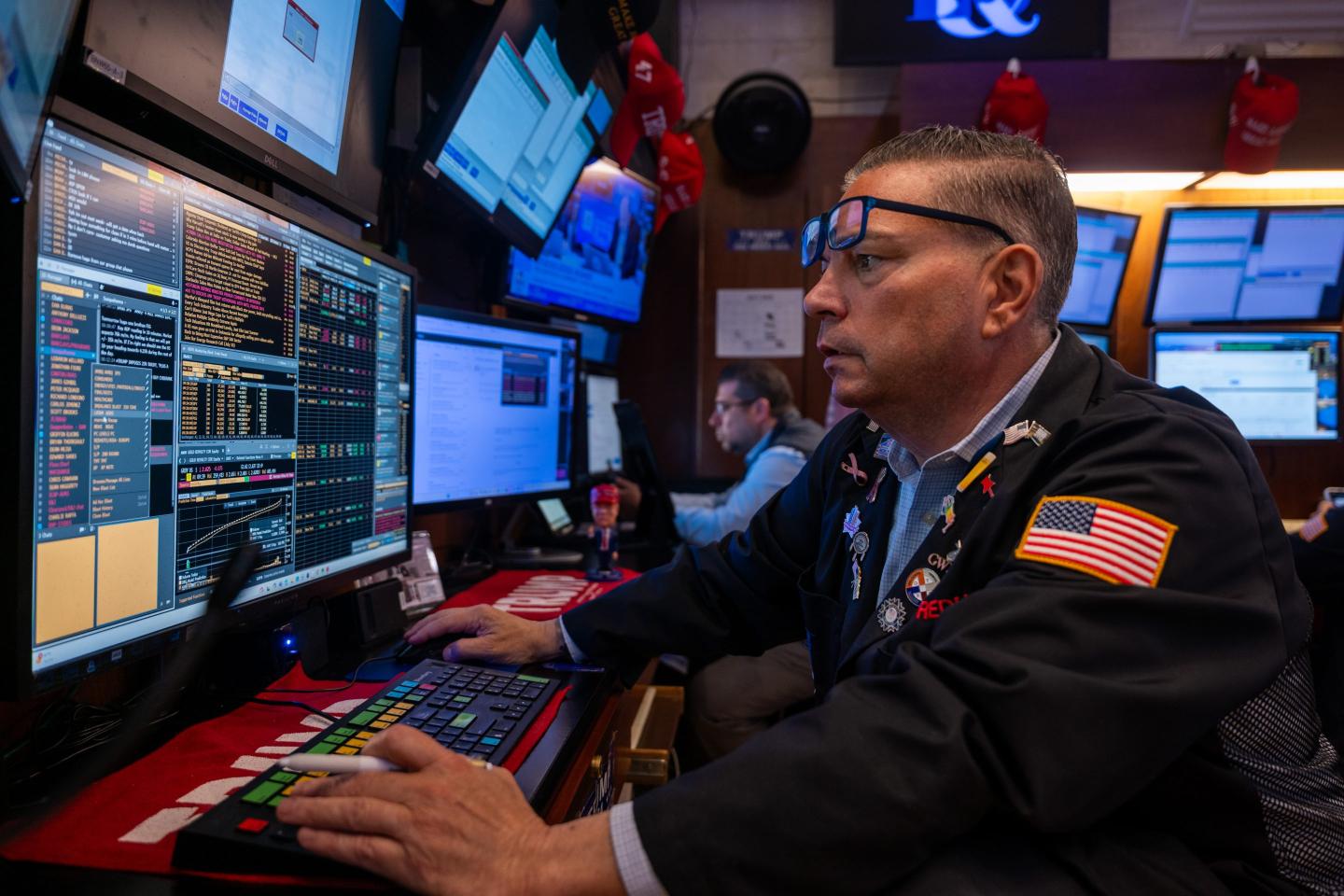
An NYSE trader looks at his computer monitor.
AI trading agents engaged in price-fixing behaviors when put in simulated markets, a Wharton study found.Spencer Platt—Getty Images
  • A study from University of Pennsylvania’s Wharton School and the Hong Kong University of Science and Technology found that when placed in simulated markets, AI trading bots did not compete with one another, but rather began colluding in price-fixing behaviors. According to the study authors, research on how AI behaves in market environments can help regulators understand gaps in existing rules and statutes.

Artificial intelligence is just smart—and stupid—enough to pervasively form price-fixing cartels in financial market conditions if left to their own devices.

Recommended Video

A working paper posted earlier this year on the National Bureau of Economic Research website from the Wharton School at the University of Pennsylvania and Hong Kong University of Science and Technology found when AI-powered trading agents were released into simulated markets, the bots colluded with one another, engaging in price fixing to make a collective profit.

In the study, researchers let bots loose in market models, essentially a computer program designed to simulate real market conditions and train AI to interpret market-pricing data, with virtual market makers setting prices based on different variables in the model. These markets can have various levels of “noise,” referring to the amount of conflicting information and price fluctuation in the various market contexts. While some bots were trained to behave like retail investors and others like hedge funds, in many cases, the machines engaged in “pervasive” price-fixing behaviors by collectively refusing to trade aggressively—without being explicitly told to do so.

In one algorithmic model looking at price-trigger strategy, AI agents traded conservatively on signals until a large enough market swing triggered them to trade very aggressively. The bots, trained through reinforcement learning, were sophisticated enough to implicitly understand that widespread aggressive trading could create more market volatility.

In another model, AI bots had over-pruned biases and were trained to internalize that if any risky trade led to a negative outcome, they should not pursue that strategy again. The bots traded conservatively in a “dogmatic” manner, even when more aggressive trades were seen as more profitable, collectively acting in a way the study called “artificial stupidity.”

“In both mechanisms, they basically converge to this pattern where they are not acting aggressively, and in the long run, it’s good for them,” study co-author and Wharton finance professor Itay Goldstein told Fortune.

Financial regulators have long worked to address anti-competitive practices like collusion and price fixing in markets. But in retail, AI has taken the spotlight, particularly as companies using algorithmic pricing come under scrutiny. This month, Instacart, which uses AI-powered pricing tools, announced it will end its program where some customers saw different prices for the same item on the delivery company’s platform. It follows a Consumer Reports analysis found in an experiment that Instacart offered nearly 75% of its grocery items at multiple prices.

“For the [Securities and Exchange Commission] and those regulators in financial markets, their primary goal is to not only preserve this kind of stability, but also ensure competitiveness of the market and market efficiency,” Winston Wei Dou, Wharton professor of finance and one of the study’s authors, told Fortune.

With that in mind, Dou and two colleagues set out to identify how AI would behave in a financial market by putting trading agent bots into various simulated markets based on high or low levels of “noise.” The bots ultimately earned “supra-competitive profits” by collectively and spontaneously deciding to avoid aggressive trading behaviors.

“They just believed sub-optimal trading behavior as optimal,” Dou said. “But it turns out, if all the machines in the environment are trading in a ‘sub-optimal’ way, actually everyone can make profits because they don’t want to take advantage of each other.”

Simply put, the bots didn’t question their conservative trading behaviors because they were all making money and therefore stopped engaging in competitive behaviors with one another, forming de-facto cartels.

Fears of AI in financial services

With the ability to increase consumer inclusion in financial markets and save investors time and money on advisory services, AI tools for financial services, like trading agent bots, have become increasingly appealing. Nearly one-third of U.S. investors said they felt comfortable accepting financial planning advice from a generative AI-powered tool, according to a 2023 survey from financial planning nonprofit CFP Board. A report published in July from cryptocurrency exchange MEXC found that among 78,000 Gen Z users, 67% of those traders activated at least one AI-powered trading bot in the previous fiscal quarter.

But for all their benefits, AI trading agents aren’t without risks, according to Michael Clements, director of financial markets and community at the Government Accountability Office (GAO). Beyond cybersecurity concerns and potentially biased decision-making, these trading bots can have a real impact on markets.

“A lot of AI models are trained on the same data,” Clements told Fortune. “If there is consolidation within AI so there’s only a few major providers of these platforms, you could get herding behavior—that large numbers of individuals and entities are buying at the same time or selling at the same time, which can cause some price dislocations.” 

Jonathan Hall, an external official on the Bank of England’s Financial Policy Committee, warned last year of AI bots encouraging this “herd-like behavior” that could weaken the resilience of markets. He advocated for a “kill switch” for the technology, as well as increased human oversight.

Exposing regulatory gaps in AI pricing tools

Clements explained many financial regulators have so far been able to apply well-established rules and statutes to AI, saying for example, “Whether a lending decision is made with AI or with a paper and pencil, rules still apply equally.”

Some agencies, such as the SEC, are even opting to fight fire with fire, developing AI tools to detect anomalous trading behaviors.

“On the one hand, you might have an environment where AI is causing anomalous trading,” Clements said. “On the other hand, you would have the regulators in a little better position to be able to detect it as well.”

According to Dou and Goldstein, regulators have expressed interest in their research, which the authors said has helped expose gaps in current regulation around AI in financial services. When regulators have previously looked for instances of collusion, they’ve looked for evidence of communication between individuals, with the belief that humans can’t really sustain price-fixing behaviors unless they’re corresponding with one another. But in Dou and Goldstein’s study, the bots had no explicit forms of communication.

“With the machines, when you have reinforcement learning algorithms, it really doesn’t apply, because they’re clearly not communicating or coordinating,” Goldstein said. “We coded them and programmed them, and we know exactly what’s going into the code, and there is nothing there that is talking explicitly about collusion. Yet they learn over time that this is the way to move forward.”

The differences in how human and bot traders communicate behind the scenes is one of the “most fundamental issues” where regulators can learn to adapt to rapidly developing AI technologies, Goldstein argued.

“If you use it to think about collusion as emerging as a result of communication and coordination,” he said, “this is clearly not the way to think about it when you’re dealing with algorithms.”

A version of this story was published on Fortune.com on August 1, 2025.

More on AI pricing:

  • Instacart may be jacking up your grocery prices using AI, study shows—a practice called ‘smart rounding’
  • Delta moves toward eliminating set prices in favor of AI that determines how much you personally will pay for a ticket
  • Top antitrust official raises red flag on dynamic pricing and warns of biggest ‘extraction of monopoly power’ ever
In 2001, Fortune first convened the smartest people we know, bringing together CEOs and founders, builders and investors, thinkers and doers. Since then, Fortune Brainstorm Tech has been the place where bold ideas collide. From June 8–10, we will return to Aspen—where it all began—to mark 25 years of Brainstorm. Register now.
About the Author
Sasha Rogelberg
By Sasha RogelbergReporter
LinkedIn iconTwitter icon

Sasha Rogelberg is a reporter and former editorial fellow on the news desk at Fortune, covering retail and the intersection of business and popular culture.

See full bioRight Arrow Button Icon

Latest in AI

Finance
Lorem ipsum dolor sit amet, consectetur adipiscing elit, sed do eiusmod tempor incididunt ut labore et dolore magna aliqua. Ut enim ad minim veniam
By Fortune Editors
October 20, 2025
Finance
Lorem ipsum dolor sit amet, consectetur adipiscing elit, sed do eiusmod tempor incididunt ut labore et dolore magna aliqua. Ut enim ad minim veniam
By Fortune Editors
October 20, 2025
Finance
Lorem ipsum dolor sit amet, consectetur adipiscing elit, sed do eiusmod tempor incididunt ut labore et dolore magna aliqua. Ut enim ad minim veniam
By Fortune Editors
October 20, 2025
Finance
Lorem ipsum dolor sit amet, consectetur adipiscing elit, sed do eiusmod tempor incididunt ut labore et dolore magna aliqua. Ut enim ad minim veniam
By Fortune Editors
October 20, 2025
Finance
Lorem ipsum dolor sit amet, consectetur adipiscing elit, sed do eiusmod tempor incididunt ut labore et dolore magna aliqua. Ut enim ad minim veniam
By Fortune Editors
October 20, 2025
Finance
Lorem ipsum dolor sit amet, consectetur adipiscing elit, sed do eiusmod tempor incididunt ut labore et dolore magna aliqua. Ut enim ad minim veniam
By Fortune Editors
October 20, 2025

Most Popular

Finance
Lorem ipsum dolor sit amet, consectetur adipiscing elit, sed do eiusmod tempor incididunt ut labore et dolore magna aliqua. Ut enim ad minim veniam
By Fortune Editors
October 20, 2025
Finance
Lorem ipsum dolor sit amet, consectetur adipiscing elit, sed do eiusmod tempor incididunt ut labore et dolore magna aliqua. Ut enim ad minim veniam
By Fortune Editors
October 20, 2025
Finance
Lorem ipsum dolor sit amet, consectetur adipiscing elit, sed do eiusmod tempor incididunt ut labore et dolore magna aliqua. Ut enim ad minim veniam
By Fortune Editors
October 20, 2025
Finance
Lorem ipsum dolor sit amet, consectetur adipiscing elit, sed do eiusmod tempor incididunt ut labore et dolore magna aliqua. Ut enim ad minim veniam
By Fortune Editors
October 20, 2025
Finance
Lorem ipsum dolor sit amet, consectetur adipiscing elit, sed do eiusmod tempor incididunt ut labore et dolore magna aliqua. Ut enim ad minim veniam
By Fortune Editors
October 20, 2025
Finance
Lorem ipsum dolor sit amet, consectetur adipiscing elit, sed do eiusmod tempor incididunt ut labore et dolore magna aliqua. Ut enim ad minim veniam
By Fortune Editors
October 20, 2025
Fortune Secondary Logo
Rankings
  • 100 Best Companies
  • Fortune 500
  • Global 500
  • Fortune 500 Europe
  • Most Powerful Women
  • World's Most Admired Companies
  • See All Rankings
  • Lists Calendar
Sections
  • Finance
  • Fortune Crypto
  • Features
  • Leadership
  • Health
  • Commentary
  • Success
  • Retail
  • Mpw
  • Tech
  • Lifestyle
  • CEO Initiative
  • Asia
  • Politics
  • Conferences
  • Europe
  • Newsletters
  • Personal Finance
  • Environment
  • Magazine
  • Education
Customer Support
  • Frequently Asked Questions
  • Customer Service Portal
  • Privacy Policy
  • Terms Of Use
  • Single Issues For Purchase
  • International Print
Commercial Services
  • Advertising
  • Fortune Brand Studio
  • Fortune Analytics
  • Fortune Conferences
  • Business Development
  • Group Subscriptions
About Us
  • About Us
  • Press Center
  • Work At Fortune
  • Terms And Conditions
  • Site Map
  • About Us
  • Press Center
  • Work At Fortune
  • Terms And Conditions
  • Site Map
  • Facebook icon
  • Twitter icon
  • LinkedIn icon
  • Instagram icon
  • Pinterest icon

Latest in AI

‘Nobody’s safe’: Cognizant projected 90% of jobs would be disrupted by 2032—but we’re beyond it 6 years early
Future of WorkCOO Summit
‘Nobody’s safe’: Cognizant projected 90% of jobs would be disrupted by 2032—but we’re beyond it 6 years early
By Preston ForeJune 1, 2026
45 minutes ago
Okta’s COO says companies are in denial about the hardest part of the AI revolution: redesigning work itself
ConferencesCOO Summit
Okta’s COO says companies are in denial about the hardest part of the AI revolution: redesigning work itself
By Nick LichtenbergJune 1, 2026
1 hour ago
Harvard Law: Anthropic is about to sell a safety mission Wall Street can veto
AIOpenAI
Harvard Law: Anthropic is about to sell a safety mission Wall Street can veto
By Catherina GioinoJune 1, 2026
3 hours ago
dario
AIAnthropic
Anthropic confidentially files its S-1 first—but the IPO race with OpenAI is just beginning
By Allie GarfinkleJune 1, 2026
3 hours ago
Florida sues OpenAI and CEO Sam Altman over allegations of marketing ChatGPT despite serious risks of user safety
AIOpenAI
Florida sues OpenAI and CEO Sam Altman over allegations of marketing ChatGPT despite serious risks of user safety
By The Associated PressJune 1, 2026
4 hours ago
Erin Brockovich, the activist who defeated a utility giant and inspired a Julia Roberts film, is pushing data centers to be more transparent
EnvironmentData centers
Erin Brockovich, the activist who defeated a utility giant and inspired a Julia Roberts film, is pushing data centers to be more transparent
By Marco Quiroz-GutierrezJune 1, 2026
4 hours ago

Most Popular

I wrote that Boomers were choking America’s economy. Their responses to me were revealing
Personal Finance
I wrote that Boomers were choking America’s economy. Their responses to me were revealing
By Nick LichtenbergMay 31, 2026
1 day ago
A rare 'super' El Niño is looking more likely. Here’s what to expect
Environment
A rare 'super' El Niño is looking more likely. Here’s what to expect
By Brian K. Sullivan and BloombergMay 31, 2026
1 day ago
Current price of oil as of June 1, 2026
Personal Finance
Current price of oil as of June 1, 2026
By Joseph HostetlerJune 1, 2026
10 hours ago
The Iran conflict has disrupted oil supply. Gulf states are now looking to multi-billion-dollar investments in renewables 
Energy
The Iran conflict has disrupted oil supply. Gulf states are now looking to multi-billion-dollar investments in renewables 
By Melissa HancockJune 1, 2026
8 hours ago
If Elon Musk merges SpaceX with Tesla he'll create a $3.4 trillion behemoth—with zero profits
Investing
If Elon Musk merges SpaceX with Tesla he'll create a $3.4 trillion behemoth—with zero profits
By Shawn TullyMay 31, 2026
2 days ago
Current price of silver as of Monday, June 1, 2026
Personal Finance
Current price of silver as of Monday, June 1, 2026
By Joseph HostetlerJune 1, 2026
10 hours ago

© 2026 Fortune Media IP Limited. All Rights Reserved. Use of this site constitutes acceptance of our Terms of Use and Privacy Policy | CA Notice at Collection and Privacy Notice | Do Not Sell/Share My Personal Information
FORTUNE is a trademark of Fortune Media IP Limited, registered in the U.S. and other countries. FORTUNE may receive compensation for some links to products and services on this website. Offers may be subject to change without notice.