• Home
  • Latest
  • Fortune 500
  • Finance
  • Tech
  • Leadership
  • Lifestyle
  • Rankings
  • Multimedia

Trendingnow

1

Surging Treasury yields expose a brutal truth: America has no margin for error on its $39 trillion debt

2

U.S. says deals with Iran for safe Hormuz transit are prohibited

3

After a judge ordered Trump's name be removed from the Kennedy Center, president says it will 'soon be closed, probably never to open again'

1

Surging Treasury yields expose a brutal truth: America has no margin for error on its $39 trillion debt

2

U.S. says deals with Iran for safe Hormuz transit are prohibited

3

After a judge ordered Trump's name be removed from the Kennedy Center, president says it will 'soon be closed, probably never to open again'
CommentaryFinance

What ‘Mar-a-Lago Accord’ proponents—who have Trump’s ear—get wrong about the U.S. dollar

By
Steve H. Hanke
Steve H. Hanke
and
John A. Tatom
John A. Tatom
Down Arrow Button Icon
By
Steve H. Hanke
Steve H. Hanke
and
John A. Tatom
John A. Tatom
Down Arrow Button Icon
April 25, 2025, 10:52 AM ET

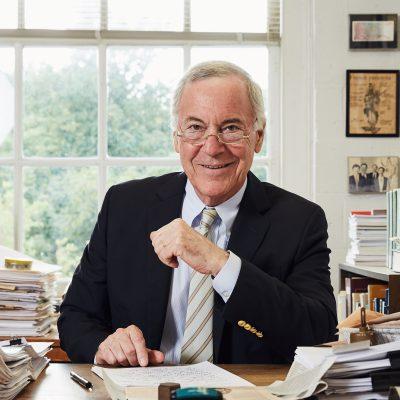
Steve Hanke is a professor of applied economics at Johns Hopkins University. John A. Tatom is a fellow at the Johns Hopkins Institute for Applied Economics, Global Health, and the Study of Business Enterprise.

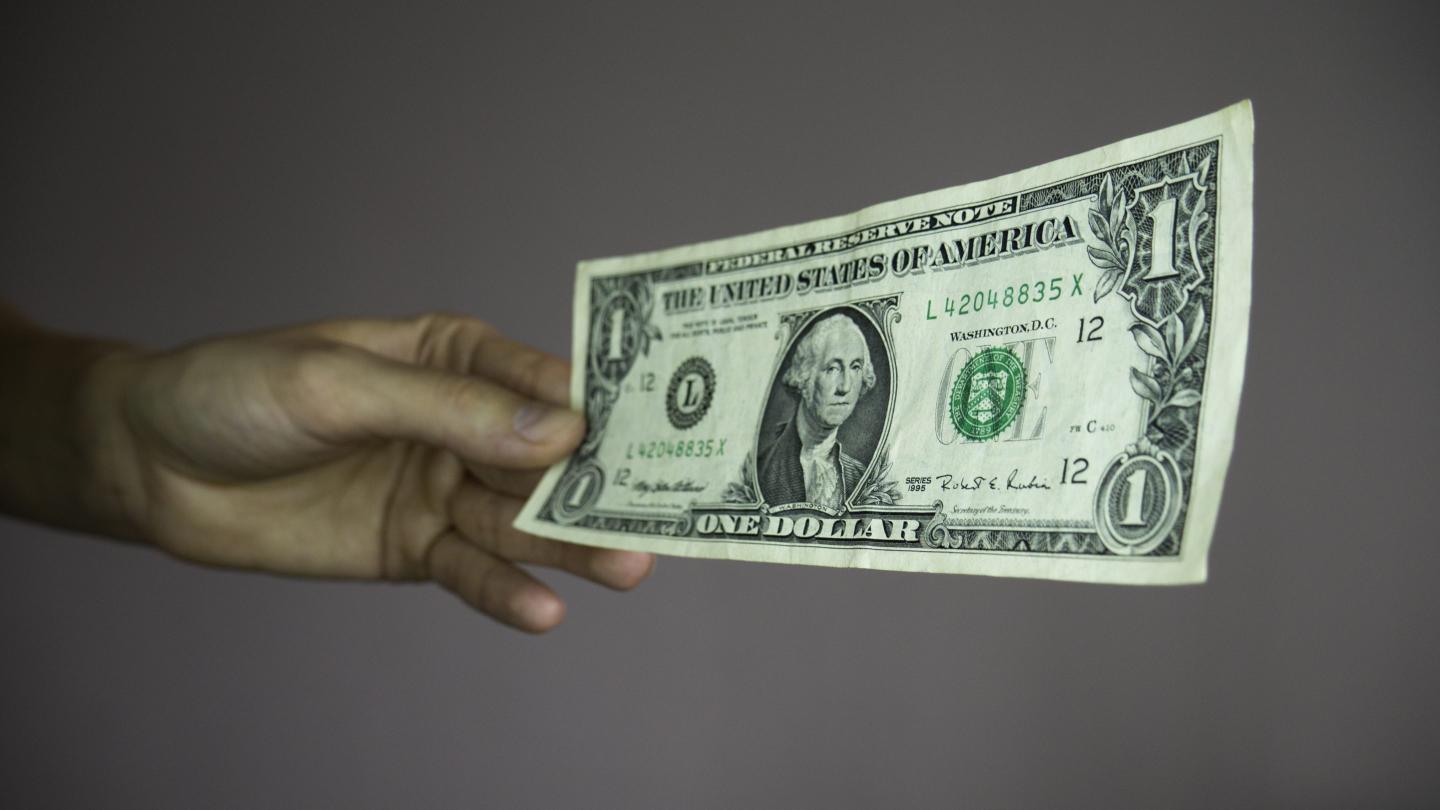
The “exorbitant privilege” associated with the U.S. dollar is why America can easily finance its systemic trade deficit.
The “exorbitant privilege” associated with the U.S. dollar is why America can easily finance its systemic trade deficit.getty images

Michael Pettis, a distinguished economist and professor at Peking University in Beijing, recently argued that “the U.S. would be better off without the global dollar.” His thesis is highly relevant because it agrees with that of Stephen Miran, the chairman of President Trump’s Council of Economic Advisers, whose work has turned into what is termed the “Mar-a-Lago Accord.”

While his conclusion was likely exaggerated by a headline writer, Pettis does attempt to make the case that the U.S. would be better off if its currency and financial markets were not the dominant global financial suppliers. This is akin to arguing that sliced bread was a destructive innovation.

The notion that dollar dominance is contributing to the structural, trade, or financial imbalances in the world is at the heart of the Mar-a-Lago Accord. Its proponents claim that the accord will lower the value of the dollar, eliminate the U.S. trade deficit, and shift global production back to the U.S.

U.S. dollar dominance—no downside

As it turns out, there is a longstanding consensus in economics and finance that a country whose currency is the dominant international reserve currency enjoys unambiguous benefits in terms of seigniorage (read: profits) from its ability to maintain outsized money stocks and greater credit supplies because of foreign demand for domestic currency (reserves) and financial assets. Full stop. There is no downside to having a currency that foreigners want to hold in their portfolios or assets denominated in that currency that foreigners also desire for relative liquidity and return considerations and because it improves access to credit denominated in the same liquid currency. This is the so-called “exorbitant privilege” associated with the U.S. dollar, and why the U.S. can easily finance its systemic trade deficit. 

But Pettis, and like-minded advocates of the accord, drag up an old canard that the dominant currency will also have an inflated value that makes it difficult for manufacturers and farmers to compete globally. These goods tend to be quite standardized and readily available in a multitude of national markets. For that reason, the relative price of these goods is also set in global markets and is independent of the relative currency value. A domestic potato does not become more expensive in dollars or in terms of other commodities when the exchange rate, or the value of the dollar in terms of other currencies, rises, unless that potato is only available as an import. Exchange rates matter to the extent that resources or outputs are influenced by them. In the U.S. case, most products are largely sold domestically or exported, and it is the domestic demand market that largely sets prices. One important exception, especially in agriculture, is the availability of domestic credit. The dominant currency country tends to have the greatest access to credit at relatively unchanged prices, providing a reinforcing factor to the U.S. comparative advantage in food products and in the case of domestic agriculture.

Proponents of a Mar-a-Lago Accord tend to think of the U.S. available supply of assets as infinitely available at relatively unchanged liquidity and relative returns. This is false. When supplies of government securities become threatened by political intervention, foreigners can substitute toward private sector securities, reducing any perceived political risk. Similarly, they can substitute across currency denominations or political risk as relative liquidities or risks change. There is no question that managing a portfolio of U.S. dollar or foreign currency denominated U.S. assets can be difficult and cannot assume infinite supplies of particular assets across suppliers. But standard risk-return considerations make this easier in the domestic market of the dominant currency. On the other hand, some proponents of the accord advocate a tax or charge on foreign purchases of U.S. assets. Due to the heterogeneity of such assets, it would be very difficult to design a comparable charge across assets that adjusts for differences in various risk and return expectations.

A different situation

A third fallacy in proposals for a Mar-a-Lago Accord is that the supposed historical parallels are, in fact, nonexistent. Proponents focus on the 1985 Plaza Accord, when major European countries, Japan, and the U.S. decided to lower the value of the dollar through coordinated intervention in economic policies. The prospective success of this precedent cannot be assumed to apply as a general matter. From 1980 to 1985, the value of the dollar rose 46.3%. This was no accident or random event. Instead, it was due to Reaganomics; namely, cuts in U.S. tax rates and policies designed to reduce inflation. The return to investment in the U.S. rose for both domestic and foreign investors. This boosted domestic investment and productivity. The Plaza Accord involved a set of U.S. and foreign policies to depreciate the dollar. By 1990, it was clear that these policies were largely successful in reversing the earlier appreciation.

The current situation is quite different than the 1980s. While an extension of the 2017 Trump tax cuts (read: the avoidance of a tax increase) is on the table, the recent rise in the value of the dollar is far smaller than it was in the 1980s. Moreover, some of the recent appreciation of the dollar has already evaporated.

There was never a reason for a Plaza-like Accord before the recent tariff brouhaha, and there is none now. America should count its blessings as the world’s dominant-currency country.

The opinions expressed in Fortune.com commentary pieces are solely the views of their authors and do not necessarily reflect the opinions and beliefs of Fortune.

Read more:

  • How to restore confidence in the U.S. dollar—and why it’s faltering in the first place
  • The U.S. dollar is losing its status as a safe haven thanks to Trump’s tariffs. What does that mean for investors?
  • The truth about the dollar’s decline: ‘You’ll either have to raise prices, or lower profits’
  • ‘The Sell America Trade’: Who’s behind the sinking of the U.S. dollar
About the Authors
Steve H. Hanke
By Steve H. Hanke
Twitter icon
See full bioRight Arrow Button Icon
By John A. Tatom
See full bioRight Arrow Button Icon

Latest in Commentary

Finance
Lorem ipsum dolor sit amet, consectetur adipiscing elit, sed do eiusmod tempor incididunt ut labore et dolore magna aliqua. Ut enim ad minim veniam
By Fortune Editors
October 20, 2025
Finance
Lorem ipsum dolor sit amet, consectetur adipiscing elit, sed do eiusmod tempor incididunt ut labore et dolore magna aliqua. Ut enim ad minim veniam
By Fortune Editors
October 20, 2025
Finance
Lorem ipsum dolor sit amet, consectetur adipiscing elit, sed do eiusmod tempor incididunt ut labore et dolore magna aliqua. Ut enim ad minim veniam
By Fortune Editors
October 20, 2025
Finance
Lorem ipsum dolor sit amet, consectetur adipiscing elit, sed do eiusmod tempor incididunt ut labore et dolore magna aliqua. Ut enim ad minim veniam
By Fortune Editors
October 20, 2025
Finance
Lorem ipsum dolor sit amet, consectetur adipiscing elit, sed do eiusmod tempor incididunt ut labore et dolore magna aliqua. Ut enim ad minim veniam
By Fortune Editors
October 20, 2025
Finance
Lorem ipsum dolor sit amet, consectetur adipiscing elit, sed do eiusmod tempor incididunt ut labore et dolore magna aliqua. Ut enim ad minim veniam
By Fortune Editors
October 20, 2025

Most Popular

Finance
Lorem ipsum dolor sit amet, consectetur adipiscing elit, sed do eiusmod tempor incididunt ut labore et dolore magna aliqua. Ut enim ad minim veniam
By Fortune Editors
October 20, 2025
Finance
Lorem ipsum dolor sit amet, consectetur adipiscing elit, sed do eiusmod tempor incididunt ut labore et dolore magna aliqua. Ut enim ad minim veniam
By Fortune Editors
October 20, 2025
Finance
Lorem ipsum dolor sit amet, consectetur adipiscing elit, sed do eiusmod tempor incididunt ut labore et dolore magna aliqua. Ut enim ad minim veniam
By Fortune Editors
October 20, 2025
Finance
Lorem ipsum dolor sit amet, consectetur adipiscing elit, sed do eiusmod tempor incididunt ut labore et dolore magna aliqua. Ut enim ad minim veniam
By Fortune Editors
October 20, 2025
Finance
Lorem ipsum dolor sit amet, consectetur adipiscing elit, sed do eiusmod tempor incididunt ut labore et dolore magna aliqua. Ut enim ad minim veniam
By Fortune Editors
October 20, 2025
Finance
Lorem ipsum dolor sit amet, consectetur adipiscing elit, sed do eiusmod tempor incididunt ut labore et dolore magna aliqua. Ut enim ad minim veniam
By Fortune Editors
October 20, 2025
Fortune Secondary Logo
Rankings
  • 100 Best Companies
  • Fortune 500
  • Global 500
  • Fortune 500 Europe
  • Most Powerful Women
  • World's Most Admired Companies
  • See All Rankings
  • Lists Calendar
Sections
  • Finance
  • Fortune Crypto
  • Features
  • Leadership
  • Health
  • Commentary
  • Success
  • Retail
  • Mpw
  • Tech
  • Lifestyle
  • CEO Initiative
  • Asia
  • Politics
  • Conferences
  • Europe
  • Newsletters
  • Personal Finance
  • Environment
  • Magazine
  • Education
Customer Support
  • Frequently Asked Questions
  • Customer Service Portal
  • Privacy Policy
  • Terms Of Use
  • Single Issues For Purchase
  • International Print
Commercial Services
  • Advertising
  • Fortune Brand Studio
  • Fortune Analytics
  • Fortune Conferences
  • Business Development
  • Group Subscriptions
About Us
  • About Us
  • Press Center
  • Work At Fortune
  • Terms And Conditions
  • Site Map
  • About Us
  • Press Center
  • Work At Fortune
  • Terms And Conditions
  • Site Map
  • Facebook icon
  • Twitter icon
  • LinkedIn icon
  • Instagram icon
  • Pinterest icon

© 2026 Fortune Media IP Limited. All Rights Reserved. Use of this site constitutes acceptance of our Terms of Use and Privacy Policy | CA Notice at Collection and Privacy Notice | Do Not Sell/Share My Personal Information
FORTUNE is a trademark of Fortune Media IP Limited, registered in the U.S. and other countries. FORTUNE may receive compensation for some links to products and services on this website. Offers may be subject to change without notice.


Latest in Commentary

soccer moms
CommentarySports
Why soccer moms are shaping the future of football in the U.S.
By Ruslan BashirovMay 31, 2026
2 hours ago
Matt Rogers
Commentarystart-ups
I worked with Steve Jobs at Apple, where every OS update killed startups. AI founders are about to face the same thing
By Matt RogersMay 30, 2026
23 hours ago
sam
CommentaryChips
The AI economy could crash on mounting chip costs — and those token costs won’t help
By Rakesh KumarMay 30, 2026
24 hours ago
pope
Commentaryregulation
The Pope and Anthropic agree: AI Companies cannot govern this alone
By Shlomit WagmanMay 30, 2026
1 day ago
t
CommentaryCoding
Girls Who Code CEO: 70% of teen girls want to work in cybersecurity. We’re losing them before they start
By Tarika BarrettMay 29, 2026
2 days ago
r
CommentaryLayoffs
Big Tech is laying off developers. My company just hired its first. We’re both right about AI
By Rob CollieMay 29, 2026
2 days ago

Most Popular

Surging Treasury yields expose a brutal truth: America has no margin for error on its $39 trillion debt
Economy
Surging Treasury yields expose a brutal truth: America has no margin for error on its $39 trillion debt
By Shawn TullyMay 30, 2026
1 day ago
U.S. says deals with Iran for safe Hormuz transit are prohibited
Politics
U.S. says deals with Iran for safe Hormuz transit are prohibited
By Jack Wittels and BloombergMay 30, 2026
20 hours ago
After a judge ordered Trump's name be removed from the Kennedy Center, president says it will 'soon be closed, probably never to open again'
Law
After a judge ordered Trump's name be removed from the Kennedy Center, president says it will 'soon be closed, probably never to open again'
By Collin Binkley and The Associated PressMay 30, 2026
14 hours ago
Gen Z is rejecting $200 dates and choosing 'solo-maxxing'—and dating apps are taking a hit
Economy
Gen Z is rejecting $200 dates and choosing 'solo-maxxing'—and dating apps are taking a hit
By Sydney LakeMay 30, 2026
1 day ago
After Blue Origin rocket explosion, NASA's entire moon exploration program depends on SpaceX for now as Musk eyes blockbuster IPO soon
Innovation
After Blue Origin rocket explosion, NASA's entire moon exploration program depends on SpaceX for now as Musk eyes blockbuster IPO soon
By Jason MaMay 30, 2026
15 hours ago
Current price of oil as of May 29, 2026
Personal Finance
Current price of oil as of May 29, 2026
By Joseph HostetlerMay 29, 2026
2 days ago