
Hims has become one of the most recognizable names in online hair loss treatment, promising convenient access to proven medications without a trip to the doctor’s office. Our Hims hair loss review focuses on what those promises actually look like in real life, from signup and telehealth visits to unboxing, using the products, and tracking early results.
Drawing on hands-on testing, we break down the biggest pros, the most important drawbacks, and who is most likely to benefit, so you can decide if Hims is right for you.
What is Hims Hair Loss Treatment?
Hims hair loss treatment is a telehealth-based service that evaluates your hair loss online and, if appropriate, prescribes medications like finasteride and minoxidil to be shipped directly to your home. Unlike buying a mens probiotic or a men’s multivitamin, for instance, obtaining Hims is more of a process (rightfully so). After completing an intake form and sharing photos, a licensed provider reviews your case and recommends a regimen that may include topical minoxidil, oral finasteride, or combined formulas such as a finasteride-minoxidil spray or chewable hybrid.
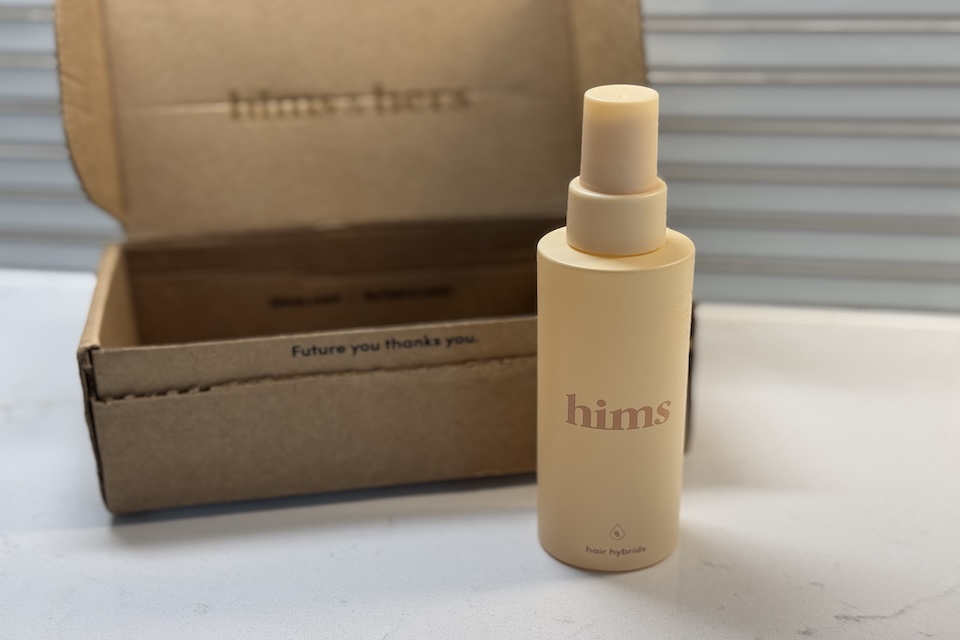
The core goal is to slow or stop male pattern hair loss and stimulate regrowth, especially at the crown and thinning areas, with visible changes typically starting after about three to six months of consistent daily use. Hims also offers supportive hair products and supplements, but the primary therapeutic effect comes from its prescription and over-the-counter drugs that target the hormone DHT (via finasteride) and improve follicle blood flow and activity (via minoxidil).
Hims Hair Loss Specs
Our Experience with Hims Minoxidil for Men
Taylor, 31, tested Hims Topical 0.3% Finasteride and 6% Minoxidil solution once daily at night for about nine months. His notes highlight both the practical day-to-day realities of using the spray and the bigger-picture value compared with more invasive options like hair transplant surgery.
What We Liked
Ease of Use
Taylor found the product very easy to work into his nightly routine, applying it once before bed and letting it dry for about 30 minutes before lying down. He shared that “the product is slow to dry and felt slightly moisturizing or oily,” but once it set, “it felt a little hard on my hair like hair spray but wasn’t clumpy or noticeable.” He appreciated that “there isn’t much of a smell to it and it is extremely easy to use overall.”
Visible Results
He also reported a clear improvement in shedding, thickness, and coverage over time. Taylor noted that the initial fallout around month one seemed to be “all the hair that was weak or going to fall out on its own,” which then “developed into new hair growth that is stronger and more full.”
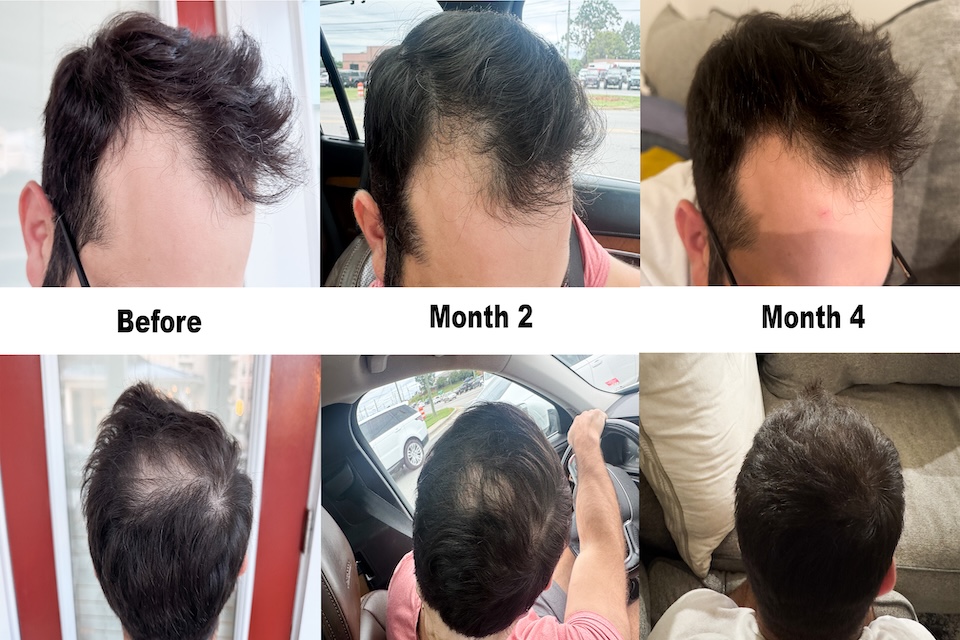
By month two, he rated his shedding, thickness, and new growth at a 4 out of 5, and said his “overall scalp” showed improvement—and he felt confident he saw noticeable changes around weeks five through eight. By the end of the test, he rated his final results a 4 out of 5. “I now have a fuller scalp of hair overall and my hairline in the front is regrowing back to what it used to be,” Taylor said.
What We Would Change
Planning Ahead
Most of Taylor’s critiques are about practicality, not performance. Because the solution is “slow to dry,” he emphasized the need to plan ahead at night: “When using the product, give it about 30 minutes to get dry enough to lay down before you go to bed.”
Initial Shed
Taylor also pointed out the emotional hurdle of the early shed, writing that he “was slightly concerned at month one with the fallout” before understanding it as part of the process, and his experience underscores how helpful clearer upfront education about this phase could be.
Price
Price and effort are other areas where some users may hesitate, even though Taylor ultimately feels the value is strong. At $150 for a three‑month supply (about $50 per month), he framed the cost against surgical options: “This product would need to be used for 10 years consistently to equal roughly the cost of a transplant.” For someone on the fence about surgery, he said “this product is a great alternative with amazing results,” even if “there is more effort with using this product.”
Consistency
As with most hair loss treatments, consistency is crucial. Taylor mentioned that staying consistent required deliberate habit-building—like keeping the bottle next to his toothbrush as a nightly reminder—which may not work for everyone without that kind of structure.
Who It’s For & Who It’s Not For

Comparing to Other Hair Loss Treatments
Frequently asked questions
Does Hims actually work for hair loss?
Hims provides treatments centered on finasteride and minoxidil, both of which are supported by clinical evidence for slowing male pattern hair loss and promoting regrowth in many users. Independent reviews and user reports generally find that men who start early and stay consistent for at least three to six months are the most likely to notice reduced shedding and thicker coverage.
What is better, Hims or Rogaine?
Hims can bundle prescription finasteride with minoxidil and telehealth care, while Rogaine is an over-the-counter 5% minoxidil product without finasteride or provider oversight. For someone who wants a simple OTC option and to avoid finasteride, Rogaine may be the better fit; whereas, men seeking a finasteride–minoxidil combo and online medical guidance may be better served by Hims.
As an aside, we’ll note that you should keep any minoxidil products away from your pets, as the medication can be highly toxic to dogs, cats, and other animals even in small amounts.
Does Hims minoxidil regrow hair?
Hims minoxidil uses the same active ingredient and strength (typically 5% for men, or 6% in certain combo formulas) that has been shown to stimulate hair regrowth in many men with androgenetic alopecia. When applied as directed every day for several months, it can help increase hair density and regrowth in thinning areas, though it does not work for everyone and results must be maintained with ongoing use.