
Public service announcements are often dismissed amid the cacophony of daily life, but a confluence of events appears to have mobilized the British people into action as they rush to prepare for the worst.
The U.K. government launched its Be Ready campaign on Oct. 22, urging people to hold three days of supplies in the event of extreme weather, cyberattack or other emergency.
The recommended checklist included three liters of drinking water per person per day, nonperishable food that needs no cooking or refrigeration, flashlights, power banks, first-aid supplies, a battery-powered or windup radio, and food and water for pets. Households were also encouraged to keep cash in case card payments and ATMs go down.
Britons took heed and hoarded up to 700 million pound sterling ($917 million) in additional cash over the last five weeks, according to Bloomberg, which cited Bank of England data.
Cash withdrawals over that span were about double the pace compared to the three previous years, and the only other period that saw more hoarding was from October to November in 2009, when the economy was still reeling from the global financial crisis.
Meanwhile, total cash in circulation jumped by 1.5 billion pounds ($1.97 billion), marking the biggest surge since 2014.
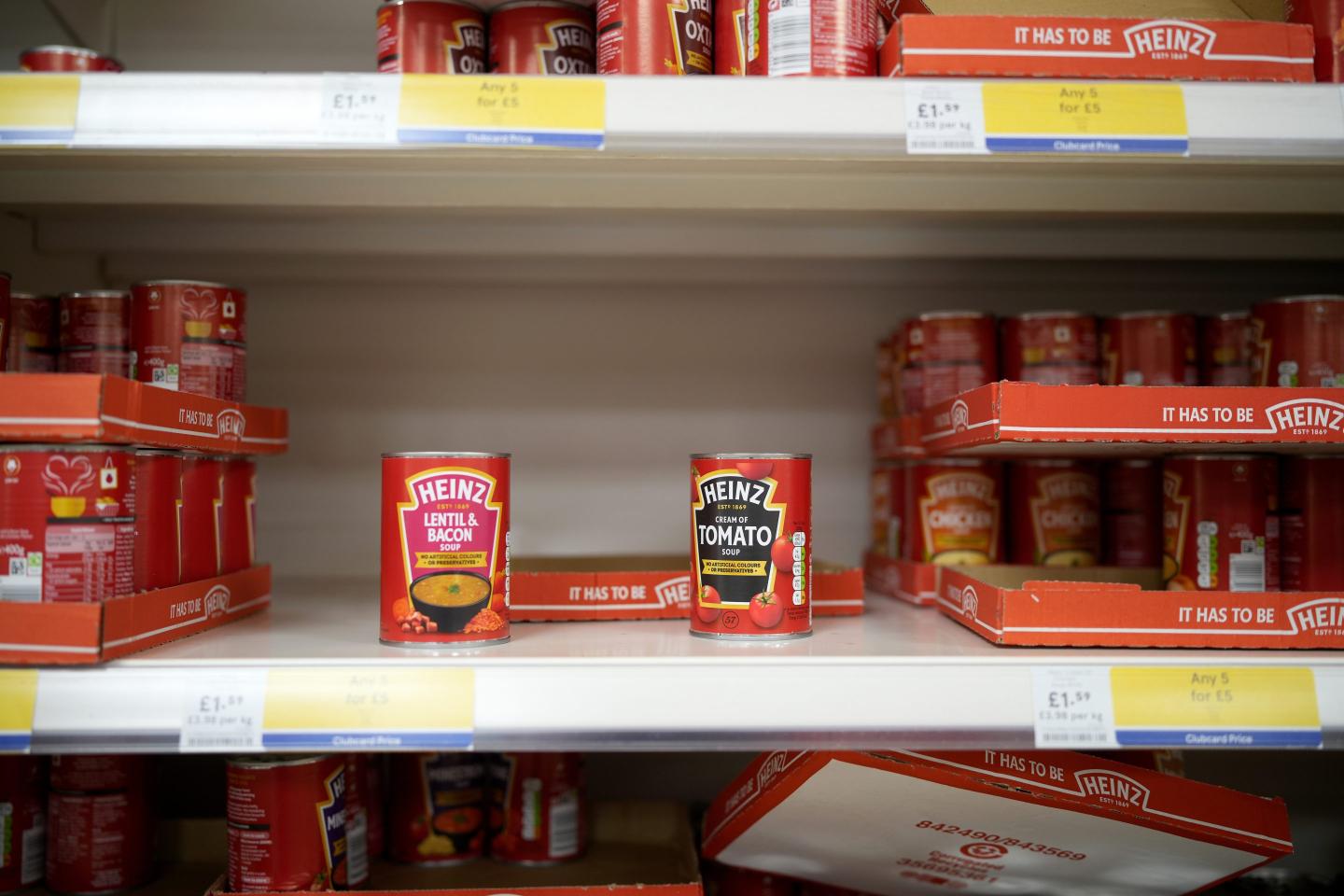
The Bank of England didn’t single out a reason for the cash hoarding, but separate data on retail sales pointed to emergency stockpiling—signaling that doomsday prepping has gone from the fringes to a mainstream trend.
The Office for National Statistics said the volume of goods sold in October jumped by 0.7% from the prior month, crushing consensus expectations for flat sales. Food store sales, which primarily consist of supermarkets, climbed by 0.8%.
“Supermarkets have told us that sales of long-life food items such as tinned food and UHT milk were boosted by the government’s Be Ready campaign,” ONS Chief Economist Grant Fitzner said.
Other categories saw even more volume, with sales at textile, clothing and footwear stores up 1.5% in October.
The U.K. government has described Be Ready as the first stage of a three-year campaign and has published household preparedness guidance since May 2024.
Still, the latest plea received more urgency after Defense Secretary Wes Streeting warned last month an adversary could attack by 2030 while also pointing to cyberattacks, organized crime, and climate change.
The message came just as hackers waged a massive crime spree in October, hitting hundreds of companies and institutions around the world. Cyberattacks even reached freezers across Europe and at U.S. military bases.
The hacking was so widespread that it was dubbed “Black October,” which reached a crescendo with the largest crypto heist in history when North Korea swiped $6.3 billion from Binance.
November has seen a new string of cyber incidents, with U.S. spy agencies and the Air Force targeted. In the U.K., the Department for Work and Pensions, which administers Britain’s welfare system, took many of its services offline on Friday as officials declined to rule out a cyberattack.
Meanwhile, European governments and analysts have accused Russia of waging an escalating “hybrid warfare” campaign to undermine support for Ukraine.
Incidents are designed to stay below the threshold of open war and include physical sabotage, such as the cutting of undersea fiber-optic cables and an explosion at a railway link in eastern Poland that is used for delivering aid to Ukraine.
In addition, NATO airspace has been violated, drones have threatened airports and military bases, cyberattacks have hit European governments, and disinformation campaigns have sought to influence elections.
As Russia’s war in Ukraine continues to stall, experts have warned that President Vladimir Putin could get increasingly desperate and escalate from hybrid war to full-blown war.
Last year, the Danish Defense Intelligence Service assessed the risk from Russia once its Ukraine war stops or freezes in place.
Russia could launch a local war against a bordering country within six months, a regional war in the Baltics within two years, and a large-scale attack on Europe within five years if the U.S. does not get involved, according to a translation of the report from Politico.
“Russia is likely to be more willing to use military force in a regional war against one or more European NATO countries if it perceives NATO as militarily weakened or politically divided,” according to the report, which was dated Feb. 9, 2025. “This is particularly true if Russia assesses that the U.S. cannot or will not support the European NATO countries in a war with Russia.”