The Pentagon wants every major U.S. military base to run for 90 days without outside help if a war cuts off power and supply chains. Across the Atlantic, Britain is telling families to keep canned food, bottled water and cash on hand to get through three days of disruption.
The two efforts aren’t known to be coordinated, and neither government has said a new war is imminent. But both are planning for disruptions that could leave homes and military installations without the services they depend on.
Inside the Pentagon’s 90-day plan
The Pentagon is developing a requirement that every major military installation in the continental U.S. be able to sustain essential operations on its own for at least 90 days, Fox News Digital reported Oct. 25, citing internal planning documents. The requirement falls under an initiative called FORTRESS, short for Federal Operations for Resilience, Troop Resources, Energy, Supply, and Survivability.
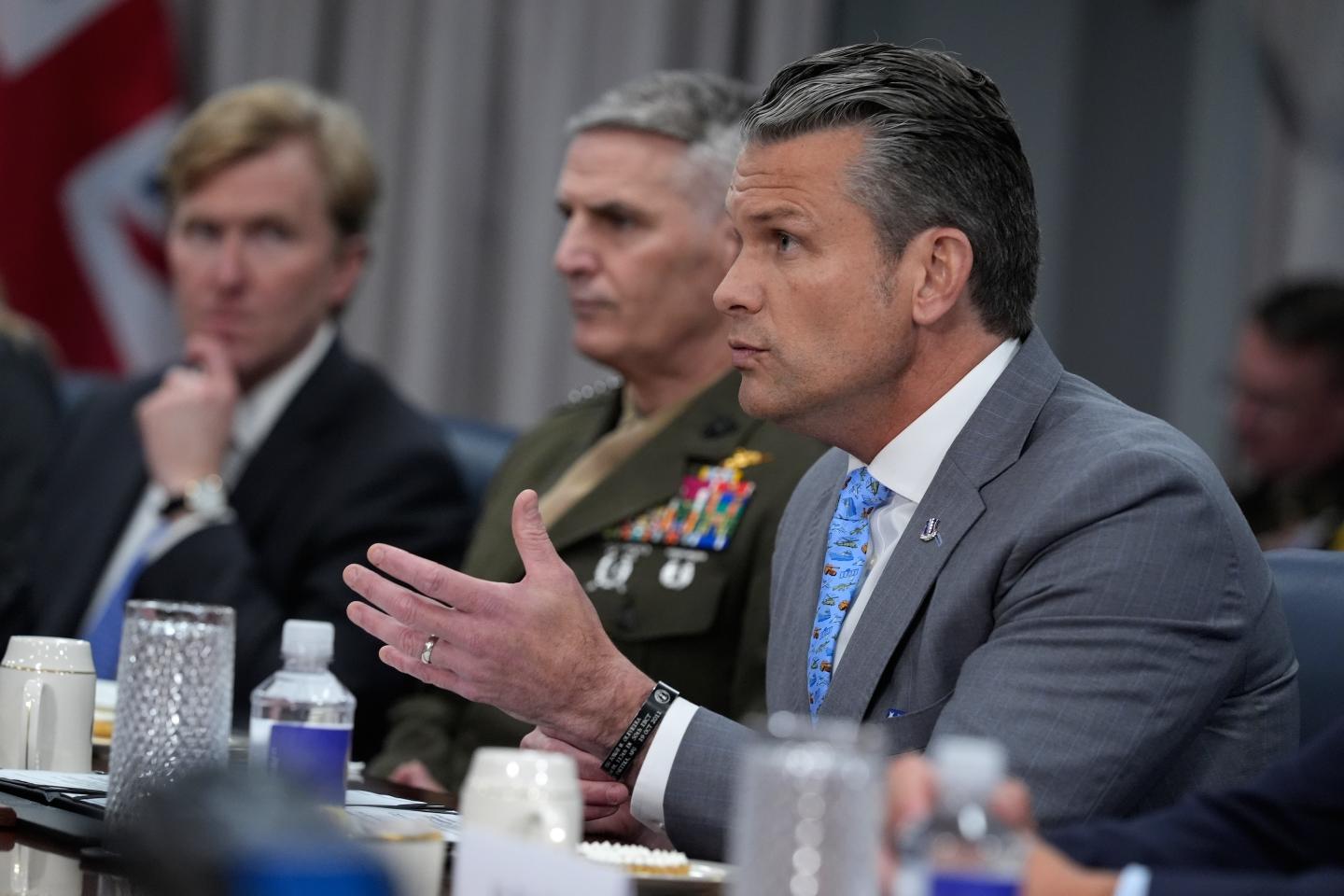
Defense Secretary Pete Hegseth unveiled FORTRESS in his Sept. 30 “State of the Force” address. He pledged that every major installation would generate its own power, independent of the civilian grid. A follow-up memo laid out plans for a dedicated program office. The 90-day standard goes further than that original goal, extending self-sufficiency beyond electricity to water, fuel and communications.
The plan envisions portable nuclear reactors, large-scale battery storage and microgrids that can disconnect bases from civilian power networks. The Army has already moved in that direction: In August it announced up to $2.2 billion in awards to build nuclear microreactors at five bases, including Fort Bragg and Fort Hood.
“Power is combat now,” Pentagon chief spokesperson Sean Parnell, who Fox said led the FORTRESS initiative, told the outlet. “Without electricity, you lose communications, water, logistics, assembly lines and just basic military command structures.”
FORTRESS also calls for strategic reserves of munitions, fuel, critical minerals, electronics, spare parts and medical supplies. For the military’s most critical dependencies, it would require at least two qualified supply or production pathways, so that losing a single factory or supplier wouldn’t halt operations.
Through the Civil Reserve Manufacturing Network, an existing program folded into FORTRESS, the Pentagon plans to identify commercial factories that could switch to defense production in a crisis. Technical specifications, cybersecurity protections, contracting arrangements and conversion procedures would be worked out in advance.
The threat no one names out loud
The Pentagon hasn’t publicly identified a specific country as FORTRESS’s target. But in a February 2024 joint advisory, the Cybersecurity and Infrastructure Security Agency, NSA and FBI warned that Chinese state-sponsored hackers known as Volt Typhoon had compromised IT networks of U.S. organizations in the communications, energy, transportation and water sectors. The agencies said the hackers were potentially positioning themselves to disrupt essential services during a future conflict. Microsoft first flagged the group’s activity in 2023.
The Pentagon hasn’t released a cost estimate or timeline. A senior defense official told reporters Oct. 20 that officials are still assessing the needs of roughly 500 bases in the continental U.S. and that fully meeting the goal could take decades, according to Air & Space Forces Magazine. The magazine estimated the cost could run into the tens of billions of dollars, if not hundreds of billions.
Britain tells families to prepare for 3 days without essential services
Details of the Pentagon plan emerged days after the British government launched its Be Ready campaign on Oct. 22.
The government’s checklist recommends three liters of drinking water per person per day. It also lists nonperishable food that needs no cooking or refrigeration, flashlights, power banks, first-aid supplies, a battery-powered or wind-up radio, and food and water for pets. Households are also encouraged to keep cash in case card payments and ATMs go down.
The government describes Be Ready as the first stage of a three-year campaign covering severe weather and other emergencies. Britain has published household preparedness guidance since May 2024, so the campaign isn’t a sudden signal that war is near.
Britain’s defense leadership has been far blunter. Writing in The Telegraph over the weekend, Defence Secretary Wes Streeting warned that adversaries could have the force strength and war economy to attack by 2030. That leaves Britain and its NATO allies a little over 1,000 days to prepare, he wrote.
“To prevent the worst, we have to prepare for it,” Streeting wrote. He pointed to threats from hostile states, cyberattacks, organized crime and climate change, and argued that terms like “hybrid warfare” understate the danger.
Russia, China and Iran are already probing British systems
The concerns aren’t new. Britain’s 2025 National Security Strategy named Russia the country’s most acute threat and flagged Iranian hostile activity. It also cast China as a sophisticated, persistent challenge and highlighted undersea cables, energy pipelines and transportation networks as infrastructure to protect.
A July government resilience report pointed to new conflict in the Middle East, a growing number of sub-threshold attacks from Russia and several major cyberattacks.
Britain’s National Cyber Security Centre handled more than 200 cyber incidents affecting critical infrastructure and its supporting ecosystem between June 2025 and May 2026. NCSC chief executive Richard Horne said in June that about 75% of those incidents were believed to be linked to state actors, naming Russia, China and Iran.
Britain isn’t alone
In March 2025, the European Commission unveiled a preparedness strategy calling for guidelines to help EU residents keep at least 72 hours of emergency supplies.
In the U.S., President Trump marked FEMA’s National Preparedness Month in September, an annual campaign dating to 2004, with a presidential message. He urged Americans to keep emergency kits, know their evacuation routes and ready themselves for “natural and man-made threats.”
Emergency preparedness is nothing new. But the latest push comes as Western governments grow more worried about cyberattacks, sabotage and other forms of hybrid warfare linked to Russia, China and Iran. The next conflict may not start on a battlefield. It could start with the power going out.