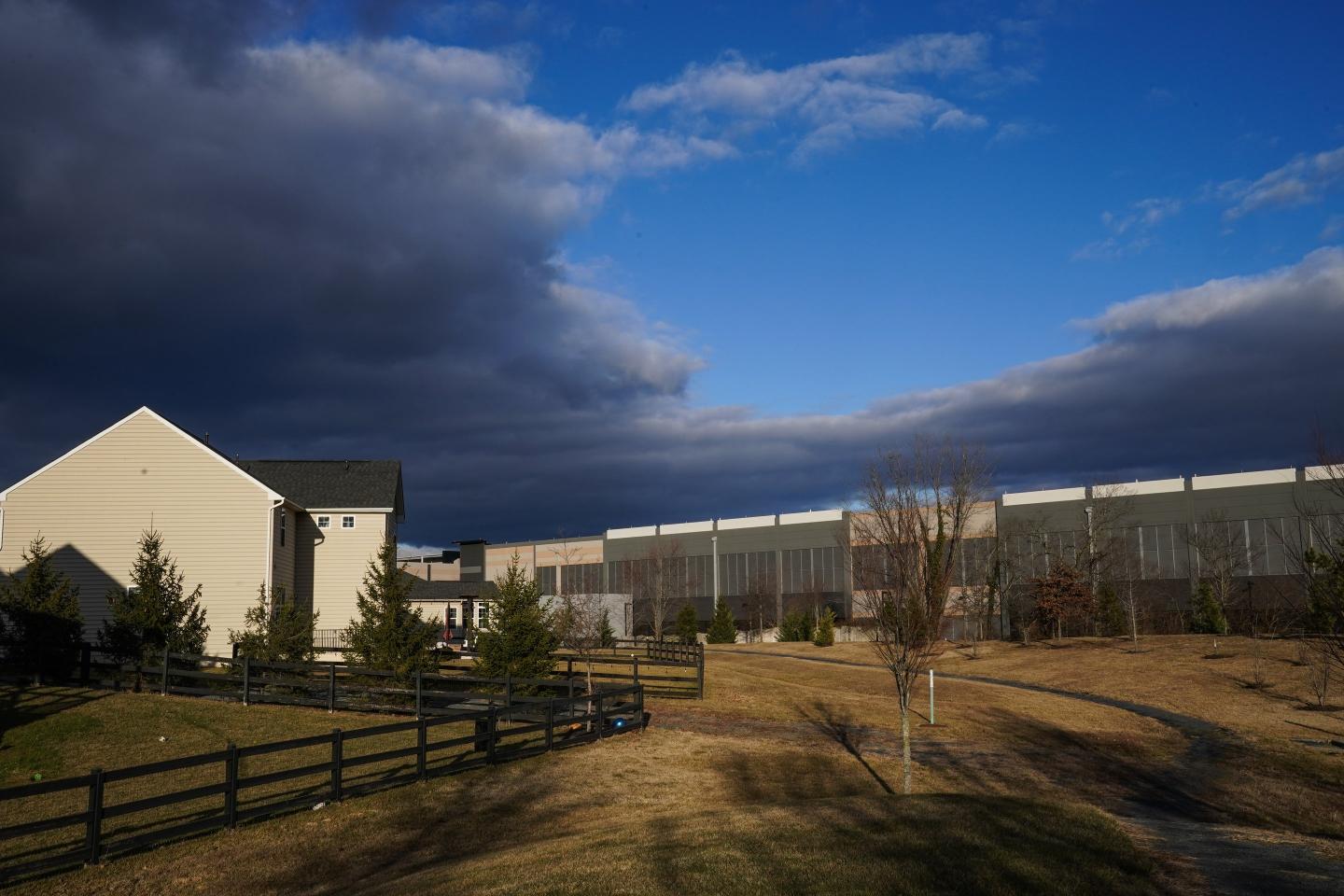
Data centers were on the ballot, both directly and indirectly, in the 2026 midterm elections.
A total of 41 local ballot initiatives concerning data centers in 10 states were up for a vote. All but one resulted in measures to restrict or limit their development.
The centers also may have played a role in several high-profile contests. In Ohio’s race for a U.S. Senate seat, Democratic challenger Sherrod Brown hammered incumbent Jon Husted for his past support of data centers. In Texas, Gina Hinojosa made Republican Gov. Greg Abbott’s track record of supporting tax breaks for data centers a focal point of her winning campaign. Her victory marked a historic break with decades of Republican control in the state. As governor-elect, she immediately reaffirmed her campaign pledge to pursue legislation protecting Texans from data centers.
According to NBC exit poll data, 56% of voters felt that data centers were a major or even a crucial factor in influencing their congressional vote. For Black voters, the share was even higher, at 68%.
Data centers are key components in artificial intelligence infrastructure, housing the computing resources used to train AI models. These massive facilities guzzle energy and water and are very noisy. Many Americans argue that their costs, in terms of land use, higher utility bills and environmental degradation, outweigh the benefits.
I’m a professor of political science who studies political parties, electoral politics and technology. My forthcoming book, “Democratic Intelligence: Navigating Electoral Politics in an AI World,” examines how the adoption of this technology is reshaping established practices and power dynamics in campaigns.
Before the midterms, it had already appeared to be disrupting some partisan alignments. Following those historic elections, which have thoroughly shaken up America’s political geography, the widespread pushback against data centers is now part of the narrative explaining the dramatic results of the 2026 midterms.
Disrupting political polarization
In contrast to many other issues, concern about data centers is relatively bipartisan. The Annenberg Public Policy Center asked Americans in mid-2026 whether they support or oppose having data centers in their communities. Opposition was stronger among Democrats, at 69%, than Republicans, at 54%, but it crossed party lines.
Local ballot measures restricting data centers also cut across traditional political alignments. Communities as disparate as deeply red Edgewater, Florida, and solidly blue Alhambra, California, voted to prohibit them. The margins for the restrictions were large, averaging 49 percentage points.
The one restrictive local measure that failed to pass was in Harwood, North Dakota, population around 800. With a data center project already in progress, political and economic leaders prevailed in arguing that restrictions would cut into local revenue and stifle economic development more generally.
Allies and adversaries
Exit polls taken during the midterm elections also detected a degree of bipartisanship. Of the 56% of voters who said data centers played a “major” or “crucial” role in their vote, approximately two-thirds were Democrats and one-third Republicans. Exit polls, however, should be interpreted with care, given their methodological limitations.
These responses hint at why the narrative that opposition to data centers helped fuel the Democrats’ historic midterm victory emerged right away.
The seeds of this argument were in place before the election, picking up on unusual alliances that marked the data center opposition. In cities and counties, zoning fights are drawing a diverse kind of resistance: environmentalists, voters reeling under high electricity costs, local-control advocates and farmers concerned that data centers eat up land. They unite in opposition to projects backed by powerful corporate interests.
Some of the bipartisanship around this issue has even seeped into Congress. Several weeks before Election Day, the House passed the Ratepayer Protection Act by a 417-3 vote. The bill would require states to consider adopting a policy that data centers pay for the upgrades necessary to meet their high electricity needs. The three nay House votes were from progressives who felt the bill’s measures, which would be voluntary, didn’t go far enough to protect consumers.
Similar concerns killed the Senate version, a reminder that even allies sometimes follow different strategic paths. Some proponents of tighter regulation will accept incremental progress, while others push for more sweeping change.
Brookings Institution scholars anticipate that the newly elected Congress will take up the issue again, this time with a directive to states to establish mandatory, not voluntary, requirements.
Politics as usual
As the midterm elections approached, candidates up and down the ballot blanketed the airwaves and digital platforms with ads against data centers. President Donald Trump pushed back, suggesting that data center opponents want their communities to be “backwards and poor.”
Some Republican candidates walked a fine line between responding to voters’ concerns and not alienating the president.
It matters little whether the data center electoral narrative is accurate, and so far, the reported evidence is limited. We need to know where losing candidates stood on data centers, not just the winners. That voters considered data centers important says nothing about which direction they leaned. And despite a 98% success rate across the 41 local ballot measures, it’s hard to gauge how much resistance there is to the more than 600 proposed data centers that are slated to be built.
What does matter is that many people apparently are accepting the narrative because that alone will affect politics and the economy. Consider Elon Musk’s post on Nov. 4 on X, his social media platform: “Data centers in space looking pretty appealing right now,” and the sell-off of data center-related stocks the next day.
As the 2028 presidential primaries come into focus, I believe we should expect to see many Democratic and Republican hopefuls emphasizing their support for data center restrictions and bans as they throw their hats into the ring.
Some parts of this article appeared in a previous article published on Oct. 26, 2026
Barbara A. Trish, Professor of Political Science, Grinnell College
This article is republished from The Conversation under a Creative Commons license. Read the original article.
