
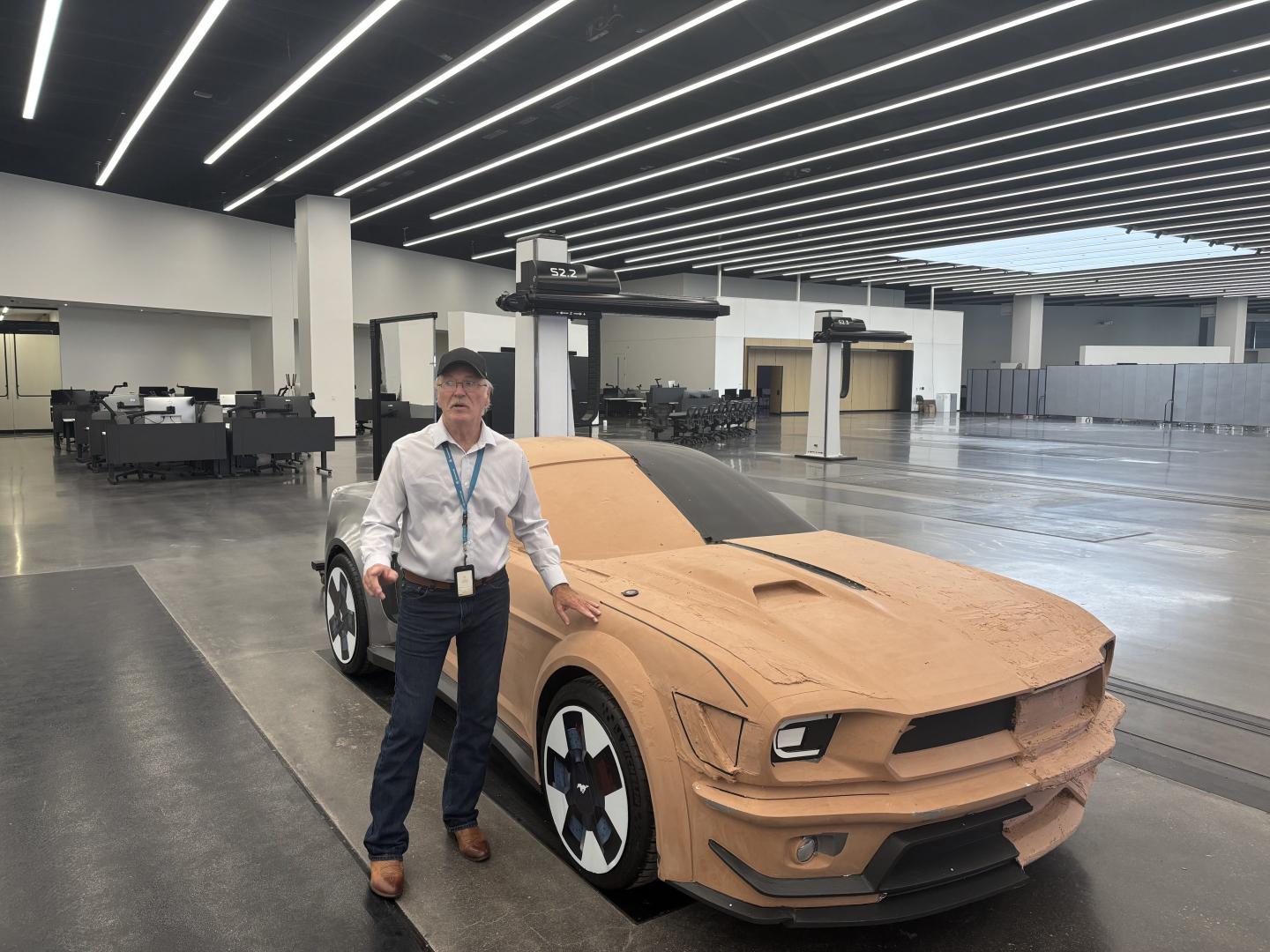
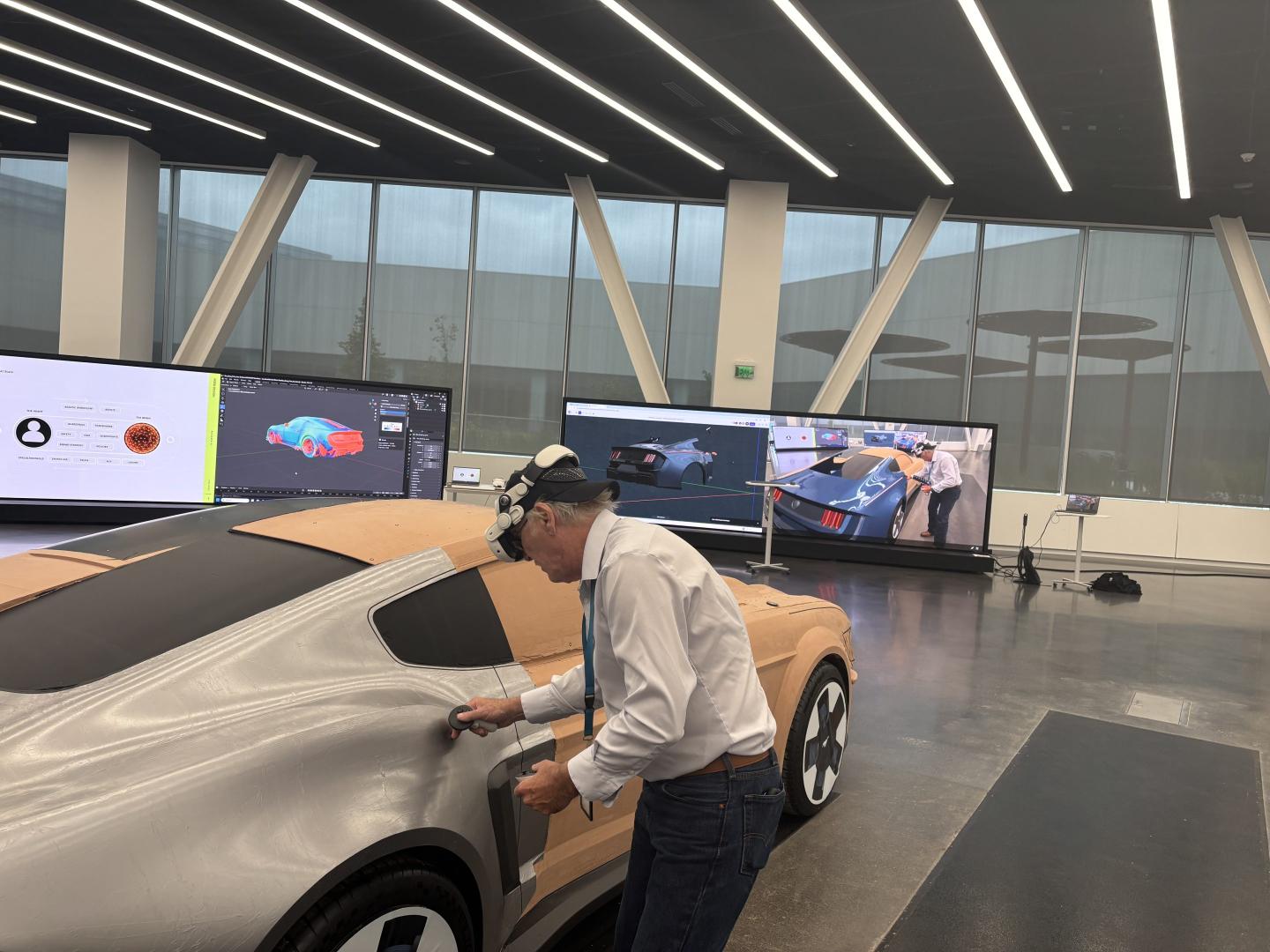
John “Rex” Allen is 68, wears cowboy boots, a black baseball cap, and he’s spent four decades building life-size cars out of clay. These days he builds inside a virtual-reality headset, too.
He does his work upstairs at Ford Motor Company’s gleaming new headquarters in Dearborn, Michigan, where the bird sounds in the yard aren’t even real. Just over four miles away, the 109-year-old Rouge Plant looks much the way it did in the 1920s, except with 3D-printed parts patching the factory together and a “Green Roof” overhead that is one of the world’s largest.
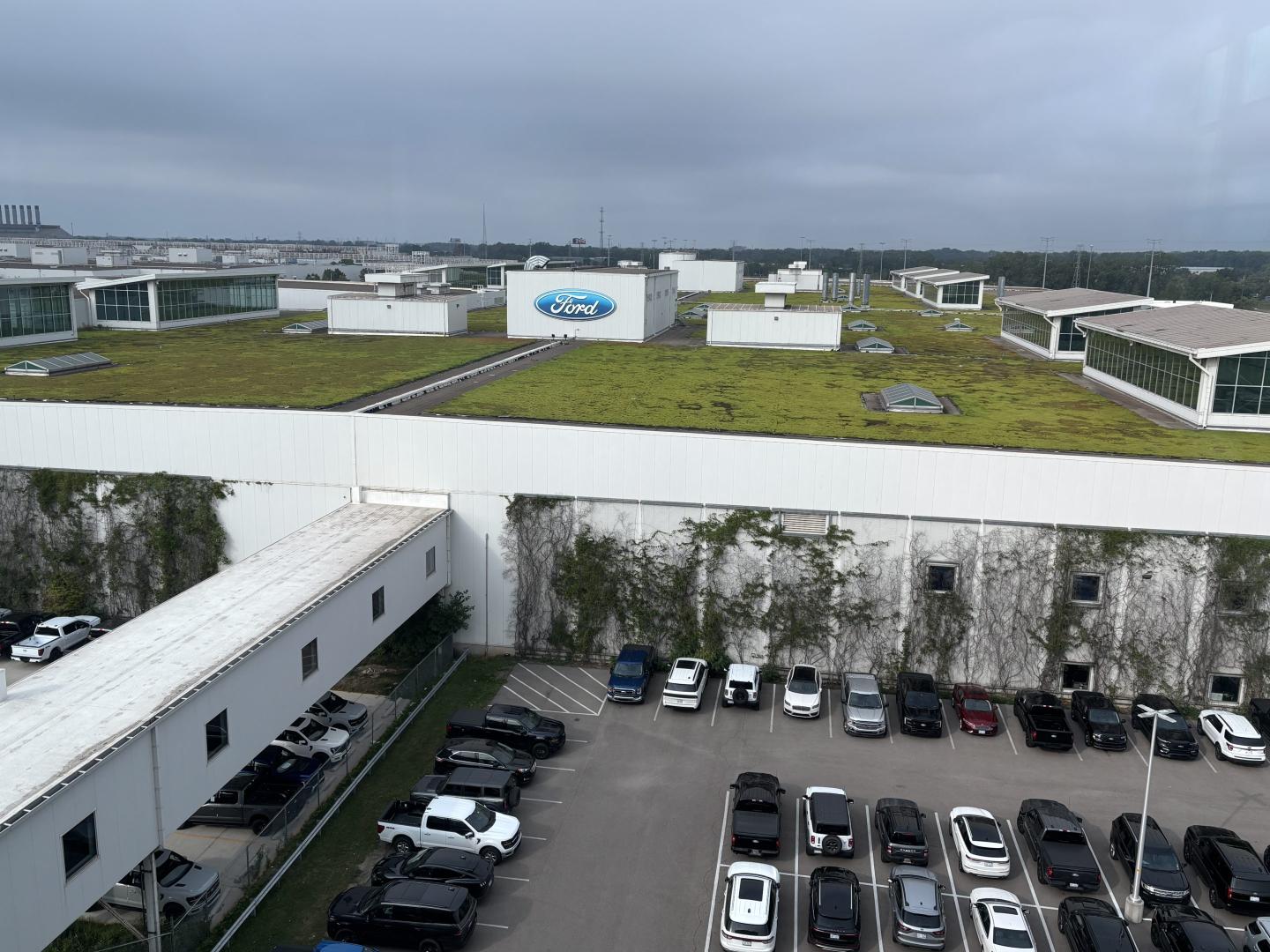
The new Ford World HQ opened in November 2025 as a 21st-century expression of the Ford Rouge logic, according to Ford Land CEO Jim Dobleske. World HQ stacks modern teams vertically the way Henry Ford stacked steel and assembly at the Rouge. It used to take 30 minutes to move a car from one end of the old design center to the other; now it takes “just over three minutes.” The birdsong in the courtyard is piped in, predator calls included, to keep Michigan’s ever-present geese away from workers wolfing down their lunches. “Those are not real birds,” Dobleske said, “that’s all fake.”
Fortune visited Ford in 1947 to document the “rebirth” of the company, when founder Henry Ford died and his grandson, Henry Ford II, was leading the postwar modernization of the iconic American manufacturer. Nearly eight decades later, Detroit as a whole is 13 years on from its historic bankruptcy process, but General Motors was the only member of the “Big Three” auto firms to post a net profit in 2025.
All three OEMs, or original equipment manufacturers, announced major pullbacks in their electric-vehicle strategies in 2025 as the federal government scrapped subsidies, prompting Ford CEO Jim Farley to (accurately) predict that the EV market would be cut in half as a result. In December, Ford announced about $19.5 billion in charges and pivoted to another rebirth: a race against the calendar.
Upstairs at Ford World HQ, Allen is looking at his clay cars, his monitors, his plastic models and his virtual reality glasses.
‘Somebody told me they created cars out of clay’
The Ford modeling studio is massive, with ceilings 25 to 30 feet high and a wide-open, blank space that feels like an empty Hollywood studio, awaiting a Gilmore Girls set or a replica of the Titanic.
Allen, with his thin white mustache complementing his mane of white hair, is doing what he’s always done: building cars out of clay.
Like most Michiganders who still work in auto manufacturing, Allen has an unimpressed air about his remarkable, unusual career. Asked how he joined the ranks of elite auto sculptors, he explains that he felt forced into it by fear of automation. “I used to be a machinist, and then it started becoming robotic, so I got out of that business real quick.” He reasoned that he’d always been a “bit of an artist,” and in high school loved comic books and cars and ran a side hustle airbrushing the “Rat Fink” mascot and other Kustom Kulture motifs onto T-shirts for other kids. Sort of a Mickey Mouse by way of R. Crumb, Rat Fink was a neon-green rodent mascot that exemplified the proto-punk vibes of Southern California car culture of the 1960s, but Allen said his tastes also ran a bit less gonzo — he used to carve Disney characters out of wood and clay for extra credit in art class, along with watercolors and oil paintings for extra credit in art class. “I made good money in high school,” Allen shrugs. “I loved doing that stuff.”
He didn’t set out to become a clay-man, either. “Somebody told me they created cars out of clay,” he explains, “which I had no idea of, so he introduced me to a guy that owned a business. And I mean, I fell right into it.” Allen recalled that he “tried it once” and the results spoke for themselves. He was 26 and soon found himself working 100 hours a week, pulling down roughly $100,000 a year.
Allen wasn’t in-house at Ford, then. At that time, Detroit had a dense web of small model shops that handled overflow work for the Big 3 — Ford, General Motors and Chrysler (now Stellantis), along with their suppliers — and Allen worked at a half-dozen of them. Work was steady. “You could grab a job any day of the week in one of these places,” he said, recalling that he worked on the original concept for the Dodge Viper at a Chrysler satellite studio. He’s now been at Ford for 24 years.
So, why clay? Allen and his colleagues, Nick Navarro, Shawn Fairall and Michael Smith, explained that it’s been that way for nearly a century. “Having the physical property in front of you to have the conversation with multiple people has always been a key part of the process,” Fairall said. “There’s always kind of this general misconception that computers have taken over car design,” Fairall said. “Clay has never really gone away.”
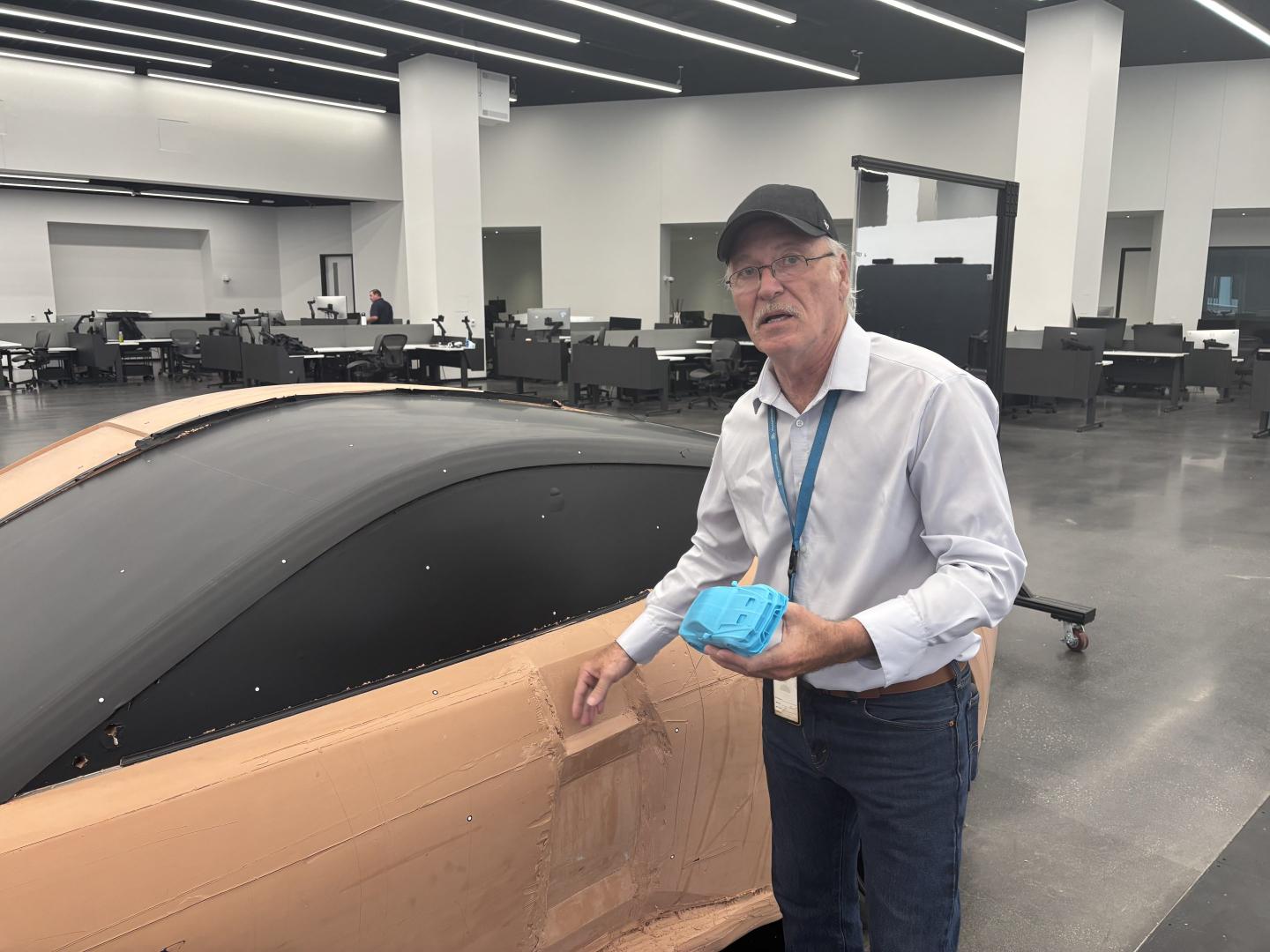
Smith, who leads research and development for Ford’s design team, always describes it to interns the same way. “We don’t sell pretty pictures of cars,” he said. “We sell vehicles.” He said a director might look at the clay and say, “you need to pull this back three more inches.”
It used to take about two weeks for one modeler to sculpt one full-size model, Allen said, and every change meant more weeks of work to do by hand. About six years ago, that changed with virtual reality and 3D printing. Now Allen can knock out a design’s theme in five days.
Allen said he’s seen a lot of upgrades in 40-odd years. First came “sweeps,” templates that modelers could drag along a car’s side. “That was a wow factor there for a while,” Allen said. Then came machines that could map the body, cut pieces out of it, and eventually shape an entire side. Now the team can rough out a car in clay, scan it in about 20 minutes, put on a headset to refine the shape digitally, and have a mill carve out the new surface over a few shifts, then continue working the surface by hand for the finishing touches. They call it hybrid sculpting. “This one is leaps and bounds,” Allen said, “further than anything we’ve ever done.”
“Because of technology, we’ve reduced the people over the years, so there’s less and less of us,” Allen said, adding, “we still have the same amount of work.” He said he thought this “virtual reality way of working would help keep us employed, basically, and it seems like it has, because we’re able to flip more designs now because of it.”
Those saved weeks matter because of what Ford is trying to pull off.
So what is the shape of the new Ford being born? The answer is in four parts. Ford sold about 650,000 fewer vehicles in the U.S. than GM last year, yet brought in slightly more revenue: $187.3 billion to $185 billion. The difference is mainly Ford Pro, the commercial arm that sells trucks and vans to businesses and governments earned $6.8 billion before interest and taxes in 2025 at a 10.3% margin. That’s more than double the earnings of Ford Blue, the gas and hybrid business, which made $3 billion, while the EV unit called Model e, lost $4.8 billion.
Kumar Galhotra, Ford’s chief operating officer, explained to Fortune how Ford’s next plan for Model e started with a skunkworks operation in California. “We tore down multiple Chinese OEM vehicles,” he said. “It was clear that because of the labor advantage and certain subsidies and battery areas, that their batteries are cheaper than ours.” So the team stopped trying to win on battery cost and designed around a smaller battery instead, with cleverer aerodynamics, fewer frictional losses and more efficient motors. “In the end, we’re pretty much equal in total system cost,” he said of Ford’s projection against China’s BYD, calling it “first principles thinking.”
The first vehicle on Ford’s new Universal EV platform is the Fathom, a $28,350 midsize electric pickup due in 2027. Ford says it will be able to send more than 10 kilowatts into a house during a blackout without the expensive wall-mounted inverter the F-150 Lightning needed. Asked how Ford makes money on that, a spokesperson said: “We see it as a compelling reason to buy Fathom.”
The rebirth includes a brand new business, Ford Energy, built to get a return on the billions Ford has sunk into batteries. By around March of 2025, veteran executive Lisa Drake could see that her battery plants just “weren’t full,” but Ford had already licensed lithium-iron-phosphate cells from China’s CATL and was building batteries in Marshall, Michigan. The same chemistry turned out to be close to ideal for energy storage for utilities and power developers racing to meet demand from data centers and an aging grid. “We actually were very fortunate,” Drake told Fortune. “I had a license for the best tech on the planet and the right tech for storage.”
In December, the board gave her $2 billion to start Ford Energy and she is retooling a Kentucky plant that used to make F-150 Lightning batteries, reusing about 30% to 40% of the equipment, with production set to begin in late 2027. The target customers are utilities, renewable energy developers and even data centers and hyperscalers, which don’t buy batteries directly but need power.
It’s part of Ford’s giant race against the calendar — Galhotra said Ford will end up “refreshing about 80% of our North American portfolio” between 2027 and 2029. And that’s where Rex Allen comes in. Every week saved in the clay studio will get to that refresh quicker.
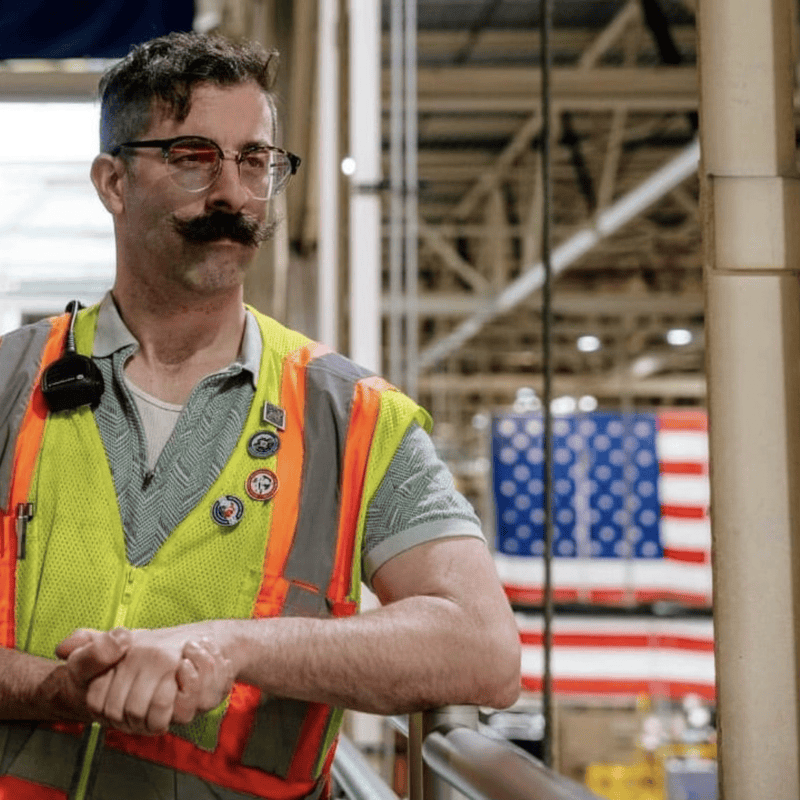
Allen isn’t the only unlikely face of innovation at Ford. Over the river in Dearborn, another wears a giant Luigi-shaped mustache. His name is Greg Foresi.
The 3D printer who keeps a piece of history in motion
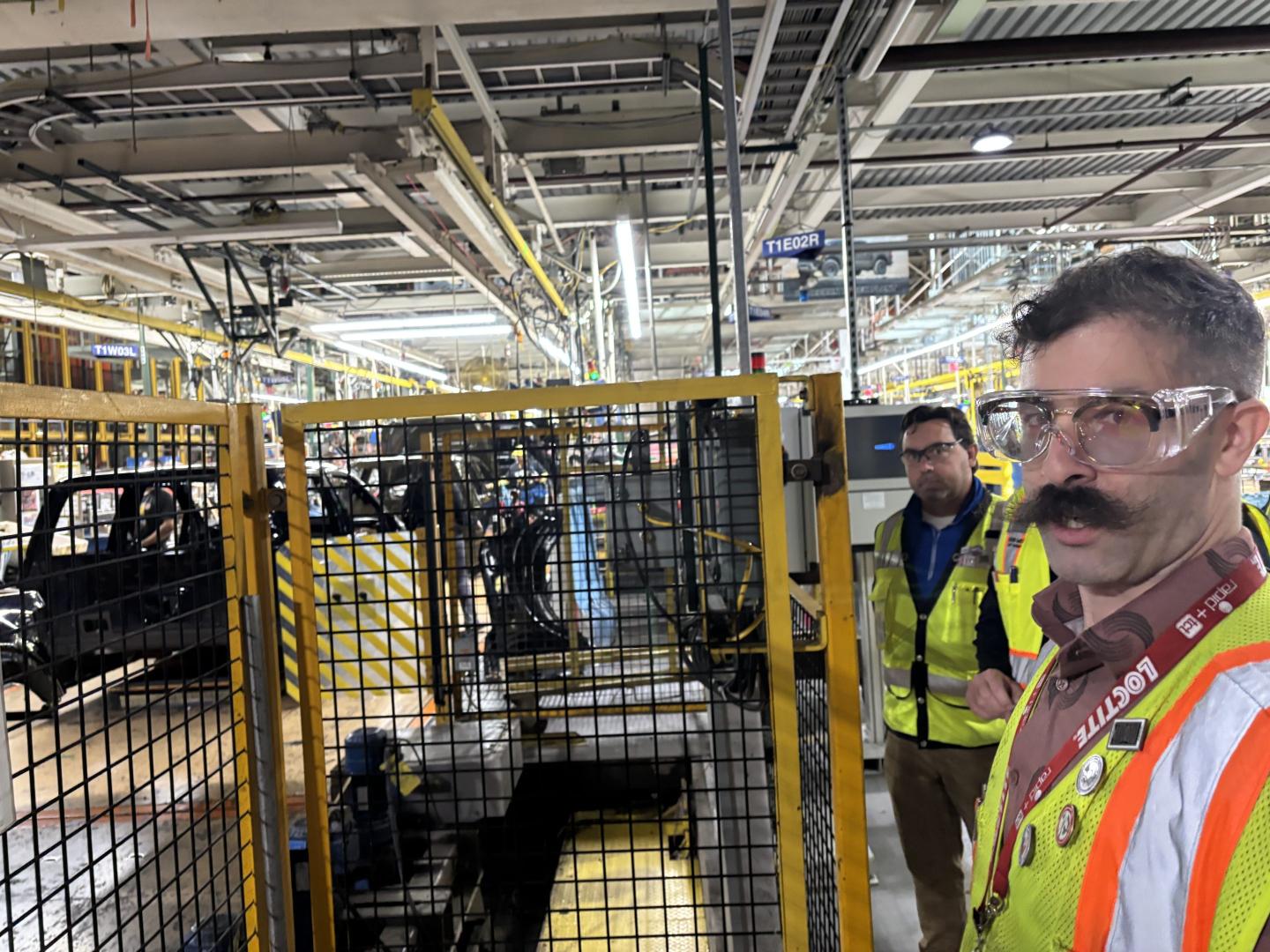
The Ford Rouge Plant shows its age in a good way — a living museum, the first fully integrated auto factory in the world, still turning out cars in minutes through a century-old assembly line. And walking around, like a friendly engineer beat cop, is Foresi, the 3D-printing guy.
Foresi, who wears the horn-rimmed glasses of a Buddy Holly or a young Elvis Costello, got his signature look when he shaved off his eight-inch beard to play Luigi to a friend’s Mario one Halloween. When “mustache guy” shows up, he takes random requests from nearly everyone on the factory floor. That’s because he manages the 3D-printing lab, where roughly a dozen machines whirr away, steadily adding to nearly 300 tools and components in Foresi’s database, including about 50 individual socket covers.
“I’m out on the floor all day talking to people, trialing tools, evaluating equipment,” said the 35-year-old Foresi. Sometimes he gets five requests in one day, and sometimes nothing for five days. Foresi and his team point me toward a factory-floor wheel that isn’t black like the other ones, but a bright royal blue. This is a specialized part that filled a gap in availability during a supply-chain disruption. When Foresi saw the shortage coming, he printed his own.
Foresi explained that they didn’t have time to test the part. The choice was either trying the blue wheel and potentially creating a line stoppage — or not trying and definitely creating a stoppage. Some versions of the wheel failed, but Foresi said iterative improvements were made. “We avoided the problem entirely,” he said. Galhotra explained that Ford makes a new F-150 every 54 seconds at the plant, making Foresi’s blue wheel a hugely important component, but also not inherently scalable.
“One of the most radical things about 3D printing is that it decentralizes your logistics,” Foresi said. Galhotra put the limits plainly, saying that right now it’s “good for patches here and there,” like when a part is back-ordered or only can be flown in from somewhere else. Foresi agrees: “It’s not remotely close to replacing our conventional supply chain,” he said, adding that he gets “crazy requests” he has to turn down constantly. Some people think 3D printing is a joke, and other people “think that you can just 3D-print anything.”
Foresi had his own doubts at first. After stints at a supplier and a Ford stamping plant in Kansas City, he landed at the Dearborn truck plant as the only mechanical engineer in the final assembly department — ”a pretty intense job,” he said. “I’ve seen everything in the plant break and fixed everything,” Foresi said, recalling a line of people always waiting outside his cubicle. So when his talent was recognized as a fit for 3D printing (his “boss’ boss asked,” he said), his first instinct, like Allen’s, was fear for his job. His first instinct was that the job wouldn’t last, that 3D printing would lose favor and he’d be moved to a new role.
“I was worried that it was just a fad with the company and that it would lose energy and I would get laid off or something,” Foresi said. “They were like, ‘Too bad, you’re doing it anyway.’” Foresi hastened to add that he never felt pushed into taking the job or truly feared that he would be laid off; but he did think he might get reassigned. “After two or three months it became clear both to management and myself that printing was becoming so useful that a full-time position was needed.”
Mike Aragon and Alicia Boler Davis are both newcomers to Ford’s C-suite. The two Amazon veterans said have grown close, Aragon said, as their teams depend on each other and they bond over similar big-tech career transitions. Aragon recalls showing up for a leadership meeting five minutes late and CEO Jim Farley turning to him and saying, “Hey Mike, I want you to take on this AI initiative.” Boler Davis, a Detroiter who spent nearly 25 years working at GM before seven years out of manufacturing, said her return was like “drinking out of a firehose” and that she’s still “relearning the language, learning the culture.”
Boler Davis described the services and efficiencies that come from her use of smart data connected to a nationwide fleet and said she’s working toward a Ford Pro that can predict when a car will need a repair, or provide AI-enhanced advice to customers. As president of Ford Integrated Services, Aragon leads the teams that develop and scale digital products. “This is another reinvention on top of the reinvention that we already had to do,” he told Fortune.
At the Ford Accelerate event in Detroit in late September, Farley described to Fortune during a media briefing how Ford Pro actually uses AI to help dealership technicians, citing the example of an engine removal from a Ford Super Duty truck. “It’s like a two-day job” to take apart a Super Duty, he said, and AI is invaluable in walking customers through the process. “We are using AI for them to say, ‘Okay, do this, do that,’” he said. “They’re good mechanics, they just don’t know. They’ve never done it before.”
Galhotra was more measured about how far Ford has to go. There’s the AI that software companies talk about, on the one hand, and then “AI that’s going to change factories of how we build physical things, and in that second category, I haven’t seen really good execution yet. And even ourselves, we’re at the beginning of that journey.”
Boler Davis said some of Ford Pro’s fleet customers have pushed back. “We have some customers that, you know, don’t want you monitoring the vehicle or connected or don’t want to use the AI,” she said. Stressing that the cost of downtime can be hundreds, even thousands of dollars per vehicle on a given day, she said Ford Pro wants to empower fleet managers to help unlock the potential for their business. The tool isn’t to “get rid of the fleet manager,” she said, but to “make their job easier.”
Part of Ford’s pull for Aragon is personal. He said he remembers being driven to school in his grandfather’s 1963 F-100 truck. “I just remember the smell, which is like the smell of the nylon, and the dust — and then the Camels [cigarettes].” He said he’s planning to rebuild a model from the early ‘70s, which he’s planning to drive to work every day.
He’s not the only one at Ford with a project in the garage. Fairall restores old Volkswagens — he’s finished an ‘84 Westfalia Bus and is working on a ‘65 Split Window Bus. Allen is building his own car on the side, and he’s 3D-printing its front end. Asked whose intellectual property that makes it, Allen immediately responds, “It’s my car. “
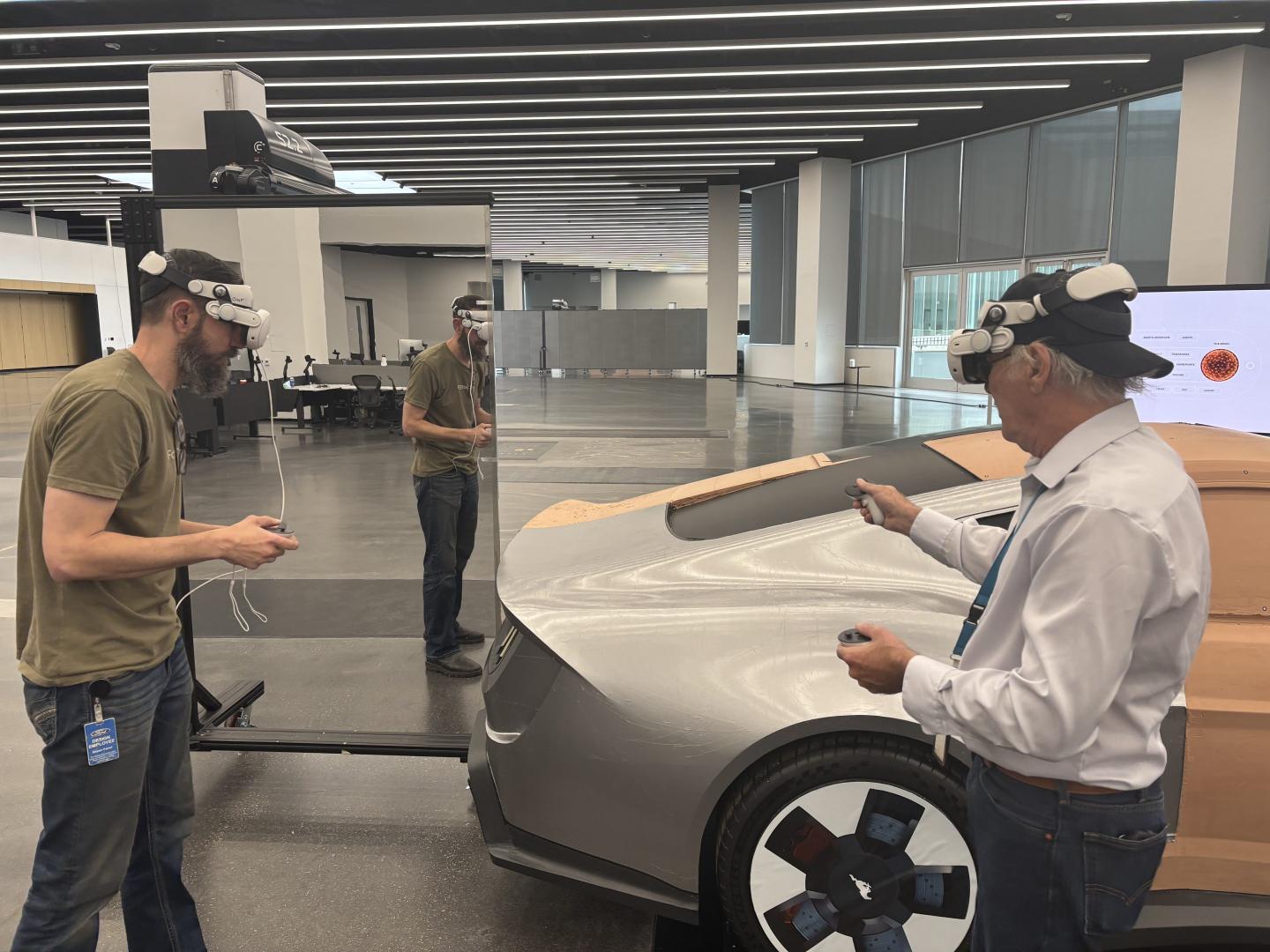
Allen once feared the future enough to steer his son away from clay, though. Years ago, he brought his son, Derek, into a satellite studio and paid Derek to work six hours a day for him. “He started heading down this path,” Allen said, “he was getting pretty good at it. But I wanted him to be much more than just a modeler because I was worried about where modeling was going.” He steered him into engineering instead. “I always thought virtual reality would be there, but not in my lifetime,” he said. “I didn’t think I’d be part of it exactly.”
Allen says he thought he was ready to retire eight years ago, but now he’s excited to train the next generation of modelers in both virtual reality and clay. “I’m very excited about this whole chapter in my life,” he said. “I hop out of bed in the morning so I can come to work.”