
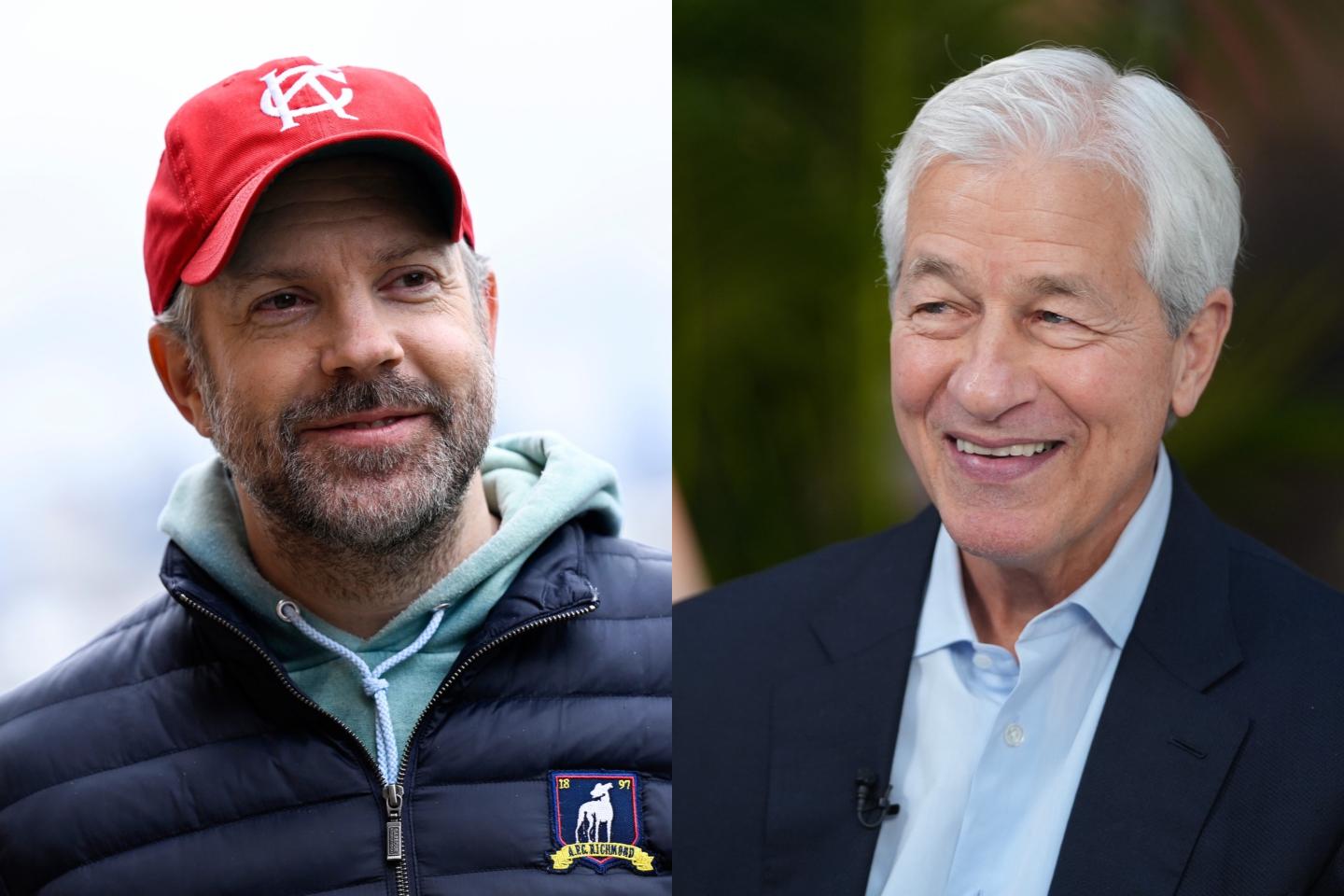
When Ted Lasso took over AFC Richmond, the fictional England soccer team at the center of Apple TV’s hit series, his relentlessly positive attitude and folksy charm made him an unlikely leader. But beneath his optimism was a coach who understood how to bring out the best in people—even when that meant confronting their insecurities, calling out bad behavior, and demanding better.
It’s a leadership style that even JPMorgan Chase Jamie Dimon admitted he’s learned from.
“I love Ted Lasso,” Dimon recently told The Wall Street Journal. “He comes in and he doesn’t know anything about football, and he’s just gracious. He’s working with people—their insecurities, their bad behavior, their work ethic—and he’s getting them to function as a team.”
The 70-year-old added that Lasso gets at something many corporate leaders struggle with: balancing humility and empathy with an unwavering drive to win.
“Most of these companies have huge capabilities, IP, and great people. But a lot of big companies are political and bureaucratic,” Dimon said. “The people would like to get out of that, most of them—but some of the bad people want to keep it that way, like autocrats, they want to keep things suppressed because they benefit from it.”
That often shows up when unnamed “terrible companies” have to bring in a new CEO to clean up a culture problem, Dimon said. However, it would suit many to be more like Lasso to begin with—and speak up when there are problems, even if it may not be easy to hear.
“A good leader over time figures it out, removes some of the bad ones, and the place starts to shine,” Dimon added. “It can take some time because these bullshitters have been doing it for 25 years, and they’re usually pretty good at it. It’s hard to notice in real time.”
Chevron’s CEO agrees with Dimon: The ‘best leaders’ ask questions and listen to others
Dimon isn’t the only business leader who saw leadership lessons in the show, now in its fourth season and starring Jason Sudeikis and Hannah Waddingham.
Chevron CEO Mike Wirth has also praised Lasso’s approach, particularly his willingness to listen before jumping to conclusions.
“In our work, it’s easy to assume we already know the answer,” Wirth told the WSJ. “Easy to think we know what caused a problem, what a customer wants, or what the best option is. But the best leaders I’ve worked with do something different. They ask questions. They listen. They seek to understand before they decide.”
That philosophy is central to Lasso’s unlikely coaching career. Hired to lead an English soccer club despite having coached American football, he had to learn a new sport while earning the trust of players who initially doubted him. Rather than pretend to know everything, he leaned on others, stayed curious, and adapted as he went.
Wirth said that the same willingness to learn from people with different backgrounds has helped him throughout his career at Chevron, the energy giant ranked No. 21 on the Fortune 500.
“Some of the most important lessons I’ve learned came from conversations with people with different experience than me—in a refinery control room, at a drilling site or on a trading floor,” Wirth added. “Curiosity creates learning. And learning leads to better decisions.”
Lasso’s lessons are embodied in one word: ‘Believe’
There’s also a more academic explanation for why Lasso’s approach resonates with business leaders.
Bruce Avolio, professor of management at the University of Washington, sees the fictional coach as an example of a leader who prioritizes learning, humility, and the people around him.
“Ted [Lasso] views each situation with childlike wonder and curiosity,” Avolio said in a university Q&A. “He seeks out opportunities for development and performance, while delaying judgment. He transmits genuine humility, which allows others who know more to step in and contribute to the collective potential.”
That approach puts people before metrics, Avolio argued, with Lasso focusing on the human dynamics that can be among the hardest parts of leadership to get right. Ultimately, he added, great leadership is about stewardship: creating an environment where people can grow, make their own decisions, and succeed even after their leader is gone.
Lasso’s “Believe” sign captures that philosophy in a single word. The message has even made its way into the corporate world: Dimon reportedly brought a version of the sign into JPMorgan’s offices, a fitting reminder that building a winning team starts with believing in the people on it.