On Dec. 4, 2025, Pantone announced its Color of the Year for 2026: a shade of white called Cloud Dancer. It was the first time in the program’s history, which dates to 1999, that Pantone chose a white. The company described Cloud Dancer as “a billowy white imbued with serenity” and “a symbol of calming influence in a society rediscovering the value of quiet reflection.”
It all sounds lovely. It’s also at odds with much of what has actually taken off in design, decor, and style this year.
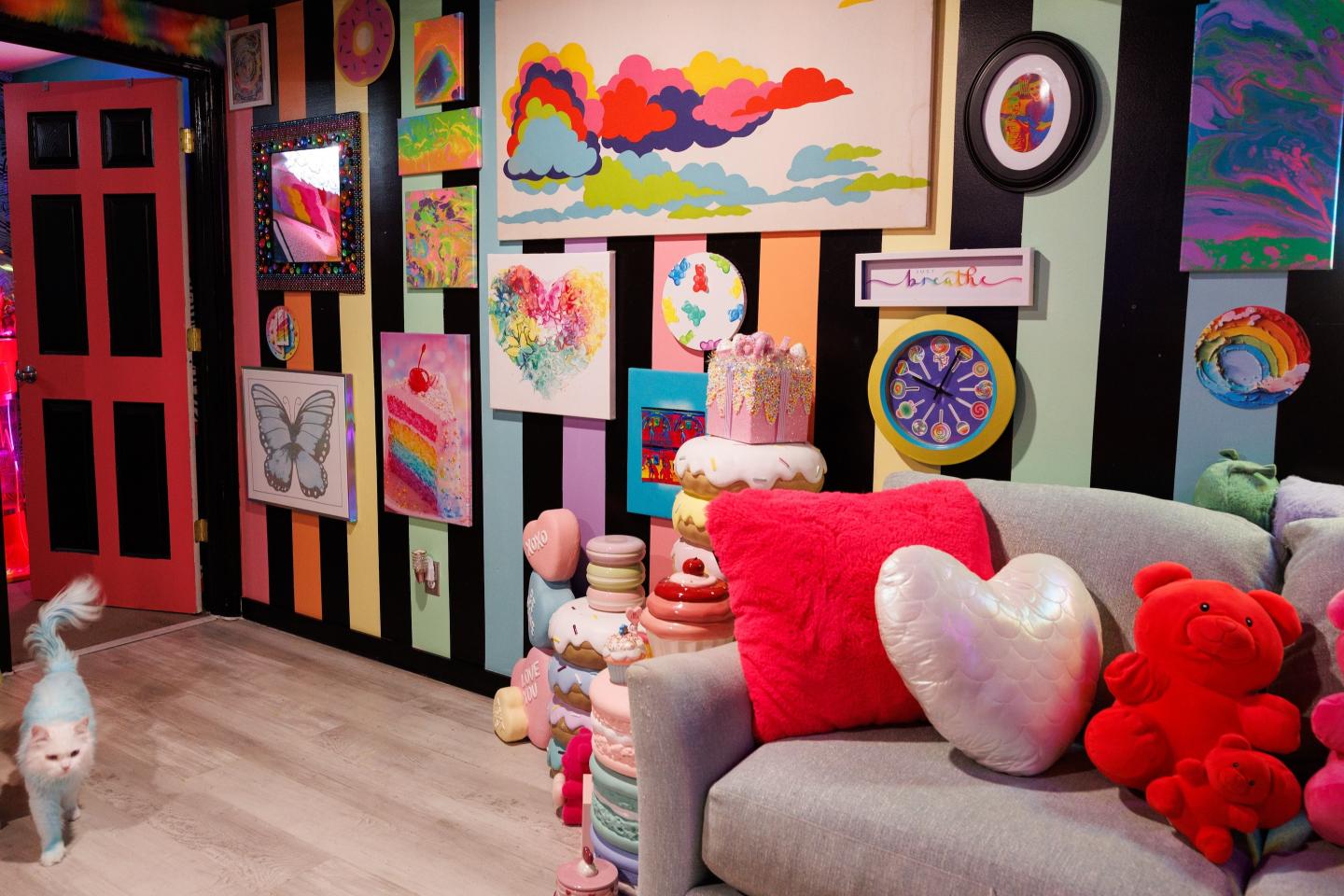
Pantone pitched its white as a way to “build atmospheres of serenity and spaciousness, providing a refuge of visual cleanliness.” Meanwhile, many Gen Zers and millennials are going maximalist in their homes and wardrobes. Rather than a billowy white, a large cadre of consumers want bold colors, plenty of texture, and lots of layers.
This isn’t the first time maximalism has had a moment; 1970s style leaned that way, too. But today’s trend-conscious younger Americans are thinking beyond looks. They want decor and outfits that boost their sense of well-being, even when the aesthetic is over the top.
“In 2026, we’re going full-on gummy,” according to Pinterest Predicts 2026, the platform’s annual trend forecast. “Gen Z and Millennials are behind this ASMR overload—think bendy phone cases, elastic cheek tints and probiotic treats that have that spring-back bite.” Pinterest also expects rubberized nail art and 3D jewelry to catch on, and it reported searches for “gummy bears aesthetic” up 50%.
From ‘dopamine decor’ to ‘gummy bear aesthetic’
Terms like “dopamine decor” and “gummy bear aesthetic” are everywhere lately, and you likely have an innate sense of what they mean. For context, Fortune spoke to two interior designers whose earlier careers in mental health give them an unusual read on how the way we appoint our spaces, and even our outfits, affects how we feel.
Lori Miller is the principal at LGC Interior Design in Melville, N.Y. Before founding her firm, Miller studied social work at Adelphi University and earned a master’s degree in counseling from C.W. Post, a campus of Long Island University now known as LIU Post. She later directed a psychiatric unit at the Rikers Island jail complex and, later, a crime victims’ program for the Queens District Attorney’s office.
What people find calming is highly subjective, Miller says, but most people gravitate toward blues or greens, not white. In fact, more color, depth, and contrast can be more calming than cool, crisp white spaces.
“In our current period of upset, things are very serious, especially with the upcoming generation, the Gen Zs,” Miller says. “They’ve been through COVID, complicated presidencies, upheavals in politics and financial things; there are just so many different things that they’ve been through, and the ‘gummy’ style seems to keep us calm, to give us motivation. It’s uplifting; it’s bright and cheery.”
That tracks with what researchers have found: young adults report rising anxiety and a sense that things are falling apart, and even well-paid millennials and Gen Zers describe constant money anxiety.
Nostalgic craving for comfort and safety
Betsy Wentz, principal at Betsy Wentz Interior Design in Sewickley, Pa., and author of Design Happy: Colorful Homes for the Modern Family, worked in counseling for several years before turning to design. She agrees that pops of color can bring feelings of wellness. White on its own can be calming, she says, but it can also have the opposite effect.
“Color is information—your nervous system will scan a room asking: ‘Am I safe here?'” Wentz says. Colors from nature, like a blue sky or green grass, give your eyes less work to do, she explains, so heart rate and cortisol tend to settle when you look at them. That’s why blues and greens are often treated as neutrals. “White can feel serene or sterile depending on whether it reminds you of your grandmother’s house or a cold hospital. I learned in my counseling years that we pair colors with memories.”
A mix of nostalgia and a craving for safety and comfort runs through much of youth culture today, from the retro design boom to Gen Z’s embrace of conspicuous, maximalist spending over quiet luxury. It helps explain why current trends are often the polar opposite of open white rooms.
“I think Gen Z and Millennials are pushing back on years of beige algorithm homes and a world that’s felt very sharp and unpredictable,” Wentz says. “When life feels sharp, you want a home that looks like it can’t hurt you. Gummy is all rounded corners—literally no sharp edges—and saturated color that feels alive. Everything looks tactile and chewy and squeezable.”
Chasing dopamine while cutting spending
That squeezable quality is where ASMR comes in. Short for autonomous sensory meridian response, ASMR describes the pleasant, tingling calm some people feel in response to soft sensory input, like whispering, tapping, or watching something being squished. (The chills you might get from a favorite song are a related but distinct phenomenon called frisson.) For many people, the right visuals and textures can set it off.
“ASMR is that little ‘ahhh’ your body gets from soft sensory input,” says Wentz. “I came to design with a master’s in mental health counseling, so I’m always thinking about how a room makes you feel. That’s my philosophy—what I call ‘Design Happy.’ We don’t just decorate for the eye, we decorate for the hand and the ear…. I encourage clients to touch the fabrics, wallpapers, and other samples in order to find what feels good to them.”
“Gummy bear design feels good before you even think about it; it’s colorful design that looks edible,” she adds. “Your hand wants to touch it, and your brain says: ‘Yum!’ That’s the whole idea; the design creates joy you can feel with your eyes. ‘Gummy bear,’ in design, is a type of dopamine decor. When a room is full of color, pattern, and soft, touchable things, it gives you a little lift every time you walk in.”
That little lift is part of the appeal for a generation that has also been cutting back on spending while chasing small dopamine hits, and color has long carried that kind of cultural weight; just look at the run on Barbie pink.
Still, Wentz says, rich color and texture work best when balanced, and white has a role to play.
“Culturally, we have spent 20 years being taught that white = clean = good = calm. Think Scandinavian design, think Apple Store, think all-white kitchens. We’ve been trained to read an uncluttered white room as: ‘You have your life together, you can relax now.’ So does white pigment itself lower anxiety? No. Does a beautiful, softly textured, sun-filled ‘Cloud Dancer’ room feel calm because we believe it should? Yes, and belief still works. That’s why I’d use [white] as the quiet canvas and then let your gummy bears dance on top of it.”