- In today’s CEO Daily: CEOs are rethinking how they train workers.
- The big leadership story: Younger workers are taking on second jobs at alarming rates.
- The markets: Mostly up as investors await the U.S. jobs report.
- Plus: All the news and watercooler chat from Fortune.
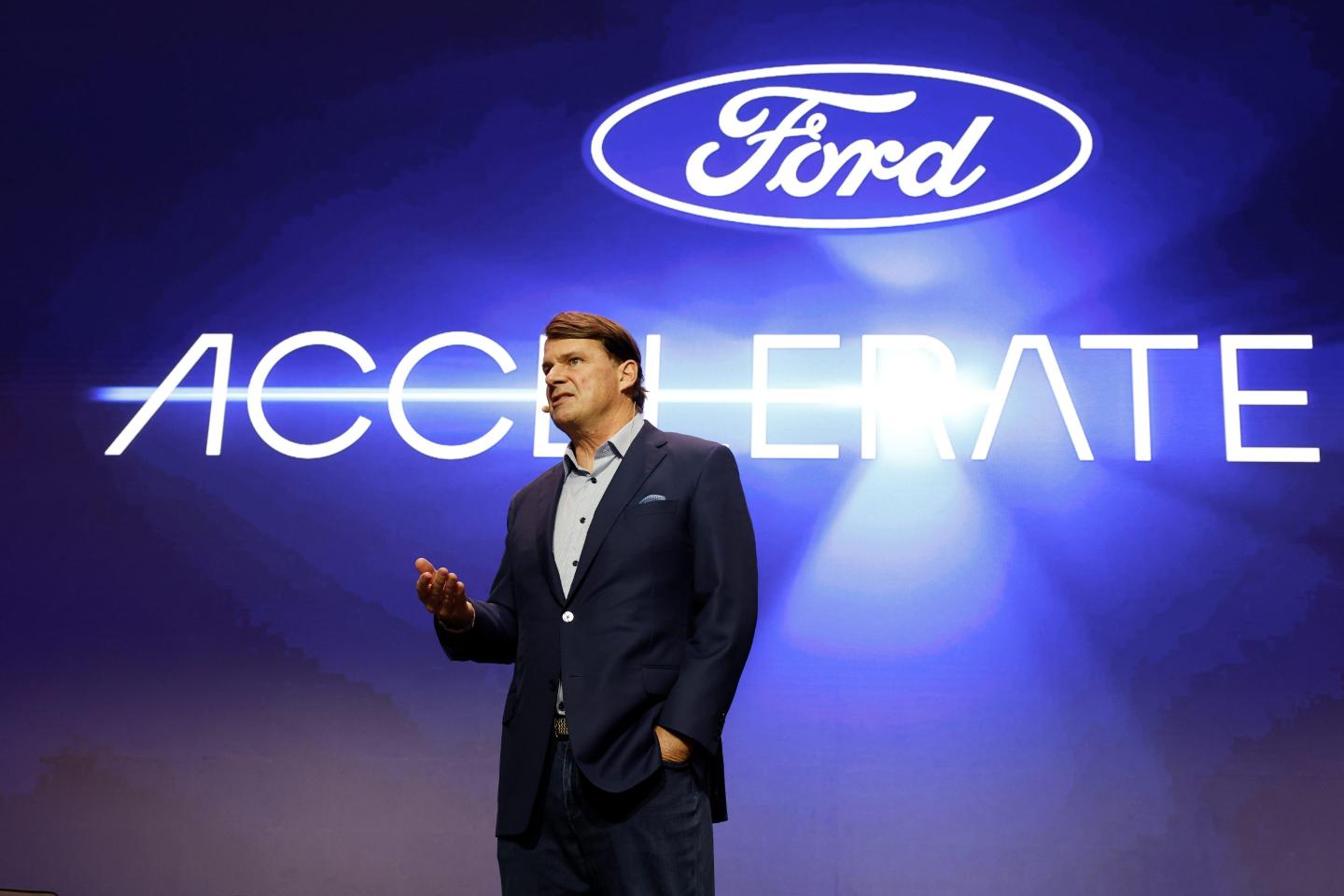
Good morning. What is a skilled trade in the age of AI? For that matter, what’s a job? Ford CEO Jim Farley told me in Detroit this week that the line between engineers and hourly skilled-trades workers “is completely blurred out” as software, robotics, and machine learning reshape the assembly line. Meanwhile, at Fortune’s inaugural AIQ Summit in New York yesterday, a panel of Fortune 500 chief people officers told editor-in-chief Alyson Shontell that AI has killed the org chart. “We’re going to give you all the tools,” said Drew Holler of homebuilder Lennar, “but it’s your responsibility to upskill yourself.”
That can sound empowering or demoralizing, depending on your perception of AI and ability to master it. The job of a leader in this climate is not just to deploy new technologies but to leverage them to reimagine work and reinvigorate workers. By speaking to CEOs at the Ford Accelerate Summit this week and studying the companies successfully deploying AI on Fortune’s new AIQ 75 ranking, I’m getting some clues on how to get this right.
Create a learning organization for every worker. I studied history and politics in college with no intention of ever becoming a historian or politician. I viewed the degree as a credential, a ticket that would widen the aperture of possibilities in my life, allowing me to learn on the job. We treat the skilled trades in a different way. You train to be an electrician to be an electrician. The aperture feels narrowed: Okay, kid, here’s your license. Have a nice life!
But that’s not how people or careers work, especially now. Dallas Sutton, a 17-year-old who was celebrated in Detroit for studying to be an auto mechanic, is a case in point. She told me that she actually wants to be a vet, too. Being a mechanic is fun. She wants to fix her own car and make good money to pay tuition. She also wants to get credentials to be a part-time firefighter. Sutton sounded like we all sound at 17: figuring it out. What’s different now is that the figuring it out never ends, as AI remakes the work we thought we’d settled into.
Make it cool. Dave Regnery, CEO of Trane Technologies, is creating learning labs for skilled trade workers modeled on programs to train athletes. He wants it to feel innovative, cutting edge, and cool. Dan Peyovich of Dycom, who started out as a carpenter, is also taking a holistic approach, expanding benefits and training in topics like personal finance to help the employees who string fiber wiring and maintain telecom infrastructure to see their jobs as a career. Patti Poppe of PG&E described employees dangling from ropes off helicopters, which made working at the utility sound like an extreme sport. Really.
Tackle the tough stuff. When I asked Verizon CEO Dan Schulman about the skills shortage, though, he immediately pivoted to existential questions about AI’s impact on society and the nature of work itself. He believes we’ll “get to some form of AGI [artificial general intelligence] in the next six to 18 months.” Two years after that comes “the era of quantum.” And he predicts humanoid robots could be outperforming humans by 2030. If that’s the case, convincing kids to consider a career in construction might not be our biggest problem.
Schulman is a man who spent a lot of time in Silicon Valley as CEO of PayPal, which may explain why he brought a more doomsday tone to the discussion. He’s trying to figure out how to make Verizon’s 250,000-plus workers and contractors more nimble, innovative, and determined to win. He thinks a lot about what could go wrong, but he’s also intrigued by what could go right. It’s those possibilities that drew him away from retirement on his Montana ranch with his wife, a bunch of bears, and 500 head of cattle. Does the pace of AI ever make Schulman long to return to the simple life of a cowboy? No way. “I’m loving it,” he told me as we walked offstage. “What a time to compete!”
Contact CEO Daily via Diane Brady at diane.brady@fortune.com
Top leadership news
Younger workers take on second jobs
A Goldman Sachs survey shows that 80% of Gen Z workers and 77% of millennials are taking on side hustles. Most of them say that they need the extra income to meet their day-to-day expenses, and housing and other bills make it difficult to save for retirement.
The pipeline for pipeline deals
Energy dealmaking is partly frozen by the Middle East conflict and sky-high prices, but pipelines are the exception. Demand from LNG exports and data centers is driving midstream M&A, including Williams' $5.5 billion Momentum Midstream purchase and ONEOK's $4.42 billion Permian deal. A bipartisan Senate permitting bill introduced Wednesday could speed up more.
Vestas tries to make wind power pay
Vestas, the world’s largest wind turbine maker by cumulative installations, is recovering from supply-chain disruptions and rising material costs, reporting €446 million in quarterly operating profit and a €36 billion order backlog. CEO Henrik Andersen is leaning on standardized designs, AI maintenance, and Europe’s energy-security concerns to compete with cheaper Chinese rivals.
The markets
S&P 500 futures are up 0.51% this morning. The last session closed up 0.19%. The STOXX Europe 600 was up 0.93%% in early trading. The U.K.’s FTSE 100 was up 0.54% in early trading. Japan’s Nikkei 225 was down 0.94%. South Korea’s KOSPI was up 0.46%. China’s markets are closed. Hong Kong’s Hang Seng is down 2.60%. India’s markets are closed. Bitcoin is up at $86k.
Around the watercooler
Paramount’s new co-CEO once hired a barista he met at a café with no résumé. His advice to Gen Z: ‘Look up and make eye contact’ by Preston Fore
AI’s biggest players promise to police themselves at the White House by Beatrice Nolan
Thieves stole an Nvidia-branded truck filled with just 20,000 pounds of sand—and it points to Big Tech’s $150 million AI hardware theft headache by Sasha Rogelberg
Billion-dollar tech company Starkey unveils its newest hearing aid—saying the most human AI innovation may be one you wear by Sydney Lake
CEO Daily is curated and edited by Joseph Abrams, Jason Ma, Claire Zillman, and Lee Clifford.