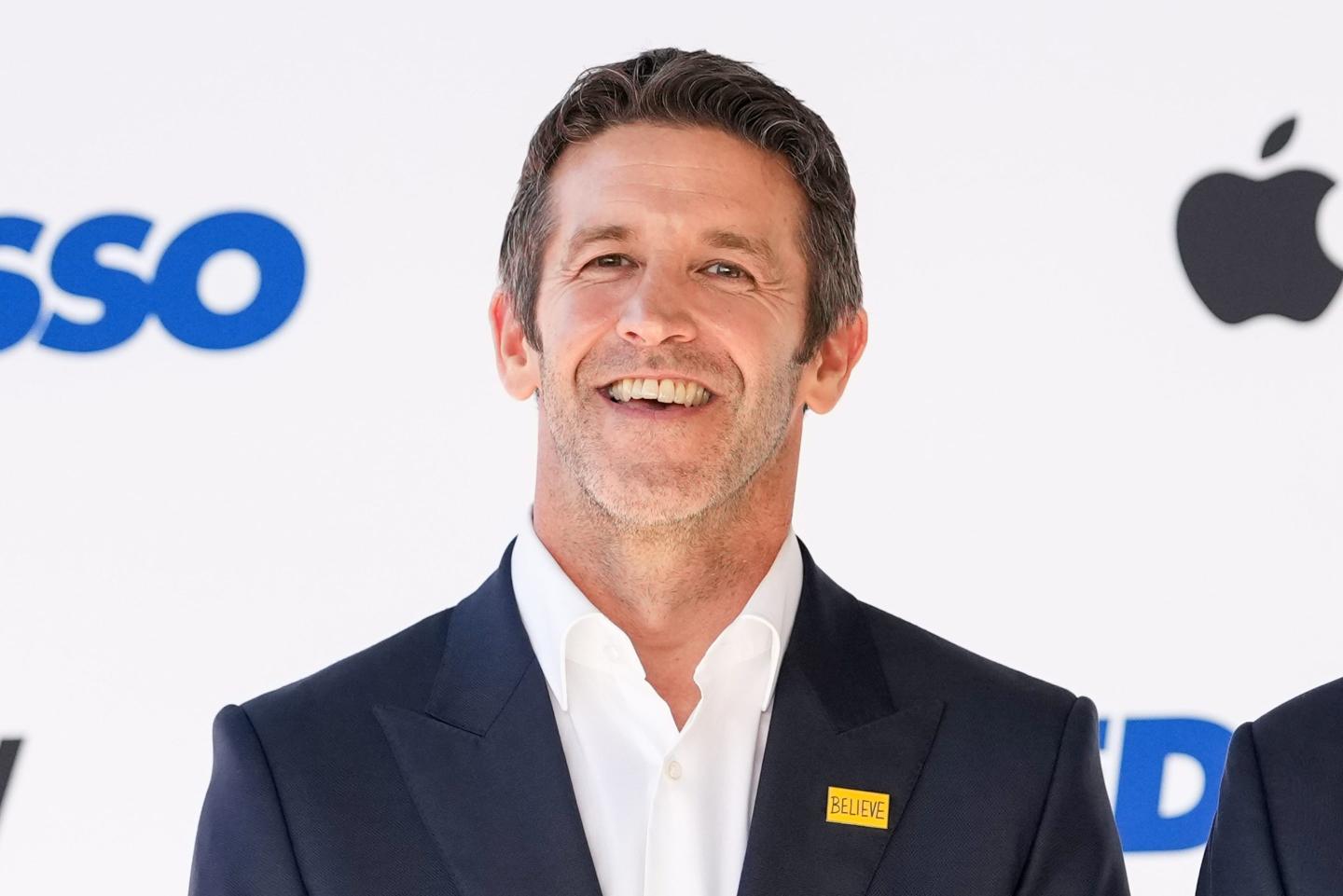
Today, longtime insider John Ternus took the reins as CEO of the $4.6 trillion tech giant Apple, succeeding Tim Cook after his 15-year run at the helm. It took Ternus more than two decades to reach the top of Apple’s corporate ladder—and along the way, he learned that even the most accomplished workers will question whether they’re up to the task. The CEO fought uncertainty and impostor syndrome by following one key mindset.
“Always assume you’re as smart as anyone else in the room, but never assume that you know as much as they do,” Ternus told University of Pennsylvania’s engineering graduates in 2024. “With this mindset, you’ll find the confidence you need to push forward, but more importantly, the humility to ask questions and learn.”
It was a lesson he first learned 25 years ago, when he first began his ascent to the helm of Apple’s executive team. Ternus was just 26 years old when he joined Apple as an engineer in 2001—it was his second job out of college, right as technology was innovating at breakneck speed. It was “intimidating and exhilarating,” the new CEO admitted. He even questioned if he could keep up.
“I wasn’t sure I belonged there,” Ternus continued. “The people I met were so smart and so confident, and they knew so much more than me.”
Ternus has been dealt his fair share of uncertainty and change—especially early on in his career, when Apple went from designing products with clear plastic parts to ones with aluminum. But he doesn’t regret what he learned from that bygone era, “because every experience like this sharpened my ability to approach problems from different angles.” It’s inevitable that young workers alike will have to take on something new, and self-doubt is bound to creep in. But being in community with smart peers is one way to navigate uncertainty and achieve success.
“I’ll always be grateful that I wasn’t afraid to ask for help when I needed it,” Ternus said. “Because being around people that care that deeply, it won’t just make you want to stretch your limits and see how far you can go, but they’re also the best people to help you understand how to get there.”
Fortune reached out to Apple for comment.
Ternus’s two-decade ascent to CEO of $4.6 trillion Apple
Young workers may question their impact as they’re funneled into low-paying entry-level roles. But if Ternus has learned one thing from climbing the ladder at Apple, it’s that “the care that you put into your work, it really matters.”
Ternus joined Apple’s product design team in 2001 after a short stint at Virtual Research Systems upon graduating from the University of Pennsylvania. He first helped to create a large plastic desktop monitor called Cinema Display for the tech giant, then he steadily climbed the ranks, advancing to a managerial role within a few years and leading hardware engineering on the G5-era iMacs.
By 2013, he became the vice president of hardware engineering, overseeing the iPad and Mac, and eventually, contributing to builds like the iPhone pros and AirPods. And two decades into his run, he joined the executive ranks as SVP, directly reporting to his CEO predecessor, Tim Cook. Over the past 25 years, he’s played a pivotal role in the development of products including every generation of iPad and the first AirPods, while also overseeing hardware work across the iPhone, Mac, and Apple Watch.
As the eighth CEO in Apple’s 50-year history, Ternus’s decades of career success have now propelled him to the top. And in his final memo as chief executive, Cook said he has full confidence in his successor’s ability to lead Apple into its next chapter.
“I take enormous comfort in handing the helm to someone as brilliant and wonderful and capable as John,” Cook said in his email to Apple employees. “Few people understand what it takes to build products that change the world the way John does and I could not be more excited for his leadership.”
Echoing Apple’s late cofounder Steve Jobs: ‘Go out there and make a dent in the universe’
Ternus, 51, has played a hand in creating the millions of iPhones tucked into back pockets and AirPods playing music in ears all around the world. He’s been at Apple through its many product innovations and failings, and that stream of continuous learning helped him approach problems from different angles. It’s a habit that budding professionals should take with them in their careers, even after they’ve closed their textbooks and turned their tassels.
“Ongoing change is one of the great gifts of life, and learning how to learn and keep learning is one of the great gifts of your college education,” Ternus continued in his commencement speech.
Instead of simply gunning for big paychecks or flashy job titles, Ternus advises workers to build what “interests” and “excites” them—and above all else, create it in a way that “aligns with your values.” Whether it be product development, fighting incurable disease, or building a health care AI model, young professionals should invest their time in something meaningful. For Ternus, finding work that matters—and caring deeply about doing it well—is ultimately what makes an impact.
“This is your time, this is your moment, so do what Steve Jobs once said, and go out there and make a dent in the universe,” the CEO said.