
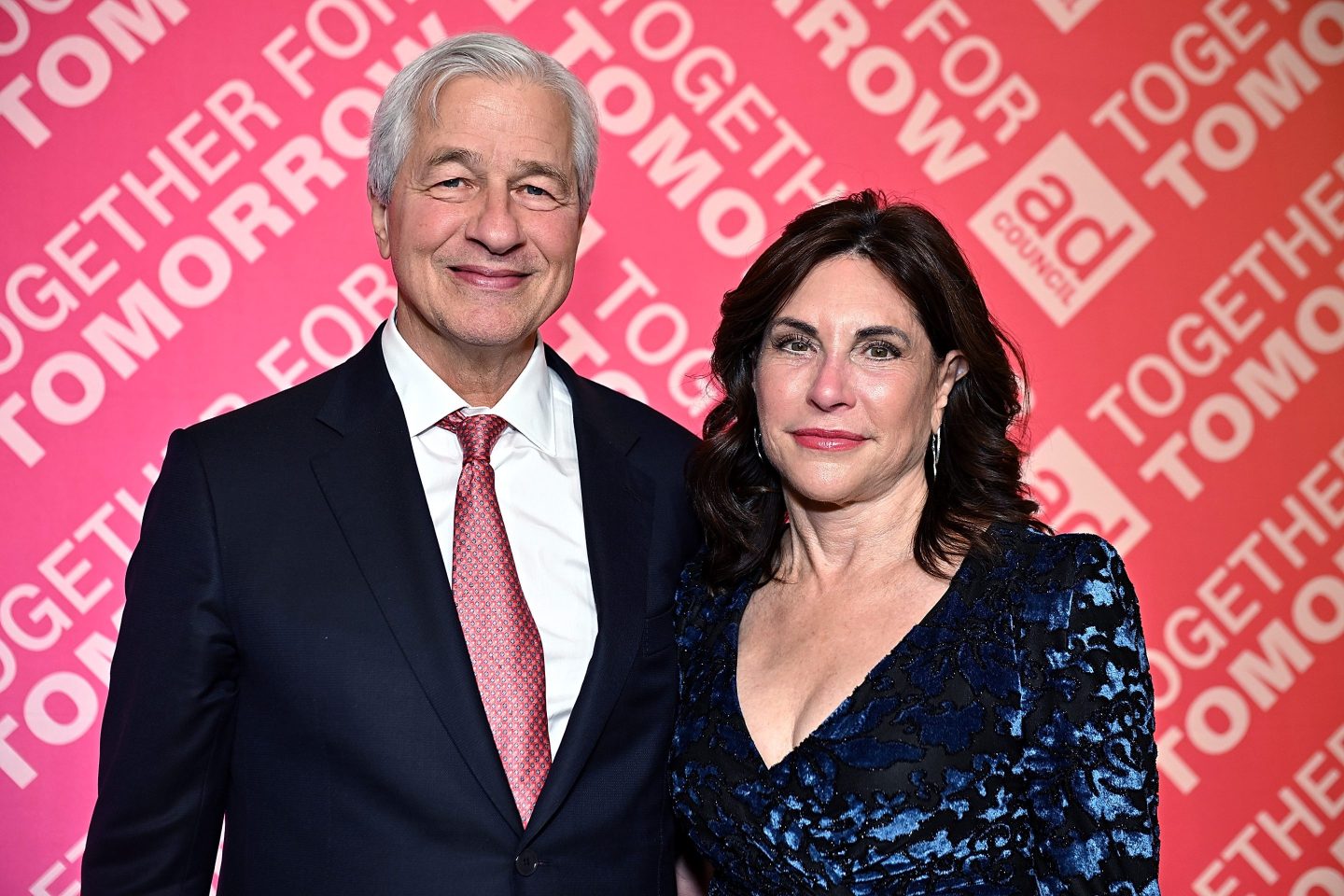
Jamie Dimon is well-known for his historic career as CEO of JPMorgan Chase, the world’s largest bank, and for his hot takes on the economy, work culture, and geopolitics. Less well known are his philanthropic efforts with his wife through their organization, the James and Judith K. Dimon Foundation.
The foundation, which was established in 1996, doesn’t even have its own website, but according to ProPublica data, the private charitable organization donates millions of dollars each year to support education and economic mobility for young people. Its most recent 990-PF form (the annual tax and information document for private foundations) shows that in 2024 the organization paid out more than $9 million across organizations mostly focused on public schools and career advancement.
On Aug. 20, United Negro College Fund (UNCF) announced the James and Judith K. Dimon Foundation had donated $12 million to 12 historically Black colleges and universities. The gift establishes the Dimon Fund to Advance Economic Opportunity and is part of UNCF’s $1.5 billion capital campaign. It will provide permanent endowment capital to the selected schools as part of their $5 million institutional match from UNCF’s pooled endowment fund.
“Our system of HBCUs continue to serve as the springboard to success for thousands of students in pursuit of the American Dream,” Jamie and Judith Dimon said in a joint statement. “As the children of first-generation high school and college graduates, we were imbued with a thirst for knowledge and a drive to succeed—principles that we have passed on to our own children and that we wish to share with all the students at the selected HBCUs.”
What HBCUs are receiving funding from the Dimons?
The selected HBCUs for this round of donations include:
- Benedict College (Columbia, S.C.)
- Dillard University (New Orleans)
- Edward Waters University (Jacksonville, Fla.)
- Huston-Tillotson University (Austin)
- Jarvis Christian University (Hawkins, Texas)
- Johnson C. Smith University (Charlotte)
- Miles College (Fairfield, Ala.)
- Oakwood University (Huntsville, Ala.)
- Shaw University (Raleigh, N.C.)
- Stillman College (Tuscaloosa, Ala.)
- Tuskegee University (Tuskegee, Ala.)
- Voorhees University (Denmark, S.C.)
UNCF said the 12 schools were selected for their leadership and their records preparing teachers, nurses, and other health care professionals, which are the high-demand fields where HBCUs punch above their weight for first-generation students.
Rather than funding a single program, the donation from the Dimons flows into permanent endowments, which UNCF argues gives schools the freedom to plan for decades instead of scrambling to find donations year to year.
The approach matches the Dimons’ broader philanthropy. Judy Dimon, the foundation’s president, oversees grantmaking focused on career-connected learning for New York City public school students, and the foundation helped launch FutureReadyNYC, an initiative aiming to give 100,000 students hands-on career experience by 2030. Jamie Dimon also previously sat on UNCF’s board.
Billionaire philanthropists stepping in where the Trump administration pulls back
The gift lands as the Trump administration has pulled back funding for public institutions and other HBCUs. Other billionaire philanthropists like MacKenzie Scott have stepped in to fill that gap: She’s given more than $700 million to more than a dozen HBCUs and affiliated organizations.
Federal support has grown shakier. During the 43-day government shutdown that began Oct. 1, 2025, the Department of Education stopped issuing new grants and furloughed roughly 95% of staff who don’t work on federal student aid. That left programs like the HBCU Capital Financing Program in limbo even as the department announced in September a $495 million increase for HBCUs and tribally controlled colleges and universities for FY 2025.
But some higher education experts doubted its sincerity.
“If [the Trump administration] actually…cared about HBCUs and tribal colleges, then you would not see such a big attack on other sectors of higher education,” Mike Hoa Nguyen, an associate professor of education at UCLA, told The American Prospect in October 2025.
The shutdown ended Nov. 12, but the reprieve looks temporary. Days after the government reopened, the department signed agreements handing billions in grant programs to other federal agencies. That’s seen as essentially a move in the Trump administration’s stated goal of dissolving the Education Department.