
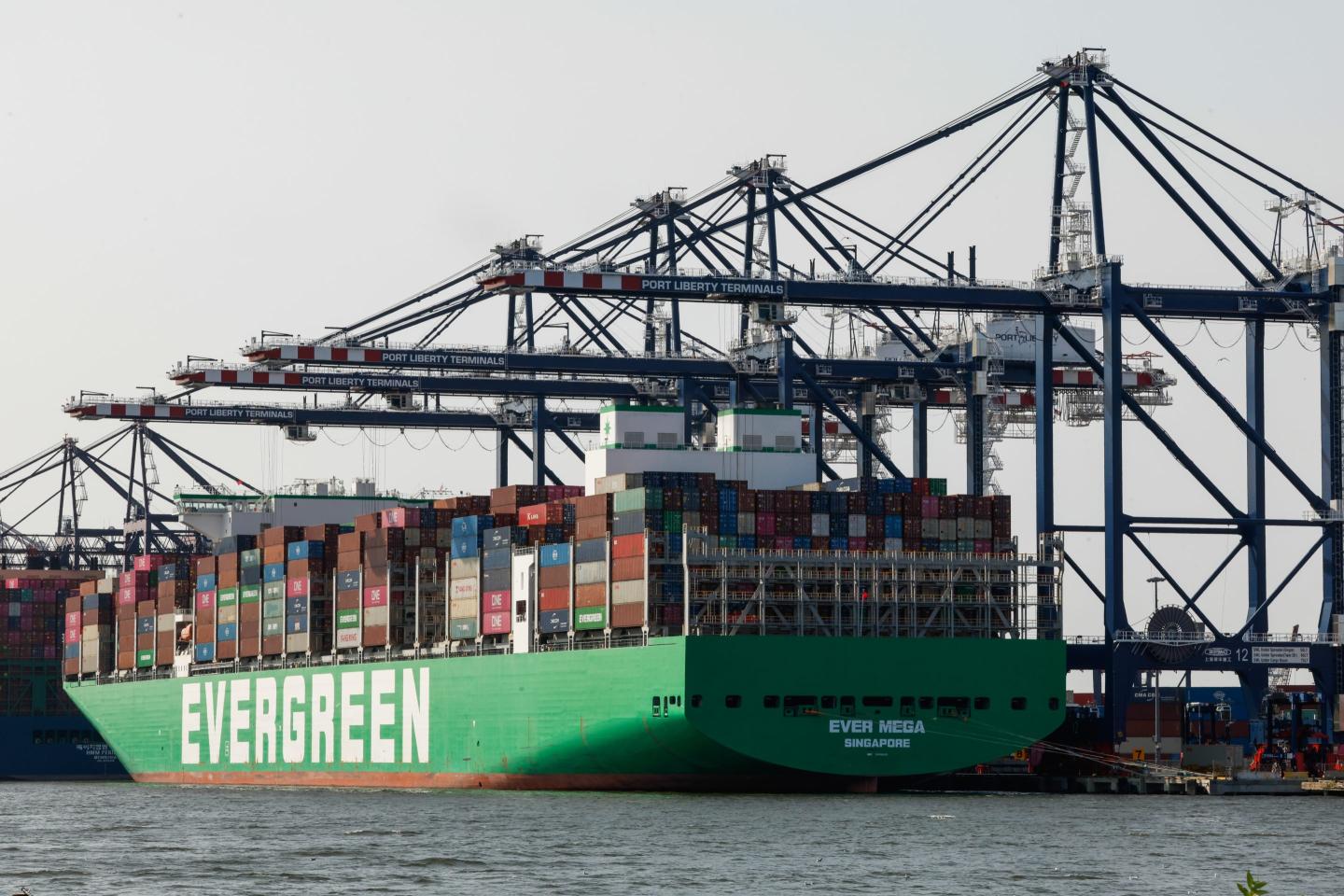
The Trump administration has returned more than $100 billion to U.S. businesses and importers that paid his global tariffs, and the money is quickly heating up the economy.
The refunds are already boosting bottom lines, and 40 companies in the S&P 500 have recorded $9.6 billion, with Apple alone reporting nearly $2.2 billion, according to a Wall Street Journal tally. Other top recipients include Nike, FedEx, Amazon, and General Motors.
“Not only are tariff refunds boosting corporate earnings, they are also boosting GDP growth,” Apollo Chief Economist Torsten Slok said in a note on Saturday.
He estimated that the refund money will contribute about 0.2 percentage point to third-quarter GDP growth, which the Atlanta Fed says is tracking toward 4.3%.
That represents a steep acceleration from the second quarter’s gain of just 1.5%, which was skewed by high AI-related imports, as well as 2.1% in the first quarter.
In the current quarter, the tariff refunds are combining with other positive factors, such as the ongoing AI spending boom, tax cuts from the the One Big Beautiful Bill Act, and the reshoring of U.S. manufacturing.
“The bottom line is that the U.S. economy continues to be supported by a growing set of tailwinds,” Slok added.
The surprisingly weak jobs report for July doesn’t signal the economy is losing momentum, he wrote, attributing sharp drops in government payrolls and hospitality employment to quirks in seasonal adjustments.
After backing out those sectors, the economy would’ve added 70,000 jobs, in line with Wall Street’s consensus, instead of losing 23,000 jobs.
In addition, jobless claims have hovered around 200,000 a week, and the number of job openings has been rising over the past six months, Slok pointed out.
“In short, the market is underestimating how strong growth is right now,” he said. “As a result, rates will stay higher for longer.”
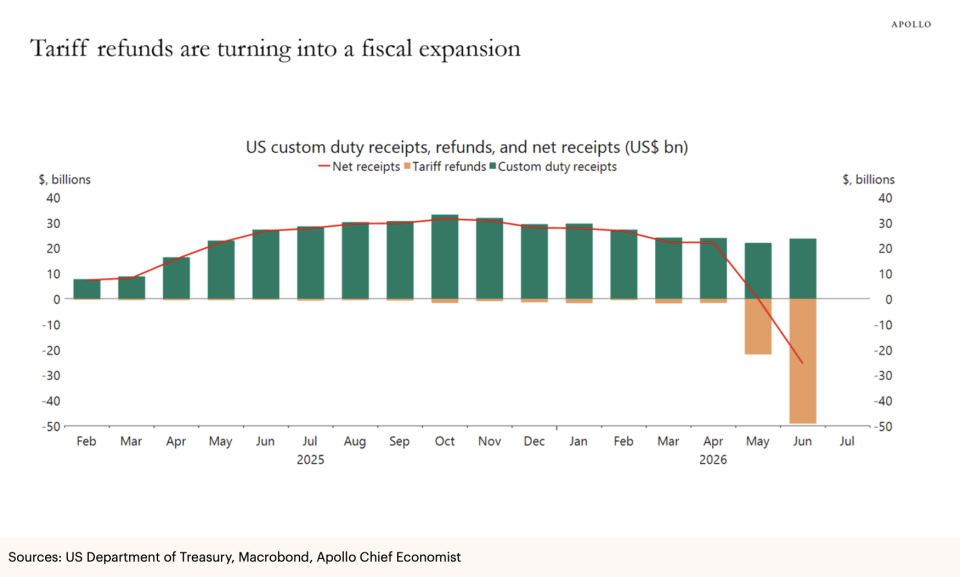
The refunds so far represent about 60% of the $166 billion in revenues collected from import taxes under the International Emergency Economic Powers Act, which were struck down by the Supreme Court in February.
But some U.S. consumers want to see some of that money reach their own wallets and are filing lawsuits against companies to demand it. Firms such as Amazon, FedEx and UPS, however, have vowed to return the funds to customers.
Earlier this month, analysts at Bank of America said in a note that retailers are using the money that’s been returned to them to fund promotions as well as offset freight and other supply-chain costs.
BofA also expects some retailers will work with brands to recoup some tariff money, either via direct payments or future purchase order negotiations.
“Outside of this, companies have the optionality to use refunds to invest in the business (i.e. AI/tech) or return capital to shareholders,” analysts added.