• Home
  • Latest
  • Fortune 500
  • Finance
  • Tech
  • Leadership
  • Lifestyle
  • Rankings
  • Multimedia

Trendingnow

1

Iran just crossed Trump's red line for resuming all-out war as fighting continues to escalate with no end in sight

2

Indeed chief economist: Aging Baby Boomers are America's real labor problem, not AI

3

'Dr. Doom' Nouriel Roubini says we're headed for universal basic income or 'some form of socialism' as AI revolutionizes work—He calls that optimistic

1

Iran just crossed Trump's red line for resuming all-out war as fighting continues to escalate with no end in sight

2

Indeed chief economist: Aging Baby Boomers are America's real labor problem, not AI

3

'Dr. Doom' Nouriel Roubini says we're headed for universal basic income or 'some form of socialism' as AI revolutionizes work—He calls that optimistic
EconomyInflation

Agricultural economist explains why you’re paying 32% more for lettuce and 20% more for tomatoes — and why it will stay that way

By
Elizabeth Canales
Elizabeth Canales
and
The Conversation
The Conversation
Down Arrow Button Icon
By
Elizabeth Canales
Elizabeth Canales
and
The Conversation
The Conversation
Down Arrow Button Icon
July 19, 2026, 4:00 AM ET
grocery
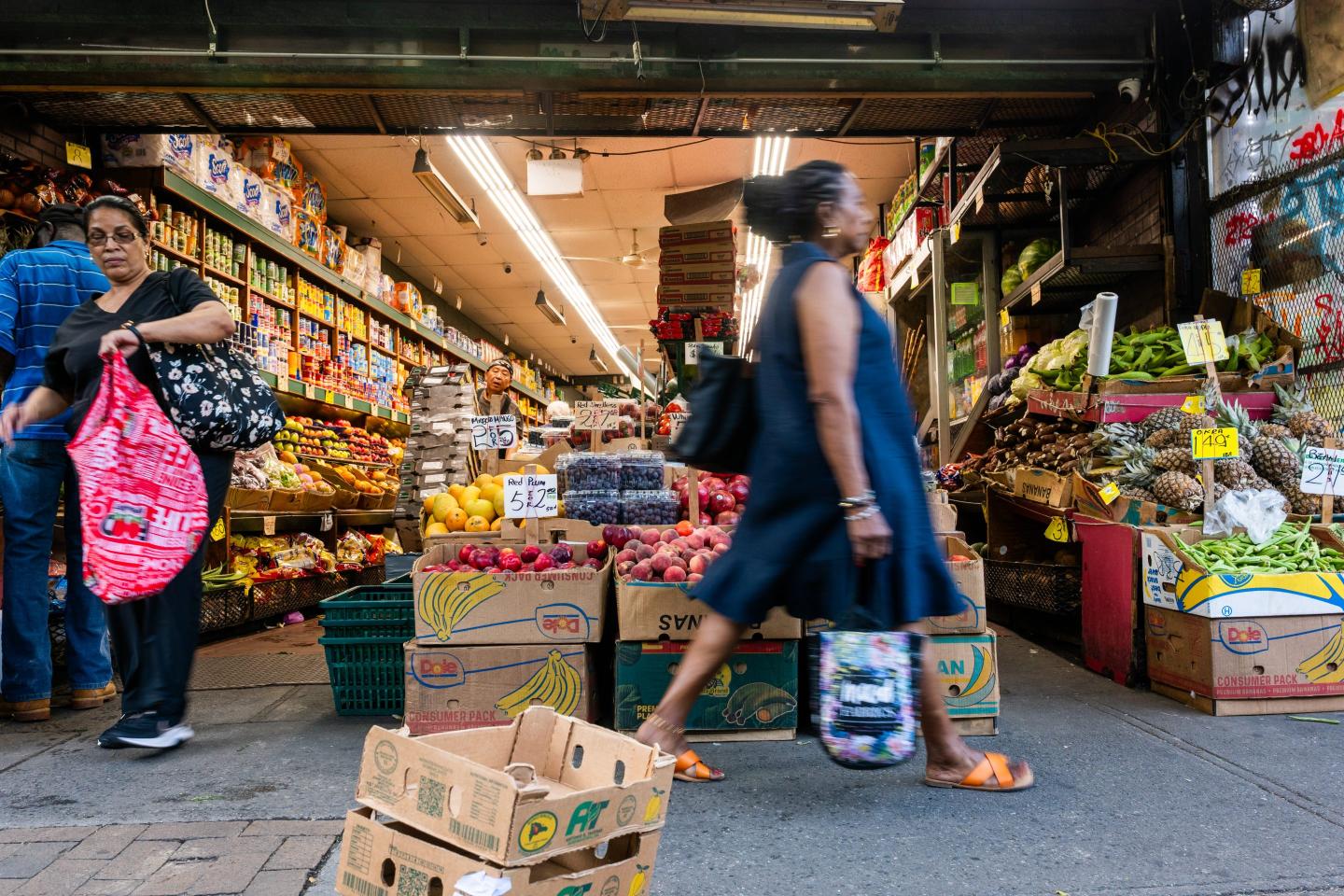
A grocery store stands along a street in Brooklyn on July 13, 2026 in New York City.Spencer Platt/Getty Images
Add Fortune on Google for similar content.

From tomatoes and berries to lettuce and peppers, shoppers are feeling sticker shock in the produce aisle.

Recommended Video

Recent headlines have focused in particular on soaring tomato prices. They spiked by roughly one-fifth from June 2025 to June 2026, according to consumer price data published by the U.S. Bureau of Labor Statistics.

But across the board, fruits and vegetables have gotten more expensive. Lettuce prices jumped by about 32% during that same 12-month period, while prices for all fresh vegetables increased about 10%. Fresh fruit saw smaller hikes, with apples up 7% and citrus fruit prices rising 6%..

As an agricultural economist, I see a complex mix of factors at work: extreme weather, worker shortages and rising labor costs, and high energy and shipping prices, as well as fallout from the Trump administration’s trade policies, just to name a few. And because some of these inflation drivers affect multiple sectors, costs are building up throughout the supply chain.

The breadth of these factors suggests that widespread relief may not come quickly. But inflation-weary shoppers can still take some steps to ease the sting of high prices.

What’s driving higher fruit and vegetable prices?

To start with, weather disruptions have cut supply and pushed prices up.

Unusual freezes in Florida in early 2026, for example, hit a variety of crops – including citrus, strawberries, blueberries, tomatoes and sweet corn – leading to yield losses and higher prices.

Imports also play a critical role in the U.S. food supply, especially during the winter and early spring months, when domestic production is limited. And if adverse weather conditions coincide with changes in trade policy, as is the case with the U.S.-Mexico relationship, produce supply and prices are especially affected.

The surge in tomato prices is a good example.

To protect the domestic tomato industry, the U.S. Commerce Department withdrew in June 2025 from a deal with Mexico, known formally as the U.S.-Mexico Tomato Suspension Agreement, to end duty-free access for Mexican tomatoes. This move effectively imposed a 17% antidumping duty on most tomato imports.

With imports accounting for about three-quarters of the U.S. tomato supply and Mexico supplying the overwhelming majority of foreign-grown tomatoes, U.S. consumers ultimately picked up the tab. In addition, reports suggest that Mexican tomato production declined after the agreement ended, with tomato imports dropping by 13% year over year. That diminished supply likely pushed prices higher.

Rising costs across the produce supply chain

Growing everything from strawberries to collard greens is labor intensive, and for many years, worker shortages have compelled farms to hike wages. Amid those pressures, producers are reporting that having to pay more for labor is adding to their own rising production costs.

Another factor is fertilizer prices, which have spiked due to disruptions caused by the Iran war. This geopolitical shock has affected the flow of goods, including fertilizer and oil passing through the Strait of Hormuz, hiking prices and fueling volatility in global fertilizer markets.

Fertilizer prices paid to manufacturers jumped by more than 20% year over year in June 2026, while nitrogen fertilizer prices increased a whopping 46%, according to U.S. government data.

With all these factors driving up costs, farmers have little control over the prices they receive for their products. Market prices are largely determined by the forces of demand and supply, including domestic production and imports. And considering that producer costs account for only about one-third of the retail price for fresh produce, those increases aren’t always fully passed through to consumers.

Beyond production costs, higher fuel prices have made doing business throughout the supply chain more expensive. The Iran war has resulted in a significant spike in fuel prices – roughly 27% over the year – which trickles down through the economy.

This jump has a pronounced effect on refrigerated truck rates, which are critical for shipping fresh produce. Those were 20% higher in June 2026 compared with June 2025, according to data from the Department of Agriculture.

In effect, these increases raise both the cost of producing fresh produce and of getting it from the farm to the final consumer.
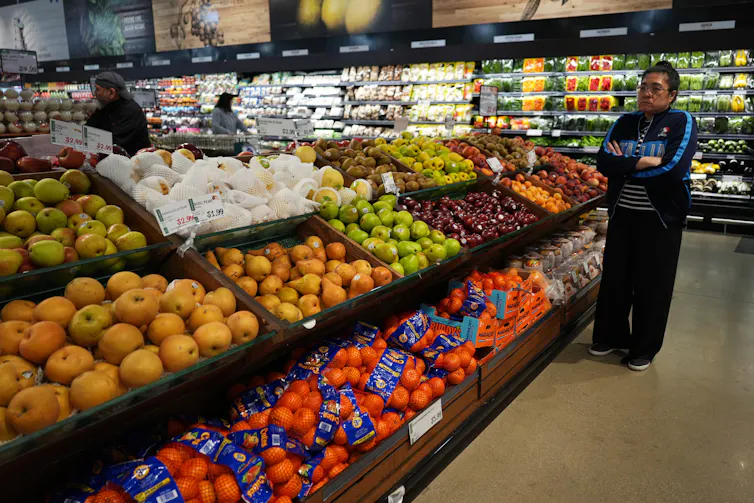
Shoppers inspect the offerings in the produce aisle, including apples, plums and pears, at a grocery store in Schaumburg, Ill.
Shoppers can find cheaper workarounds, but vulnerable Americans will still bear the brunt of higher produce prices as a share of their household budget. AP Photo/Nam Y. Huh

What can shoppers do?

Food inflation delivers a major hit on consumer budgets, particularly for low-income Americans, who are more sensitive to price increases. When the quality of diet in vulnerable households drops, rising food costs may be among the contributing reasons. A May 2026 survey of shoppers illustrates this financial squeeze, with 1 in 3 households reporting a drop in fresh produce purchases as a result.

But there are still workarounds if you’re seeking affordable yet healthy options. For example, certain types of produce and legumes have been less affected by inflation, including bananas, oranges, potatoes, dried beans, peas and lentils.

Shoppers should also look to canned and frozen fruit and vegetables to save money. They’re just as healthy but less affected by inflation because their longer shelf life means that factors such as weather and transportation play less of a role. Prices for processed produce increased year over year by just 3%, and 2.4% for frozen.

The substitution for cheaper alternatives is already evident in consumer choices, as 1 in 5 shoppers have reported shifting from fresh to frozen produce.

That said, sustained produce inflation makes healthy eating more difficult – which is why the search for affordable alternatives is increasingly important.

With so many factors contributing to higher inflation, some of the challenges affecting produce prices may be too long-lasting and hard to resolve overnight. As a result, relief at the checkout line may take longer than many consumers would like.

Elizabeth Canales, Associate Professor of Agricultural Economics, Mississippi State University

This article is republished from The Conversation under a Creative Commons license. Read the original article.

The Conversation
Subscribe to Fortune Gulf Brief. Every Tuesday, this new newsletter delivers clear-eyed, authoritative intelligence on the deals, decisions, policies, and power shifts shaping one of the world’s most consequential regions, written for the people who need to act on it. Sign up here.
About the Authors
By Elizabeth Canales
See full bioRight Arrow Button Icon
By The Conversation
See full bioRight Arrow Button Icon
Add Fortune on Google for similar content.

Latest in Economy

Finance
Lorem ipsum dolor sit amet, consectetur adipiscing elit, sed do eiusmod tempor incididunt ut labore et dolore magna aliqua. Ut enim ad minim veniam
By Fortune Editors
October 20, 2025
Finance
Lorem ipsum dolor sit amet, consectetur adipiscing elit, sed do eiusmod tempor incididunt ut labore et dolore magna aliqua. Ut enim ad minim veniam
By Fortune Editors
October 20, 2025
Finance
Lorem ipsum dolor sit amet, consectetur adipiscing elit, sed do eiusmod tempor incididunt ut labore et dolore magna aliqua. Ut enim ad minim veniam
By Fortune Editors
October 20, 2025
Finance
Lorem ipsum dolor sit amet, consectetur adipiscing elit, sed do eiusmod tempor incididunt ut labore et dolore magna aliqua. Ut enim ad minim veniam
By Fortune Editors
October 20, 2025
Finance
Lorem ipsum dolor sit amet, consectetur adipiscing elit, sed do eiusmod tempor incididunt ut labore et dolore magna aliqua. Ut enim ad minim veniam
By Fortune Editors
October 20, 2025
Finance
Lorem ipsum dolor sit amet, consectetur adipiscing elit, sed do eiusmod tempor incididunt ut labore et dolore magna aliqua. Ut enim ad minim veniam
By Fortune Editors
October 20, 2025

Most Popular

Finance
Lorem ipsum dolor sit amet, consectetur adipiscing elit, sed do eiusmod tempor incididunt ut labore et dolore magna aliqua. Ut enim ad minim veniam
By Fortune Editors
October 20, 2025
Finance
Lorem ipsum dolor sit amet, consectetur adipiscing elit, sed do eiusmod tempor incididunt ut labore et dolore magna aliqua. Ut enim ad minim veniam
By Fortune Editors
October 20, 2025
Finance
Lorem ipsum dolor sit amet, consectetur adipiscing elit, sed do eiusmod tempor incididunt ut labore et dolore magna aliqua. Ut enim ad minim veniam
By Fortune Editors
October 20, 2025
Finance
Lorem ipsum dolor sit amet, consectetur adipiscing elit, sed do eiusmod tempor incididunt ut labore et dolore magna aliqua. Ut enim ad minim veniam
By Fortune Editors
October 20, 2025
Finance
Lorem ipsum dolor sit amet, consectetur adipiscing elit, sed do eiusmod tempor incididunt ut labore et dolore magna aliqua. Ut enim ad minim veniam
By Fortune Editors
October 20, 2025
Finance
Lorem ipsum dolor sit amet, consectetur adipiscing elit, sed do eiusmod tempor incididunt ut labore et dolore magna aliqua. Ut enim ad minim veniam
By Fortune Editors
October 20, 2025
Fortune Secondary Logo
Rankings
  • 100 Best Companies
  • Fortune 500
  • Global 500
  • Fortune 500 Europe
  • Most Powerful Women
  • World's Most Admired Companies
  • See All Rankings
  • Lists Calendar
Sections
  • Finance
  • Fortune Crypto
  • Features
  • Leadership
  • Health
  • Commentary
  • Success
  • Retail
  • Mpw
  • Tech
  • Lifestyle
  • CEO Initiative
  • Asia
  • Politics
  • Conferences
  • Europe
  • Newsletters
  • Personal Finance
  • Environment
  • Magazine
  • Education
Customer Support
  • Frequently Asked Questions
  • Customer Service Portal
  • Privacy Policy
  • Terms Of Use
  • Single Issues For Purchase
  • International Print
Commercial Services
  • Advertising
  • Fortune Brand Studio
  • Fortune Analytics
  • Fortune Conferences
  • Business Development
  • Group Subscriptions
About Us
  • About Us
  • Press Center
  • Work At Fortune
  • Terms And Conditions
  • Site Map
  • About Us
  • Press Center
  • Work At Fortune
  • Terms And Conditions
  • Site Map
  • Facebook icon
  • Twitter icon
  • LinkedIn icon
  • Instagram icon
  • Pinterest icon

Latest in Economy

Andrew McAfee
SuccessCareers
MIT AI expert warns automating Gen Z entry-level jobs could backfire—and cost companies their future workforce
By Preston ForeJuly 19, 2026
2 hours ago
Looking back at the World Cup: Fans drank Boston dry, got permanent tattoos, sold out famous BBQ joints, and drove up small business revenue
RetailSports
Looking back at the World Cup: Fans drank Boston dry, got permanent tattoos, sold out famous BBQ joints, and drove up small business revenue
By Catherina GioinoJuly 19, 2026
3 hours ago
A weak yen turned Tokyo into a steal. A strong shekel turned Tel Aviv into the world’s most expensive city to buy McDonald’s
EconomyIsrael
A weak yen turned Tokyo into a steal. A strong shekel turned Tel Aviv into the world’s most expensive city to buy McDonald’s
By Mia OsmonbekovJuly 19, 2026
5 hours ago
grocery
EconomyInflation
Agricultural economist explains why you’re paying 32% more for lettuce and 20% more for tomatoes — and why it will stay that way
By Elizabeth Canales and The ConversationJuly 19, 2026
7 hours ago
russia
PoliticsEconomics
Strong economies, strongman leaders: how China (and America’s) AI boom could create a new class of kowtowing elites
By José Kaire and The ConversationJuly 19, 2026
8 hours ago
Iran just crossed Trump’s red line for resuming all-out war as fighting continues to escalate with no end in sight
Middle EastIran
Iran just crossed Trump’s red line for resuming all-out war as fighting continues to escalate with no end in sight
By Jason MaJuly 18, 2026
16 hours ago

Most Popular

Iran just crossed Trump's red line for resuming all-out war as fighting continues to escalate with no end in sight
Middle East
Iran just crossed Trump's red line for resuming all-out war as fighting continues to escalate with no end in sight
By Jason MaJuly 18, 2026
16 hours ago
Indeed chief economist: Aging Baby Boomers are America's real labor problem, not AI
Commentary
Indeed chief economist: Aging Baby Boomers are America's real labor problem, not AI
By Svenja GudellJuly 18, 2026
1 day ago
'Dr. Doom' Nouriel Roubini says we're headed for universal basic income or 'some form of socialism' as AI revolutionizes work—He calls that optimistic
AI
'Dr. Doom' Nouriel Roubini says we're headed for universal basic income or 'some form of socialism' as AI revolutionizes work—He calls that optimistic
By Jason MaJuly 18, 2026
17 hours ago
U.S. companies have finally gotten $71 billion in tariff refunds, but they’re using it to offset inflation caused by the Iran war
Economy
U.S. companies have finally gotten $71 billion in tariff refunds, but they’re using it to offset inflation caused by the Iran war
By Sasha RogelbergJuly 17, 2026
2 days ago
FedEx CEO says we are in the middle of the biggest supply chain shift he’s seen in 35 years: ‘We are the referendum’
C-Suite
FedEx CEO says we are in the middle of the biggest supply chain shift he’s seen in 35 years: ‘We are the referendum’
By Fortune EditorsJuly 15, 2026
4 days ago
Peter Thiel just gave the public its closest look yet at his 'Antichrist' theory—and it's a tech and climate regulator
Politics
Peter Thiel just gave the public its closest look yet at his 'Antichrist' theory—and it's a tech and climate regulator
By Nick LichtenbergJuly 18, 2026
1 day ago

© 2026 Fortune Media IP Limited. All Rights Reserved. Use of this site constitutes acceptance of our Terms of Use and Privacy Policy | CA Notice at Collection and Privacy Notice | Do Not Sell/Share My Personal Information
FORTUNE is a trademark of Fortune Media IP Limited, registered in the U.S. and other countries. FORTUNE may receive compensation for some links to products and services on this website. Offers may be subject to change without notice.