
Good morning. Today’s award for coolest-sounding company goes to London-based Kraken Technology, which designs and builds “autonomous maritime platforms.”
Sounds a bit like a high-tech ghost ship, right? You’re not far off, me hearties.
Founded by speedboat racer Mal Crease, Kraken—not to be confused with the Wyoming crypto exchange of the same name—makes uncrewed subsurface vessels and the like for military and security purposes. It’s partnered with Anduril in the U.S. and as of this week, it’s worth a billion dollars.
“Look at me. Look at me,” the AI warned. “I’m the captain now.”
More tech news below. Have a wonderful weekend. —Andrew Nusca
Want to send thoughts or suggestions to Fortune Tech? Drop a line here.
U.S. AI policy lacks transparency, Microsoft prez says
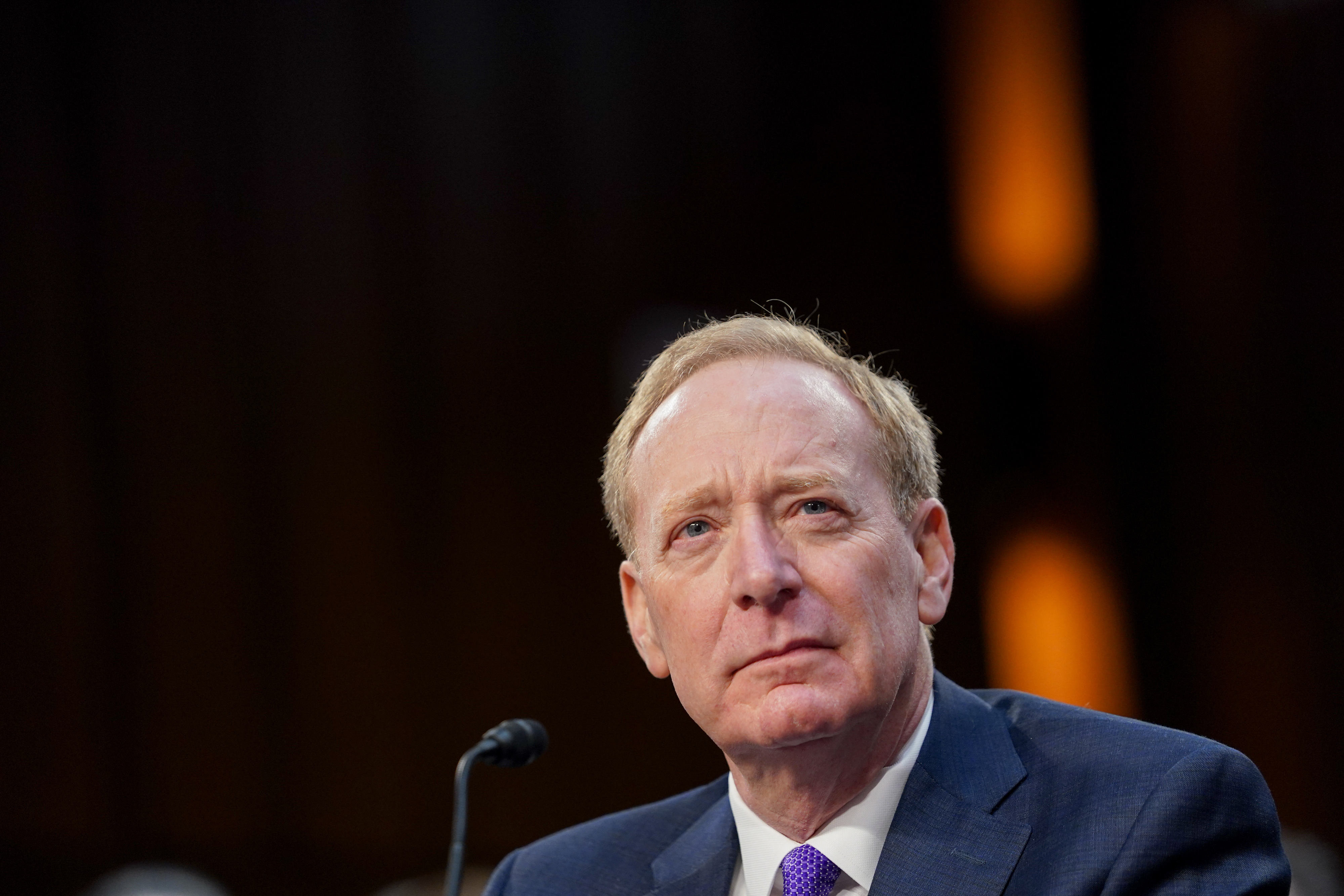
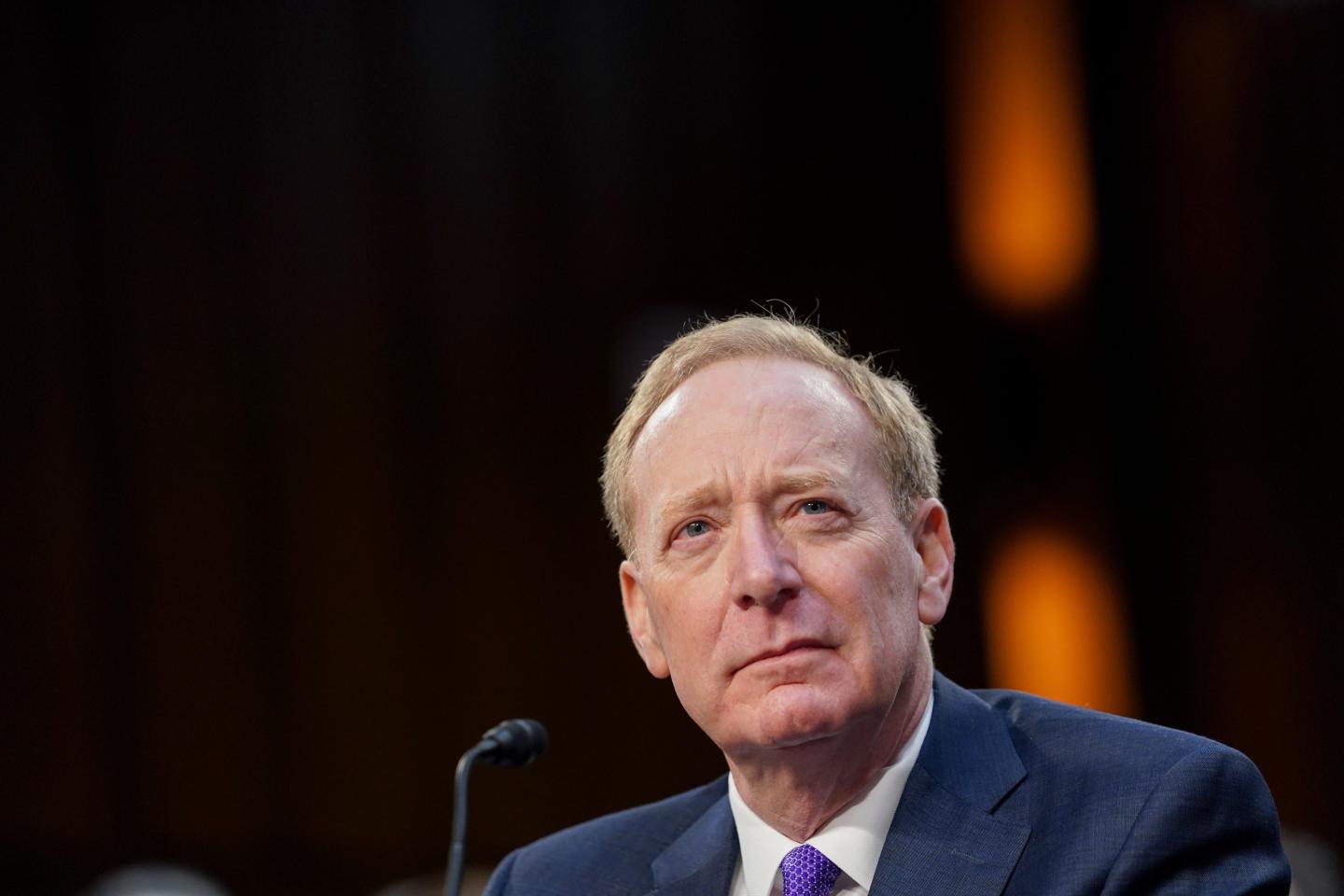
In a new interview with Fortune, Microsoft President Brad Smith says the Trump administration’s current approach to AI lacks transparency and does not provide the clear rules companies need.
“Everyone is reluctant to say there should be regulation, but what we really have right now is regulation without transparent or complete rules,” he said on the sidelines of the AI for Good Global Summit in Geneva, Switzerland. “Without rules, businesses can’t plan.”
The Trump administration’s recent decisions to restrict access to two of the industry’s most advanced AI models have left even the labs building them guessing at what the government’s AI policy is.
Last month, the Commerce Department invoked export-control law to force Anthropic to pull its Fable 5 and Mythos 5 models from the market worldwide, citing a cybersecurity risk. Weeks later, officials pressed OpenAI to hold back the public rollout of its new GPT-5.6 model family, limiting early access to government-vetted partners. (Both restrictions have since eased.)
Smith said the administration is now effectively regulating frontier AI without the tools it needs to do so.
“The U.S. government got information that led it to conclude that there was an urgent cybersecurity risk, and when the government gets that information, I think it’s right to act,” Smith said. “But, what the government found was that it only had one regulatory tool it could use: an export control tool.”
Legal experts have also noted that the export controls Washington reached for were never designed for widely accessible AI models delivered over an API, raising doubts about whether the government’s recent decision could have survived a legal challenge.
“Ultimately, common sense says don’t be heavy-handed, but have enough of a touch that you can do what needs to be done,” Smith said. “I hope we can move the conversation in that direction.” —Beatrice Nolan
European Parliament advances contentious CSAM scanning bill
Few disagree with the need to eradicate CSAM—child sexual abuse material—on the Internet.
But how one goes about it? That’s more complicated.
In March, the European Parliament rejected a bill (nicknamed “Chat Control”) giving tech companies the legal right to scan for CSAM on concerns that it would allow mass surveillance of users’ communications, including those of innocent citizens.
Yesterday, Parliament changed its mind, voting to send the bill to EU member countries for approval—with an amendment exempting end-to-end encrypted services such as WhatsApp and Signal.
Support was hardly unanimous. The center-right European People's Party was the most supportive of the bill; liberal and social-democrat groups were more evenly split. Most other groups were against it.
If the European Council fails to reach a consensus, the bill would go to a rarely used “conciliation” procedure that gives a temporary joint committee six weeks to hammer out a mutually acceptable version.
In the meantime, tech companies remain in limbo. Politico notes that they’re scanning for the stuff despite the legal complications of doing so, but whether the revived bill addresses any of their collective concerns—the need for a narrower scope, voluntary scanning, etc.—remains to be seen. —AN
Fed chair names Andreessen, Sharma to tech task force
Federal Reserve chair Kevin Warsh this week established five task forces to advise its work on monetary policy.
Appointed to them are a few familiar faces from techland.
The five groups cover Fed communication, its balance sheet, data, inflation, and productivity and jobs. They are co-led by external advisers—“accomplished economists, business leaders, and former central bank practitioners” with “deep expertise in their fields”—and tasked with giving candid, evidence-based feedback.
The task force focused on data—to “improve the quality and timeliness of real economic signals that inform the Federal Reserve's policy judgments,” per the Fed—features former Walmart CEO Doug McMillon, who turned the retailer into an omnichannel juggernaut, alongside two economists.
But it’s the group focused on productivity—to “assess the economic impact of new general-purpose technologies, including artificial intelligence, to inform the Federal Reserve's policy judgments”—that stands out the most.
It features prominent investor Marc Andreessen (who sits on the board of Meta and backs a number of AI-driven firms including Applied Intuition and Samsara) and Xbox CEO Asha Sharma (who was previously the president of Microsoft's CoreAI group), complemented by Stanford economist Charles I. Jones, who is currently researching AI’s economic impact at the Anthropic Institute, the San Francisco AI company’s in-house think tank.
We don’t yet know what to expect from the new Fed chair. President Trump nominated Warsh, a former Fed governor and the son-in-law of prominent Republican donor Ronald Lauder, on the belief that he would cut interest rates to boost economic growth. That hasn’t yet happened: the Fed voted in June to hold the current rate. —AN
More tech
—Meta releases Muse Spark 1.1, a “significant upgrade” to its multimodal AI model for agentic tasks.
—Sam Altman says OpenAI made “many changes” to its new AI models after talks with the U.S. government.
—Google will automatically add a disclosure to all ads made with its AI tools.
—Interpol and others arrest 5,811 suspects and seize $293 million in a global operation combating social engineering scams.
—U.S. venture funding in the first half of 2026 is already 30% higher than full-year 2025.
—Mercor acquires Deeptune. The a16z-backed startup builds simulation environments for AI agents to practice tasks.
—India scraps import duties on some phone components through March 31, 2029.