• Home
  • Latest
  • Fortune 500
  • Finance
  • Tech
  • Leadership
  • Lifestyle
  • Rankings
  • Multimedia

Trendingnow

1

Former U.S. Secret Service agent says bringing your authentic self to work stifles teamwork: 'You don’t get high performers, you get sloppiness'

2

Current price of oil as of June 22, 2026

3

Current price of silver as of Monday, June 22, 2026

1

Former U.S. Secret Service agent says bringing your authentic self to work stifles teamwork: 'You don’t get high performers, you get sloppiness'

2

Current price of oil as of June 22, 2026

3

Current price of silver as of Monday, June 22, 2026
CommentaryElon Musk

Elon Musk’s trillion dollars aren’t real — and that’s the point

By
Douglas P. McCormick
Down Arrow Button Icon
By
Douglas P. McCormick
Down Arrow Button Icon
June 23, 2026, 7:30 AM ET

Douglas P. McCormick is Managing Partner and Chief Investment Officer of Oridian Capital Partners.

elon
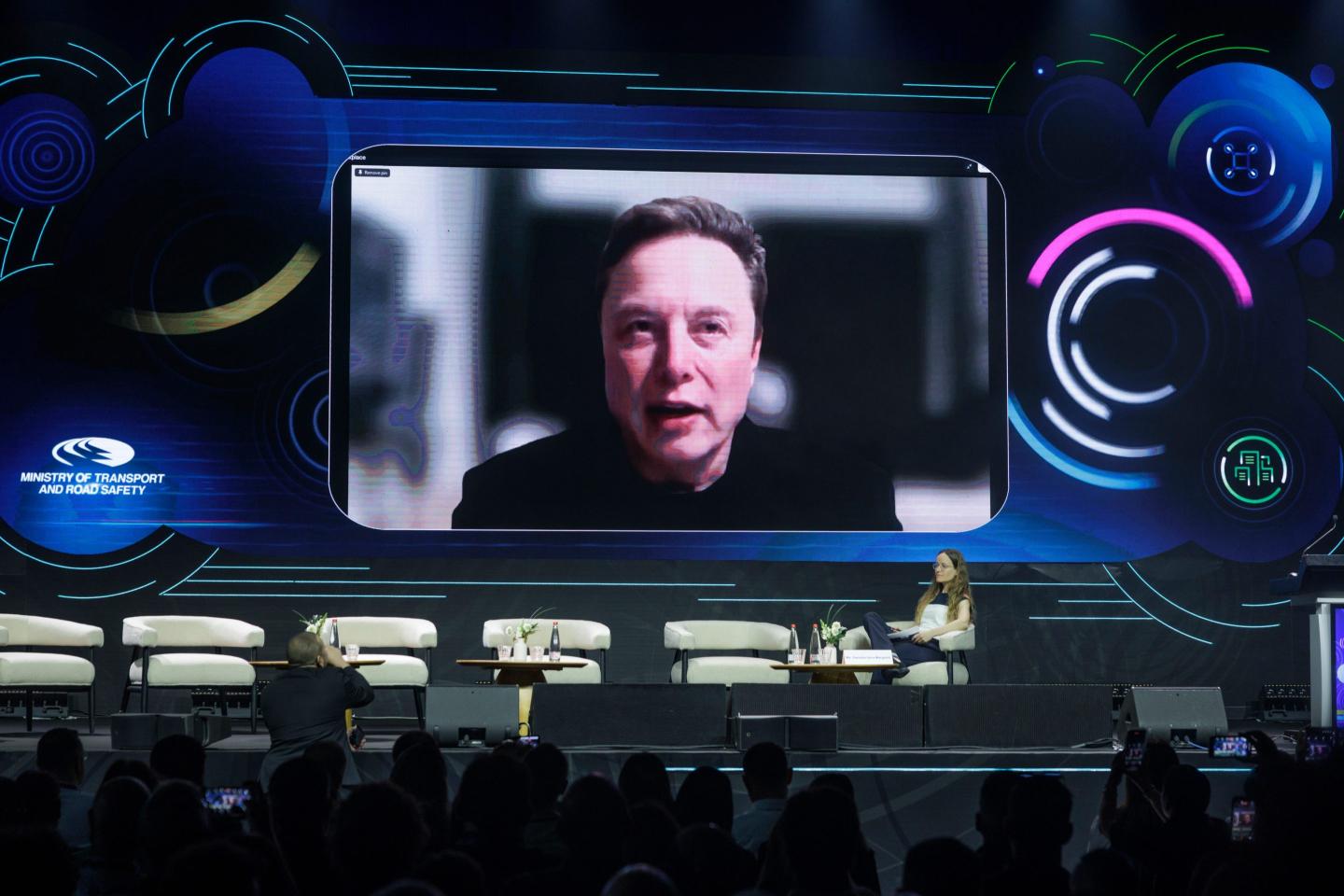
Elon Musk, chief executive officer of Tesla Inc., speaks during a video interview at the Samson International Smart Mobility Summit in Tel Aviv, Israel, on Monday, May 18, 2026. "We've got to get the SpaceX IPO stuff going here pretty soon," the billionaire said, giving a reason for appearing virtually, instead of in person. Kobi Wolf/Bloomberg via Getty Images
Add Fortune on Google for similar content.

Elon Musk became the world’s first trillionaire in June 2026, when SpaceX’s record $75 billion IPO — the largest in history — pushed his net worth past $1.1 trillion.

Recommended Video

Before the outrage starts, consider what that number actually is — and isn’t.

Musk is a trillionaire for one reason: investors, acting with free will and full information, agreed to buy in at that price. No one was forced, no one was defrauded, and the price paid is their business and their risk to bear.

But what should interest everyone is what this number actually represents — because it is almost certainly not what most people think. That $75 billion funds the next generation of rockets, satellites, factories and AI — long-horizon, high-risk innovation that markets rarely back and governments increasingly cannot. The valuation is the investors’ concern; the innovation it underwrites is everyone’s.

Musk’s fortune isn’t a hoard. It is a performance bond — a measure of innovation already delivered and innovation still owed. The difference matters enormously.

Start with what he has built. Tesla forced the global auto industry to electrify; before it proved electric vehicles could be desirable, legacy automakers treated them as compliance exercises. SpaceX broke a government monopoly on space access, cut launch costs by an order of magnitude, restored America’s ability to put its own astronauts in orbit, and through Starlink delivered broadband to rural communities the telecoms had abandoned. These are hundreds of thousands of American jobs, much of it advanced manufacturing reshored to Texas, California and Nevada.

And as economists who study innovation note, entrepreneurs capture only a sliver of the value they create; the rest spills to consumers, workers and imitators. A trillion-dollar fortune is the visible tip of a far larger pool of value already delivered to everyone else.

Here is what almost every commentary on Musk’s wealth gets wrong. Almost none of his net worth is held in cash. Nearly all of it is unrealized equity in companies he still runs, and he draws no salary. His wealth is not money he extracted and stored. It is the market’s estimate of promises he hasn’t yet kept.

SpaceX’s roughly $1.77 trillion valuation isn’t a reward for past rockets — it is a bet on Starship reaching Mars and a satellite economy that barely exists. Tesla’s valuation prices in full autonomy and a robotics business that has not yet materialized. Strip those future bets out and the trillion largely disappears.

The logic should reassure rather than alarm: for Musk to keep this fortune, those things must actually happen. If Starship stalls or autonomy disappoints, his paper trillion evaporates. Tesla shed more than $800 billion in market value in early 2025 before recovering, and his net worth swings by tens of billions on ordinary trading days.

He is, by this measure, more exposed to failure than any person alive — tethered to outcomes most people would consider impossible, with no salary, limited liquidity, and no exit that doesn’t destroy the very thing he’s selling. And markets are not oracles; they misprice the future all the time, which is exactly the point — his fortune is a wager, not a certainty.

So the country faces an attractive asymmetry. Either Musk delivers a wave of growth larger than anything we’ve seen — enriching the pension funds and 401(k) holders who own these same shares alongside him — or he fails, and the fortune that offends people simply disappears. We have seen only the front end of this bargain. The valuation is the promise.

Some will object that a fortune this size is really about power, not money, and the worry deserves a real answer. One man now holds unusual sway across rockets, satellites, automobiles, artificial intelligence, a major communications platform and a web of government contracts — influence concentrated in a way that should make any republic pause. 

It is a legitimate concern. But it is not a new one, and it is not unanswerable. Concentrated wealth has always converted into influence, and the republic absorbed it and built the antitrust law and disclosure rules that outlasted the men who provoked them. Musk is a contractor, not a sovereign: his largest customer is the U.S. government, and his companies can be taxed, sued or denied a contract at will. The right response to private power is competition and law — govern the power, not the fortune.

The deeper anxiety is inequality, and here the structure of his wealth is the answer. Because nearly all of it is equity he cannot sell without collapsing its value, his only path to keeping it is to make those companies succeed — and they succeed by doing the very things the country wants done. Tesla is worth more if it electrifies transport and builds American factories; SpaceX is worth more if it lowers the cost of space and wires the broadband deserts. He cannot enrich himself by extracting from the public the way a monopolist raising prices can; he enriches himself by producing for it.

And if he does succeed — if the rockets fly, the cars drive themselves, and the satellites connect the unconnected — the fortune hits a basic arithmetic problem: it is impossible to spend on oneself. No quantity of houses or yachts dents it. Such money has only three destinations — reinvestment, the Treasury, or philanthropy — and all three serve the public.

History is emphatic. Andrew Carnegie gave away nearly 90% of his fortune, building more than 2,500 libraries and an enduring peace endowment. Rockefeller money founded the University of Chicago and the public-health campaigns that beat back disease; the Mellon fortune built the National Gallery. The Gilded Age fortunes that scandalized their contemporaries became, within a generation, the universities, museums and hospitals that form America’s civic backbone. The Giving Pledge, which Musk signed in 2012, formalized that expectation. 

Musk’s own philanthropic story is still unwritten. But the fortune is too large to consume, the law will not let it sit untouched forever, and the precedent is overwhelming. The money finds public purpose in the end.

Strip away the politics and what remains is this: the world’s first trillionaire draws no salary, cannot spend his fortune, cannot sell it without destroying it, and will only keep it if he delivers on the ambitious expectations implied in today’s stock price. That is not a description of hoarded wealth. It is a description of the most audacious performance bond in history.

A trillion dollars is the country’s collective bet that the cars, the rockets, the satellites and the factories will deliver far more than they already have. If the bet pays off, America gets the growth, the jobs and the technology — and eventually the philanthropy. If it doesn’t, the fortune simply vanishes.

Either way the wealth is pointed at the future, not locked in the past. America should want more bets like this, not fewer.

The opinions expressed in Fortune.com commentary pieces are solely the views of their authors and do not necessarily reflect the opinions and beliefs of Fortune.

About the Author
By Douglas P. McCormick
See full bioRight Arrow Button Icon
Add Fortune on Google for similar content.

Latest in Commentary

Finance
Lorem ipsum dolor sit amet, consectetur adipiscing elit, sed do eiusmod tempor incididunt ut labore et dolore magna aliqua. Ut enim ad minim veniam
By Fortune Editors
October 20, 2025
Finance
Lorem ipsum dolor sit amet, consectetur adipiscing elit, sed do eiusmod tempor incididunt ut labore et dolore magna aliqua. Ut enim ad minim veniam
By Fortune Editors
October 20, 2025
Finance
Lorem ipsum dolor sit amet, consectetur adipiscing elit, sed do eiusmod tempor incididunt ut labore et dolore magna aliqua. Ut enim ad minim veniam
By Fortune Editors
October 20, 2025
Finance
Lorem ipsum dolor sit amet, consectetur adipiscing elit, sed do eiusmod tempor incididunt ut labore et dolore magna aliqua. Ut enim ad minim veniam
By Fortune Editors
October 20, 2025
Finance
Lorem ipsum dolor sit amet, consectetur adipiscing elit, sed do eiusmod tempor incididunt ut labore et dolore magna aliqua. Ut enim ad minim veniam
By Fortune Editors
October 20, 2025
Finance
Lorem ipsum dolor sit amet, consectetur adipiscing elit, sed do eiusmod tempor incididunt ut labore et dolore magna aliqua. Ut enim ad minim veniam
By Fortune Editors
October 20, 2025

Most Popular

Finance
Lorem ipsum dolor sit amet, consectetur adipiscing elit, sed do eiusmod tempor incididunt ut labore et dolore magna aliqua. Ut enim ad minim veniam
By Fortune Editors
October 20, 2025
Finance
Lorem ipsum dolor sit amet, consectetur adipiscing elit, sed do eiusmod tempor incididunt ut labore et dolore magna aliqua. Ut enim ad minim veniam
By Fortune Editors
October 20, 2025
Finance
Lorem ipsum dolor sit amet, consectetur adipiscing elit, sed do eiusmod tempor incididunt ut labore et dolore magna aliqua. Ut enim ad minim veniam
By Fortune Editors
October 20, 2025
Finance
Lorem ipsum dolor sit amet, consectetur adipiscing elit, sed do eiusmod tempor incididunt ut labore et dolore magna aliqua. Ut enim ad minim veniam
By Fortune Editors
October 20, 2025
Finance
Lorem ipsum dolor sit amet, consectetur adipiscing elit, sed do eiusmod tempor incididunt ut labore et dolore magna aliqua. Ut enim ad minim veniam
By Fortune Editors
October 20, 2025
Finance
Lorem ipsum dolor sit amet, consectetur adipiscing elit, sed do eiusmod tempor incididunt ut labore et dolore magna aliqua. Ut enim ad minim veniam
By Fortune Editors
October 20, 2025
Fortune Secondary Logo
Rankings
  • 100 Best Companies
  • Fortune 500
  • Global 500
  • Fortune 500 Europe
  • Most Powerful Women
  • World's Most Admired Companies
  • See All Rankings
  • Lists Calendar
Sections
  • Finance
  • Fortune Crypto
  • Features
  • Leadership
  • Health
  • Commentary
  • Success
  • Retail
  • Mpw
  • Tech
  • Lifestyle
  • CEO Initiative
  • Asia
  • Politics
  • Conferences
  • Europe
  • Newsletters
  • Personal Finance
  • Environment
  • Magazine
  • Education
Customer Support
  • Frequently Asked Questions
  • Customer Service Portal
  • Privacy Policy
  • Terms Of Use
  • Single Issues For Purchase
  • International Print
Commercial Services
  • Advertising
  • Fortune Brand Studio
  • Fortune Analytics
  • Fortune Conferences
  • Business Development
  • Group Subscriptions
About Us
  • About Us
  • Press Center
  • Work At Fortune
  • Terms And Conditions
  • Site Map
  • About Us
  • Press Center
  • Work At Fortune
  • Terms And Conditions
  • Site Map
  • Facebook icon
  • Twitter icon
  • LinkedIn icon
  • Instagram icon
  • Pinterest icon

Latest in Commentary

brett
CommentaryManagement
Middle managers aren’t going extinct—they’re evolving into something more powerful
By Brett HurtJune 23, 2026
42 minutes ago
ravi
CommentaryAI agents
Yale School of Management: surveillance pricing is just the beginning. AI agents will be the real test of corporate trust
By Ravi Dhar and Jon IwataJune 23, 2026
2 hours ago
elon
CommentaryElon Musk
Elon Musk’s trillion dollars aren’t real — and that’s the point
By Douglas P. McCormickJune 23, 2026
2 hours ago
ms
CommentaryCareers
Gen Z: if you want to succeed at work, you need to start friction-maxxing
By Michelle SobelJune 23, 2026
2 hours ago
rp
CommentaryLaw
Cooley CEO: Big Law won’t survive if it treats AI as just an efficiency tool
By Rachel ProffittJune 23, 2026
3 hours ago
gg
CommentaryWorld Cup
CPJ: press freedom must endure the American World Cup
By Gypsy Guillén KaiserJune 23, 2026
3 hours ago

Most Popular

Former U.S. Secret Service agent says bringing your authentic self to work stifles teamwork: 'You don’t get high performers, you get sloppiness'
Success
Former U.S. Secret Service agent says bringing your authentic self to work stifles teamwork: 'You don’t get high performers, you get sloppiness'
By Sydney LakeJune 21, 2026
2 days ago
Current price of oil as of June 22, 2026
Personal Finance
Current price of oil as of June 22, 2026
By Joseph HostetlerJune 22, 2026
1 day ago
Current price of silver as of Monday, June 22, 2026
Personal Finance
Current price of silver as of Monday, June 22, 2026
By Joseph HostetlerJune 22, 2026
1 day ago
The Fed is fed up with inflation and will bring down the hammer with a series of rate hikes this year, reversing earlier cuts, BofA says
Economy
The Fed is fed up with inflation and will bring down the hammer with a series of rate hikes this year, reversing earlier cuts, BofA says
By Jason MaJune 22, 2026
21 hours ago
NBC’s Tom Llamas climbed from 15-year-old intern to the top anchor chair—and still isn’t satisfied: ‘If you're not growing, you're dying'
Success
NBC’s Tom Llamas climbed from 15-year-old intern to the top anchor chair—and still isn’t satisfied: ‘If you're not growing, you're dying'
By Preston ForeJune 21, 2026
2 days ago
By 7 a.m., Bank of America’s CEO has already read 5 newspapers, his email inbox, and hit the gym—he says if you’re late to meetings, you’re ‘selfish’
Success
By 7 a.m., Bank of America’s CEO has already read 5 newspapers, his email inbox, and hit the gym—he says if you’re late to meetings, you’re ‘selfish’
By Preston ForeJune 22, 2026
22 hours ago

© 2026 Fortune Media IP Limited. All Rights Reserved. Use of this site constitutes acceptance of our Terms of Use and Privacy Policy | CA Notice at Collection and Privacy Notice | Do Not Sell/Share My Personal Information
FORTUNE is a trademark of Fortune Media IP Limited, registered in the U.S. and other countries. FORTUNE may receive compensation for some links to products and services on this website. Offers may be subject to change without notice.