
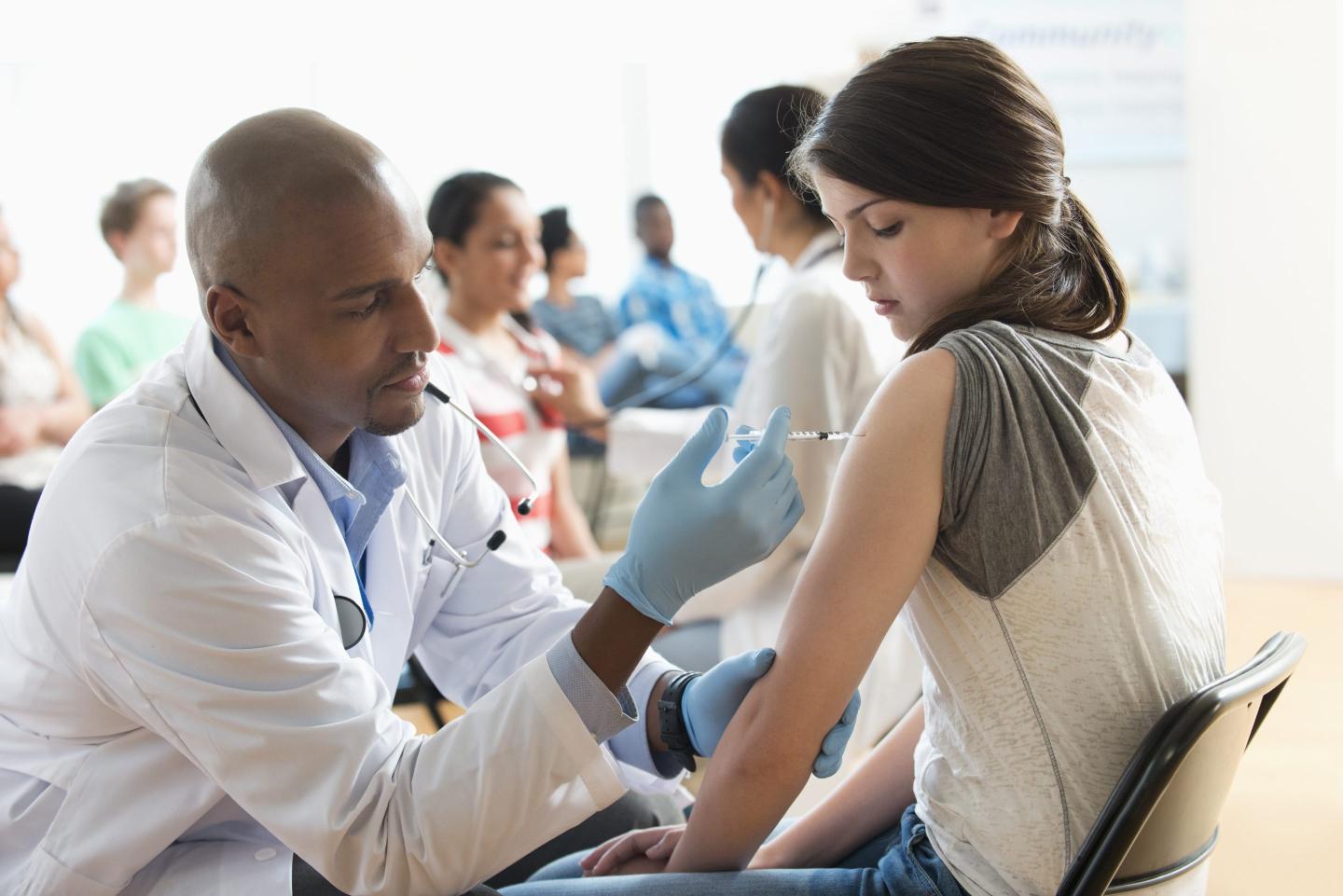
For the first time since records have been kept, a five-year stretch passed in England without a single young woman dying of cervical cancer. Between 2020 and 2024, not one woman ages 20 to 24 died of the disease—a cohort that, absent vaccination, would have been expected to lose roughly 23 of its members to it.
The finding comes from a landmark study published June 17 in The Lancet by Queen Mary University of London professors Peter Sasieni and Milena Falcaro. Both spent two decades building the evidentiary chain: HPV causes cervical cancer; vaccination stops the infection; vaccination should, eventually, stop the dying.
“For more than two decades, our team has been building evidence to show that HPV causes cervical cancer and that vaccination prevents infections, precancerous changes, and the disease itself. This is the first study to highlight the impact of HPV vaccination on cervical cancer mortality,” Sasieni said in a statement from QMUL. “It’s amazing news that no women aged between 20 and 24 died from cervical cancer in the whole of England between 2020 and 2024. That remarkable fact is thanks to nearly 90% of Gen Z women having received the HPV vaccine through the school vaccination and catch-up programs.”
“Our findings provide the first robust national-level evidence, albeit observational, that high HPV vaccination coverage is associated with a substantial reduction in cervical cancer deaths,” the authors wrote. The study analyzed England’s cervical cancer mortality data from 2001 through 2024 among women ages 20 to 34, comparing actual deaths with expected deaths based on pre-vaccination historical rates. The researchers found a 100% reduction in cervical cancer mortality among women ages 20 to 24 between 2020 and 2024, as compared with historical rates.
During that time period, the vaccination coverage for that cohort was around 88% to 90% at ages 12 to 13. In earlier cohorts with somewhat lower coverage, mortality fell 80% among women ages 20 to 24 in 2014–2019, and 69% among women ages 25 to 29 in 2020–2024.
“We estimate that since its introduction, HPV vaccination has prevented nearly 200 young women from dying from cervical cancer in England,” Sasieni wrote. “But that’s just the tip of the iceberg—as vaccinated generations grow older, we’ll see many more lives saved from cervical cancer.”
The researchers do note an important caveat: The finding of zero cervical cancer deaths is “likely to be a chance finding corresponding to a very low underlying rate, rather than a true eradication of cervical cancer as a cause of death in young women.” The underlying risk has been driven so low that zero is now statistically plausible.
Vaccine skepticism threatens the same result in the U.S.
The results land at a difficult moment for the vaccine’s standing in the United States. The Lancet paper itself notes a separate U.S. analysis found just 31 cervical cancer deaths among women under 25 between 2016 and 2021 (26 fewer than projected from past rates) as evidence that the vaccine is working here as well, in a population that never fully deployed it. Merck’s Gardasil, which racked up more than $8 billion in sales in 2023, faces its first U.S. jury trial over claims it wrongfully marketed the vaccine, litigation that HHS Secretary Robert F. Kennedy Jr. has financially benefited from through referral fees to plaintiffs’ firms. During his Senate confirmation hearing, Kennedy refused to say whether the HPV vaccine was safe when pressed by Sen. Patty Murray (D-Wash.), and declined to renounce his prior characterization of Gardasil as “dangerous and defective.”
Since taking office, RFJ Jr. has fired the entire CDC vaccine advisory committee and replaced it with skeptics, vowed to investigate the childhood vaccine schedule after promising not to change it, and forced out the FDA’s top vaccine regulator after he refused to hand over unrestricted access to the agency’s vaccine safety database.
This high-profile skepticism is now reflecting in the numbers. According to health policy researchers at KFF, only about 61% of adolescents ages 13 to 17 have completed the HPV vaccination series in the U.S., far behind the meningococcal vaccine at 88.4% and the Tdap at 89%. HPV initiation has now stalled for three consecutive years, with rates substantially lower in rural areas.
The U.S. government’s own goal of 80% HPV vaccination coverage by 2030—a target Kennedy is now in charge of pursuing—was already looking ambitious before he arrived. Legal analysts and oncology groups have argued Kennedy’s years of rhetoric against the vaccine have already contributed to depressed uptake, particularly in conservative-leaning states where HPV coverage lagged even before pandemic disruptions.
The WHO estimates HPV caused roughly 620,000 cancer cases in women and 70,000 in men globally in 2019 across cervical, anal, vulvar, vaginal, penile, and oropharyngeal cancers, with cervical cancer alone responsible for an estimated 350,000 deaths in 2022. In the U.S., the CDC estimates HPV causes around 39,300 cancers annually, nearly all of which are preventable with the 9-valent Gardasil vaccine. Meanwhile, global HPV vaccination coverage by age 15 stands at roughly 20% for girls receiving a first dose and only 15% completing the series.