
Good morning. Talk to any high school teacher or university adjunct and they’ll tell you that generative AI has become a real problem.
Readers of this newsletter know that’s not news—though the use of technology to evade AI detection is. The latest battle in the war over classroom cheating in the Intelligence Age, it turns out, is students’ use of so-called humanizers and autotypers that rewrite AI-generated text to make it less awkward or formulaic. (Shot, meet chaser.)
No wonder so many instructors are tearing up their lesson plans and bringing back the old-school approach. In fact, while school’s out for summer, consider lending them a helping hand, would you?
More tech news follows. —Andrew Nusca
Want to send thoughts or suggestions to Fortune Tech? Drop a line here.
Those winning Polymarket bets on social media may not be real

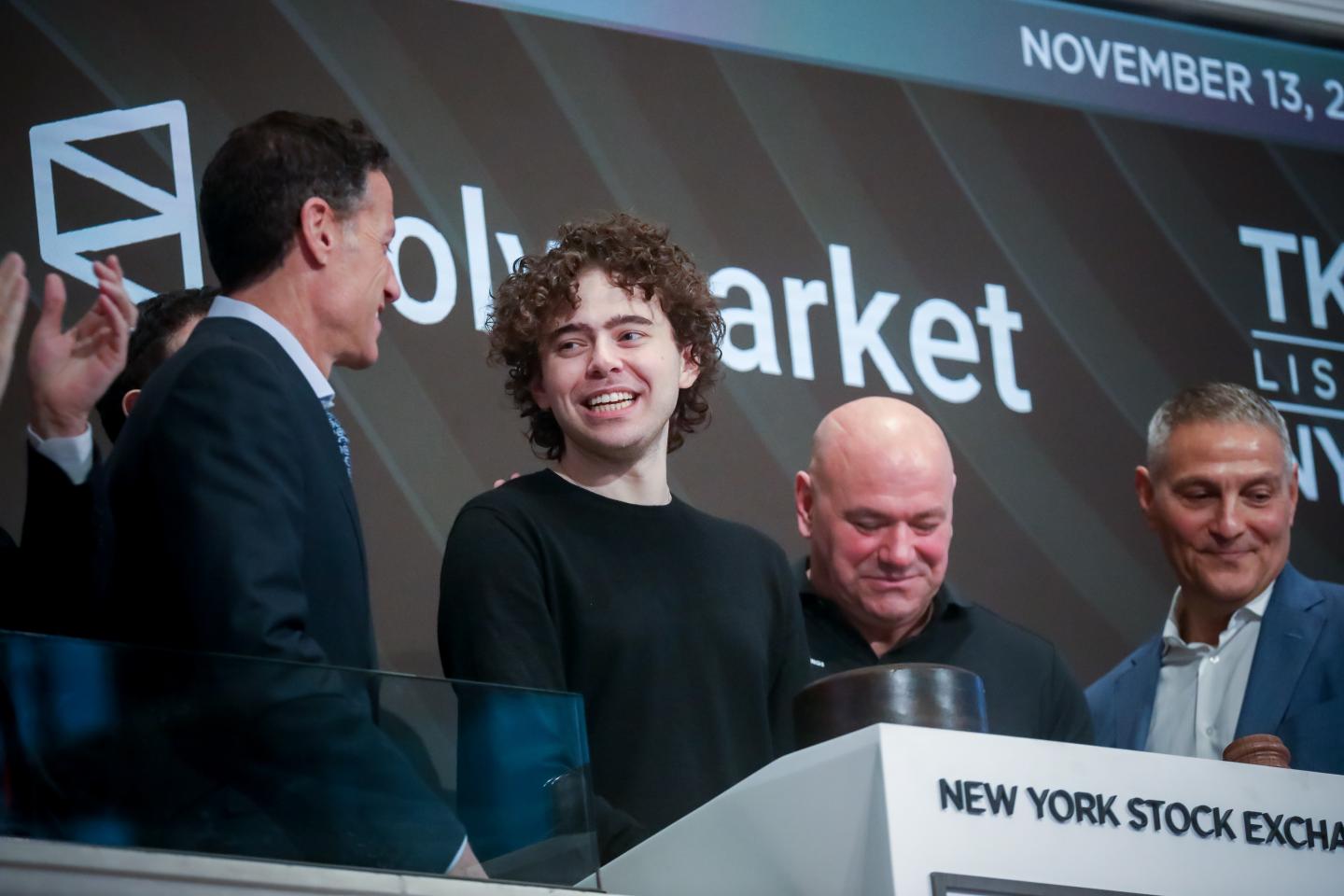
Polymarket reportedly paid content creators to make social media videos implying that they got rich using the company’s platform when in fact the trades were simulated—and the videos paid for by Polymarket.
A new Wall Street Journal investigation says it was all a bid by the New York prediction markets company to attract users to its offshore platform, which is largely unregulated.
“In reality, Polymarket built near-perfect copies of its website, then instructed creators to make simulated trades on those dummy sites and hide that they were being paid by Polymarket,” the report reads. “To get the videos to go viral, Polymarket has recruited a social-media army to copy and re-post creators’ footage. Though the New York-based company has been banned from offering its primary crypto platform in the U.S. since 2022, the social-media creators are paid to specifically target U.S. users, who can still access the site with a virtual private network.”
The Journal said it reviewed more than 1,000 videos as well as instructional materials for creators to make videos. Seven in 10 videos reviewed showed the creator making a bet; none of the bets—some $2 million worth—were real, according to the publication, despite many creators reacting to media coverage suggesting they’d won.
Polymarket reportedly paid each creator upwards of thousands of dollars a month. The creators were told not to disclose that relationship. (The company told the Journal that it was committed to “accurate, fair, and transparent” markets and would audit its active promotions.)
Federal advertising laws, of course, require truth and the disclosure of paid endorsement. Commodities law, which covers prediction markets, also forbids deceptive and misleading practices. And the Commodity Futures Trading Commission, or CFTC, which oversees prediction markets, has previously brought enforcement actions against companies using simulated trades or making unrealistic claims about winnings. —AN
A new CEO suggests good things for Apple’s design team
If you haven’t heard, Apple gets a new chief executive come September 1—and it might just be the thing Apple’s famed industrial design team needs to pick itself up again.
Tim Cook’s successor, John Ternus, comes from Apple’s product engineering and design ranks and “knows a major design shake-up is needed,” according to a new Bloomberg report. Ternus is “getting ready to put his firm imprint on the team” and has spent “a considerable amount of time” with Apple’s industrial designers.
How did design at Apple lose its luster, you ask? It started a decade ago when Jony Ive stepped away from his day-to-day management responsibilities of the design teams in 2015 to become Apple’s chief design officer. That move set in motion a series of steps under Cook that ultimately led to the company’s design function reporting to operations and losing its historic seat at the leadership table, which in turn led to declining morale, accelerating exits, and shrinking influence within a growing tech giant.
“Without the depth of leadership, authority or talent density that once made it the envy of the industry, there have been clear consequences for the company’s products,” Bloomberg’s Mark Gurman writes. “While Apple has continued updating devices like clockwork, the pace of new designs, innovation and major new features has slowed.”
The good news? It’s almost Ternus time. The future CEO reportedly reassured employees in a recent meeting that Apple would “keep focusing on design.”
“Apple’s brought truly incredible design to more people than any company in history,” he apparently said. “We’re going to make sure that stays the case.” —AN
SpaceX-Tesla merger odds improve each time the stock rises
In a CNBC interview earlier this month, host Morgan Brennan asked SpaceX president and COO Gwynne Shotwell whether the rocket and AI player might buy Elon Musk’s second-largest holding, Tesla. She didn’t dismiss the possibility, and even suggested that it might make sense. “There’s a convergence we’re all trying to accomplish in the future,” she declared, adding that the tie-up “might make Elon’s life a little easier.”
Since SpaceX’s stupendous debut, the math governing a potential union has improved substantially. SpaceX can now purchase Tesla by offering far less stock than would have been required had its valuation settled at its pre-trading level.
That scenario makes it easier to solve a nagging problem that plagues the Musk empire: How to bail out Tesla. The EV-maker’s fundamentals are getting weaker and weaker. In the past four quarters, Tesla posted just $3.4 billion in GAAP net earnings, down from $15 billion in 2023 and $7 billion in 2024. Yet its market cap is still hovering around $1.5 trillion.
Sundry prominent figures on Wall Street view a deal as inevitable. Wedbush analyst Dan Ives put the odds of a merger at 80%. Long-time Tesla investor Ross Gerber, citing that Musk had already folded xAI into SpaceX, concluded that this new gambit would advance his vision of running one big company, amounting to a kind of Berkshire Hathaway of AI-driven tech.
Musk’s position that his two top holdings share a common AI vision gives him cover for justifying a deal. The problem: the combo would create one of the strangest creatures in the annals of capitalism. If the valuations for both companies stayed about the same through completion of a merger, the combined entity would sport a market cap of $4 trillion, making it fourth most valuable U.S. enterprise behind Nvidia, Alphabet, and Apple, and over one trillion ahead of Amazon and Microsoft. Yet unlike all of those big earners, it would have negative profits. —Shawn Tully
More tech
—China places export controls on 10 additional U.S. firms and bars government purchases from 46 U.S. companies, Anduril among them.
—ByteDance IPO? Don’t hold your breath. Shares are reportedly trading at a $600 billion valuation in gray markets but things are looking up, pushing out a market debut.
—Europe 2031: The economic and political doomsday scenario for the EU if it can’t keep up with the U.S. and China in the global AI arms race.
—An electric, self-driving, cabless freight truck with a 200-mile range? Humble Robotics in San Francisco is working on it.
—Brazil pulls the plug on its National Civil Defense warning platform after alleged hackers send an unauthorized alert to phones.
—Anduril reportedly explores establishing operations in Israel to invest or acquire startups and perhaps sell to the nation’s defense industry.
—Japan's largest toilet maker, Toto, says it will spend half a billion dollars to expand its semiconductor materials unit and work on 1-nanometer production.