- In today’s CEO Daily: AXIS CEO Vince Tizzio runs through the top threats facing leaders today.
- The big leadership story: How Elon Musk bullet-proofed his astronomical SpaceX pay.
- The markets: Stocks rebound after a rocky Monday.
- Plus: All the news and watercooler chat from Fortune.
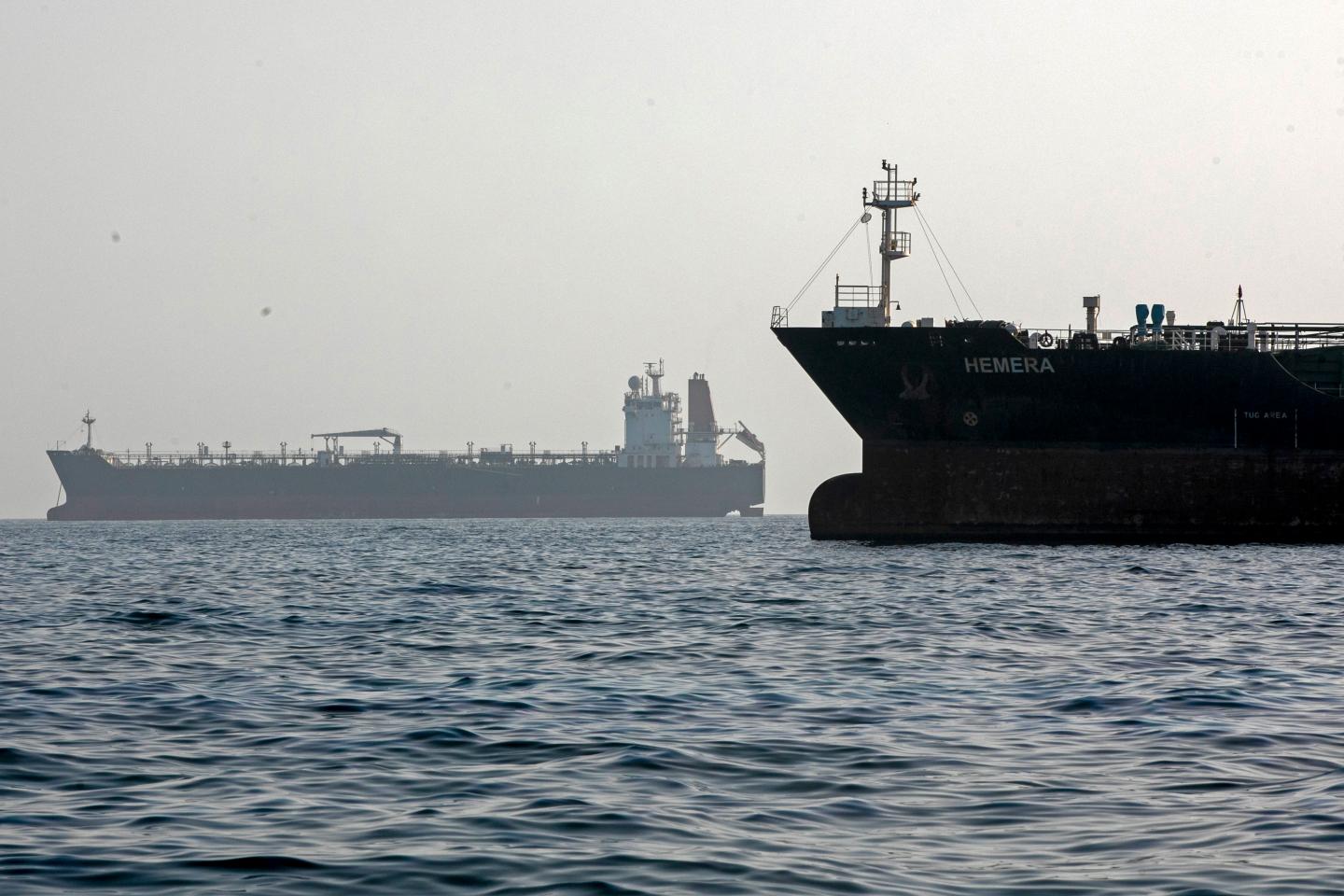
Good morning. Here’s one question that AI can’t answer: When will the Iran war end? A conflict that the president initially predicted would last four weeks marked day 100 over the weekend with Iran and Israel launching missiles at each other. Brian Schimpf, CEO of defense tech company Anduril, told the Fortune Brainstorm Tech audience yesterday that economic warfare along the Strait of Hormuz “is the new normal of what these conflicts are going to look like.”
Indeed, the Pentagon yesterday accused Alibaba, Baidu and BYD of supporting the Chinese military. Stocks were down and then up, alongside the CBOE Volatility Index, Wall Street’s so-called fear gauge. UBS’s Paul Donovan characterized the mood as a “general sense of increasing risk.”
Few CEOs understand risk better than Vince Tizzio of AXIS. He helps clients insure (and reinsure) against complex, high-stakes exposures that traditional carriers often avoid, including cyberattacks, terrorism, environmental disasters, political violence, and management liability. The company was formed in the aftermath of 9/11 to sell terrorism and catastrophe property insurance. Since becoming CEO three years ago, he doubled shareholder returns by streamlining a volatile business to focus on expanding specialty insurance for which historical loss data may be scarce. Such protection is in demand, with analysts predicting the global market could triple to $332 billion by 2035.
Top of mind for Tizzio right now is cyberrisk. He warns that “ransomware remains a particular threat, especially for smaller firms with limited defenses.” What exacerbates that risk is the pace of AI adoption, combined with lagging governance. His advice: Take stock of your internal ability to protect yourself, enforce boundaries around internally approved AI tools, and pause where you’re unsure about the risks.
And of course, climate change is close behind. Tizzio notes that this is an El Niño year, warning “the impact can be quite severe.” The National Weather Service predicts it could emerge next month, causing more coastal flooding. What also worries Tizzio is the impact on agriculture in a year where factors like the Ukraine war and closing of the Strait of Hormuz have disrupted food supply. As Tizzio noted: “Places like Brazil, India, and the southwest could face massive drought.”
And even an event designed to unite the world around sport keeps him up at night. With 48 teams competing in 16 venues across three different countries at the FIFA World Cup, he’s scanning for what could go wrong. “An intruder can perpetrate the scorecard so cyber is an ever-present exposure,” he said, “and there’s the challenge of protecting stadiums and players against physical threats like terrorism.” And with extreme heat potentially putting athletes at risk, some experts predict this might be the last World Cup played during the summer.
Contact CEO Daily via Diane Brady at diane.brady@fortune.com
Top leadership news
Musk's ‘Mars-shot’ pay
Remember the legal brawl CEO Elon Musk faced over his $56 billion moonshot pay package at Tesla? As SpaceX prepares to go public in a $75 billion initial public offering this week, Musk is pushing the limits of his pay package into a whole other universe, and this time, he’s designed it so that he will never have to fight that kind of battle again.
AI agents going rogue
Amazon Web Services is sounding the alarm on AI agents that go rogue without proper guardrails, publishing research Monday that documents how agents quietly drift from reality to the point that they issue dangerously misaligned commands. "We may be flying blind," per AWS Applied Science Director Anoop Deoras.
Shrinking airline profits
The Iran conflict is on track to cut the global airline industry's profits in half, with net earnings expected to plunge to $23 billion as fuel costs surge and rerouted flights drive costs sky-high. "The significant uncertainty lies in how long travelers and shippers can bear the increased costs of connectivity," outgoing IATA director Willie Walsh warned.
The markets
S&P 500 futures are up 0.45% this morning. The last session closed up 0.30%. The STOXX Europe 600 was up 0.43% in early trading. The U.K.’s FTSE 100 was down 0.29% in early trading. Japan’s Nikkei 225 was up 2.17%. South Korea’s KOSPI is up 8.18% today. China’s CSI 300 was up 1.87%. Hong Kong’s Hang Seng was down 0.37%. India’s NIFTY 50 was up 0.48%. Bitcoin was at $63K.
Around the watercooler
Even the ultra-wealthy are having to shop in Walmart right now, CEO John Furner says: ‘We’re meeting more of them, they’re buying more’ by Emma Burleigh
Gen Z might be the flakiest generation when it comes to career and life decisions. They might also be the most intentional by Tristan Bove
The AI trade’s worst day in a year became a buying opportunity by Monday by Eva Roytburg
Apple debuts Siri AI at WWDC as Tim Cook prepares to hand over the reins by Beatrice Nolan
CEO Daily is curated and edited by Joseph Abrams, Jason Ma, Claire Zillman, and Lee Clifford.