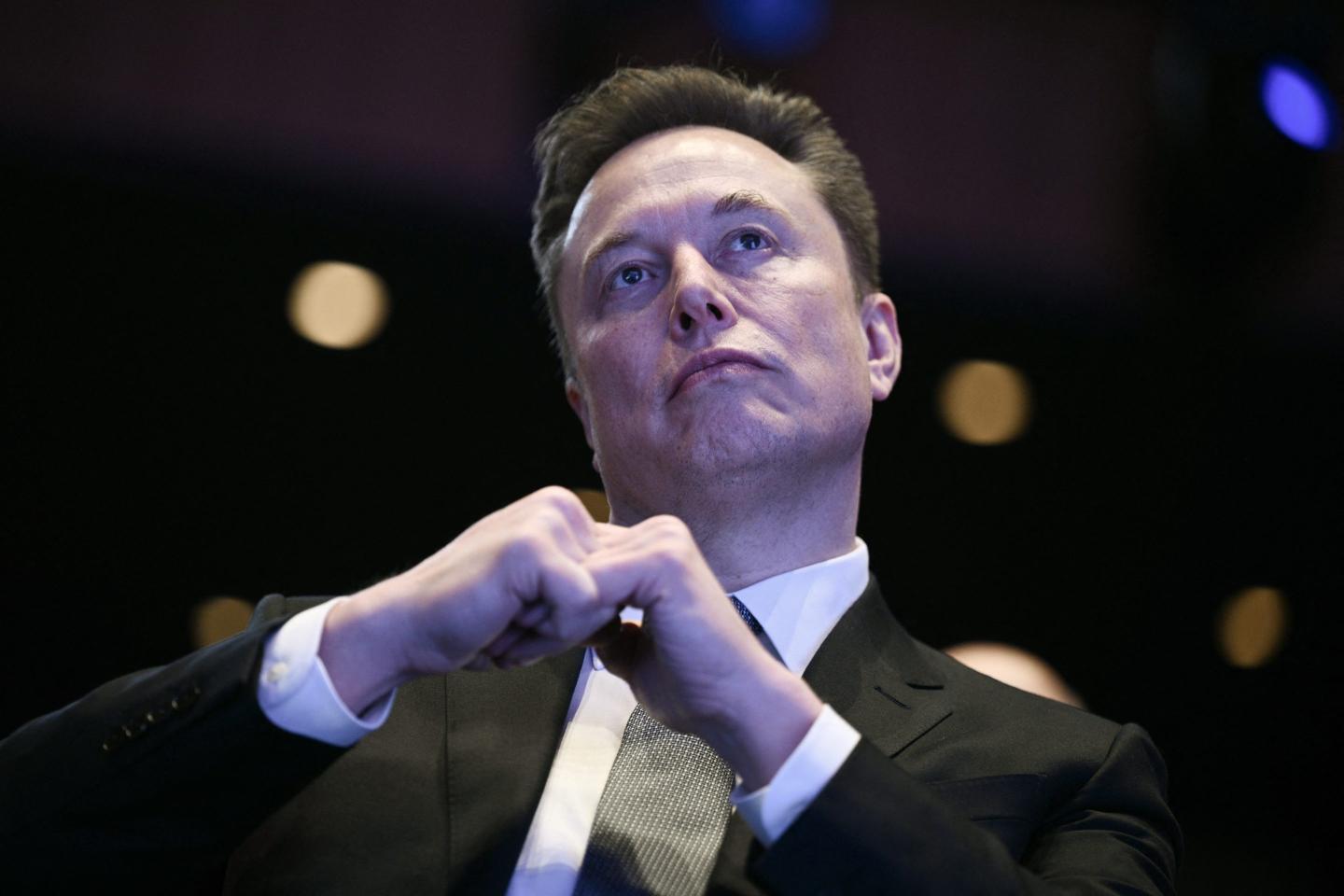
Remember the legal brawl CEO Elon Musk faced over his $56 billion moonshot pay package at Tesla? As SpaceX prepares to go public in a $75 billion initial public offering next week, Musk is pushing the limits of his pay package into a whole other universe, and this time, he’s designed it so that he will never have to fight that kind of battle again.
What sets Musk’s SpaceX pay package apart is how thoroughly insulated it is from the kind of lawsuit that nearly cost Musk his at-the-time unprecedented award from Tesla, which was the largest in U.S. corporate history. First, the Tesla board granted Musk the 2018 award after the company was already public, which allowed a shareholder to argue it was an after-the-fact transfer of wealth from investors who never signed off. A Delaware Chancery Court judge agreed and voided it. This time, Musk’s massive stock grant, with a potential $1.1 trillion value, is spelled out clearly in SpaceX’s IPO registration statement for any investor to read about before buying a single share.
To boot, SpaceX is no longer incorporated in Delaware, the state whose court struck down the Tesla package. In fact, Musk very publicly moved SpaceX to Texas after the court rescinded his Tesla award, where a shareholder would need to own 3% of the company—a multibillion-dollar stake at SpaceX’s projected $1.8 trillion valuation—merely to bring a legal claim, which a special Texas business court would hear with no jury.
There are no surprises here, said Jay Ritter, a University of Florida finance professor and longtime scholar of IPOs.
“If you don’t like it, you don’t have to buy it at that price,” said Ritter, referring to the $135 per-share price planned for the IPO. “And that’s a big difference. With the Tesla pay package—the company was already public.”
Musk’s SpaceX compensation deal, which is currently valued at $175 billion with the potential for up to $1.1 trillion in upside, requires him to achieve never-before-seen feats such as a $7.5 trillion market capitalization, a human community on planet Mars, and data centers somewhere other than Earth.
The astronomical pay package and eye-popping performance targets are on brand for Musk, whose track record of innovation is perhaps matched only by his thirst for attention. In this case, they serve the practical purpose of getting the world buzzing about both him and the SpaceX IPO.
“This is marketing 101,” said Eric Hoffmann, chief data officer at compensation consulting firm Farient Advisors. “They’re driving hype to drive the stock price and the amount of money they can raise.”
In fact, a close reading of the 300-page-plus IPO prospectus suggests that Musk’s stock-compensation package is not really designed for him to reap the full payout. SpaceX describes those data center and Mars milestones as “improbable,” meaning even the company doesn’t think Musk can do it.
So why build a payday around goals Musk will almost certainly never reach?
They ensure the world’s richest man maintains something he might value even more from the compensation deal: his near-iron grip over SpaceX.
Here again, the Tesla experience in instructive. Musk’s 2018 $56 billion moonshot grant at Tesla was structured as a stock option package, and thus didn’t give him nearly the same level of sway over the company and board without first hitting the goals laid out in the award. The SpaceX stock-based awards—which consist of 1.3 billion super-voting Class B shares with 10 votes per share—flip that equation on its head. Because of the unusual way the stock-based awards are structured, Musk will receive the voting benefits of the shares even if he never hits the performance targets necessary to unlock their financial value.
“He has a 0.00% chance of hitting those two project-based goals,” said Hoffmann, referring to the Mars colony and the data centers. “He wants to make sure he has complete control over this company—which he has done.”
Another feature of the moonshot grants, which Hoffmann dubbed a “Mars-shot,” is that they don’t include a time frame in which the goals need to be hit. They require only that Musk remain employed at SpaceX, noted Hoffmann.
Control first, performance TBD
Musk holds a total of 5.6 billion Class B shares of SpaceX stock, according to the company’s S-1, making his combined total voting power 85.1% before the IPO. A significant chunk of those shares were granted in January and March of this year when Musk received two grants totaling 1.3 billion performance-based restricted shares of Class B stock.
To actually earn and monetize 1 billion of the shares, Musk has to hit 15 market capitalization milestones up to $7.5 trillion and establish a “permanent human colony on Mars with at least 1 million inhabitants.”
To get the other 300 million shares, he has to hit 12 market cap milestones from $1 trillion to $6.6 trillion and set up data centers capable of delivering 100 terawatts of compute per year. That 100 terawatts, equivalent to 100 trillion watts of power, is roughly 30 times the U.S.’s average power consumption in 2022 and five to six times average power use globally, according to the data from the U.S. Energy Information Administration.
Whether or not any of that actually happens, however, is almost besides the point. In exhibits accompanying the SpaceX registration statement, the company makes it clear Musk has “all the rights and privileges of a holder of Class B Common Stock in respect the Restricted Shares that have not been forfeited, including the right to vote the restricted shares from the date of grant.” So, even though the shares don’t vest until the performance targets are met, they confer immediate voting rights.
Musk is hardly alone among tech founders in seeking to maintain control of their company through a dual-class stock structure. Meta’s Mark Zuckerberg, Snap’s Evan Spiegel, and Google founders Larry Page and Sergey Brin all took their companies public with similar arrangements. For Musk, however, the move comes after learning firsthand how difficult it can be to gain control of a public company—and how to get around the obstacles.
After Musk’s 2018 Tesla stock options grant was challenged, Tesla awarded Musk another moonshot with a potential $1 trillion upside in 2025 and structured it as performance-based restricted stock—same as his SpaceX awards. Musk earns the voting rights on each tranche as he hits milestones, even years before they financially vest and before he can sell them. If he earns all the tranches at Tesla, Musk will hold about 25% of the electric-vehicle maker, a larger stake that he sought publicly last July.
At the time, Musk said, “I think my control over Tesla should be enough to ensure that it goes in a good direction, but not so much control that I can’t be thrown out if I go crazy.”
At SpaceX, Musk may have the power and freedom to go as crazy as he wants without worrying about his job.
The rocket ship and Starlink satellite internet provider’s block of Class B shares, held mostly by Musk, will get to elect 51% of SpaceX’s board, for as long as any Class B stock exists, and Musk will retain 82.4% of that voting power after a potential IPO. Based on an amendment to the registration statement this week, Musk’s total 6.4 billion shares (including his Class A and B shares) will be locked up—meaning they can’t be sold—for 366 days. Other executives are allowed to start selling earlier in staged releases. SpaceX did not immediately respond to a request for comment.
SpaceX is clear that it will be what is technically called a “controlled” publicly listed company, which means some traditional governance rules that apply to most other large publicly traded companies won’t apply to it. For instance, it won’t need to have a compensation committee made up of all independent board members. For now, SpaceX has said it expects Ira Ehrenpreis, Antonio J. Gracias, and Luke Nosek to serve as compensation and nominating committee members, meaning they’ll determine who joins the board and how much Musk gets paid.
Ehrenpreis is considered independent, but has a long-standing relationship with Musk as a board member of Tesla. Gracias is a longtime confidant of Musk’s, and has served on the SpaceX board since 2010 and is a board member of Neuralink and the Boring Company, two other Musk-founded companies. SpaceX states in its disclosures that investors, which would include the general public, “will not have the same protections afforded to shareholders of companies that are subject to all of the corporate governance requirements of Nasdaq and Nasdaq Texas.”
The case for dual-class companies
Still, some experts argue the dual-class, controlled-company structure isn’t necessarily cause for alarm. Ritter, whose nickname is “Mr. IPO” for his research into the subject, notes that tech IPOs with dual-class stock have, on average, outperformed their single-class peers—pointing to Google and Meta as prime examples. The reason, said Ritter, is that founder-CEOs like Mark Zuckerberg with large, equity-compensated workforces still have significant reasons to care about the share price.
“While this is bad corporate governance, Elon Musk knows that if the stock doesn’t do well, he’s going to have a whole lot of employees who are really ticked off,” said Ritter.
He pointed to Zuckerberg’s unsuccessful $70 billion Metaverse push, which drove share values down to about $90 in late 2022 before they recovered to more than $600. Despite Zuckerberg’s control over Meta, he pulled back on spending and refocused the company. There was nothing stopping him, noted Ritter, but employees watched their paper wealth decline and that mechanism serves as a check on a CEO even when public shareholders can’t force their hand, he added.
Takis Makridis, CEO of valuation and equity compensation accounting firm Equity Methods, noted that the design of the moonshot award itself is also sound. There are long performance periods with increasing hurdles, and the marriage of operational milestones with market-cap results. Pure financial goals can often be gamed, he said. CEOs can hit earnings targets by cutting costs and shrinking investments, which could eventually leave a company in worse shape. Musk’s grants seem to be audacious and difficult to achieve by design.
“This is a human who gets out of bed and says, ‘If I don’t set a nearly impossible goal, I’m not achieving my full potential,’” said Makridis.
In addition, under the rules governing equity awards no compensation expense is recognized by SpaceX while a performance milestone is deemed “improbable,” which is the exact word SpaceX used to describe the Mars community and the data centers. If the milestones remain improbable, they’ll never run through the income statement as an expense.
“Zero expense in the general ledger,” said Makridis, meaning SpaceX could carry the package at no reported cost for years.
The Haunting of Delaware Chancery Court
Critically, SpaceX is headquartered in Starbase, Texas, and has applied for its Class A shares to be dual-listed on Nasdaq and Nasdaq Texas. Musk moved its physical headquarters to the Lone Star State following a July 16, 2024, announcement on X that he would move SpaceX HQ from Hawthorne, Calif., to its operations in Texas. The company officially reincorporated in February 2024 just weeks after the Delaware court voided Musk’s 2018 Tesla moonshot in late January 2024 after finding that Musk had influenced the Tesla board, and that the board itself was conflicted in granting it.
The court ruling led the grant to be rescinded, although Tesla shareholders ratified the plan a second time in 2024, and ultimately the Delaware Supreme Court reinstated the grant. In the interim, however, Musk led what became known as “DExit,” which was a movement for public companies to incorporate in Texas, rather than Delaware, where the majority of public companies are incorporated. But the 2025 reinstatement did not overrule the lower court’s finding about Musk’s control and the board.
With SpaceX incorporated in Texas, it will be governed by the Texas Business Organization’s Code, which is far less shareholder-friendly than Delaware and means that a shareholder hoping to challenge his pay plan would have to own 3% of the company’s stock. It also makes the Texas Business Court, 11th Division the “exclusive forum” for challenges.
“The selection of the Business Court as the exclusive forum for Internal Disputes may limit a shareholder’s ability to bring a claim in a judicial forum that it finds favorable for disputes with us or our directors, officers, other managerial officials, or other employees, which may discourage lawsuits against us and our directors, officers, other managerial officials, and other employees,” the registration statement reads. It gives a legal challenge, like the one he faced over his pay package from Tesla, a much higher bar to clear.
For Ritter, the elevated bar is almost beside the point, because the SpaceX grants differ fundamentally from the Tesla fight.
Everyone buying into the IPO, he added, “has no excuse about, ‘I didn’t know Elon Musk was going to grab an even bigger share of the company’s profits.’ It’s all out there in the S-1.”