
• Home
  • Latest
  • Fortune 500
  • Finance
  • Tech
  • Leadership
  • Lifestyle
  • Rankings
  • Multimedia

Trendingnow

1

Now worth $200 million, Sarah Jessica Parker credits being ‘one of eight kids that struggled financially’ for her hunger, ambition, and work ethic

2

The Pentagon said Iran War costs $29 billion, but the real cost is closer to $200 billion—and counting

3

Amazon's record Prime Day masks a darker truth: Americans are spending more and getting less

1

Now worth $200 million, Sarah Jessica Parker credits being ‘one of eight kids that struggled financially’ for her hunger, ambition, and work ethic

2

The Pentagon said Iran War costs $29 billion, but the real cost is closer to $200 billion—and counting

3

Amazon's record Prime Day masks a darker truth: Americans are spending more and getting less
EnvironmentAdvertising
Europe

The death of the billboard: Amsterdam’s ad crackdown is part of a much bigger European shift 

Sam Birchall
By
Sam Birchall
Sam Birchall
Features writer
Down Arrow Button Icon
Sam Birchall
By
Sam Birchall
Sam Birchall
Features writer
Down Arrow Button Icon
June 5, 2026, 4:16 AM ET
The capital is not the only Dutch city relaxing solar panel rules. Rotterdam, Utrecht and others are following suit.
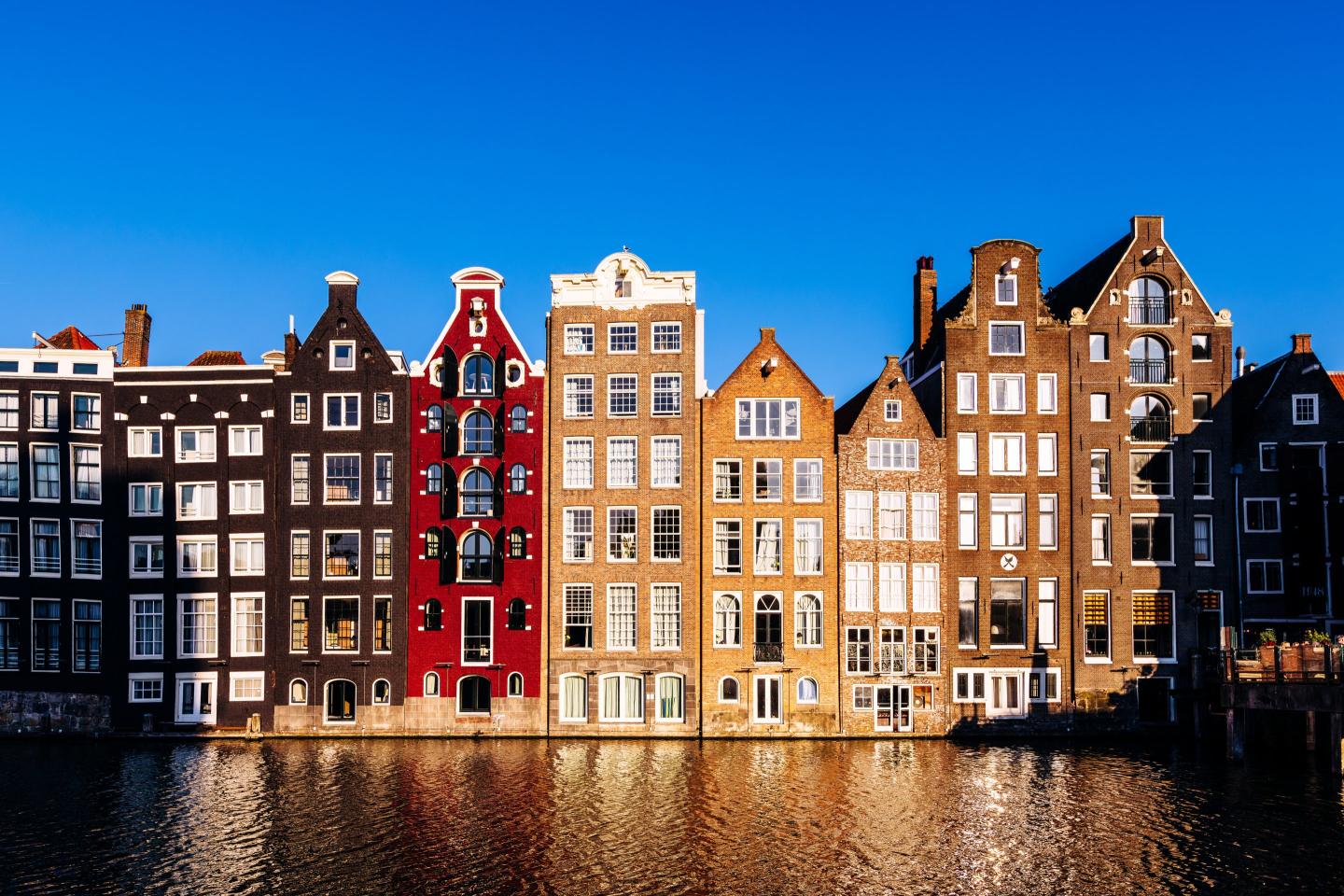
The capital is not the only Dutch city relaxing solar panel rules. Rotterdam, Utrecht and others are following suit.Alexander Spatari via Getty
Add Fortune on Google for similar content.

Stand at a busy tram stop in Amsterdam and you may no longer see glossy posters advertising chicken nuggets, gleaming SUVs or luxury getaways lining the shelter walls. The Dutch capital has banned outdoor advertising for meat products, fossil fuels, and high-emission travel. It is part of a growing conviction across Europe that advertising should be judged not only by the claims it makes, but by the habits, desires, and behaviours it helps to shape. 

Recommended Video

The move feels, at first glance, oddly out of character for Amsterdam. This is a place where, famously, few vices are verboten—where prostitution, marijuana, and psychedelic truffles are legal and openly regulated. But its local government argues the policy is about bringing the city’s streetscape in line with its environmental goals: to become carbon-neutral by 2050. It has set a goal for residents to get 60% of their protein from plant-based sources by 2030.  

The ad ban is an interesting, if not somewhat contradictory, step for one of the continent’s most commercially connected cities. Every few minutes, another aircraft descends over Amsterdam’s tidy rows of canal houses before landing at Schiphol Airport, one of Europe’s busiest aviation hubs—handling roughly 70 million passengers annually. It is a constant reminder that the very industries the city seeks to push out of its advertising spaces—tourism, aviation, and commerce—remain central to its economy and daily life.  

Critics argue that the ban is too binary, and companies investing in renewable energy, cleaner technologies, and sustainable innovation should still be able to communicate those efforts to consumers. But its immediate economic impact will be miniscule. Fossil fuel companies remain among the top-ranking companies in the Fortune 500 Europe list. So in practical terms, removing advertisements from tram shelters and billboards is unlikely, on its own, to significantly dent corporate revenues—no more than it will alter the fate of the places climate change affects the most.  

City officials themselves said meat advertising made up only a tiny fraction of Amsterdam’s outdoor advertising market, accounting for an estimated 0.1% of ad spending, compared with around 4% linked to fossil-fuel-related industries.   

Others may also scoff that, in an age when people spend far more time scrolling on their phones than looking at roadside billboards, the policy is unlikely to have much meaningful impact.  

But that’s not the point. Conversations with marketing leaders across Europe about Amsterdam’s crackdown suggest this is only the beginning of a far more interventionist era for advertising regulation. 

The death of the billboard  

“Amsterdam is ahead of Europe, but it’s part of a much bigger shift,” says Oatly’s executive creative director, Martin Ringqvist. “Across the continent, cities are starting to question whether public spaces should promote the very behaviors they’re trying to reduce.”  

“In many ways, high-carbon advertising is heading toward the same cultural territory tobacco advertising entered years ago, asking the question: if a city is trying to reduce something should it really be promoting it in public space?” 

Amsterdam is not an isolated case. Over 50 cities, mostly European, have already introduced restrictions on fossil fuel advertising or are actively considering similar measures. France became the first European country to ban fossil fuel advertising in 2022. That same year, Haarlem prohibited meat advertising and, in 2024, The Hague banned ads for high-carbon products and services. This effectively gave municipalities across Europe a green light to pursue similar legislation without immediate fear of reversal.  

Stockholm is expected to introduce comparable restrictions later this year.  

Momentum is also building in the U.K. Edinburgh and Sheffield have introduced bans on high-carbon advertising across council-owned spaces, while the issue has already reached Westminster, where lawmakers have debated whether the U.K. should consider nationwide restrictions on fossil fuel advertising. 

“Regulators are no longer just asking whether advertising is misleading,” says Becky Owen, CMO of global social agency Billion Dollar Boy. “They’re asking what role an industry plays in wider societal harm. That’s a fundamentally different lens—and it’s reshaping the future of advertising.”  

There are signs the push to regulate advertising may not stop with fossil fuels or meat. In Berlin, a growing grassroots movement is campaigning for the gradual removal of advertising from public spaces altogether. 

How brands are adapting 

“The smartest brands will stop seeing regulation as something restrictive and start seeing it as a creative opportunity,” says Ringqvist. “Consumers are tired of being lectured, and regulators are tired of vague promises. The brands that will win are the ones that make better choices feel natural, enjoyable, and part of everyday life.” 

What makes Amsterdam different, he argues, is that the shift feels native to the city itself. “It doesn’t feel imposed; it feels like Amsterdam doubling down on its own identity.”  

That philosophy is what inspired Oatly’s “Bike-Thru” campaign, which reimagined the drive-thru concept for a city built around bicycles rather than cars. “Instead of asking consumers to radically change their habits, the campaign adapted itself to behavior already embedded in local culture. That’s the future of sustainability marketing,” Ringqvist says. “Less guilt, less preaching, more ideas that slot naturally into everyday life.” 

For Owen, the greater threat to brands in an increasingly regulated landscape is the collapse of consumer trust. The biggest risk in modern advertising isn’t regulation, but losing credibility, she says. Like Ringqvist, she argues“the brands that will thrive in a more regulated environment are the ones that treat regulation as a creative opportunity rather than a creative restriction. When regulation is done well, it often pushes the industry into more interesting territory.” 

She recalls a recent Nordic campaign where a client was prohibited from launching a beauty filter due to strict regional rules around appearance-distorting technology. Instead, the agency pivoted to an immersive augmented reality experience. “We ended up creating something far more engaging and culturally resonant,” she says. 

“Brands are moving away from straightforward product-led advertising and leaning into lifestyle storytelling and distinctive brand codes instead,” Owen continues. “Once product-centric advertising becomes harder, companies are forced to focus on what actually builds long-term brand value: storytelling, culture, emotional connection, and identity.” 

The future of advertising regulation 

According to Ringqvist, three areas now appear most vulnerable to tighter regulation in Europe: high-carbon industries, greenwashing, and hyper-targeted digital advertising. 

“Europe is moving toward a world where brands won’t just be judged on what they sell, but on what behaviors they normalize. At the same time, vague sustainability language is becoming a huge risk. You can’t just say ’eco-friendly’ anymore and hope nobody asks questions.” 

That shift is reflected in the EU’s Greenwashing Directive, which takes effect later this year and introduces far stricter standards for environmental marketing claims. For many businesses, the new rules will bring much-needed clarity after years of uncertainty around what constitutes acceptable sustainability messaging. 

Yet Ringqvist argues that stronger regulation does not have to come at the expense of effective advertising. “The upside is that real action matters. And so does creativity,” he says. “As targeting becomes more restricted and consumers grow more skeptical, brands will need ideas people genuinely want to engage with in the real world.” 

Other sectors are also facing increased scrutiny. HFSS (high fat, salt and sugar) food and drink advertising is already subject to tighter restrictions in the U.K., while alcohol and gambling face growing regulatory pressure across Europe. “If a category is perceived to create societal harm, regulation is likely to intensify,” says Owen. “That puts sectors such as gambling, ultra-processed food, alcohol, and fast fashion under increasing pressure.” 

For decades, European policymakers largely viewed advertising as a commercial activity requiring intervention only when claims were misleading or offensive. That perspective is changing, and governments are increasingly treating advertising as a powerful social force capable of influencing consumer behavior, public health, and even climate outcomes. 

Amsterdam’s tram shelters may seem like an unlikely battleground in the future of advertising, but it offers an early glimpse at what the next era may look like.  

Subscribe to Fortune Gulf Brief. Every Tuesday, this new newsletter delivers clear-eyed, authoritative intelligence on the deals, decisions, policies, and power shifts shaping one of the world’s most consequential regions, written for the people who need to act on it. Sign up here.
About the Author
Sam Birchall
By Sam BirchallFeatures writer

Sam Birchall is a features writer at Fortune 500 C-Suite Europe. Previously, she was a reporter at Raconteur, where she specialized in business and leadership storytelling for C-suite audiences.

See full bioRight Arrow Button Icon
Add Fortune on Google for similar content.

Latest in Environment

Finance
Lorem ipsum dolor sit amet, consectetur adipiscing elit, sed do eiusmod tempor incididunt ut labore et dolore magna aliqua. Ut enim ad minim veniam
By Fortune Editors
October 20, 2025
Finance
Lorem ipsum dolor sit amet, consectetur adipiscing elit, sed do eiusmod tempor incididunt ut labore et dolore magna aliqua. Ut enim ad minim veniam
By Fortune Editors
October 20, 2025
Finance
Lorem ipsum dolor sit amet, consectetur adipiscing elit, sed do eiusmod tempor incididunt ut labore et dolore magna aliqua. Ut enim ad minim veniam
By Fortune Editors
October 20, 2025
Finance
Lorem ipsum dolor sit amet, consectetur adipiscing elit, sed do eiusmod tempor incididunt ut labore et dolore magna aliqua. Ut enim ad minim veniam
By Fortune Editors
October 20, 2025
Finance
Lorem ipsum dolor sit amet, consectetur adipiscing elit, sed do eiusmod tempor incididunt ut labore et dolore magna aliqua. Ut enim ad minim veniam
By Fortune Editors
October 20, 2025
Finance
Lorem ipsum dolor sit amet, consectetur adipiscing elit, sed do eiusmod tempor incididunt ut labore et dolore magna aliqua. Ut enim ad minim veniam
By Fortune Editors
October 20, 2025

Most Popular

Finance
Lorem ipsum dolor sit amet, consectetur adipiscing elit, sed do eiusmod tempor incididunt ut labore et dolore magna aliqua. Ut enim ad minim veniam
By Fortune Editors
October 20, 2025
Finance
Lorem ipsum dolor sit amet, consectetur adipiscing elit, sed do eiusmod tempor incididunt ut labore et dolore magna aliqua. Ut enim ad minim veniam
By Fortune Editors
October 20, 2025
Finance
Lorem ipsum dolor sit amet, consectetur adipiscing elit, sed do eiusmod tempor incididunt ut labore et dolore magna aliqua. Ut enim ad minim veniam
By Fortune Editors
October 20, 2025
Finance
Lorem ipsum dolor sit amet, consectetur adipiscing elit, sed do eiusmod tempor incididunt ut labore et dolore magna aliqua. Ut enim ad minim veniam
By Fortune Editors
October 20, 2025
Finance
Lorem ipsum dolor sit amet, consectetur adipiscing elit, sed do eiusmod tempor incididunt ut labore et dolore magna aliqua. Ut enim ad minim veniam
By Fortune Editors
October 20, 2025
Finance
Lorem ipsum dolor sit amet, consectetur adipiscing elit, sed do eiusmod tempor incididunt ut labore et dolore magna aliqua. Ut enim ad minim veniam
By Fortune Editors
October 20, 2025
Fortune Secondary Logo
Rankings
  • 100 Best Companies
  • Fortune 500
  • Global 500
  • Fortune 500 Europe
  • Most Powerful Women
  • World's Most Admired Companies
  • See All Rankings
  • Lists Calendar
Sections
  • Finance
  • Fortune Crypto
  • Features
  • Leadership
  • Health
  • Commentary
  • Success
  • Retail
  • Mpw
  • Tech
  • Lifestyle
  • CEO Initiative
  • Asia
  • Politics
  • Conferences
  • Europe
  • Newsletters
  • Personal Finance
  • Environment
  • Magazine
  • Education
Customer Support
  • Frequently Asked Questions
  • Customer Service Portal
  • Privacy Policy
  • Terms Of Use
  • Single Issues For Purchase
  • International Print
Commercial Services
  • Advertising
  • Fortune Brand Studio
  • Fortune Analytics
  • Fortune Conferences
  • Business Development
  • Group Subscriptions
About Us
  • About Us
  • Press Center
  • Work At Fortune
  • Terms And Conditions
  • Site Map
  • About Us
  • Press Center
  • Work At Fortune
  • Terms And Conditions
  • Site Map
  • Facebook icon
  • Twitter icon
  • LinkedIn icon
  • Instagram icon
  • Pinterest icon

Latest in Environment

US says chemical maker Chemours will pay $450M in penalties and relief programs to three states to settle ‘forever chemicals’ case
EnvironmentEnvironment
US says chemical maker Chemours will pay $450M in penalties and relief programs to three states to settle ‘forever chemicals’ case
By The Associated PressJune 24, 2026
16 hours ago
Wind turbines on yellow grass
Environmentwind power
California threatens to hit Trump with lawsuit if he doesn’t revive massive wind farm project off central coast
By Jennifer McDermott and The Associated PressJune 24, 2026
17 hours ago
A team of workers sort aluminum cans near large bales of plastics
LawCalifornia
17 red states sue California over ‘onerous’ recycling law: ‘California is not entitled to pronounce nationwide policies’
By The Associated PressJune 24, 2026
21 hours ago
White House blames ‘leftist activists’ for Reflecting Pool snafus as crews put up fencing to block off the algae- and peeling paint-filled water
LawWhite House
White House blames ‘leftist activists’ for Reflecting Pool snafus as crews put up fencing to block off the algae- and peeling paint-filled water
By Matthew Daly and The Associated PressJune 24, 2026
23 hours ago
sb
Commentaryclimate change
The climate policy triangle: why leaders can no longer choose between growth, security and sustainability
By Sebastian BuckupJune 23, 2026
2 days ago
Tom and Diane Peterman pose outside their home at Black Lake on Wednesday, April 29, 2026, in Grant Township, Mich.
EnvironmentNatural disasters
FEMA told these families they weren’t in a flood zone. Then ice came through the windows
By Tammy Webber, M.K. Wildeman and The Associated PressJune 23, 2026
2 days ago

Most Popular

Now worth $200 million, Sarah Jessica Parker credits being ‘one of eight kids that struggled financially’ for her hunger, ambition, and work ethic
Success
Now worth $200 million, Sarah Jessica Parker credits being ‘one of eight kids that struggled financially’ for her hunger, ambition, and work ethic
By Orianna Rosa RoyleJune 24, 2026
1 day ago
The Pentagon said Iran War costs $29 billion, but the real cost is closer to $200 billion—and counting
Economy
The Pentagon said Iran War costs $29 billion, but the real cost is closer to $200 billion—and counting
By Jacqueline MunisJune 24, 2026
1 day ago
Amazon's record Prime Day masks a darker truth: Americans are spending more and getting less
Retail
Amazon's record Prime Day masks a darker truth: Americans are spending more and getting less
By Nick LichtenbergJune 24, 2026
22 hours ago
Ray Dalio just finished a 10-day trip to China. He says global leaders know America ‘doesn’t have what it takes to fight to maintain its empire’
Asia
Ray Dalio just finished a 10-day trip to China. He says global leaders know America ‘doesn’t have what it takes to fight to maintain its empire’
By Nick LichtenbergJune 24, 2026
1 day ago
After forcing workers back to the office, Goldman Sachs and JPMorgan Chase are now letting their staff work remotely—but only for the World Cup
Success
After forcing workers back to the office, Goldman Sachs and JPMorgan Chase are now letting their staff work remotely—but only for the World Cup
By Orianna Rosa RoyleJune 23, 2026
2 days ago
Trump’s international student crackdown kicked off a domino effect that could shave nearly $500 billion off the economy
Economy
Trump’s international student crackdown kicked off a domino effect that could shave nearly $500 billion off the economy
By Tristan BoveJune 24, 2026
19 hours ago

© 2026 Fortune Media IP Limited. All Rights Reserved. Use of this site constitutes acceptance of our Terms of Use and Privacy Policy | CA Notice at Collection and Privacy Notice | Do Not Sell/Share My Personal Information
FORTUNE is a trademark of Fortune Media IP Limited, registered in the U.S. and other countries. FORTUNE may receive compensation for some links to products and services on this website. Offers may be subject to change without notice.