
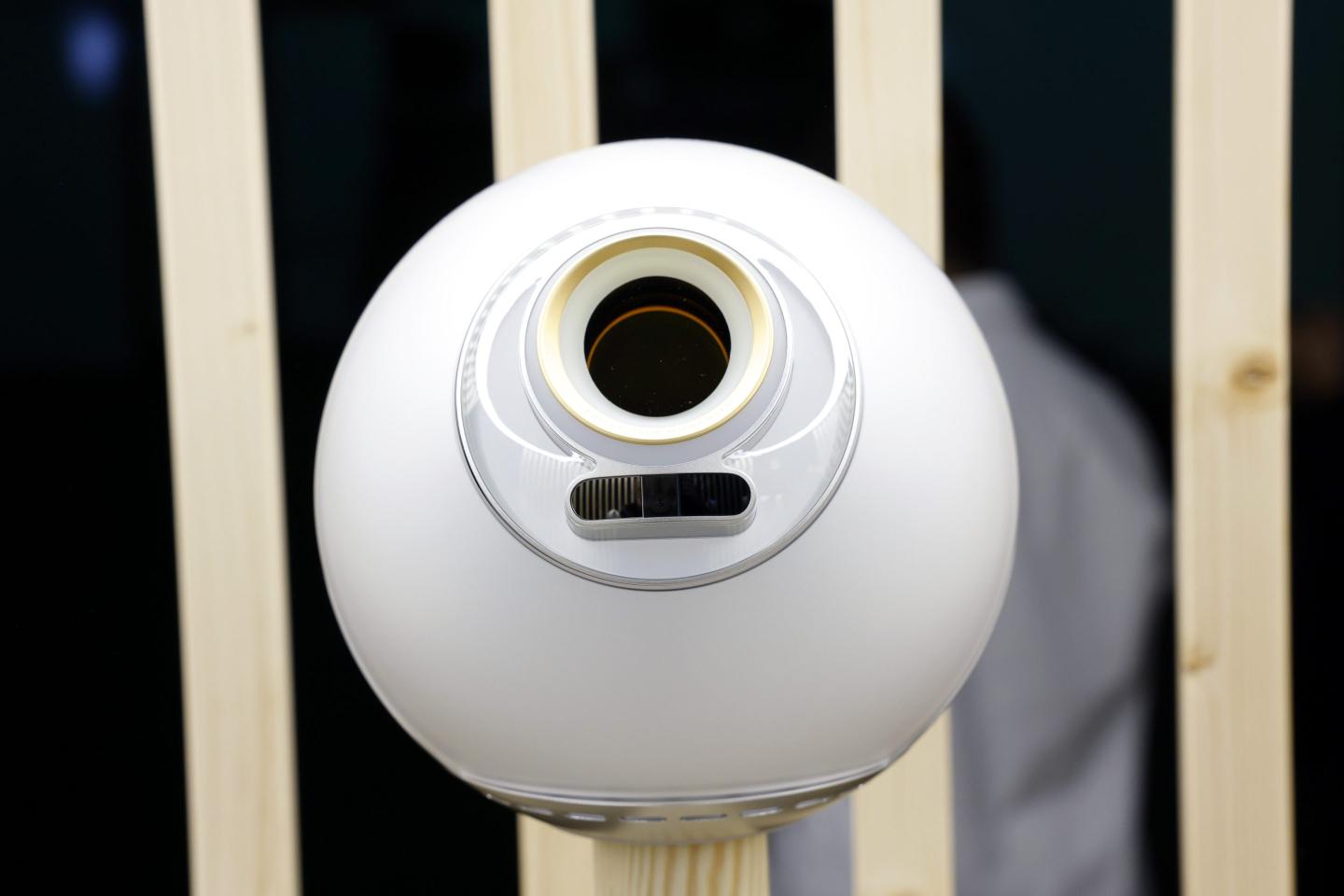
Are you real?
It’s a mind-boggling question and one that executives at Europe’s biggest companies are asking more frequently, as bots, phishers, and bad AI undermine their ability to understand what is true and what is not.
In recent years, chief executives have become targets of elaborate deepfakes scams, while scrambling to regulate the growing presence of bots across commerce, social media, and consumer platforms.
Bots now account for more than half of all internet traffic. They fake page views, clicks, impressions, and user sessions, all of which inflate web analytics data, and when fake internet activity is mistaken for genuine engagement, companies lose billions. According to Juniper Research, global losses from digital advertising fraud are expected to exceed $131bn by 2030, up from $56bn in 2025.
Whether gen AI is being used for scams, impersonation, and misinformation, or for more harmless purposes, it is undoubtedly making the web feel less trustworthy. It seems ridiculous, but possibly not that ridiculous, to find a better way to tell man from machine.
At least, that’s the thinking behind Tools for Humanity, the startup co-founded by OpenAI CEO, Sam Altman, and German entrepreneur, Alex Blania, in 2019. The company uses blockchain-based identity tools to verify people before they can use online apps and services. Last month, it announced an expansion of its verification platform, World ID.
By far, its most recognizable product is a mysterious white sphere, known officially as ‘the Orb’. To be granted human status, you must gaze into its aperture as it captures the distinct crypts, freckles, and contraction furrows of your iris and face. Within seconds, a unique 12,800-digit “iris code” is generated and stored in a conjoining app on your phone to be used as proof that you, in fact, are a real person.
Many companies already use biometrics and passkeys to distinguish legitimate users from fraudsters. What Tools for Humanity is offering is proof that an online account belongs to one unique human being, without necessarily revealing who that person is. A passkey can prove someone controls a device; it can’t prove that thousands of accounts aren’t being operated by the same person or machine.
Eye-dentity crisis
When I ask Trevor Traina, Tools for Humanity’s chief business officer, why I should trust the Orb with my eyeball data, he became noticeably careful about the language used to describe the process. “This is not a scan. It takes a photo, which is then destroyed…I detest the word ‘scan’.”
It was a revealing caveat, and a sign of the scrutiny and suspicion the company has faced since its inception. When Altman first revealed the World project on X, whistleblower Edward Snowden posted: “Don’t catalogue eyeballs.”
The technology was later temporarily restricted in several European countries amid concerns over privacy and biometric data collection. Now, however, the Orb can be found in high streets and shopping centres across European cities, including in the UK and Germany.
“The company initially struggled to explain the technical safeguards,” Traina admits. “That allowed misconceptions around eye-scanning to spread.”
Tools for Humanity insists the system is private. According to Traina, the biometric data is encrypted, sent to the user’s device, and subsequently deleted. Much of the company’s infrastructure has also been made open-source, enabling independent researchers to scrutinize its security systems, he adds.
Still, convincing the public to trust a futuristic silver orb with something as sensitive as biometric identity remains a challenge. Traina himself says he was initially skeptical of the idea. His view changed after a series of lengthy conversations with Altman, who argued that the rise of AI would one day introduce “incredible new complexities around what is real and what is not.” Today, Traina says, those concerns are already beginning to materialise.
Raised in San Francisco but educated in Oxford, Traina previously sold ventures to companies including Microsoft, Mastercard, and Intuit before later serving as U.S. ambassador to Austria, a role once held decades earlier by his grandfather. Despite his Silicon Valley credentials, Trania does not consider himself a “cookie-cutter tech guy”. His experience across technology and international diplomacy, he argues, shaped his belief that identity infrastructure should not belong exclusively to governments or large tech companies. “This has to become a decentralised protocol that belongs to everyone.”
Tools for Humanity ultimately wants to verify every human being on Earth. Whether the public shares that vision remains uncertain. So far, nearly 18 million people have verified their humanness. But, in some corners of the digital economy, opting out may eventually become difficult.
The market for ‘proof of human’ is growing
As strange and invasive as this piece of hardware is, the Orb seeks to resolve a genuine problem facing businesses, not one of speculative fiction. Airlines and ticketing companies are battling bot scalping (automated trading programs that try to make a profit), banks face increasingly sophisticated scams and identity fraud, while retailers are struggling with fake reviews.
What’s more, Zoom, Docusign, and Tinder have all announced support for aspects of World ID verification, while integrations with Shopify and Okta are underway.
The idea is gaining traction among senior leaders. Jen Wong, COO of Reddit, suggests that some form of “proof of human” verification may become inevitable as the platform strives to preserve trust online.
“We’re entering a period where bots can sound, look, and behave almost indistinguishably from humans online,” Traina says. “Every day platforms are at risk of becoming unreliable.” The repeated outages affecting major online services are further evidence that existing security systems are struggling to cope with all the bot-driven activity, he adds.
In the near-future, Traina argues the threat will become serious enough that companies will soon begin “inoculating their workforce against the bot disease,” by requiring verified digital identities for internal communications, workplace software, and even physical building access.
Fixing the Taylor Swift problem
One of Tools for Humanity’s new, more commercially practical products is Concert Kit, a system designed to combat ticket-scalping bots.
“This is our solution to the Taylor Swift problem,” Traina jokes, referring to the chaos all diehard Swifties will remember when tickets for The Eras Tour went on presale and Ticketmaster was hit with 3.5 billion system requests in a single day. Fans were locked out while bots snapped up tickets in seconds, only for them to reappear online minutes later at eye-watering mark-ups, in some cases up to 70 times face value. Authorities later alleged that one broker used bots to acquire hundreds of thousands of tickets, generating tens of millions in profits.
Musician Anderson .Paak vouched for Concert Kit at a recent Tools for Humanity event. He used the system to reserve 1,000 concert tickets exclusively for “verified humans”, reportedly blocking more than 100,000 bot attempts. “I fucking hate bots,” he reportedly told the crowd. “They make everything really shitty. Especially for the fans.”
The men behind the machines
And yet, there’s an irony at the heart of Tools for Humanity that’s difficult to ignore.
As both CEO of OpenAI and chairman of Tools for Humanity, Altman is helping build the systems making the internet harder to trust, while simultaneously backing the infrastructure claiming to restore it. Earlier this month, OpenAI released a new image-generation tool capable of producing visuals that are far more convincing than early models. Its release no doubt expands the commercial opportunity for verification platforms like the Orb.
That the same tech firms who created the disease are now selling the cure is reason enough to invite scrutiny. But then there’s the added fact that for a company whose mission seeks to restore trust, Tools for Humanity has occasionally struggled to earn it.
Questions around privacy, governance and data collection have prompted scrutiny in several countries, making policymakers wary of endorsing the project outright. The startup also faced criticism last month after promoting a partnership with Bruno Mars that the musician’s team later said had never been discussed. If the company can’t communicate with the very people it expects to trust its system, how can it position itself as any kind of authority on authenticity?
For people to trust the machines, they must first trust the people behind them
Whether the Orb itself will save the internet is another matter altogether. But the premise behind it—that businesses will require some way of users to prove their humanness —no longer sounds quite as far-fetched as it once did.