• Home
  • Latest
  • Fortune 500
  • Finance
  • Tech
  • Leadership
  • Lifestyle
  • Rankings
  • Multimedia

Trendingnow

1

Jeff Bezos wants the bottom half of earners to pay zero income tax—he says nurses making just $75K should save $12K a year

2

Uber CEO says rideshare 'freed up' his son from having to get a driver’s license—and he's one of many Gen Zers who aren’t willing to drive

3

The pig in the python: Baby Boomers are strangling the economy they built by refusing to move or retire

1

Jeff Bezos wants the bottom half of earners to pay zero income tax—he says nurses making just $75K should save $12K a year

2

Uber CEO says rideshare 'freed up' his son from having to get a driver’s license—and he's one of many Gen Zers who aren’t willing to drive

3

The pig in the python: Baby Boomers are strangling the economy they built by refusing to move or retire
EconomyWorld Cup

The economist who wrote the book on sports finance has a number for FIFA’s World Cup haul: $15 billion

By
Richard Sheehan
Richard Sheehan
and
The Conversation
The Conversation
Down Arrow Button Icon
By
Richard Sheehan
Richard Sheehan
and
The Conversation
The Conversation
Down Arrow Button Icon
May 25, 2026, 11:09 AM ET
f
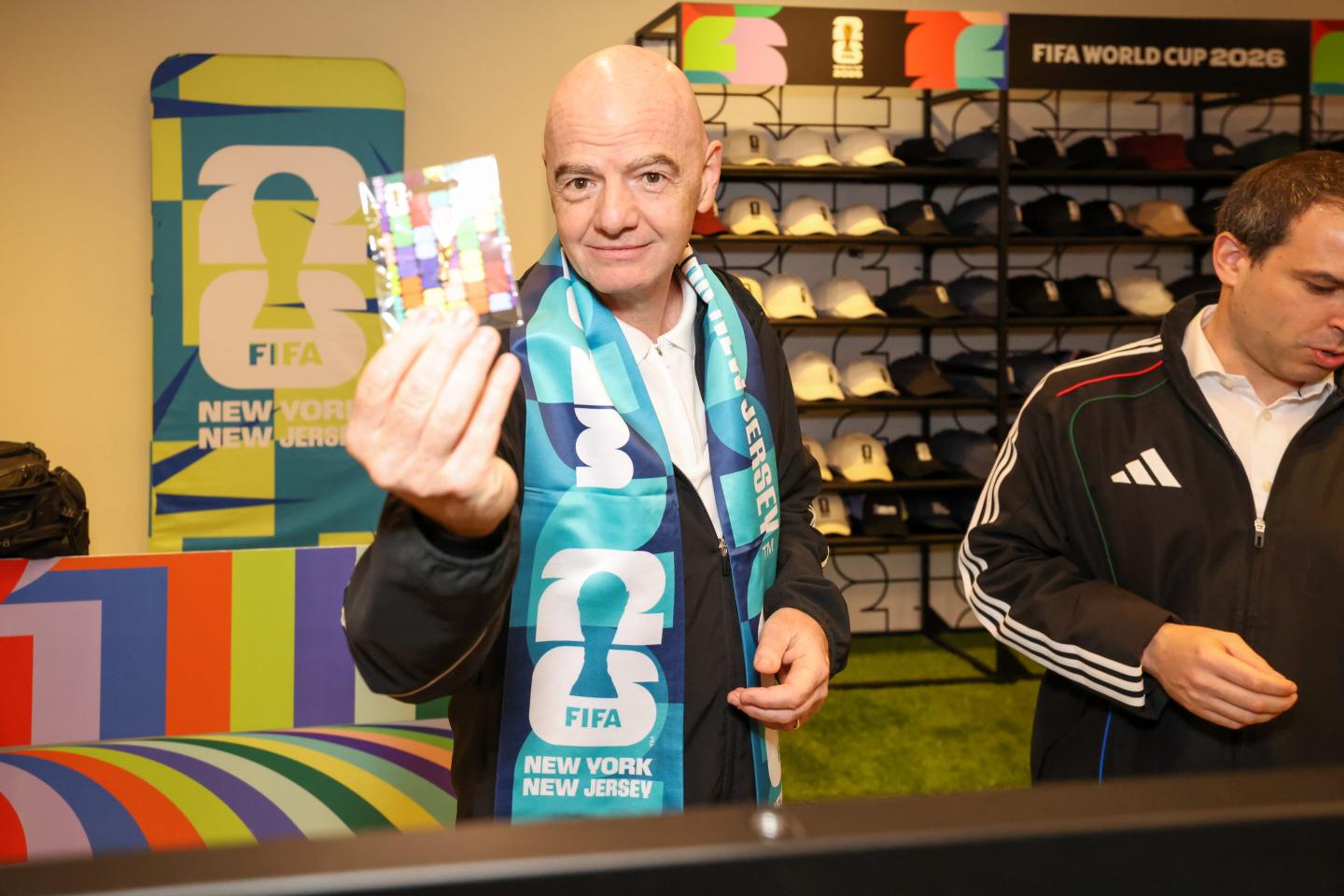
FIFA President Gianni Infantino during the launch of the official FIFA World Cup 26 store at Hudson Yards on May 21, 2026 in New York City. Ira L. Black - FIFA/FIFA via Getty Images

At soccer’s World Cup, the top scorer gets the “golden boot,” and the best goalkeeper is handed the “golden gloves.” This year’s tournament will also provide organizer FIFA with a golden opportunity to create billions in additional ticket revenues.

Recommended Video

Ticket prices are so high that even President Donald Trump, a billionaire ally of FIFA President Gianni Infantino, said he wouldn’t pay.

The concern is that FIFA is pricing out many of the sport’s most devoted fans. In the 2022 Qatar-hosted World Cup, group-stage Category 1 tickets – the best seats – cost about $220, while Qatari residents could purchase tickets for $11 in some group-stage matches. Category 1 tickets to the final were about $1,600.

For the 2026 World Cup, dynamic pricing, which deliberately makes pricing opaque and subject to real-time changes, is being used for the first time. It means ticket prices may vary dramatically both across games and even for a given game over time.

The initial baseline for Category 1 tickets during World Cup 2026 was about $600 when they first went on sale in the fall of 2025 but now they generally sell for over $1,000 and sometimes much higher. The price for Category 1 tickets for the opening game in Mexico City is currently over $2,500, and even Category 3 tickets, the lowest available tier, are over $1,000. For the final, Category 1 tickets initially cost over $6,000 and had exceeded $32,000 by early May.

As an emeritus professor of finance and author of “Keeping Score: The Economics of Big Time Sports,” I’ve done some number crunching and predict that increased ticket receipts will help FIFA exceed $15 billion in revenue this world cup cycle – which would be a record-breaker for soccer’s governing body and significantly more than its 2022 stated goal of $11 billion.

FIFA’s ticket pricing approach may be a logical way to capture at least some of the revenue that normally goes to ticket scalpers, but it’s also unlikely to find a sympathetic audience among potential ticket buyers. Further, what remains unclear is FIFA’s plan on how to spend the extra billions of revenue, with its stated goal to support positive social change belied by a track record of corruption and lack of transparency.

How FIFA operates

It’s important to put ticket pricing in the context of FIFA’s broader finances and objectives.

FIFA is a nonprofit organization, registered as a charity in Switzerland, with a mandate not only to organize competitions like the World Cup but also to grow the game and expand soccer access globally.

It operates on a four-year budget cycle with most revenues generated by the World Cup in the last year of the cycle.

Historical comparisons help frame the issue. The 1994 World Cup in the United States, widely seen as a major success, generated $700 million in net revenue – or profits – versus a $550 million budget, driven largely by stronger-than-expected ticket sales and sponsorships. Large venues and high attendance also helped advance FIFA’s development goals, including the launch of Major League Soccer.

By 2022, FIFA’s finances had grown dramatically. Revenue for the cycle that included that year’s World Cup was budgeted at $6.44 billion but ended up reaching $7.57 billion — with most growth coming from broadcasting and marketing.

Budgeted ticket revenue appeared modest due to smaller venues in Qatar, but actual ticket revenue significantly exceeded expectations, most likely due to FIFA’s conservative revenue forecast. On the cost side, spending closely matched the budget, with $2.8 billion allocated to development programs in the 2019-2022 cycle. Despite this expense, reserves rose from $2.81 billion to $3.89 billion as a result of the 2022 tournament’s success.

Looking ahead to the 2026 World Cup cycle, FIFA budgeted that revenue would increase by $4.36 billion relative to the 2019-2022 cycle, to $11 billion, driven largely by ticketing — up $2.59 billion — and broadcasting, up $890 million. Costs were expected to rise by $4.57 billion, implying a projected surplus of about $100 million, the same small increase projected in the prior cycle. By 2024, a revised FIFA budget increased the forecasted revenue for the 2023-2026 cycle up to $13 billion.

FIFA’s leverage with ticket demand

FIFA’s track record suggests a pattern: conservative revenue projections, accurate cost control and consistent “surprises” in ticketing and licensing that generate higher than expected revenues and a dramatic increase in ending reserves.

My projections suggest that broadcasting and marketing this year are on track to equal their budgeted values, and historically FIFA’s actual costs closely track budget values. But ticketing remains the key revenue variable – and the central controversy. The expanded 2026 tournament means more teams, more matches, more fans and significantly higher ticket demand.

Even with larger stadiums than any World Cup since 1994, demand has vastly exceeded supply. There were over 500 million ticket requests for the random draw, but roughly 7.1 million available seats.

This imbalance gave FIFA tremendous pricing power. To try to mitigate criticism, FIFA introduced $60 “Supporter Entry Tickets” allocated through national associations. Yet these account for only a small share of tickets, fewer than 600 per match, and have done little to dampen the outrage over prices.

Most tickets have been sold in phases using dynamic pricing, with substantial increases across phases and most sales occurring in the later and more expensive phases. Venue seating charts also indicate most tickets are classified as the highest priced tier. Meanwhile, FIFA will receive ticket revenue from FIFA-controlled resale.

All three factors will likely push ticket revenue well above FIFA’s budget. Based on these dynamics, I project ticketing and hospitality revenue of a minimum of $7.44 billion – more than double FIFA’s budget, but consistent with stadium capacities, pricing across phases, seat allocation by category and ongoing resale activity.

Ticket and hospitality revenue per match in 2022 averaged $14.5 million. FIFA’s $3.1 billion budget for 2026 implies average ticket revenue per match would be about about $30 million. But given the larger stadiums and substantially higher ticket prices, that number appears to grossly understate actual ticket revenues. A final ticketing and hospitality value of close to $9 billion would not be a surprise. My predicted total revenue for FIFA is $14 billion to $19 billion.

People in business attire stand around a desk during a press conference.
President Donald Trump speaks holding a large ticket representing a ticket for the World Cup final, alongside FIFA President Gianni Infantino on Aug. 22, 2025. AP Photo/Jacquelyn Martin

Following the money

Soccer fans, whether they are ticket buyers or media viewers, generate FIFA’s revenue. In turn, FIFA’s objectives are to use those funds to put on a great World Cup and to grow soccer and make it accessible. As revenues grow, however, it is reasonable to ask why – beyond fairness and ticket accessibility questions – FIFA believes that it needs reserves of over $4 billion – over half of its total costs in the 2019-22 cycle?

Indeed, the numbers suggest the organization has actually decreased some core funding priorities on a relative basis – significantly.

In the 2023-26 cycle, the budget for competitions rose from $2.45 billion to $5.62 billion, about a 130% increase, while the budget for development increased only 44%, and its share of budgeted revenues dropped from 44% to 36%.

FIFA could argue that maximum revenue is needed to cover costs of future events and fund soccer development, but that is not the whole story told by FIFA’s 2027-2030 budget.

Total additional costs are set at around $3 billion, with the main driver being competition and events. Crucially, for the 2019-2022 cycle, development was 44% of the costs; for 2023-2026, it dropped to 36% of the costs; and for the 2027-2030 cycle, it is budgeted to further decrease to 29% of costs. Undoubtedly, these numbers will change, but they currently do not signal that FIFA is going to use its additional ticketing revenue to support broader soccer-related or social change investments.

That is perhaps not surprising, as FIFA has faced governance challenges in the past, including issues of corruption, bribery and fraud, plus accounting practices that critics say lack transparency. Reforms have attempted to mitigate those problems, and FIFA has started programs like the FIFA Foundation, whose stated purpose is to use soccer to improve people’s lives.

Given FIFA’s background, surplus and reserves, however, the biggest question should be whether FIFA’s financial resources are being effectively used to achieve its objectives. FIFA has described its purpose with phrases like “develop the game, touch the world and build a better future.” But to me, its budgets suggest it is focused primarily on the first.

Richard Sheehan, Professor Emeritus of Business and Economics, University of Notre Dame

This article is republished from The Conversation under a Creative Commons license. Read the original article.

The Conversation
Subscribe to Fortune Gulf Brief. Every Tuesday, this new newsletter will deliver clear-eyed, authoritative intelligence on the deals, decisions, policies, and power shifts shaping one of the world’s most consequential regions, written for the people who need to act on it. Sign up here.
About the Authors
By Richard Sheehan
See full bioRight Arrow Button Icon
By The Conversation
See full bioRight Arrow Button Icon

Latest in Economy

Finance
Lorem ipsum dolor sit amet, consectetur adipiscing elit, sed do eiusmod tempor incididunt ut labore et dolore magna aliqua. Ut enim ad minim veniam
By Fortune Editors
October 20, 2025
Finance
Lorem ipsum dolor sit amet, consectetur adipiscing elit, sed do eiusmod tempor incididunt ut labore et dolore magna aliqua. Ut enim ad minim veniam
By Fortune Editors
October 20, 2025
Finance
Lorem ipsum dolor sit amet, consectetur adipiscing elit, sed do eiusmod tempor incididunt ut labore et dolore magna aliqua. Ut enim ad minim veniam
By Fortune Editors
October 20, 2025
Finance
Lorem ipsum dolor sit amet, consectetur adipiscing elit, sed do eiusmod tempor incididunt ut labore et dolore magna aliqua. Ut enim ad minim veniam
By Fortune Editors
October 20, 2025
Finance
Lorem ipsum dolor sit amet, consectetur adipiscing elit, sed do eiusmod tempor incididunt ut labore et dolore magna aliqua. Ut enim ad minim veniam
By Fortune Editors
October 20, 2025
Finance
Lorem ipsum dolor sit amet, consectetur adipiscing elit, sed do eiusmod tempor incididunt ut labore et dolore magna aliqua. Ut enim ad minim veniam
By Fortune Editors
October 20, 2025

Most Popular

Finance
Lorem ipsum dolor sit amet, consectetur adipiscing elit, sed do eiusmod tempor incididunt ut labore et dolore magna aliqua. Ut enim ad minim veniam
By Fortune Editors
October 20, 2025
Finance
Lorem ipsum dolor sit amet, consectetur adipiscing elit, sed do eiusmod tempor incididunt ut labore et dolore magna aliqua. Ut enim ad minim veniam
By Fortune Editors
October 20, 2025
Finance
Lorem ipsum dolor sit amet, consectetur adipiscing elit, sed do eiusmod tempor incididunt ut labore et dolore magna aliqua. Ut enim ad minim veniam
By Fortune Editors
October 20, 2025
Finance
Lorem ipsum dolor sit amet, consectetur adipiscing elit, sed do eiusmod tempor incididunt ut labore et dolore magna aliqua. Ut enim ad minim veniam
By Fortune Editors
October 20, 2025
Finance
Lorem ipsum dolor sit amet, consectetur adipiscing elit, sed do eiusmod tempor incididunt ut labore et dolore magna aliqua. Ut enim ad minim veniam
By Fortune Editors
October 20, 2025
Finance
Lorem ipsum dolor sit amet, consectetur adipiscing elit, sed do eiusmod tempor incididunt ut labore et dolore magna aliqua. Ut enim ad minim veniam
By Fortune Editors
October 20, 2025
Fortune Secondary Logo
Rankings
  • 100 Best Companies
  • Fortune 500
  • Global 500
  • Fortune 500 Europe
  • Most Powerful Women
  • World's Most Admired Companies
  • See All Rankings
  • Lists Calendar
Sections
  • Finance
  • Fortune Crypto
  • Features
  • Leadership
  • Health
  • Commentary
  • Success
  • Retail
  • Mpw
  • Tech
  • Lifestyle
  • CEO Initiative
  • Asia
  • Politics
  • Conferences
  • Europe
  • Newsletters
  • Personal Finance
  • Environment
  • Magazine
  • Education
Customer Support
  • Frequently Asked Questions
  • Customer Service Portal
  • Privacy Policy
  • Terms Of Use
  • Single Issues For Purchase
  • International Print
Commercial Services
  • Advertising
  • Fortune Brand Studio
  • Fortune Analytics
  • Fortune Conferences
  • Business Development
  • Group Subscriptions
About Us
  • About Us
  • Press Center
  • Work At Fortune
  • Terms And Conditions
  • Site Map
  • About Us
  • Press Center
  • Work At Fortune
  • Terms And Conditions
  • Site Map
  • Facebook icon
  • Twitter icon
  • LinkedIn icon
  • Instagram icon
  • Pinterest icon

Latest in Economy

f
EconomyWorld Cup
The economist who wrote the book on sports finance has a number for FIFA’s World Cup haul: $15 billion
By Richard Sheehan and The ConversationMay 25, 2026
46 minutes ago
mollick
Economydisruption
‘Nobody knows anything’ and ‘this time is different’: the phrases that define — and haunt — the AI economy
By Nick LichtenbergMay 25, 2026
4 hours ago
Richard McCathron is President & CEO, Hippo.
CommentaryInsurance
I’m leading a $100 million corporate turnaround. Here’s why I learned to distrust the growth mindset
By Richard McCathronMay 25, 2026
7 hours ago
b
Economybaby boomers
The pig in the python: Baby Boomers are strangling the economy they built by refusing to move or retire
By Nick LichtenbergMay 25, 2026
8 hours ago
Oil drops as U.S. says deal with Iran and Hormuz reopening is near
EnergyOil
Oil drops as U.S. says deal with Iran and Hormuz reopening is near
By Nicholas Lua and BloombergMay 24, 2026
17 hours ago
Russia’s economy is much worse than it seems, and ‘elites are increasingly alarmed’ as alternate GDP gauge shows huge contraction
EconomyRussia
Russia’s economy is much worse than it seems, and ‘elites are increasingly alarmed’ as alternate GDP gauge shows huge contraction
By Jason MaMay 24, 2026
18 hours ago

Most Popular

Jeff Bezos wants the bottom half of earners to pay zero income tax—he says nurses making just $75K should save $12K a year
Success
Jeff Bezos wants the bottom half of earners to pay zero income tax—he says nurses making just $75K should save $12K a year
By Preston ForeMay 21, 2026
4 days ago
Uber CEO says rideshare 'freed up' his son from having to get a driver’s license—and he's one of many Gen Zers who aren’t willing to drive
Lifestyle
Uber CEO says rideshare 'freed up' his son from having to get a driver’s license—and he's one of many Gen Zers who aren’t willing to drive
By Sasha RogelbergMay 24, 2026
1 day ago
The pig in the python: Baby Boomers are strangling the economy they built by refusing to move or retire
Economy
The pig in the python: Baby Boomers are strangling the economy they built by refusing to move or retire
By Nick LichtenbergMay 25, 2026
8 hours ago
Inside the 'stealth wealth' playbook: How Silicon Valley's elite buy multimillion-dollar mansions without leaving a paper trail
Real Estate
Inside the 'stealth wealth' playbook: How Silicon Valley's elite buy multimillion-dollar mansions without leaving a paper trail
By Sydney LakeMay 24, 2026
1 day ago
This 39-year-old quit his lineman job during the pandemic and built a $50 million company in his backyard
Success
This 39-year-old quit his lineman job during the pandemic and built a $50 million company in his backyard
By Nick LichtenbergMay 23, 2026
2 days ago
Microsoft reports are exposing AI's real cost problem: Using the tech is more expensive than paying human employees
AI
Microsoft reports are exposing AI's real cost problem: Using the tech is more expensive than paying human employees
By Jake AngeloMay 22, 2026
3 days ago

© 2026 Fortune Media IP Limited. All Rights Reserved. Use of this site constitutes acceptance of our Terms of Use and Privacy Policy | CA Notice at Collection and Privacy Notice | Do Not Sell/Share My Personal Information
FORTUNE is a trademark of Fortune Media IP Limited, registered in the U.S. and other countries. FORTUNE may receive compensation for some links to products and services on this website. Offers may be subject to change without notice.