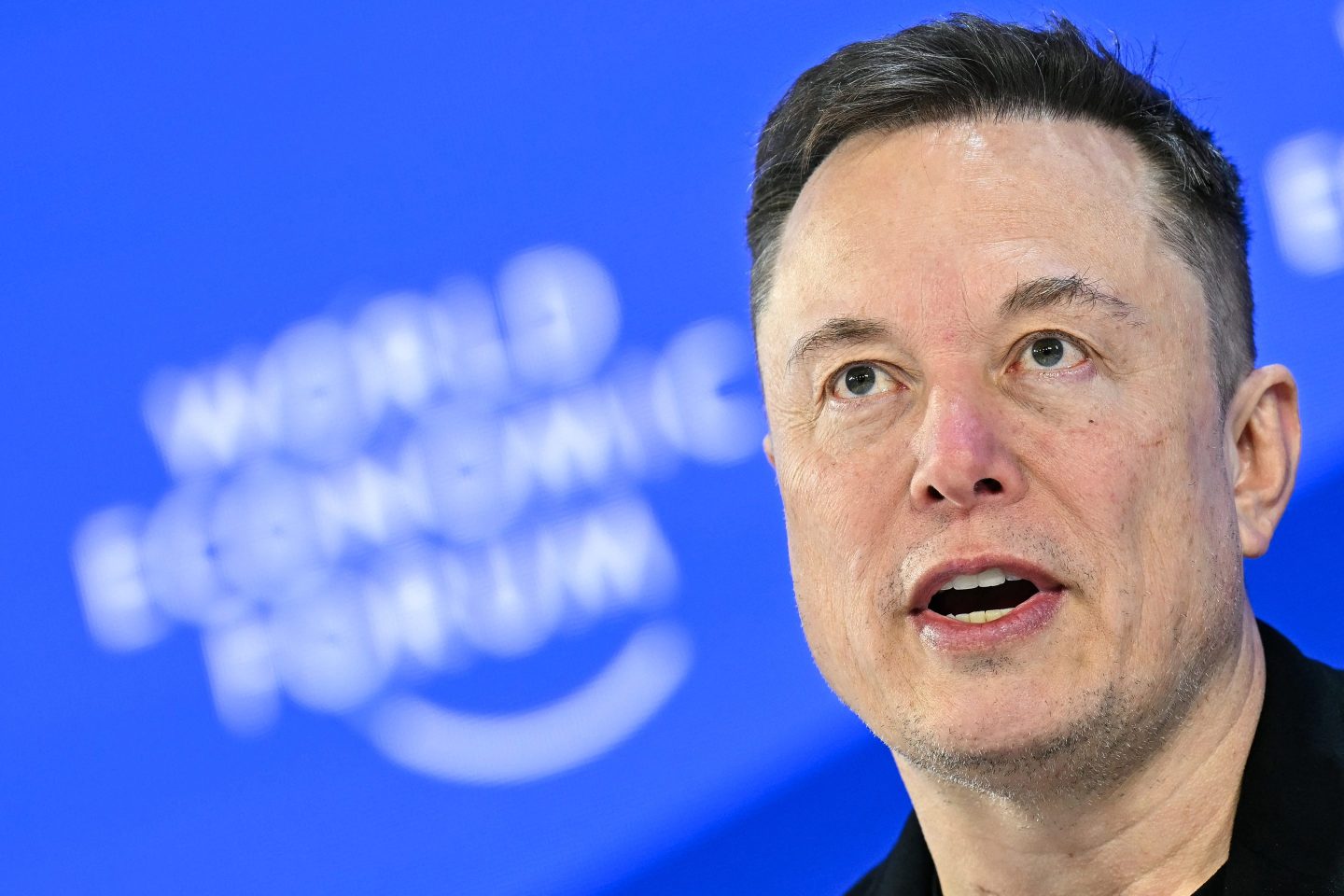
Elon Musk’s SpaceX has, at long last, filed its prospectus for what’s expected to be the largest initial public stock offering ever.
In an S-1 filing brimming with glossy color photos of rockets and space, and peppered with pull quotes highlighting Musk’s musings, the company disclosed plans Wednesday to list its shares on the Nasdaq and Nasdaq Texas under the ticker “SPCX.”
The IPO prospectus provided the first official look at the financials behind the much-hyped rocket maker that’s been around since 2002, as well as at several other businesses that Musk has folded into the company including AI, social media, and the Starlink satellite communications business. The Starlink business appears to be SpaceX’s primary financial engine, accounting for more than two-thirds of the revenue and earning $1.2 billion in profit in the most recent quarter. The space and AI divisions both lost money during the quarter.
Taken together, the prospectus reveals that Musk’s Space Exploration Technologies Corp is growing at a steady clip—full year revenue of $18.7 billion in 2025 increased roughly 33% from $14.1 billion in 2024—but that its losses are also accelerating as it pursues a mission to “build the systems and technologies necessary to make life multiplanetary, to understand the true nature of the universe, and to extend the light of consciousness to the stars.”
As of March 31, SpaceX has racked up an “accumulated deficit” of $41.3 billion, with a $4.27 billion net loss in Q1 of this year, compared to $528 million in the year ago quarter.
The filing also made clear that Musk, the founder, CEO, chief technical officer, and board chair, has complete control of the company, with 85% of the voting power thanks to special Class B shares. “Mr. Musk will have the power to control the outcome of matters requiring shareholder approval, including election of all our directors,” the filing reads. The SpaceX charter gives Musk, who is also the CEO of electric car maker Tesla and several other companies, the freedom to engage in businesses that compete directly with SpaceX.
SpaceX did not disclose the amount of shares it plans to sell in the offering, or the price it intends to sell the shares at, as is customary at this point in the process. According to the Wall Street Journal, SpaceX is seeking to raise $80 billion in the IPO, valuing the company at $1.7 trillion. That would be well above the previous IPO record holder, Saudia Arabian oil giant Saudi Aramco, which raised $26 billion in 2019.
The Elon Show
While much of SpaceX’s day-to-day operations are said to be run by President and Chief Operating Officer Gwynne Shotwell, the prospectus puts the spotlight squarely on Musk, the world’s richest—and often most controversial—person.
Among the unusual items in the filing is a grant to Musk in January of 1 billion performance-based Class B shares. One of the stipulations for the shares to vest is that SpaceX establish “a permanent human colony on Mars with at least one million inhabitants.”
“You want to wake up in the morning and think the future is going to be great—and that’s what being a space-faring civilization is all about,” Musk, 54, says in a quote at the beginning of the IPO prospectus.
Over the past decade, SpaceX has become a vital part of the U.S. space program and the commercial space business, with its rockets transporting astronauts and supplies to the International Space Station and blasting satellites into orbit for various companies. SpaceX is also at the forefront of developing re-usable rockets like the so-called Starship, which it hopes will one day transport humans to Mars.
As SpaceX embarks on its pre-IPO road show to court investors, Musk will need to make the case for the variety of businesses he has folded into SpaceX in recent years through a Russian doll-like series of mergers and acquisitions. The Twitter social media platform that Musk acquired in 2022 and rebranded as X, for example, was later folded into xAI, Musk’s artificial intelligence company, which was acquired by SpaceX in February. That means SpaceX now owns a social media platform as well as Grok, a “truth-seeking” chatbot the prospectus claims will “enable humanity to understand the universe.”
SpaceX’s debut on the public market could come as soon as June, Bloomberg reported. It’s expected to be the first of several giant offerings from AI companies, with ChatGPT maker OpenAI and Anthropic both reportedly waiting in the wings.
Anthropic will pay SpaceX $1.25 billion a month through 2029 in exchange for the cloud computing capacity it needs to run its popular AI models, according to Wednesday’s S-1 filing. The Anthropic deal underscores SpaceX’s success in tapping into other revenue streams as Musk pursues dreams of interplanetary travel, but also highlights the risky interdependencies within the booming AI sector. In its first-quarter earnings report on Tuesday, AI chipmaker Nvidia posted a $16 billion gain in “other income” from “non-marketable securities” such as its investments in Anthropic and OpenAI.
SpaceX has also entered into a deal with Cursor, an AI code writing program, that gives it the option to acquire the company for $60 billion or pay a $10 billion termination fee.