
• Home
  • Latest
  • Fortune 500
  • Finance
  • Tech
  • Leadership
  • Lifestyle
  • Rankings
  • Multimedia

Trendingnow

1

Billionaires Elon Musk and Mark Zuckerberg used mortgages to buy multimillion-dollar mansions. Here’s why that’s a savvy financial decision

2

AI CEOs from OpenAI, Anthropic, and Microsoft set aside their rivalry to warn Congress AI is making it too easy to design and create bioweapons

3

Social Security faces a 24% cut in 2032—that's a $345 billion hit to retirees nationwide, watchdog says

1

Billionaires Elon Musk and Mark Zuckerberg used mortgages to buy multimillion-dollar mansions. Here’s why that’s a savvy financial decision

2

AI CEOs from OpenAI, Anthropic, and Microsoft set aside their rivalry to warn Congress AI is making it too easy to design and create bioweapons

3

Social Security faces a 24% cut in 2032—that's a $345 billion hit to retirees nationwide, watchdog says
AIsmartphones and mobile devices

The smartphone’s days are numbered. Meet the device that could come next

Alyson Shontell
By
Alyson Shontell
Alyson Shontell
Editor-in-Chief and Chief Content Officer
Down Arrow Button Icon
Alyson Shontell
By
Alyson Shontell
Alyson Shontell
Editor-in-Chief and Chief Content Officer
Down Arrow Button Icon
May 18, 2026, 4:00 AM ET
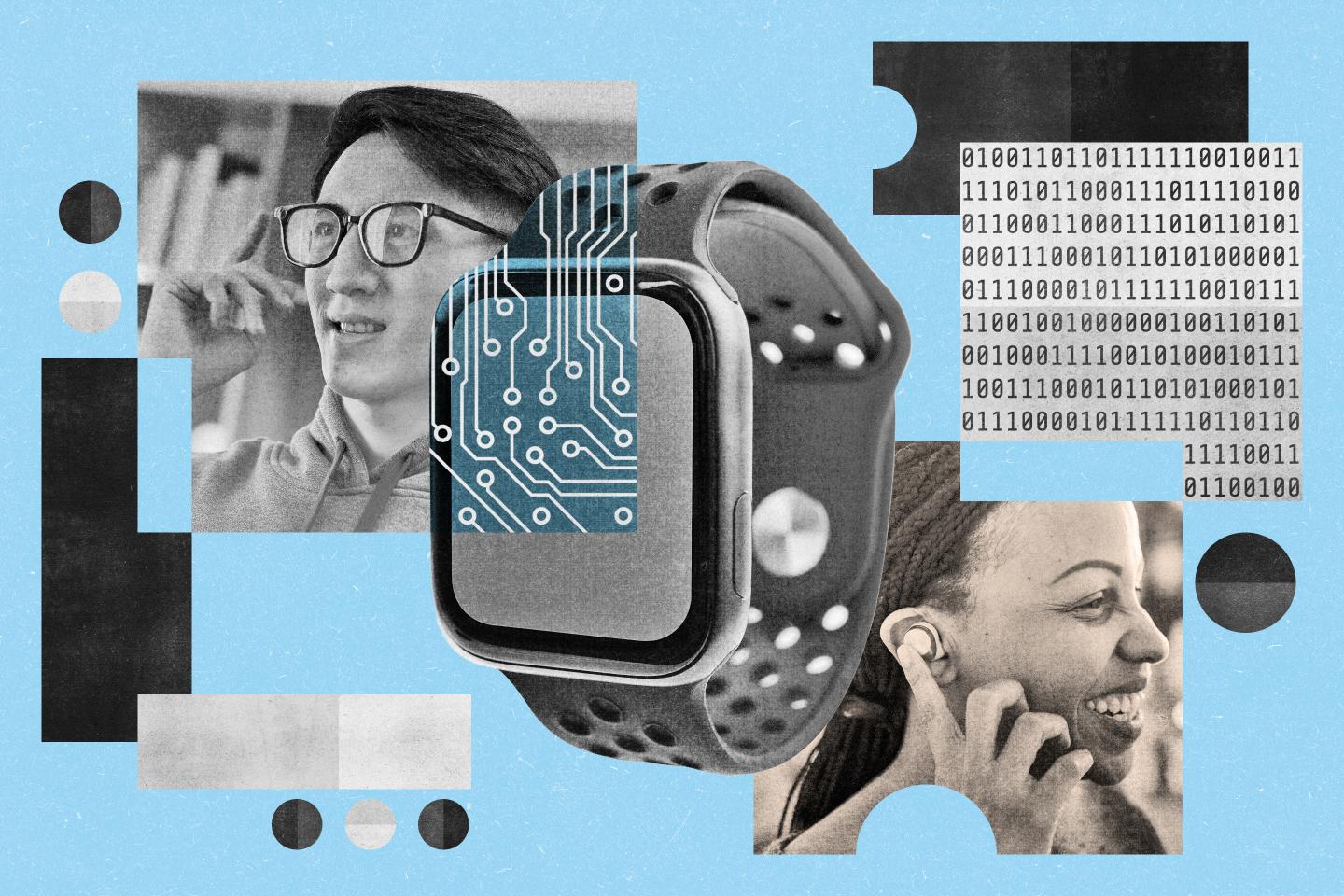
Our devices were made to be responsive to our prompts, not to anticipate our needs. In the AI era, this will flip.
Our devices were made to be responsive to our prompts, not to anticipate our needs. In the AI era, this will flip.Illustration by Andrei Cojocaru; Original photos from Getty Images

Within the next 10 years, our phones will no longer be our primary personal device. That’s pretty universally agreed upon in Silicon Valley among tech executives, including those at Apple, the major winner of the smartphone era.

That’s because computers and phones weren’t made for AI. Our devices were made to be responsive to our prompts, not to anticipate our needs. In the AI era, this will flip, and a consumer device will prevail that can see, hear, and learn in real time—becoming a proactive, hyper-personalized guide through life. This will be made possible by AI agents, which will increasingly be able to learn, sense, and react to a constant stream of real-time data, and by the shift to next-generation 6G wireless networks.

The gadgets best suited for this new reality are still in the evolutionary phase, with the various tech industry titans all seeking to advance their vision. Google and Meta are developing smart glasses with cameras that can listen and observe. OpenAI has acquired legendary iPhone designer Jony Ive’s hardware startup, io, for $6.5 billion to develop a family of AI-powered consumer devices.

The person with perhaps the best insight into what will replace our handheld obsession is Cristiano Amon, CEO of Qualcomm.

You may not know what Qualcomm does, but you almost certainly interact with its products on a daily basis. Depending on which car you drive, which computer you use, or what phone you have, there’s a high chance Qualcomm’s chips are inside it. Roughly 5 billion devices globally are powered by Qualcomm chips. The company, which ranks No. 117 on the Fortune 500, has partnerships with virtually every major tech player building the AI devices of the future except Apple—from Meta to OpenAI.

I recently sat down with Amon at Qualcomm’s Sorrento Valley, Calif., campus to discuss the 6G future and the devices that will define it, for my podcast, Fortune 500: Titans and Disruptors of Industry. Here are the key lightly edited excerpts.

What is 6G, exactly?

Every even-number generation of wireless is huge: 2G was huge; 4G was huge; 6G is going to be huge for that reason alone. But beyond the number, it’s one of the biggest transitions we’re going to see in wireless—and it’s going to be way beyond how we think about wireless connectivity. It’s also going to be how AI is going to be part of the networks.

If you look at how telecom started, you had a dial tone to call somebody. Today, it’s very, very different—you have a very high-capacity data network where you do things like stream TV on demand. It’s way beyond calling somebody. I think that type of transition is also going to happen when we go to 6G.

Why AI agents require new kinds of personal devices:

We talk about agents a lot. With agents, we are going to see a new class of AI devices. Glasses, for example, are very natural—because if they understand what we say, what we hear, and what we see, glasses are very close to all those senses. They sit near your eyes, your ears, your mouth—it’s going to be very important context for agents to do things for you. So one of the features of 6G is, I need to have a network that everything I see can get streamed to the cloud at high performance and speed. All of us are going to be walking cameras.

How much longer will we have smartphones as our primary device?

This year will be the year of agents. You’ll start to see more form factors of things people wear. By 2027, 2028, you’ll start to see workload shift [from phones to AI agent devices]. In the next five years, it’s very possible those devices will be in the hundreds of millions, heading toward a billion [agentic AI devices].

What the future personal AI device will look like:

I am bullish on glasses. Humans are very comfortable with glasses. You turn your head, that’s where the camera is going to see what your eyes are seeing. They’re very close to your ear and very close to your mouth. You’re going to read something and the camera can read it. So glasses, I think, will be the primary form factor.

There are some secret form factors that I cannot tell you about. We’re working with pretty much all of them, from OpenAI to Meta. You have different things that people wear—glasses is the easiest one to understand, but also jewelry, pins, and pendants.

For example, you’ll be walking around with glasses, and you’re going to see something you really like. You’ll say, “I’d like to buy this. How much is it on Amazon?” Or, “Can you render how I’m going to look with this on?” It’s going to be a different kind of low-friction experience, and workloads are going to start to shift. Certain things you’re going to do with an agent.

Which company is best positioned to be the Apple of AI devices?

With wearables, you have a mix of fashion and technology. Eyewear companies, for example, can become technology companies—and their valuations are going to expand, because you’re still going to be buying a fashion device.

Would you believe a consumer electronics company will make one pair of glasses that everyone wears? Or will people pick the brand they want? You’re going to see more things that we wear becoming smart, and it’s going to create a new set of players. One thing I can tell you with precision is that in every new generation of wireless, the players change as the industry changes. So I think we’re going to see that again.

AI devices will be more horizontal with less concentration, because not everybody wears the same clothes or the same glasses. The key thing is going to be the control point. Where it used to be the operating system and the app store, that’s now going to be agents. There will be new classes of devices that you’re going to use with your agent of choice.

This is also going to further separate who should be the custodians of all this personal data. Who are the trusted companies, and who are not?

Is society ready for always-streaming AI devices?

I am not one of those that think AI is going to be better than humans. I look at AI as a very powerful tool. [Like all technology] it can be misused. But it’s going to be probably as big of a change as when the internet arrived—and we survived that.

The question of trust, and which companies deserve access to the trove of data that the 6G era will generate, will be the battleground for the next decade. The future winner won’t just be the one with the best product. It will be the one consumers and enterprises trust to let into the most intimate parts of their daily lives, ultimately replacing the device they can’t imagine living without today.

Read more about how artificial intelligence is changing the way businesses operate, compete, and succeed in Fortune’s Special Digital Issue: The AI Economy.

About the Author
Alyson Shontell
By Alyson ShontellEditor-in-Chief and Chief Content Officer
Instagram iconLinkedIn iconTwitter icon

Alyson Shontell is the editor-in-chief and chief content officer at Fortune.

See full bioRight Arrow Button Icon

Latest in AI

Finance
Lorem ipsum dolor sit amet, consectetur adipiscing elit, sed do eiusmod tempor incididunt ut labore et dolore magna aliqua. Ut enim ad minim veniam
By Fortune Editors
October 20, 2025
Finance
Lorem ipsum dolor sit amet, consectetur adipiscing elit, sed do eiusmod tempor incididunt ut labore et dolore magna aliqua. Ut enim ad minim veniam
By Fortune Editors
October 20, 2025
Finance
Lorem ipsum dolor sit amet, consectetur adipiscing elit, sed do eiusmod tempor incididunt ut labore et dolore magna aliqua. Ut enim ad minim veniam
By Fortune Editors
October 20, 2025
Finance
Lorem ipsum dolor sit amet, consectetur adipiscing elit, sed do eiusmod tempor incididunt ut labore et dolore magna aliqua. Ut enim ad minim veniam
By Fortune Editors
October 20, 2025
Finance
Lorem ipsum dolor sit amet, consectetur adipiscing elit, sed do eiusmod tempor incididunt ut labore et dolore magna aliqua. Ut enim ad minim veniam
By Fortune Editors
October 20, 2025
Finance
Lorem ipsum dolor sit amet, consectetur adipiscing elit, sed do eiusmod tempor incididunt ut labore et dolore magna aliqua. Ut enim ad minim veniam
By Fortune Editors
October 20, 2025

Most Popular

Finance
Lorem ipsum dolor sit amet, consectetur adipiscing elit, sed do eiusmod tempor incididunt ut labore et dolore magna aliqua. Ut enim ad minim veniam
By Fortune Editors
October 20, 2025
Finance
Lorem ipsum dolor sit amet, consectetur adipiscing elit, sed do eiusmod tempor incididunt ut labore et dolore magna aliqua. Ut enim ad minim veniam
By Fortune Editors
October 20, 2025
Finance
Lorem ipsum dolor sit amet, consectetur adipiscing elit, sed do eiusmod tempor incididunt ut labore et dolore magna aliqua. Ut enim ad minim veniam
By Fortune Editors
October 20, 2025
Finance
Lorem ipsum dolor sit amet, consectetur adipiscing elit, sed do eiusmod tempor incididunt ut labore et dolore magna aliqua. Ut enim ad minim veniam
By Fortune Editors
October 20, 2025
Finance
Lorem ipsum dolor sit amet, consectetur adipiscing elit, sed do eiusmod tempor incididunt ut labore et dolore magna aliqua. Ut enim ad minim veniam
By Fortune Editors
October 20, 2025
Finance
Lorem ipsum dolor sit amet, consectetur adipiscing elit, sed do eiusmod tempor incididunt ut labore et dolore magna aliqua. Ut enim ad minim veniam
By Fortune Editors
October 20, 2025
Fortune Secondary Logo
Rankings
  • 100 Best Companies
  • Fortune 500
  • Global 500
  • Fortune 500 Europe
  • Most Powerful Women
  • World's Most Admired Companies
  • See All Rankings
  • Lists Calendar
Sections
  • Finance
  • Fortune Crypto
  • Features
  • Leadership
  • Health
  • Commentary
  • Success
  • Retail
  • Mpw
  • Tech
  • Lifestyle
  • CEO Initiative
  • Asia
  • Politics
  • Conferences
  • Europe
  • Newsletters
  • Personal Finance
  • Environment
  • Magazine
  • Education
Customer Support
  • Frequently Asked Questions
  • Customer Service Portal
  • Privacy Policy
  • Terms Of Use
  • Single Issues For Purchase
  • International Print
Commercial Services
  • Advertising
  • Fortune Brand Studio
  • Fortune Analytics
  • Fortune Conferences
  • Business Development
  • Group Subscriptions
About Us
  • About Us
  • Press Center
  • Work At Fortune
  • Terms And Conditions
  • Site Map
  • About Us
  • Press Center
  • Work At Fortune
  • Terms And Conditions
  • Site Map
  • Facebook icon
  • Twitter icon
  • LinkedIn icon
  • Instagram icon
  • Pinterest icon

Latest in AI

Former AI czar calls Sanders’ proposal for government equity a ‘stupidity tax’ and warns against nationalization as Trump mulls public stakes
AIregulation
Former AI czar calls Sanders’ proposal for government equity a ‘stupidity tax’ and warns against nationalization as Trump mulls public stakes
By Jason MaJune 6, 2026
12 hours ago
bernie
AIWhite House
Bernie Sanders and Sam Altman’s private one-hour meeting about the public ownership of AI
By Joey Cappelletti, Seung Min Kim and The Associated PressJune 6, 2026
17 hours ago
sa
CommentaryIPOs
When good money goes bad: the question SpaceX and OpenAI investors aren’t asking
By Rory McDonaldJune 6, 2026
22 hours ago
Man holding his fists together.
AIElon Musk
Elon Musk bullet-proofed his $1 trillion ‘Mars-shot’ pay at SpaceX after the epic battle over his $56 billion moonshot at Tesla
By Amanda GerutJune 6, 2026
22 hours ago
Upset frustrated and confused female worker folding hands on chin
Future of Workcompensation
A CEO denied raises to spend money on AI instead. Companies have ‘no idea what they’re going to need in a workforce’ when the AI race is over
By Jacqueline MunisJune 6, 2026
1 day ago
trump
PoliticsWhite House
MAGA hates AI, but Trump agrees with Bernie it might be time for partial government ownership
By Nick LichtenbergJune 5, 2026
1 day ago

Most Popular

Billionaires Elon Musk and Mark Zuckerberg used mortgages to buy multimillion-dollar mansions. Here’s why that’s a savvy financial decision
Real Estate
Billionaires Elon Musk and Mark Zuckerberg used mortgages to buy multimillion-dollar mansions. Here’s why that’s a savvy financial decision
By Sydney LakeJune 6, 2026
21 hours ago
AI CEOs from OpenAI, Anthropic, and Microsoft set aside their rivalry to warn Congress AI is making it too easy to design and create bioweapons
AI
AI CEOs from OpenAI, Anthropic, and Microsoft set aside their rivalry to warn Congress AI is making it too easy to design and create bioweapons
By Marco Quiroz-GutierrezJune 5, 2026
2 days ago
Social Security faces a 24% cut in 2032—that's a $345 billion hit to retirees nationwide, watchdog says
Economy
Social Security faces a 24% cut in 2032—that's a $345 billion hit to retirees nationwide, watchdog says
By Nick LichtenbergJune 5, 2026
2 days ago
Here's where U.S. debt may become unsustainable with interest payments triggering a default crisis that even steep tax hikes can't fix
Economy
Here's where U.S. debt may become unsustainable with interest payments triggering a default crisis that even steep tax hikes can't fix
By Jason MaJune 6, 2026
9 hours ago
The Strait of Hormuz is more open than previously thought as the U.S. shoots down Iranian drones threatening ships and provides 'naval overwatch'
Energy
The Strait of Hormuz is more open than previously thought as the U.S. shoots down Iranian drones threatening ships and provides 'naval overwatch'
By Jason MaJune 6, 2026
9 hours ago
Trump says 'situation with Iran seems to be going quite well' while U.S. shoots down more missiles and drones near Strait of Hormuz
Politics
Trump says 'situation with Iran seems to be going quite well' while U.S. shoots down more missiles and drones near Strait of Hormuz
By Michelle L. Price, Samy Magdy and The Associated PressJune 6, 2026
17 hours ago

© 2026 Fortune Media IP Limited. All Rights Reserved. Use of this site constitutes acceptance of our Terms of Use and Privacy Policy | CA Notice at Collection and Privacy Notice | Do Not Sell/Share My Personal Information
FORTUNE is a trademark of Fortune Media IP Limited, registered in the U.S. and other countries. FORTUNE may receive compensation for some links to products and services on this website. Offers may be subject to change without notice.