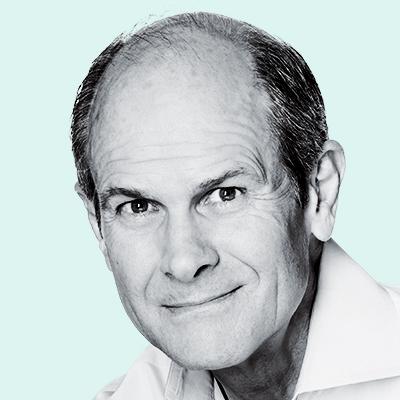

Bring up Google News and search “competitive strategy,” and chances are good you’ll find the phrase scattered across recent business articles. You might assume business leaders have been talking about that topic forever, but they haven’t.
The phrase came into common usage because in 1980 Michael Porter, a Harvard Business School professor, wrote a book called Competitive Strategy. It made him world famous almost immediately and is still in print. More broadly, Porter introduced new analytical thinking into business strategy through several more bestselling books.
In this 2012 article, I wrote that the business world speaks the language of Porter, knowingly or not. Remarkably, he remains today what I called him then: the most famous and influential business professor who ever lived.
By the time I wrote the article, Porter had become a celebrity among CEOs and heads of state (he had written The Competitive Advantage of Nations in 1990). He earned his stature with more than a brilliant mind; he also practiced a legendary work ethic. A Harvard Business School colleague of his told me, “I’ve worked with Mike for 30 years and have never seen him eat a meal.” On a six-day speaking tour through Asia, he didn’t stay in hotels, instead sleeping on overnight flights between cities.
To find a time for me to interview him, his assistant scrutinized his calendar and found 25 minutes available in Charlotte, N.C.: He would be there to participate in a midday panel (“Solutions to the Jobs Crisis”) alongside the 2012 Democratic National Convention, then go to a Duke Energy event, then go back to the airport. So I flew to Charlotte for the 25-minute slot.
My article focused on business, but Porter worked hard on improving other major sectors of society—cities, health care, industry clusters, and more. His approach was always focused on strategy, and the concepts he developed remain valuable and in use worldwide today.
Unlike most successful scholars, Porter published almost no articles in academic journals, instead writing for a broader audience in the business world. Even so, he was embraced by other professors in his field, who cited his work more than anyone else’s, and have continued to do so after his retirement in 2023. Indeed, a striking measure of his influence is the fact that even now, in a world so different from the one in which he did his work, Porter maintains his long-held title as the most-cited scholar in business or economics, according to Google Scholar—with more than 652,000 citations. So far this year, scholars are citing his work at a rate of once every eight minutes.
Porter once told author Walter Kiechel for his book, The Lords of Strategy, that his greatest gift was “the ability to take an extraordinarily complex, integrated, multidimensional problem and get arms around it conceptually in a way that helps, that informs and empowers practitioners to actually do things.” That is why, even 46 years after Competitive Strategy, people who do things in business and beyond are still speaking Porter’s language, whether they know it or not.