• Home
  • Latest
  • Fortune 500
  • Finance
  • Tech
  • Leadership
  • Lifestyle
  • Rankings
  • Multimedia

Trendingnow

1

Despite having a $165 million net worth, Scarlett Johansson says work-life balance doesn’t exist—and the first step to success is admitting that

2

The Bezos family just donated $100 million to help achieve one of Mayor Zohran Mamdani’s top campaign promises

3

Current price of oil as of May 15, 2026

1

Despite having a $165 million net worth, Scarlett Johansson says work-life balance doesn’t exist—and the first step to success is admitting that

2

The Bezos family just donated $100 million to help achieve one of Mayor Zohran Mamdani’s top campaign promises

3

Current price of oil as of May 15, 2026
Commentarystart-ups

We watched social media concentrate. The same thing is happening in AI, only at a deeper layer

By
David Liberman
David Liberman
and
Daniil Liberman
Daniil Liberman
Down Arrow Button Icon
By
David Liberman
David Liberman
and
Daniil Liberman
Daniil Liberman
Down Arrow Button Icon
May 16, 2026, 9:30 AM ET
liberman
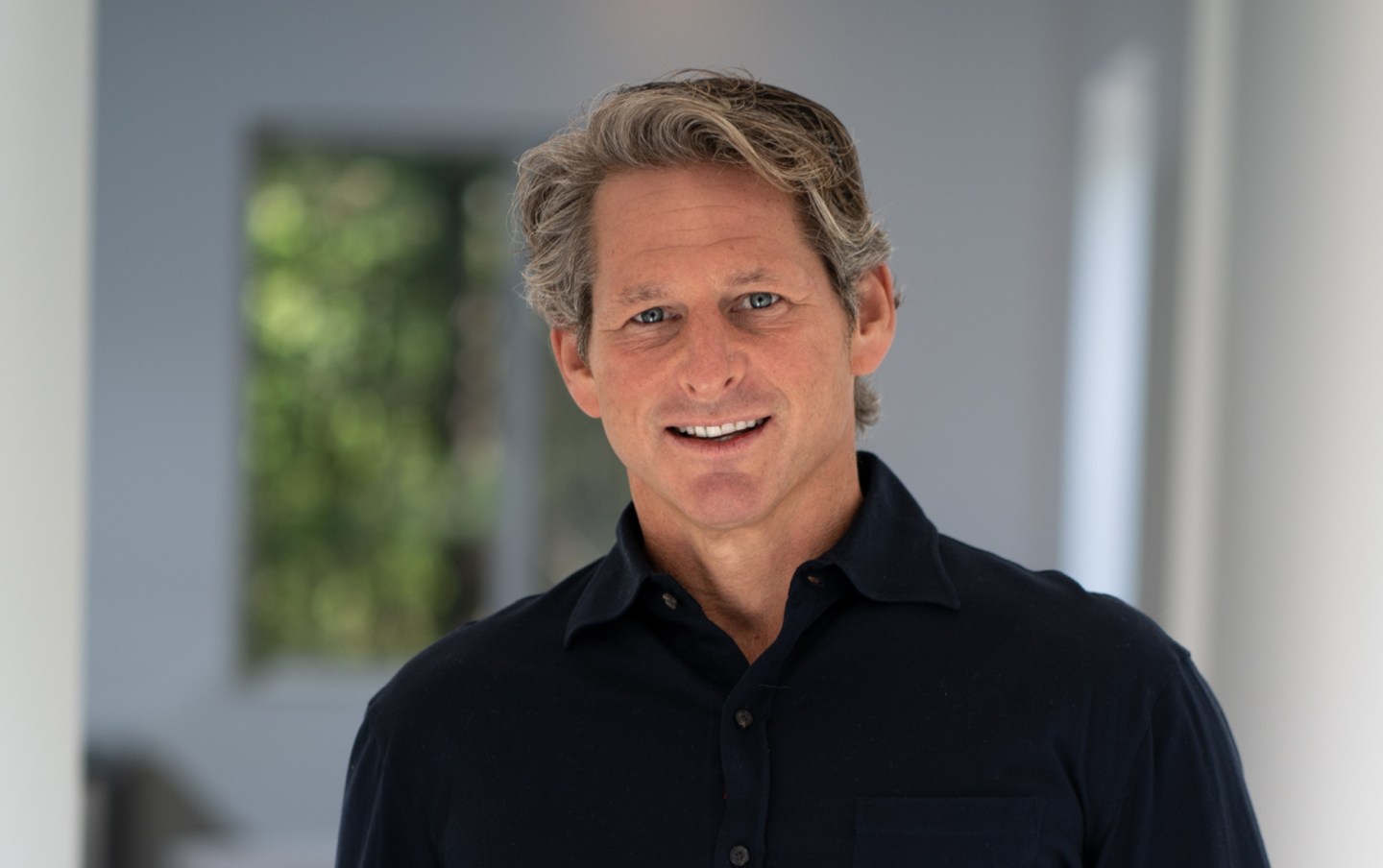
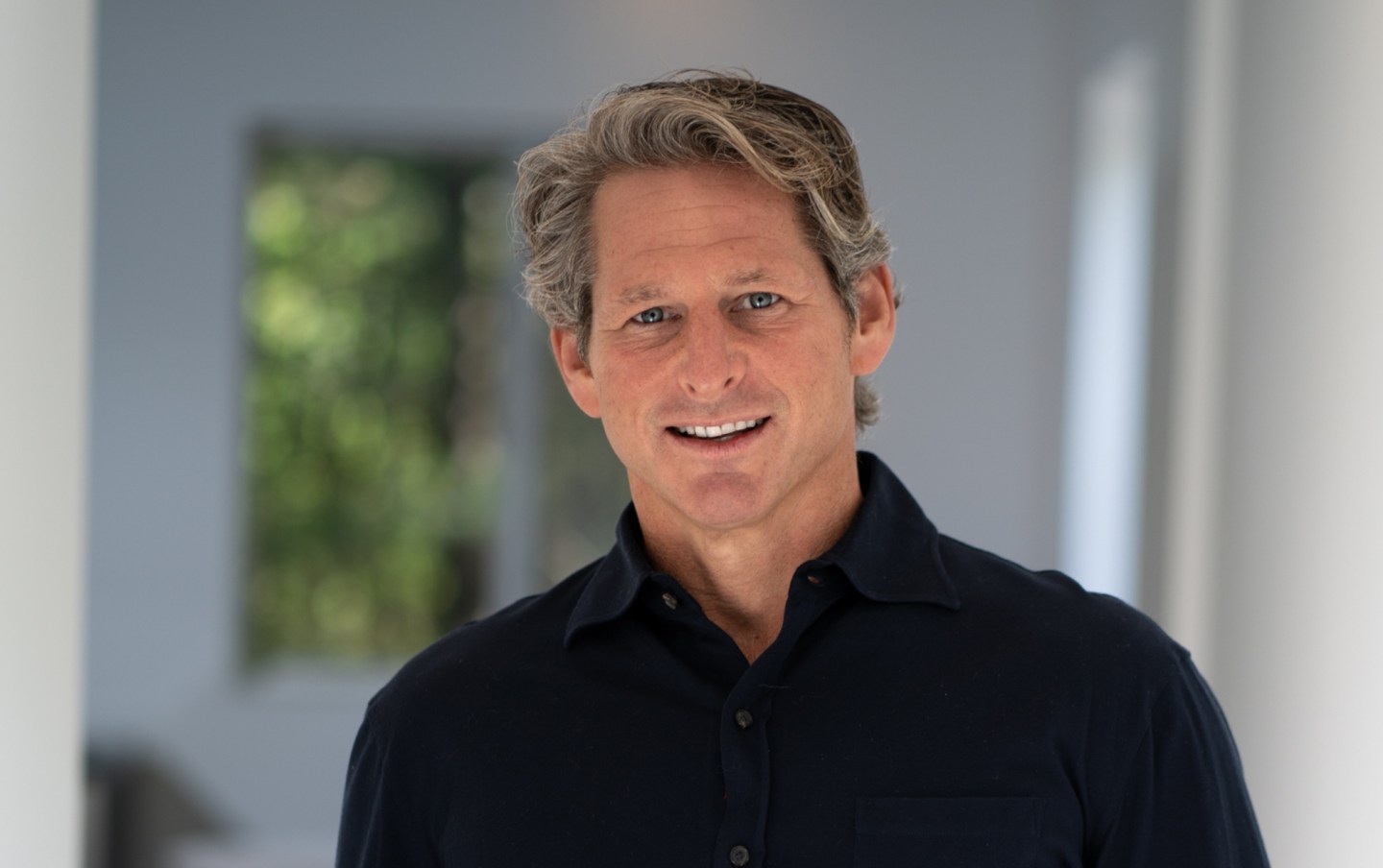
The Liberman Brothers, David (L) and Daniil (R).courtesy of the Liberman Brothers

In 2018, my brother and I sat in a product review at Snap’s Santa Monica offices staring at a chart we’d grown too familiar with. Our daily active users had stalled. Instagram (which had launched a near-identical version of our core Stories feature two years earlier) was accelerating. Snap had built a genuinely better product. It had a loyal, passionate user base. It had once famously turned down $3 billion from Facebook when most people would have taken the money and left. None of it was enough.

Recommended Video

Meta controlled the layer beneath Snap: the social graph, the feed, the audience. Once you own that layer, everything built on top bends toward you.

We’ve spent more than two decades in tech. We’ve learned to recognize when a pattern repeats.

In social networks, concentration formed at the platform level. Distribution, data, and audiences clustered around whoever had the most users, and everything else followed with them. Today, two of the largest social platforms on earth (Facebook and Instagram) belong to the same company. The cloud infrastructure that powered them followed the same logic: Amazon, Microsoft, and Google now control roughly 63% of global cloud capacity. AI is following the same geometry, only faster.

One Level Deeper

You could always spin up a new social platform. TikTok proved it possible. In AI, you cannot build anything without compute: the GPUs, the data centers, the raw processing capacity that determines who gets to participate in this economy at all. Access to compute has become a prerequisite for existence, not just for scale. A startup without cloud contracts cannot train. A country without chip access cannot compete. The gate is already in place.

The numbers describe how closed that gate already is. NVIDIA holds 85% of the data center GPU market. Three American cloud companies control 63% of the infrastructure on which most AI runs. At the model layer, just two companies capture the overwhelming majority of revenue from AI-native companies, according to The Information.

The geographic picture is starker than most people realize. The United States controls approximately 75% of global high-performance AI compute capacity. China holds around 15%. The remaining countries share the last 10% between them, most holding a fraction too small to measure. The rest of the world is not competing for AI infrastructure. It is dependent on whoever wins. There is no antitrust mechanism for countries.

There is also a quieter form of inequality embedded in the technology itself. Large language models are trained overwhelmingly on English-language data, which means prompts in other languages consume more tokens for the same output. Non-English users pay more, hit context limits faster, and receive lower-quality results. One price does not mean equal access.

This has stopped being a business concentration story. When AI shapes what gets built, how economies function, and how information flows, whoever controls the compute layer controls something closer to a geopolitical chokepoint than a market position. The United States has already demonstrated this with export controls on advanced chips, restricting which nations can develop certain AI capabilities. Two countries are now setting the terms for 191 others. Those 191 are, in varying degrees, already dependent, and that dependency is growing.

The consequences are concrete and current. Services become unavailable because of sanctions, regulatory shifts, or local law. AI models can be degraded or quietly redirected without notice. Businesses that have built products on centralized infrastructure face existential dependency on a handful of providers whose terms can change overnight, and who have demonstrated they will change them. We have already seen major AI providers retire popular models despite user backlash, restrict API access without warning, and throttle developer capabilities under the cover of safety policies that no independent body can audit.

The Alternative

Bitcoin and Ethereum did not solve financial concentration by building a better bank. They rebuilt the layer underneath: open protocols where anyone could participate as a contributor, not a customer. Thousands of independent operators, no central gatekeeper, no single point of failure or control.

The same logic applies to compute. An open, decentralized network for AI infrastructure (one where GPU capacity can be contributed and accessed across organizational and geographic boundaries) does not need to beat hyperscalers on their own terms. It makes the hyperscalers optional. It puts a floor under the market, and a ceiling on the power any single actor can extract.

That is what led us to build Gonka: a decentralized, community-governed network for AI compute, designed specifically for inference. It is our attempt to rebuild the layer, not simply compete on top of it.

What we’ve carried from that experience: in technology, whoever controls the infrastructure decides what gets built on top, and what gets pushed out. In AI, that layer is compute. Right now, it belongs to very few people. If we wait until the infrastructure is fully locked in, the next generation will not be choosing between models. It will be choosing between permissions.

The opinions expressed in Fortune.com commentary pieces are solely the views of their authors and do not necessarily reflect the opinions and beliefs of Fortune.
Join us at the Fortune Workplace Innovation Summit May 19–20, 2026, in Atlanta. The next era of workplace innovation is here—and the old playbook is being rewritten. At this exclusive, high-energy event, the world’s most innovative leaders will convene to explore how AI, humanity, and strategy converge to redefine, again, the future of work. Register now.
About the Authors
By David Liberman
See full bioRight Arrow Button Icon
By Daniil Liberman
See full bioRight Arrow Button Icon

Latest in Commentary

Finance
Lorem ipsum dolor sit amet, consectetur adipiscing elit, sed do eiusmod tempor incididunt ut labore et dolore magna aliqua. Ut enim ad minim veniam
By Fortune Editors
October 20, 2025
Finance
Lorem ipsum dolor sit amet, consectetur adipiscing elit, sed do eiusmod tempor incididunt ut labore et dolore magna aliqua. Ut enim ad minim veniam
By Fortune Editors
October 20, 2025
Finance
Lorem ipsum dolor sit amet, consectetur adipiscing elit, sed do eiusmod tempor incididunt ut labore et dolore magna aliqua. Ut enim ad minim veniam
By Fortune Editors
October 20, 2025
Finance
Lorem ipsum dolor sit amet, consectetur adipiscing elit, sed do eiusmod tempor incididunt ut labore et dolore magna aliqua. Ut enim ad minim veniam
By Fortune Editors
October 20, 2025
Finance
Lorem ipsum dolor sit amet, consectetur adipiscing elit, sed do eiusmod tempor incididunt ut labore et dolore magna aliqua. Ut enim ad minim veniam
By Fortune Editors
October 20, 2025
Finance
Lorem ipsum dolor sit amet, consectetur adipiscing elit, sed do eiusmod tempor incididunt ut labore et dolore magna aliqua. Ut enim ad minim veniam
By Fortune Editors
October 20, 2025

Most Popular

Finance
Lorem ipsum dolor sit amet, consectetur adipiscing elit, sed do eiusmod tempor incididunt ut labore et dolore magna aliqua. Ut enim ad minim veniam
By Fortune Editors
October 20, 2025
Finance
Lorem ipsum dolor sit amet, consectetur adipiscing elit, sed do eiusmod tempor incididunt ut labore et dolore magna aliqua. Ut enim ad minim veniam
By Fortune Editors
October 20, 2025
Finance
Lorem ipsum dolor sit amet, consectetur adipiscing elit, sed do eiusmod tempor incididunt ut labore et dolore magna aliqua. Ut enim ad minim veniam
By Fortune Editors
October 20, 2025
Finance
Lorem ipsum dolor sit amet, consectetur adipiscing elit, sed do eiusmod tempor incididunt ut labore et dolore magna aliqua. Ut enim ad minim veniam
By Fortune Editors
October 20, 2025
Finance
Lorem ipsum dolor sit amet, consectetur adipiscing elit, sed do eiusmod tempor incididunt ut labore et dolore magna aliqua. Ut enim ad minim veniam
By Fortune Editors
October 20, 2025
Finance
Lorem ipsum dolor sit amet, consectetur adipiscing elit, sed do eiusmod tempor incididunt ut labore et dolore magna aliqua. Ut enim ad minim veniam
By Fortune Editors
October 20, 2025
Fortune Secondary Logo
Rankings
  • 100 Best Companies
  • Fortune 500
  • Global 500
  • Fortune 500 Europe
  • Most Powerful Women
  • World's Most Admired Companies
  • See All Rankings
  • Lists Calendar
Sections
  • Finance
  • Fortune Crypto
  • Features
  • Leadership
  • Health
  • Commentary
  • Success
  • Retail
  • Mpw
  • Tech
  • Lifestyle
  • CEO Initiative
  • Asia
  • Politics
  • Conferences
  • Europe
  • Newsletters
  • Personal Finance
  • Environment
  • Magazine
  • Education
Customer Support
  • Frequently Asked Questions
  • Customer Service Portal
  • Privacy Policy
  • Terms Of Use
  • Single Issues For Purchase
  • International Print
Commercial Services
  • Advertising
  • Fortune Brand Studio
  • Fortune Analytics
  • Fortune Conferences
  • Business Development
  • Group Subscriptions
About Us
  • About Us
  • Press Center
  • Work At Fortune
  • Terms And Conditions
  • Site Map
  • About Us
  • Press Center
  • Work At Fortune
  • Terms And Conditions
  • Site Map
  • Facebook icon
  • Twitter icon
  • LinkedIn icon
  • Instagram icon
  • Pinterest icon
David and Daniil Liberman are Los Angeles-based entrepreneurs, investors, and the co-creators of the Gonka protocol. Earlier in their careers, together with their siblings, they built projects across media, finance, augmented reality, and AI, including Kernel AR, an AR startup acquired by Snap, where they later became Directors of Product.  Today, they focus on Gonka, a decentralized AI infrastructure network built around high-efficiency compute for AI inference. Their work centers on a broader question shaping the future of technology and economics: who controls access to compute, and how that control influences innovation, power, and the global AI landscape.

Latest in Commentary

liberman
Commentarystart-ups
We watched social media concentrate. The same thing is happening in AI, only at a deeper layer
By David Liberman and Daniil LibermanMay 16, 2026
3 hours ago
olivier
CommentaryAnthropic
I’ve been studying Big Tech for a long time. What just happened with Anthropic and the Pentagon terrifies me
By Olivier SylvainMay 16, 2026
4 hours ago
lawyer
CommentaryLaw
Would you hire the lawyer who just got sanctioned for using AI?
By Alexandra SmythMay 16, 2026
6 hours ago
greg
Personal FinanceAviation
Mamdani’s New York is coming to tax your private jet. Here’s how to prepare
By Greg RaiffMay 16, 2026
7 hours ago
chase
CommentaryCities
San Francisco has $2 trillion in AI wealth and can’t fix its own city. That’s every city’s problem
By Chase GarbarinoMay 15, 2026
1 day ago
lori
Commentarymental health
I run Valvoline Instant Oil Change and work with young people every day. They’re in crisis—and we all have to try to help
By Lori FleesMay 15, 2026
1 day ago

Most Popular

Despite having a $165 million net worth, Scarlett Johansson says work-life balance doesn’t exist—and the first step to success is admitting that
Success
Despite having a $165 million net worth, Scarlett Johansson says work-life balance doesn’t exist—and the first step to success is admitting that
By Preston ForeMay 13, 2026
3 days ago
The Bezos family just donated $100 million to help achieve one of Mayor Zohran Mamdani’s top campaign promises
Politics
The Bezos family just donated $100 million to help achieve one of Mayor Zohran Mamdani’s top campaign promises
By Jake AngeloMay 12, 2026
4 days ago
Current price of oil as of May 15, 2026
Personal Finance
Current price of oil as of May 15, 2026
By Joseph HostetlerMay 15, 2026
1 day ago
Nearly 50,000 Lake Tahoe residents have to find a new power source after their energy source looks to redirect lines to data centers
Travel & Leisure
Nearly 50,000 Lake Tahoe residents have to find a new power source after their energy source looks to redirect lines to data centers
By Catherina GioinoMay 12, 2026
4 days ago
The airplane fuel shortage is a myth propagated by airlines who want to cancel unprofitable flights, says private jet CEO
Energy
The airplane fuel shortage is a myth propagated by airlines who want to cancel unprofitable flights, says private jet CEO
By Jim EdwardsMay 14, 2026
2 days ago
Debbie Gibson, Geezer Butler of Black Sabbath want you to adopt a beagle rescued from an experimental lab in Wisconsin
North America
Debbie Gibson, Geezer Butler of Black Sabbath want you to adopt a beagle rescued from an experimental lab in Wisconsin
By Scott Bauer and The Associated PressMay 13, 2026
3 days ago

© 2026 Fortune Media IP Limited. All Rights Reserved. Use of this site constitutes acceptance of our Terms of Use and Privacy Policy | CA Notice at Collection and Privacy Notice | Do Not Sell/Share My Personal Information
FORTUNE is a trademark of Fortune Media IP Limited, registered in the U.S. and other countries. FORTUNE may receive compensation for some links to products and services on this website. Offers may be subject to change without notice.