
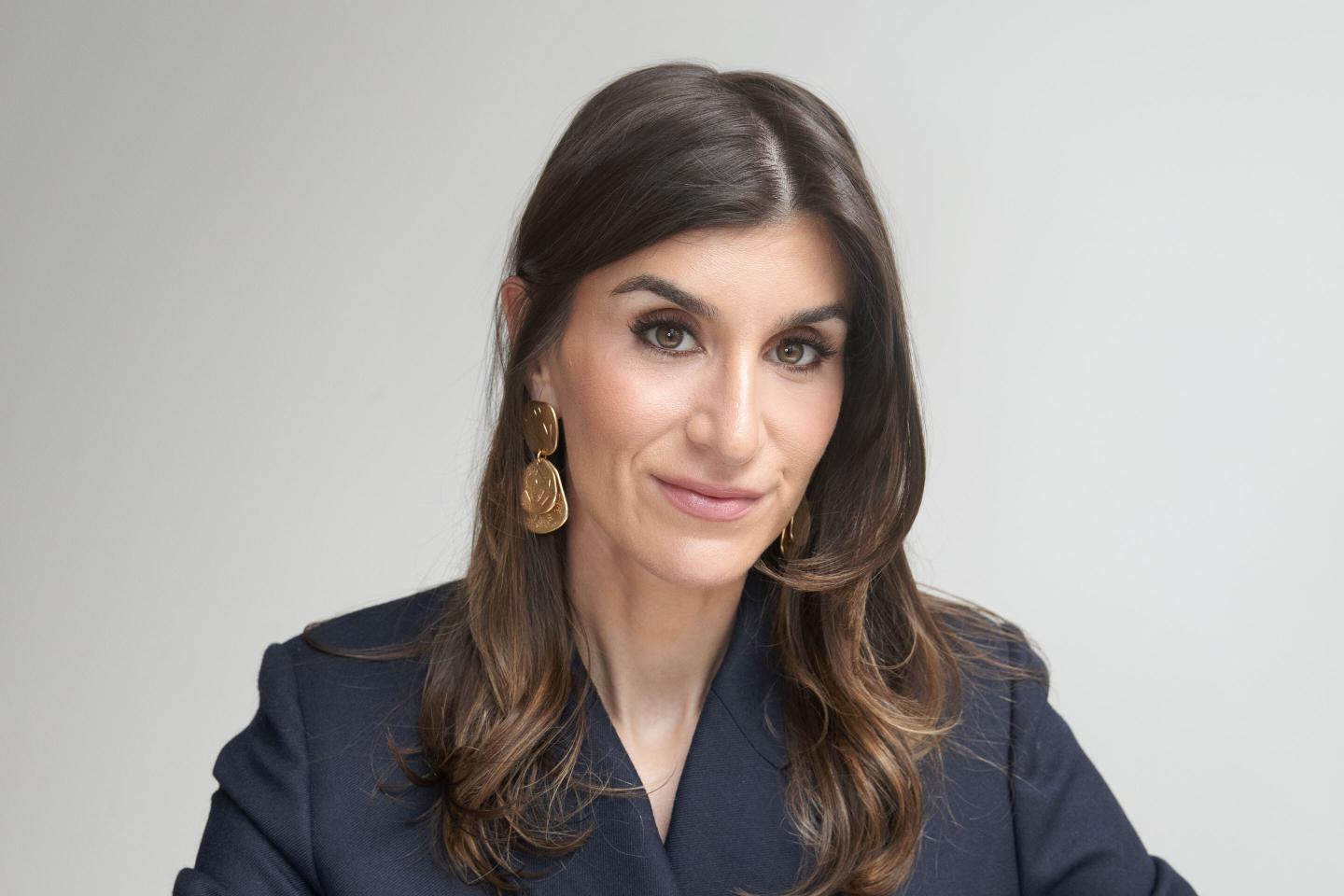
When Haley Sacks landed her first full-time job as a writer for Lorne Michaels’ digital comedy company Above Average, the HR onboarding process felt like another language to her. She had no idea the right health insurance, 401(k) options, and other benefits to choose.
So she did “what any self-respecting millennial would do,” she told me, and stress-ordered Thai food and researched it all herself. What she found was a financial education industry split between “finance bros mansplaining things on whiteboards” and women being told to skip lattes, avocado toast, and manicures.
“Nothing made growing wealth seem accessible or human,” she said. “I really wanted to find the Beyoncé of finance, and I couldn’t.”
So she became her.
Today, Sacks is better known as Mrs. Dow Jones, the zillennial finance content creator who has racked up more than 2 million followers across platforms, a 100,000-reader newsletter, a podcast (Financial Tea), and earned a spot on the Fortune 40 Under 40 list during the pandemic.
And now she can add author to her list of accolades: Her first book, Future Rich Person, is out this month from Random House. Her thesis is the personal finance advice most women are getting is built for an economy that no longer exists.
“The rules of wealth building have changed, the advice didn’t catch up, and most personal finance guidance was written for a really linear life,” she said. “You got a job, you got a house, you get married, you retire, in that order, on that timeline. Our lives don’t look like that anymore, so then all our financial strategies shouldn’t either.”
For high-earning women, she argues, her book is even more relevant because a big paycheck does not automatically translate to wealth.
She points to recent Goldman Sachs Asset Management data showing 40% of Americans earning more than $300,000 say they’re living paycheck to paycheck—a higher share than households earning $50,000 to $100,000. Goldman attributes it largely to lifestyle creep, the phenomenon of luxuries quietly becoming necessities.
Sacks’ framework for combating that is something she calls “Action Money,” or the funds left over after essentials are covered.
“Most high earners treat it like fun money,” she said. “Future rich people treat it like a powerful wealth-building asset.” She advocates for automating transfers into investment accounts before lifestyle creep takes over.
Another major blind spot Sacks sees among senior-level women workers is not negotiating full compensation packages. Sacks argues we almost never push on equity, bonuses, stock options, or deferred compensation—the pieces of a compensation package that can actually help build longstanding wealth.
“Salary is active income. It stops when you stop,” she said. “Equity is what compounds.”
Sacks is also highly focused on the investing gap for women: Women invest less than men, start later, and hold more cash. But Fidelity’s 2021 analysis of 5.2 million customer accounts found when women do invest, they outperform men by an average of 40 basis points annually.
“The most radical financial act a woman can make is opening a brokerage account and buying low-cost index funds before you feel completely ready,” Sacks said. “Ready is a feeling that usually arrives after you start.”
And feel free to ignore anyone who tells you to cut your morning latte to save money.
“That’s never been the problem,” she said. “We’ve spent years telling women to optimize small things that don’t move the needle, instead of negotiating their salaries and learning to invest.”
Sydney Lake
sydney.lake@fortune.com
The Most Powerful Women Daily newsletter is Fortune’s daily briefing for and about the women leading the business world. Subscribe here.
ALSO IN THE HEADLINES
Mayor, unmasked. The former mayor of Arcadia, Calif., Eileen Wang, has agreed to plead guilty to acting as an unregistered Chinese agent. The FBI alleges she ran pro-China propaganda, including Xinjiang genocide and forced labor denial, through her news site at the direction of PRC officials. She resigned Monday and faces up to 10 years in prison.
GM lays off hundreds. The automaker is letting go of 500 to 600 salaried IT employees, largely in Austin, Texas, and Warren, Mich., as CEO Mary Barra continues repositioning the company as a tech-driven mobility business. Affected workers allege the company is pushing more AI use for work.
FDA Commissioner Marty Makary plans to resign. This move creates a new opportunity for anti-abortion activists to push for national restrictions on the procedure and availability of mifepristone (a key drug used in abortions). Anti-abortion groups have been waiting for this because they feel as if the agency has dragged its feet in limiting access to the drug.
Virginia Rep. Jen Kiggans faces resignation calls. The Republican representative faces Democratic backlash after a Richmond radio host said Minority Leader Hakeem Jeffries (D-NY) should get his “cotton-picking hands off of Virginia,” and she replied: “That’s right. Ditto. Yes.” She claims she was just agreeing Jeffries should stay out of Virginia, not endorsing the racist language. Democrats aren’t buying it.
ON MY RADAR
Julia Letlow is Trump’s big midterms gamble The Wall Street Journal
‘Why do I need to change?’: the women resisting pricy bridal beauty treatments The Guardian
Esther Perel thinks AI is changing our relationships forever Elle
PARTING WORDS
“I think part of art is about expression, so if we start censoring ourselves, then we shut down the very core of our creativity, which is, I think, where we can discover truth and answers.”
–Actor and producer Demi Moore at Cannes about the role of politics in cinema.