
Good morning. Word on the street is that Sam Altman wanted to spin out OpenAI’s robotics division ahead of the company’s expected IPO, but the board wouldn’t let him. (They “might have to remain consolidated on the balance sheet,” per the WSJ. Ahem.)
Instead, the AI firm might attempt an Alphabet-like holding company arrangement—as if OpenAI’s corporate structure isn’t convoluted enough as it is.
OK folks, wrong answers only: What should the name of OpenAI’s holding company be? Reply with your best shot.
Today’s tech news below. —Andrew Nusca
P.S. The one-liner of the week award goes to Lisa Ann Walter (Abbott Elementary), who at a protest outside last night’s tech-infused Met Gala in New York City—which included Sergey Brin, Mark Zuckerberg, Evan Spiegel, Adam Mosseri, Stuart Butterfield, and Jeff Bezos in their finery—called the Amazon founder “Temu Lex Luthor.”
P.P.S. But wouldn’t it be Amazon Basics Lex Luthor? I digress.
Want to send thoughts or suggestions to Fortune Tech? Drop a line here.
Trump may seek to review AI models before launch
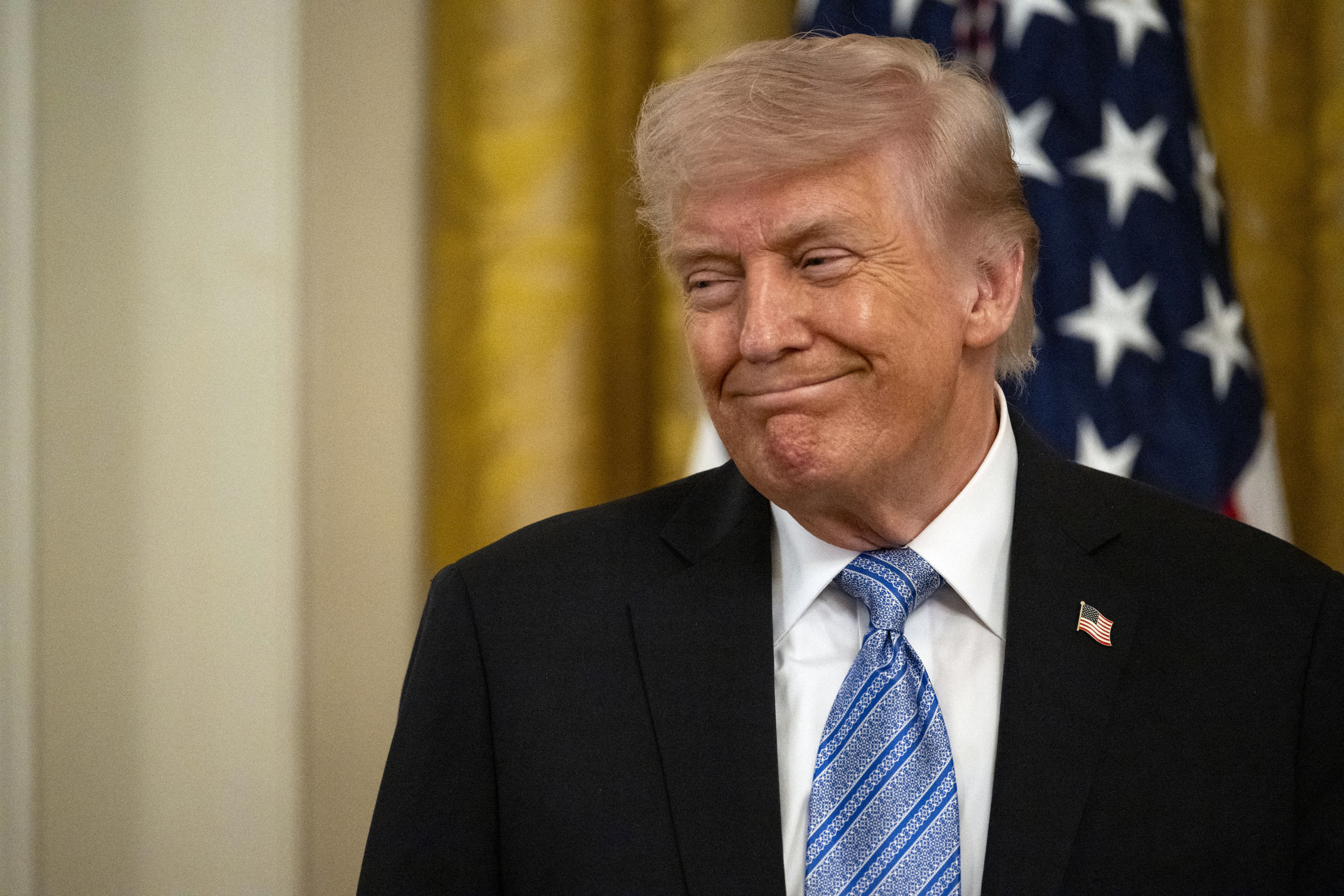
The Trump administration is reportedly considering imposing government oversight on AI models before they’re released.
A new New York Times report says administration officials are discussing an executive order to create an AI working group made of tech execs and government officials to, among other things, institute a formal government review process for new AI models.
If such a procedure were implemented, it would mark a complete reversal in the Trump administration’s laissez-faire approach to AI regulation.
It’s not an unprecedented step…if you look beyond U.S. borders, anyway. The U.K. currently reviews frontier AI models through its AI Security Institute (AISI) for national security, misuse, and societal risks.
But Trump—who has previously called British tech regulations “sad,” “strange,” “insane,” and “crazy” and rolled back Biden-era regulations asking software developers to evaluate the safety of their AI models—may be trying to find his footing with an American electorate who is consistently more concerned than excited about AI’s potential.
That’s not all. The administration is interested in “a review system that would give the government first access to AI models” for military intelligence reasons, according to the Times—say if “a devastating AI-enabled cyberattack were to occur.”
Can you feel the excitement? —AN
Musk pays $1.5 million to settle Twitter SEC allegations
Elon Musk has agreed to pay $1.5 million (or about 0.0002% of a conservative estimate of his net worth) to the U.S. Securities and Exchange Commission to settle allegations that he failed to properly disclose his growing stake in the social media company formerly known as Twitter.
Musk doesn’t admit to the allegations by settling. The proposed arrangement, subject to court approval, would conclude the SEC’s lawsuit about the matter.
The SEC was initially looking for quite a bit more—some $200 million. It would have been the largest penalty the agency levied against someone for allegedly blowing the deadline on filing a beneficial ownership report.
The agency’s argument was that Musk’s failure to disclose his 5% stake in Twitter (now X, and owned by Musk since 2022) by the necessary deadline cost shareholders more than $150 million. Once Musk disclosed the magnitude of his stake, Twitter’s shares jumped by 27%.
It certainly didn’t help that Musk stood up SEC lawyers who came to Los Angeles for his deposition, opting instead to attend a SpaceX rocket launch. (He offered to cover their travel expenses. What a mensch.)
Musk isn’t out of the woods on Twitter’s legal matters. He still faces a class-action investor suit over the blown deadline. —AN
Palantir posts fastest revenue growth ever
The data analytics firm named for J.R.R. Tolkien’s seeing stone just saw its fastest revenue growth in a quarter—ever.
Palantir on Monday released its fiscal Q1 results and it’s a barn-burner. Revenue was up 85% from the previous year to $1.63 billion, roundly beating Wall Street estimates of $1.54 billion.
The defense contractor saw government revenue leap 84% to $687 million and U.S. commercial revenue up 133% to $595 million. Net income came in at $871 million.
What’s more, the Alex Karp-led company raised its full-year 2026 revenue guidance to 71% year-over-year growth.
“Our financial results now demonstrate a level of strength that dwarfs the performance of essentially every software company in history at this scale,” Karp wrote in a letter to investors, later adding: “Palantir is now literally one of the most impactful companies on the planet.”
It’s not all roses. It was only a week ago that Palantir found itself in hot water as employees criticized the company’s commitment to civil liberties. Meanwhile some analysts say Palantir may not be hiring enough software engineers and sales reps to keep pace with business growth.
In his letter, Karp was unfazed. Palantir, he wrote, demonstrates “a hiring discipline that is too rare in the software industry today.” —AN
More tech
—Musk v. Altman: Greg Brockman testifies that his OpenAI stake is now worth about $30 billion.
—Cisco to acquire Astrix Security, which makes software to control AI agent permissions, for a reported $400 million.
—New Mexico v. Meta: State attorneys ask the judge to declare Meta a public nuisance, order it to pay $3.7 billion, and require it to revamp its apps to protect children.
—Sierra fundraises at a $16 billion valuation. A $950 million round led by Tiger and GV for the Bret Taylor and Clay Bavor-founded AI firm.
—Lattice Semiconductor to acquire AMI for $1.65 billion. The latter makes firmware for cloud and AI applications.
—Anthropic’s Jack Clark: There’s a 60%+ chance that AI systems will build themselves by 2029 😅
—Peter Thiel invests in Panthalassa, which hopes to power floating data centers with ocean wave energy.