
• Home
  • Latest
  • Fortune 500
  • Finance
  • Tech
  • Leadership
  • Lifestyle
  • Rankings
  • Multimedia

Trendingnow

1

Elon Musk on MacKenzie Scott giving away $26 billion of her fortune: 'Sadly,' it makes the world a worse place

2

MacKenzie Scott alone accounted for one-third of America's $19.2 billion in megagifts last year

3

Philanthropy leader at Warren Buffett and Bill Gates’ Giving Pledge says children of billionaires are pushing them to give their wealth away faster

1

Elon Musk on MacKenzie Scott giving away $26 billion of her fortune: 'Sadly,' it makes the world a worse place

2

MacKenzie Scott alone accounted for one-third of America's $19.2 billion in megagifts last year

3

Philanthropy leader at Warren Buffett and Bill Gates’ Giving Pledge says children of billionaires are pushing them to give their wealth away faster
Economydisruption

Dario Amodei spent last year warning of an AI white-collar bloodbath. Now he’s changing the narrative

Nick Lichtenberg
By
Nick Lichtenberg
Nick Lichtenberg
Business Editor
Down Arrow Button Icon
Nick Lichtenberg
By
Nick Lichtenberg
Nick Lichtenberg
Business Editor
Down Arrow Button Icon
May 5, 2026, 2:55 PM ET
dario
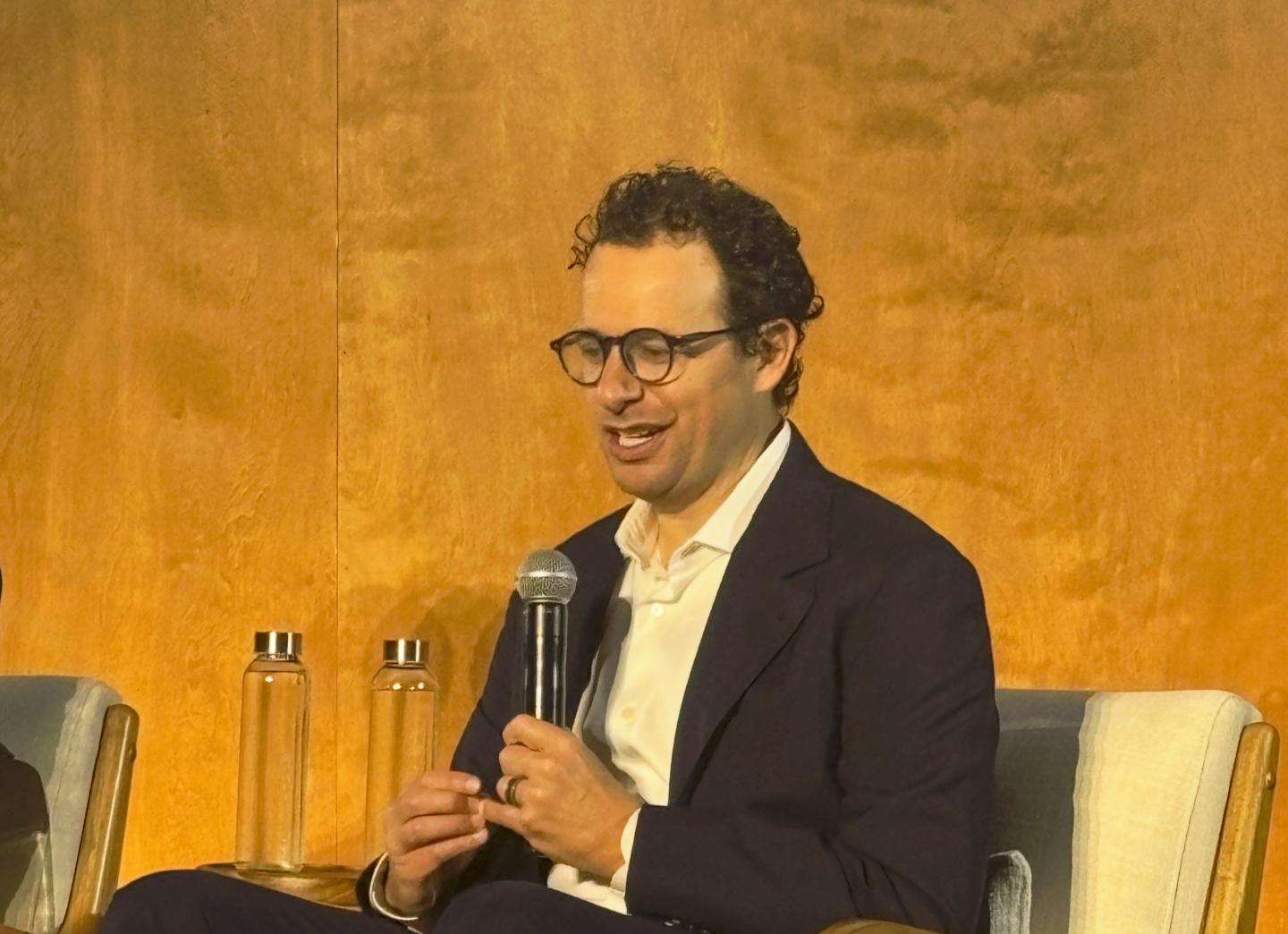
Dario Amodei at Anthropic's Briefing on Financial Services in New York City on May 5, 2026.Nick Lichtenberg/Fortune
Add Fortune on Google for similar content.

For most of last year, Dario Amodei was one of Silicon Valley’s most prominent doomsayers on AI and employment. The Anthropic CEO said publicly and repeatedly that AI could eliminate half of entry-level, white-collar knowledge work within years — the kind of stark projection that made him the rare tech founder willing to say out loud what many of his peers only whispered.

Recommended Video

So it was notable, at Anthropic’s briefing to the press on financial services in Lower Manhattan, sitting onstage alongside JPMorgan Chase CEO Jamie Dimon for the first time, when Amodei reached for a very different intellectual framework: the Jevons Paradox.

“If you automate 90% of the job,” he said, recalling recent arguments by University of Chicago economist Alex Imas and Apollo Global Management’s Torsten Slok, “then everyone does the 10% of the job. And the 10% kind of expands to be 100% of what people do and kind of 10xs their productivity.”

It’s a more comfortable theory. It’s also one he immediately complicated.

Amodei is shifting the story from jobs disappearing to jobs transforming and multiplying. His own caveat that AI is moving faster than past technologies suggests that aggregate optimism may not arrive quickly enough to spare workers displaced in the meantime.

In a single exchange, Amodei invoked two competing laws of physics-meets-economics to describe what AI might do to human labor. The first was the “Jevons Paradox” — the 19th-century observation that efficiency gains expand demand rather than contract it, suggesting AI will ultimately create more work than it destroys. The second was “Amdahl’s Law,” a principle from computer science holding that the speed of a system is limited by its slowest component — implying that even if AI automates most of a job, the remaining human bottleneck becomes the binding constraint. “Many things in this technology that I’ve seen over the last few years have this feeling of kind of an unstoppable object,” he said. Usually when people talk about unstoppable objects, they also refer to an immovable force, standing in its way. In this metaphor, the immovable force would be the entire history of modern work.

“You know, when technology kind of increases the pie, like the economy is very good at kind of – again, it’s related to kind of the Amdahl’s Law, Jevons’ Paradox,” Amodei said. “Like ,things are flexible. Things are fungible. They tend to move.”

What Jevons actually said

William Stanley Jevons was a 19th-century British economist who observed something counterintuitive about coal: as steam engines became more efficient and coal cheaper to use, total coal consumption went up, not down. Efficiency, he argued, stimulates demand rather than reducing it.

Applied to AI and labor, the logic runs like this: if AI makes a lawyer 10 times more productive, legal services become cheaper; cheaper legal services mean more people and businesses use them; more demand for legal services means more lawyers, not fewer. Apollo’s Torsten Slok has been repeatedly arguing about examples of this as the “Jevons employment effect” — the argument that AI, like the steam engine before it, will expand the pie rather than shrink anyone’s slice.

Dimon made the same argument in blunter terms, invoking agriculture, electricity, and the internet. “The capitalist society is very good at recreating jobs and recreating things,” he said. “And life is better. Not always if that town loses a factory, but in general better.”

The caveat Amodei buried

The problem is that Amodei, almost in the same breath, described precisely the condition under which Jevons stops working.

“AI is moving faster than all these previous technologies,” he said. “And so when you strain a system more than, you know, than it’s usually strained, it’s possible you get these weird behaviors and this big disruption.”

This is not a minor qualification. The Jevons mechanism depends on time — time for markets to recognize new demand, for workers to retrain, and for employers to expand rather than simply contract. The ATM is the classic cautionary example: it didn’t eliminate bank tellers immediately, but over two decades, teller employment fell sharply as branch activity shifted. AI is not operating on a two-decade timeline. The Anthropic CEO who once warned of a white-collar bloodbath is now open to Jevons — but his own analysis suggests the rebalancing may not arrive fast enough to matter for the workers caught in the transition.

The distribution problem nobody solved

Even the optimists acknowledge that Jevons operates at the aggregate level, not the individual one. If AI expands demand for legal services globally, that’s good for BigLaw partners and bad for first-year associates, whose document-review work no longer exists. The pie gets bigger; the slices don’t redistribute automatically.

Amodei gestured at this problem but didn’t resolve it. “Companies have a choice,” he said. “They can do the same thing with less resources — and that leads to things like layoffs — or they can do more with the same amount of resources. But that requires creativity.” He and Dimon both endorsed some form of wage-reassurance programs and government-funded retraining. Dimon pointed to trade adjustment assistance after NAFTA as a model — before acknowledging that it was a pretty bad example.

“It didn’t work [with NAFTA] because it wasn’t set up right, because it made it too hard to get the benefits. So it’s solvable, but only with collaboration in government and business.”

Amodei’s evolution on this question is worth tracking closely. When the CEO of the company building the technology starts invoking optimistic economic theory, there are two possible explanations. Either he has genuinely updated his view based on new evidence, or the social and political cost of the bloodbath framing — particularly as Anthropic navigates a Pentagon lawsuit and a fraught regulatory environment — has made it more useful to suddenly sound a bit more optimistic.

Which side you come down on may come down to whether you believe most humans—and most bosses—prize creativity over layoffs. What do you think?

Subscribe to Fortune Gulf Brief. Every Tuesday, this new newsletter delivers clear-eyed, authoritative intelligence on the deals, decisions, policies, and power shifts shaping one of the world’s most consequential regions, written for the people who need to act on it. Sign up here.
About the Author
Nick Lichtenberg
By Nick LichtenbergBusiness Editor
LinkedIn icon

Nick Lichtenberg is business editor and was formerly Fortune's executive editor of global news.

See full bioRight Arrow Button Icon
Add Fortune on Google for similar content.

Latest in Economy

Finance
Lorem ipsum dolor sit amet, consectetur adipiscing elit, sed do eiusmod tempor incididunt ut labore et dolore magna aliqua. Ut enim ad minim veniam
By Fortune Editors
October 20, 2025
Finance
Lorem ipsum dolor sit amet, consectetur adipiscing elit, sed do eiusmod tempor incididunt ut labore et dolore magna aliqua. Ut enim ad minim veniam
By Fortune Editors
October 20, 2025
Finance
Lorem ipsum dolor sit amet, consectetur adipiscing elit, sed do eiusmod tempor incididunt ut labore et dolore magna aliqua. Ut enim ad minim veniam
By Fortune Editors
October 20, 2025
Finance
Lorem ipsum dolor sit amet, consectetur adipiscing elit, sed do eiusmod tempor incididunt ut labore et dolore magna aliqua. Ut enim ad minim veniam
By Fortune Editors
October 20, 2025
Finance
Lorem ipsum dolor sit amet, consectetur adipiscing elit, sed do eiusmod tempor incididunt ut labore et dolore magna aliqua. Ut enim ad minim veniam
By Fortune Editors
October 20, 2025
Finance
Lorem ipsum dolor sit amet, consectetur adipiscing elit, sed do eiusmod tempor incididunt ut labore et dolore magna aliqua. Ut enim ad minim veniam
By Fortune Editors
October 20, 2025

Most Popular

Finance
Lorem ipsum dolor sit amet, consectetur adipiscing elit, sed do eiusmod tempor incididunt ut labore et dolore magna aliqua. Ut enim ad minim veniam
By Fortune Editors
October 20, 2025
Finance
Lorem ipsum dolor sit amet, consectetur adipiscing elit, sed do eiusmod tempor incididunt ut labore et dolore magna aliqua. Ut enim ad minim veniam
By Fortune Editors
October 20, 2025
Finance
Lorem ipsum dolor sit amet, consectetur adipiscing elit, sed do eiusmod tempor incididunt ut labore et dolore magna aliqua. Ut enim ad minim veniam
By Fortune Editors
October 20, 2025
Finance
Lorem ipsum dolor sit amet, consectetur adipiscing elit, sed do eiusmod tempor incididunt ut labore et dolore magna aliqua. Ut enim ad minim veniam
By Fortune Editors
October 20, 2025
Finance
Lorem ipsum dolor sit amet, consectetur adipiscing elit, sed do eiusmod tempor incididunt ut labore et dolore magna aliqua. Ut enim ad minim veniam
By Fortune Editors
October 20, 2025
Finance
Lorem ipsum dolor sit amet, consectetur adipiscing elit, sed do eiusmod tempor incididunt ut labore et dolore magna aliqua. Ut enim ad minim veniam
By Fortune Editors
October 20, 2025
Fortune Secondary Logo
Rankings
  • 100 Best Companies
  • Fortune 500
  • Global 500
  • Fortune 500 Europe
  • Most Powerful Women
  • World's Most Admired Companies
  • See All Rankings
  • Lists Calendar
Sections
  • Finance
  • Fortune Crypto
  • Features
  • Leadership
  • Health
  • Commentary
  • Success
  • Retail
  • Mpw
  • Tech
  • Lifestyle
  • CEO Initiative
  • Asia
  • Politics
  • Conferences
  • Europe
  • Newsletters
  • Personal Finance
  • Environment
  • Magazine
  • Education
Customer Support
  • Frequently Asked Questions
  • Customer Service Portal
  • Privacy Policy
  • Terms Of Use
  • Single Issues For Purchase
  • International Print
Commercial Services
  • Advertising
  • Fortune Brand Studio
  • Fortune Analytics
  • Fortune Conferences
  • Business Development
  • Group Subscriptions
About Us
  • About Us
  • Press Center
  • Work At Fortune
  • Terms And Conditions
  • Site Map
  • About Us
  • Press Center
  • Work At Fortune
  • Terms And Conditions
  • Site Map
  • Facebook icon
  • Twitter icon
  • LinkedIn icon
  • Instagram icon
  • Pinterest icon

Latest in Economy

bis
EconomyMarkets
The central bank of central banks just released its flagship annual report — and it sees a $1 trillion AI investment boom headed for a reckoning
By Nick LichtenbergJune 29, 2026
7 hours ago
This summer’s heat is a live stress test for data centers—here’s what it’s revealing in real time
AIData centers
This summer’s heat is a live stress test for data centers—here’s what it’s revealing in real time
By Tristan BoveJune 29, 2026
11 hours ago
The Supreme Court upholds Fed independence by saving Lisa Cook’s job—and also saves U.S. debt from a crisis
EconomyFederal Reserve
The Supreme Court upholds Fed independence by saving Lisa Cook’s job—and also saves U.S. debt from a crisis
By Jason MaJune 29, 2026
12 hours ago
a
Commentary250 Years of Innovation
Atomic Industries CEO: America spent 60 years retreating from manufacturing. The next 100 are about building it back
By Aaron SlodovJune 29, 2026
18 hours ago
Photo: Kevin Warsh
EconomyMarkets
President Trump will not get what he wants from Kevin Warsh, a source tells us, as inflation will force the Fed upwards
By Jim EdwardsJune 29, 2026
19 hours ago
lol
Real EstateHousing
Harvard’s housing report has a darker message than affordability—the middle-class home was always a historical accident
By Nick LichtenbergJune 29, 2026
22 hours ago

Most Popular

Elon Musk on MacKenzie Scott giving away $26 billion of her fortune: 'Sadly,' it makes the world a worse place
Success
Elon Musk on MacKenzie Scott giving away $26 billion of her fortune: 'Sadly,' it makes the world a worse place
By Sydney LakeJune 29, 2026
14 hours ago
MacKenzie Scott alone accounted for one-third of America's $19.2 billion in megagifts last year
Success
MacKenzie Scott alone accounted for one-third of America's $19.2 billion in megagifts last year
By Sydney LakeJune 25, 2026
5 days ago
Philanthropy leader at Warren Buffett and Bill Gates’ Giving Pledge says children of billionaires are pushing them to give their wealth away faster
Success
Philanthropy leader at Warren Buffett and Bill Gates’ Giving Pledge says children of billionaires are pushing them to give their wealth away faster
By Preston ForeJune 27, 2026
3 days ago
The retired college professor fighting a $313 trespassing ticket in Wisconsin thinks he's part of a national struggle
Environment
The retired college professor fighting a $313 trespassing ticket in Wisconsin thinks he's part of a national struggle
By Catherina GioinoJune 28, 2026
2 days ago
Ex-Google engineer says Larry Page, Sergey Brin and Sundar Pichai share the same trait—it's the lesson he swears by as a $7.2 billion AI CEO
Success
Ex-Google engineer says Larry Page, Sergey Brin and Sundar Pichai share the same trait—it's the lesson he swears by as a $7.2 billion AI CEO
By Orianna Rosa RoyleJune 28, 2026
2 days ago
Cristiano Ronaldo is soccer's first-ever billionaire: He went from begging for burgers outside McDonald's to landing a $400 million contract
Success
Cristiano Ronaldo is soccer's first-ever billionaire: He went from begging for burgers outside McDonald's to landing a $400 million contract
By Preston ForeJune 28, 2026
2 days ago

© 2026 Fortune Media IP Limited. All Rights Reserved. Use of this site constitutes acceptance of our Terms of Use and Privacy Policy | CA Notice at Collection and Privacy Notice | Do Not Sell/Share My Personal Information
FORTUNE is a trademark of Fortune Media IP Limited, registered in the U.S. and other countries. FORTUNE may receive compensation for some links to products and services on this website. Offers may be subject to change without notice.