Earlier this month, the Centers for Disease Control and Prevention announced that fertility rates, the average number of births women are projected to have over their lifetime, fell to a record low last year. It’s a demographic shift that could hold repercussions for the economy and the country’s politics.
There are many reasons for this, including the fact that women’s career options and earning potential have improved. But not every factor behind declining birth rates has to do with everyday decisions.
Deep and long-lasting environmental changes mean child-seeking people in the U.S.—as well as the rest of the world—might have odds stacked against them these days.
Why toxic chemicals affect reproduction
Successful reproduction relies on hormones, crucial biological regulators that orchestrate everything from puberty to sperm production, fertilization, and pregnancy. This is true for humans the same way it is for most animals, including other mammals, fish, and birds.
But a mounting volume of man-made chemicals and pollutants have infiltrated the environment and the biology of virtually all animal life. Combined with the effects of rising temperatures, these changes are starting to severely disrupt the processes by which humans and other animal species are able to reproduce, according to a review of available literature in the field, published last week in the journal NPJ Emerging Contaminants.
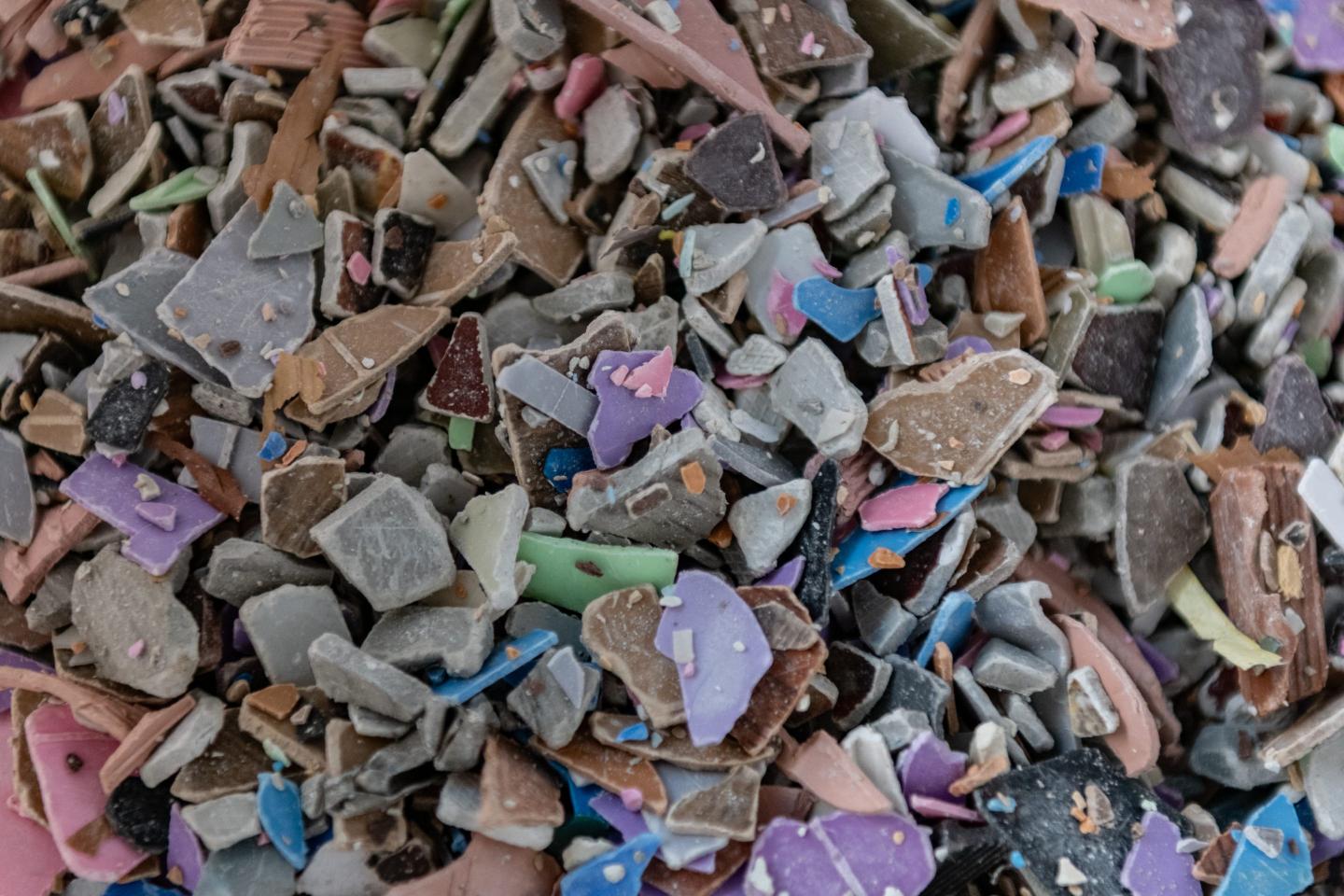
Substances such as particle-size plastics and harmful forever chemicals—a class of substances used in everything from food packaging to some nonstick cookware that do not break down naturally—can mimic or obstruct hormonal activity that develops sexual health or allows successful reproduction, the review found. Even in small amounts, these contaminants are enough to hobble normal processes.
“This can occur at effective concentrations so low they are analogous to a whisper that is powerful enough to redirect a hurricane,” the authors wrote.
Disrupters in everything, everywhere
The review described several toxins and chemicals that have become ubiquitous in everyday life, although relatively few have been deeply studied for their potential harm to humans.
The authors note how of the 140,000 synthetic chemicals that are currently registered, only 1,000 are known to affect the biological processes that govern hormones, known as the endocrine system. But this is likely a “gross underestimate,” according to the review, given just 1% of these chemicals have been sufficiently researched and the fact that around 2,000 new chemicals are produced and released every year.
These substances are invasive disrupters to animals’ endocrine and reproductive systems. For example, the review included multiple studies that documented the effect of microplastics—plastic particles smaller than a fifth of an inch in diameter, in semen production, collectively finding microplastic exposure led to falling sperm counts and motility in multiple species, including humans.
Pollutants aren’t the only environmental factor hurting fertility. The review also analyzed the role climate change plays in declining birth rates, finding higher temperatures constitute a heavy toll on the reproductive prospects of most animal life.
A prominent example cited in the review is turtle reproduction. Similar to some other reptiles, turtles rely on external temperatures to determine an individual’s sex before birth. But rising temperatures have caused the bulk of turtles to be born as females, skewing sex ratios and making populations more challenging to self-sustain.
Climate change is also affecting humans’ ability to procreate. The review cites a 2018 study that found over 80 years of birth rates, hotter weather was associated with declining conception levels. Higher temperatures have also been shown to have a similar effect as chemicals on human fertility, specifically by reducing sperm health and motility in males.
Population woes
To be sure, environmental factors aren’t the only reason birth rates in the U.S. and in the rest of the world are declining. Reducing gender discrimination in education has been a crucial driver, as a growing number of women in developed economies opt to pursue schooling and careers over creating a family.
The nosedive in U.S. fertility also has some positive explanations. A large factor in last year’s record low was a sharp decline in teen pregnancy rates, according to the CDC, which found the fertility rate for teenagers ages 15 to 19 had fallen 7% in 2025, the latest in a decades-long series of progress. Since 1991, in fact, the teen birth rate in the U.S. has plummeted 81%.
But with pollution and warming taking their own toll on fertility, the choice to avoid children might be taken out of people’s hands.
The review’s authors linked the decline in fertility rates to the historic crash in global biodiversity. Over the past 50 years, the average size of wildlife populations has collapsed by 73% owing to nature loss and climate change. Together, environmental pollutants and climate-change-fueled temperature rise combine to form yet another powerful demographic threat for all animal species, according to the review.
“We must recognize that chemicals, once released, don’t simply disappear,” the authors wrote. “Instead, they contribute to the larger issue of driving humanity towards the exceedance of planetary boundaries when considered in combination with climate change and other planetary-level impacts.”