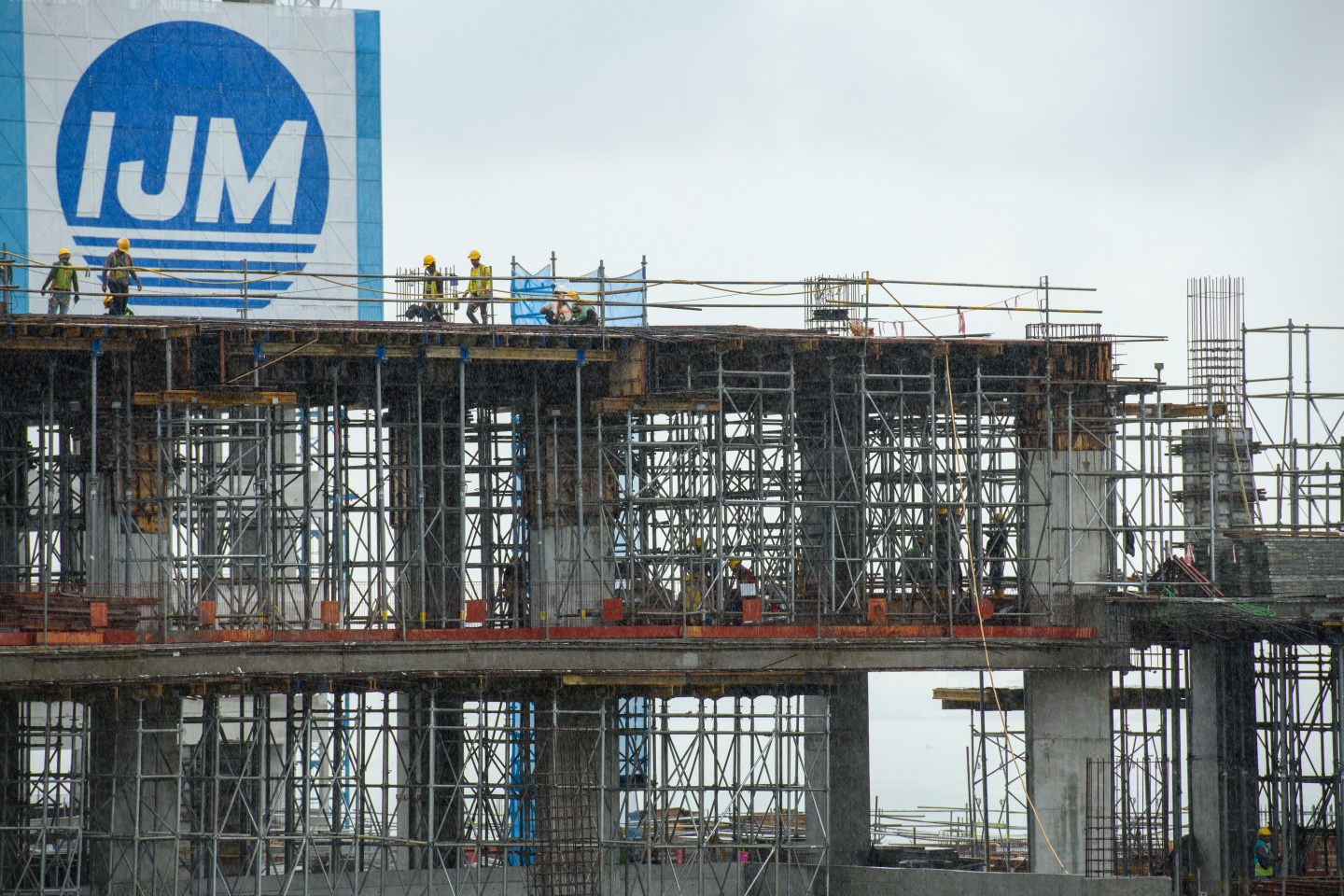
Malaysian construction giant Sunway’s $2.77 billion takeover offer for competitor IJM Corp collapsed on Monday, ending plans to create one of the country’s largest construction and infrastructure groups.
By market close on April 6, Sunway only managed to secure commitments for a third of IJM’s shares. This marked the end of Sunway’s bid, which it launched on January 12. Sunway and IJM are both listed on Fortune’s Southeast Asia 500 list, which ranks the region’s companies by revenue. (The former, at No. 190, reported $1.7 billion in revenue in 2024, while the latter, at No. 228, generated $1.3 billion.)
Had it gone through, the merger would have created a new powerhouse in Malaysia’s construction and infrastructure sector, overtaking current leader Gamuda. Yet valuation concerns, as well as Malaysia’s longstanding rules on equity for its rural Malays, complicated the deal.
“With the offer now concluded, IJM moves forward with resolve,” Dato’ Lee Chun Fai, IJM’s group CEO and managing director, said in a press statement released Monday. “Our shareholders have decided, and we respect the conviction they have placed in IJM’s long-term intrinsic value.” Lee continued that the company will focus on unlocking the value of its portfolio through strategic investments and overseas expansion.
Sunway, too, released a statement on Monday, saying that it respected the outcome of the process and that “in any transaction of this scale, differing perspectives are natural.”
Why the Sunway-IJM merger fell through
From the get-go, Sunway’s takeover bid was met with opposition by various analysts, politicians and institutional stakeholders.
Market watchers questioned the fairness of Sunway’s offer. Malaysia’s Kenanga Investment Bank issued a “reject” recommendation, stating that Sunway’s offer price of 3.15 Malaysian ringgit per share did not reflect IJM’s true value. According to a report by M&A Securities, an independent advisor to IJM, Sunway’s offer price reflected a discount of between 46.1% and 51.4% to the estimated value of IJM shares.
The merger also drew political scrutiny over concerns that it could dilute the rights of Bumiputeras, or indigenous Malaysians of ethnic Malay origin.
Following deadly race riots in 1969, Malaysia started a policy of affirmative action for ethnic Malays, hoping to tamp down tensions between the country’s ethnic groups and foster a more equal distribution of wealth. These policies include preferential treatment for the Bumiputera, including priority consideration for public university spaces and government jobs, and discounts for business licenses.
On Jan. 18, soon after Sunway launched its takeover bid, Akmal Saleh, the youth leader of UMNO, Malaysia’s conservative political party, argued that the deal “could undermine national and Bumiputera interests.” Akmal pointed out that Malaysian state funds like the Permodalan Nasional and the Employees Provident Fund owned around 47% of IJM shares. The construction company is also responsible for national infrastructure projects like the New Pantai Expressway, Sungai Besi Expressway, and the West Coast Expressway.
Corruption allegations also dogged the takeover bid.
In late January, the Malaysian Anti-Corruption Commission (MACC) launched a probe into IJM over accusations of lapses in corporate governance and procurement processes. The company had its offices raided and several bank accounts frozen, according to Malaysian business publication The Edge. Two months later, MACC chief commissioner Tan Sri Azam Baki said the commission would study Sunway’s takeover bid to see if there had been “corruption, abuse of power or violations of governance” in the process. (Both firms were later cleared of the accusations on March 27.)
IJM’s shares initially surged by over 2% on Monday, after the merger fell apart, before paring those gains by Thursday. Sunway’s shares are up by about 2% since Monday.