

• Home
  • Latest
  • Fortune 500
  • Finance
  • Tech
  • Leadership
  • Lifestyle
  • Rankings
  • Multimedia
Future of WorkLinkedIn
Asia

Is the org chart dead in the age of AI? LinkedIn’s chief economic opportunity officer thinks so

Nicholas Gordon
By
Nicholas Gordon
Nicholas Gordon
Asia Editor
Down Arrow Button Icon
Nicholas Gordon
By
Nicholas Gordon
Nicholas Gordon
Asia Editor
Down Arrow Button Icon
March 31, 2026, 3:00 AM ET
LinkedIn’s Aneesh Raman says rigid org charts are stifling AI innovation—and companies must embrace worker-led experimentation to stay competitive.
LinkedIn’s Aneesh Raman says rigid org charts are stifling AI innovation—and companies must embrace worker-led experimentation to stay competitive.Getty Images

The humble org chart isn’t usually blamed for holding back innovation. But as companies push their employees to adopt AI, LinkedIn executive Aneesh Raman thinks the relationships that structure most workplaces are what’s holding things back.

Recommended Video

“The org chart was built in the industrial age to bring order, predictability, and stability to rapidly growing organizations,” says Raman, LinkedIn’s chief economic opportunity officer and coauthor of a new book on the future of work. “Companies need to let that go, as it’s going to hold back innovation.”

Instead of waiting for top-down transformation programs, Raman argues, executives will need to get comfortable with workers figuring out AI on their own, even if those experiments cut across departments and job descriptions. “Where you’re going to see the real returns on AI isn’t just a new workflow around AI, but rather new work around human capability,” he says.

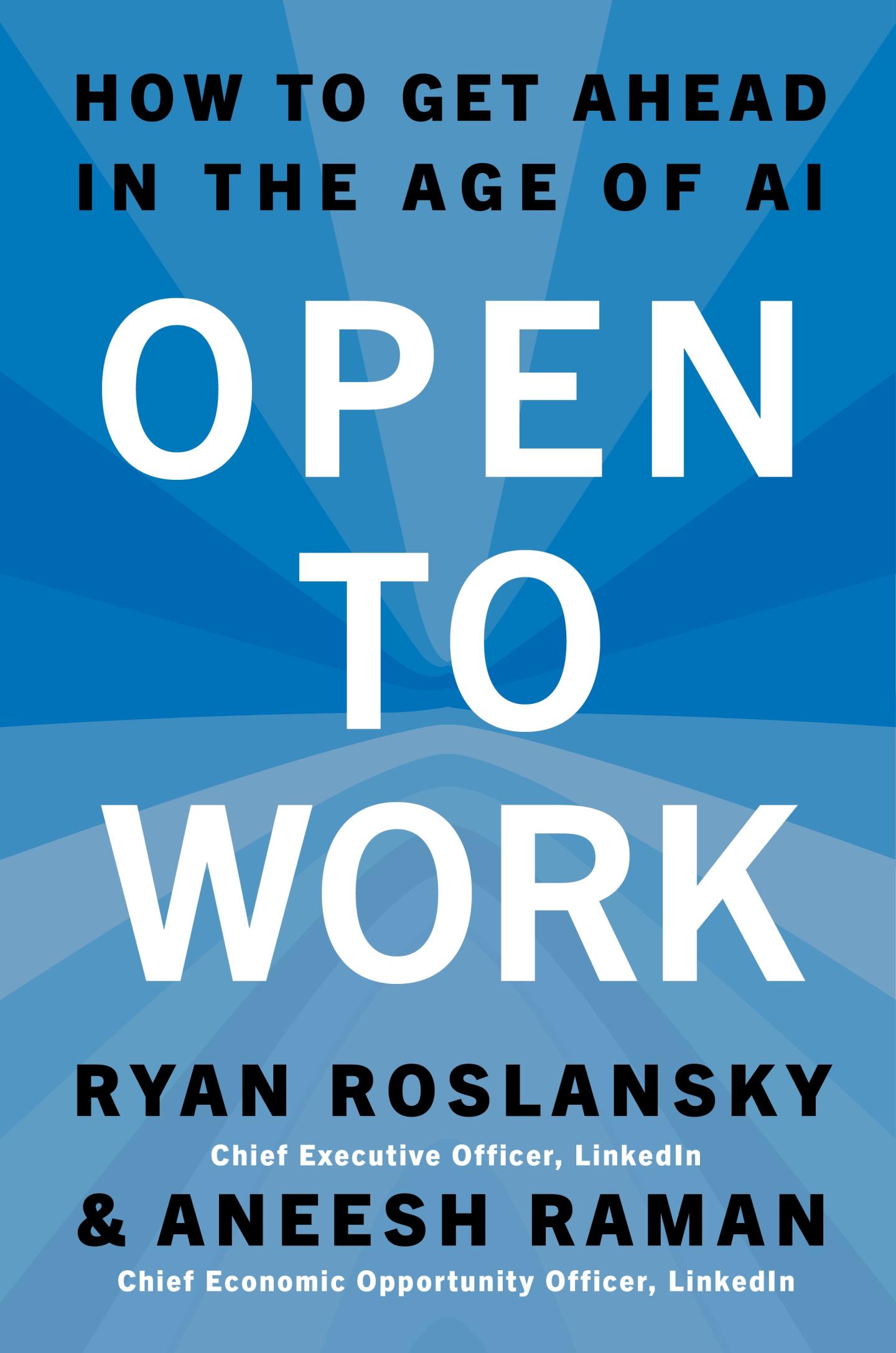
Raman, a former CNN war correspondent and Obama speechwriter, is the coauthor of Open to Work: How to Get Ahead in the Age of AI, alongside LinkedIn CEO Ryan Roslansky. The book draws on LinkedIn data and case studies of early adopters to offer what he calls a “how-to-human-with-AI” playbook that tries to counter the “fatalism” dominating most conversations about AI’s effect on employment.
Courtesy of LinkedIn

He urges workers to think about their work, and how AI relates to it, in three categories. The first bucket covers activities AI already does today, like generating code, running quick analyses, or writing a first draft to inspire someone else’s writing. The second bucket are experiments to create something new with AI. The final bucket involves using the time saved from the first bucket, and the lessons learned from the second bucket, to start using AI as a group. “What are you doing with other people?” he asks.

“It’s going to be a worker-led transition, and so companies are going to have to figure out how to let individuals start to move into this new era in their day-to-day work,” Raman says. “We have more autonomy than we often think in terms of pushing for what we want to do that might push our work to the next level.”

What skills will matter in the AI workforce?

LinkedIn is in the middle of a pivot to what it calls a “skills-first approach” to hiring and employment. In theory, employers are looking for specific skills and capabilities—and proof that potential hires have those skills—instead of just looking at a list of job titles on a résumé. LinkedIn is also integrating AI into its own product, such as a new AI agent to help with hiring.

But as AI’s capacity to automate knowledge work grows, there’s still confusion over what skills employees will need. Take coding: For more than a decade, universities and policymakers told young people that learning to code was the surest path to a high-paying job. That advice looks less certain in the age of “vibe coding”: Claude developer Anthropic now sees computer and math careers as leading the way in terms of current and possible coverage by AI.

Raman, for his part, thinks computer science isn’t obsolete. Instead, employers need to look at the broader skills a degree like computer science provides. “A computer science degree doesn’t just teach coding alone. It teaches complex thinking, organizational design, and structures of systems,” he points out. 

Workers, at least in the U.S., aren’t convinced they will come out ahead. A CBS News poll released last week reported that two-thirds of Americans believe AI will decrease the number of jobs; around the same share don’t believe that tech companies will use AI in appropriate ways.

AI could get more traction in Asia, where populations are more comfortable with the technology. A Pew Research Center survey from October found lower rates of concern among Asia-based respondents than Western ones. For example, just 16% of South Koreans reported being “more concerned than excited” about AI, the lowest share among the 25 countries Pew surveyed; the U.S., in contrast, had the highest share, with 50% reporting concern.

More recently, Chinese consumers have flocked to install OpenClaw, the open-source AI agent framework, on their devices, and local governments are rushing to support “one-person companies,” or AI startups trying to build new products. 

“There’s a hunger in Asia, not just among companies but also among workers, to learn about these tools and put them to use,” Raman says. “There’s an entrepreneurial culture in a lot of countries in Asia.”

Time to adapt

Still, Raman is sympathetic to workers concerned about automation. “There was a career ladder, and there was extreme clarity about what you had to do to get on each rung of that ladder,” he says.

But he’s optimistic that, ultimately, employees will be better off as AI starts to dismantle the ways companies traditionally organize and reward their talent. “Very few people have ever had real control over their career,” he says. “Because of AI, I think we’re about to have the first generations at work that have more control over their career than any who’ve come before.”

But what if someone doesn’t want to be an innovator at their job? What if someone wants to maintain their responsibilities and earn a stable wage?

Raman’s answer to those people is direct: “Nobody is coming to save any individual but themselves.” 

Change is coming, like it or not. “It’s just a question of when this change hits you, and how hard it hits you,” he says. 

At the Fortune Workplace Innovation Summit, Fortune 500 leaders will convene to explore the defining questions shaping the workforce of the future—delivering bold ideas, powerful connections, and actionable insights for building resilient organizations for the decade ahead. Join Fortune May 19–20 in Atlanta. Register now.
About the Author
Nicholas Gordon
By Nicholas GordonAsia Editor
LinkedIn iconTwitter icon

Nicholas Gordon is an Asia editor based in Hong Kong, where he helps to drive Fortune’s coverage of Asian business and economics news.

See full bioRight Arrow Button Icon

Latest in Future of Work

Finance
Lorem ipsum dolor sit amet, consectetur adipiscing elit, sed do eiusmod tempor incididunt ut labore et dolore magna aliqua. Ut enim ad minim veniam
By Fortune Editors
October 20, 2025
Finance
Lorem ipsum dolor sit amet, consectetur adipiscing elit, sed do eiusmod tempor incididunt ut labore et dolore magna aliqua. Ut enim ad minim veniam
By Fortune Editors
October 20, 2025
Finance
Lorem ipsum dolor sit amet, consectetur adipiscing elit, sed do eiusmod tempor incididunt ut labore et dolore magna aliqua. Ut enim ad minim veniam
By Fortune Editors
October 20, 2025
Finance
Lorem ipsum dolor sit amet, consectetur adipiscing elit, sed do eiusmod tempor incididunt ut labore et dolore magna aliqua. Ut enim ad minim veniam
By Fortune Editors
October 20, 2025
Finance
Lorem ipsum dolor sit amet, consectetur adipiscing elit, sed do eiusmod tempor incididunt ut labore et dolore magna aliqua. Ut enim ad minim veniam
By Fortune Editors
October 20, 2025
Finance
Lorem ipsum dolor sit amet, consectetur adipiscing elit, sed do eiusmod tempor incididunt ut labore et dolore magna aliqua. Ut enim ad minim veniam
By Fortune Editors
October 20, 2025

Most Popular

Finance
Lorem ipsum dolor sit amet, consectetur adipiscing elit, sed do eiusmod tempor incididunt ut labore et dolore magna aliqua. Ut enim ad minim veniam
By Fortune Editors
October 20, 2025
Finance
Lorem ipsum dolor sit amet, consectetur adipiscing elit, sed do eiusmod tempor incididunt ut labore et dolore magna aliqua. Ut enim ad minim veniam
By Fortune Editors
October 20, 2025
Finance
Lorem ipsum dolor sit amet, consectetur adipiscing elit, sed do eiusmod tempor incididunt ut labore et dolore magna aliqua. Ut enim ad minim veniam
By Fortune Editors
October 20, 2025
Finance
Lorem ipsum dolor sit amet, consectetur adipiscing elit, sed do eiusmod tempor incididunt ut labore et dolore magna aliqua. Ut enim ad minim veniam
By Fortune Editors
October 20, 2025
Finance
Lorem ipsum dolor sit amet, consectetur adipiscing elit, sed do eiusmod tempor incididunt ut labore et dolore magna aliqua. Ut enim ad minim veniam
By Fortune Editors
October 20, 2025
Finance
Lorem ipsum dolor sit amet, consectetur adipiscing elit, sed do eiusmod tempor incididunt ut labore et dolore magna aliqua. Ut enim ad minim veniam
By Fortune Editors
October 20, 2025
Fortune Secondary Logo
Rankings
  • 100 Best Companies
  • Fortune 500
  • Global 500
  • Fortune 500 Europe
  • Most Powerful Women
  • Future 50
  • World’s Most Admired Companies
  • See All Rankings
Sections
  • Finance
  • Fortune Crypto
  • Features
  • Leadership
  • Health
  • Commentary
  • Success
  • Retail
  • Mpw
  • Tech
  • Lifestyle
  • CEO Initiative
  • Asia
  • Politics
  • Conferences
  • Europe
  • Newsletters
  • Personal Finance
  • Environment
  • Magazine
  • Education
Customer Support
  • Frequently Asked Questions
  • Customer Service Portal
  • Privacy Policy
  • Terms Of Use
  • Single Issues For Purchase
  • International Print
Commercial Services
  • Advertising
  • Fortune Brand Studio
  • Fortune Analytics
  • Fortune Conferences
  • Business Development
  • Group Subscriptions
About Us
  • About Us
  • Editorial Calendar
  • Press Center
  • Work At Fortune
  • Diversity And Inclusion
  • Terms And Conditions
  • Site Map
  • About Us
  • Editorial Calendar
  • Press Center
  • Work At Fortune
  • Diversity And Inclusion
  • Terms And Conditions
  • Site Map
  • Facebook icon
  • Twitter icon
  • LinkedIn icon
  • Instagram icon
  • Pinterest icon

Latest in Future of Work

Nvidia CEO Jensen Huang
SuccessJobs
Nvidia’s Jensen Huang says AI assistants will act more like overbearing managers rather than job destroyers: ‘They’ll be micromanaging you’
By Emma BurleighApril 20, 2026
4 hours ago
The hidden ROI of AI: What leaders should actually measure
AICommentary
The hidden ROI of AI: What leaders should actually measure
By Beena Ammananth and Jim RowanApril 20, 2026
7 hours ago
elon musk
Future of WorkElon Musk
Elon Musk bans résumés and cover letters in hiring for his chip team. These are the 3 bullet points he’s looking for instead
By Jake AngeloApril 19, 2026
1 day ago
Photo of Robert Solow
AIProductivity
Thousands of CEOs admit AI had no impact on employment or productivity—and it has economists resurrecting a paradox from 40 years ago
By Sasha RogelbergApril 19, 2026
1 day ago
stressed student and parent
SuccessCareers
Parents are so panicked about the job market they’re paying career coaches $15,000 years before their kids graduate from college
By Jake AngeloApril 19, 2026
1 day ago
Fortune Archives: What work will be left for people to do?
NewslettersFortune Archives
Fortune Archives: What work will be left for people to do?
By Geoff ColvinApril 19, 2026
1 day ago

Most Popular

Thousands of CEOs admit AI had no impact on employment or productivity—and it has economists resurrecting a paradox from 40 years ago
AI
Thousands of CEOs admit AI had no impact on employment or productivity—and it has economists resurrecting a paradox from 40 years ago
By Sasha RogelbergApril 19, 2026
1 day ago
Markets shudder as Strait of Hormuz starts resembling a combat zone. 'We're prepared to subject you to disabling fire'
Energy
Markets shudder as Strait of Hormuz starts resembling a combat zone. 'We're prepared to subject you to disabling fire'
By Jason MaApril 19, 2026
20 hours ago
The explosion of U.S. debt is wiping out the 'safety premium' of Treasury bonds, and time is running out for an orderly fiscal solution, IMF warns
Economy
The explosion of U.S. debt is wiping out the 'safety premium' of Treasury bonds, and time is running out for an orderly fiscal solution, IMF warns
By Jason MaApril 19, 2026
24 hours ago
Elon Musk bans résumés and cover letters in hiring for his chip team. These are the 3 bullet points he’s looking for instead
Future of Work
Elon Musk bans résumés and cover letters in hiring for his chip team. These are the 3 bullet points he’s looking for instead
By Jake AngeloApril 19, 2026
1 day ago
'We should absolutely be concerned about non-college-educated men today': higher rents, living at home, falling out of the labor market
Economy
'We should absolutely be concerned about non-college-educated men today': higher rents, living at home, falling out of the labor market
By Catherina GioinoApril 18, 2026
2 days ago
The $6 billion Vatican Bank was beset by scandals, disastrous investments—and ties to the Mafia. How Pope Francis tried to fix it
Banking
The $6 billion Vatican Bank was beset by scandals, disastrous investments—and ties to the Mafia. How Pope Francis tried to fix it
By Marco Quiroz-GutierrezApril 18, 2026
2 days ago

© 2026 Fortune Media IP Limited. All Rights Reserved. Use of this site constitutes acceptance of our Terms of Use and Privacy Policy | CA Notice at Collection and Privacy Notice | Do Not Sell/Share My Personal Information
FORTUNE is a trademark of Fortune Media IP Limited, registered in the U.S. and other countries. FORTUNE may receive compensation for some links to products and services on this website. Offers may be subject to change without notice.