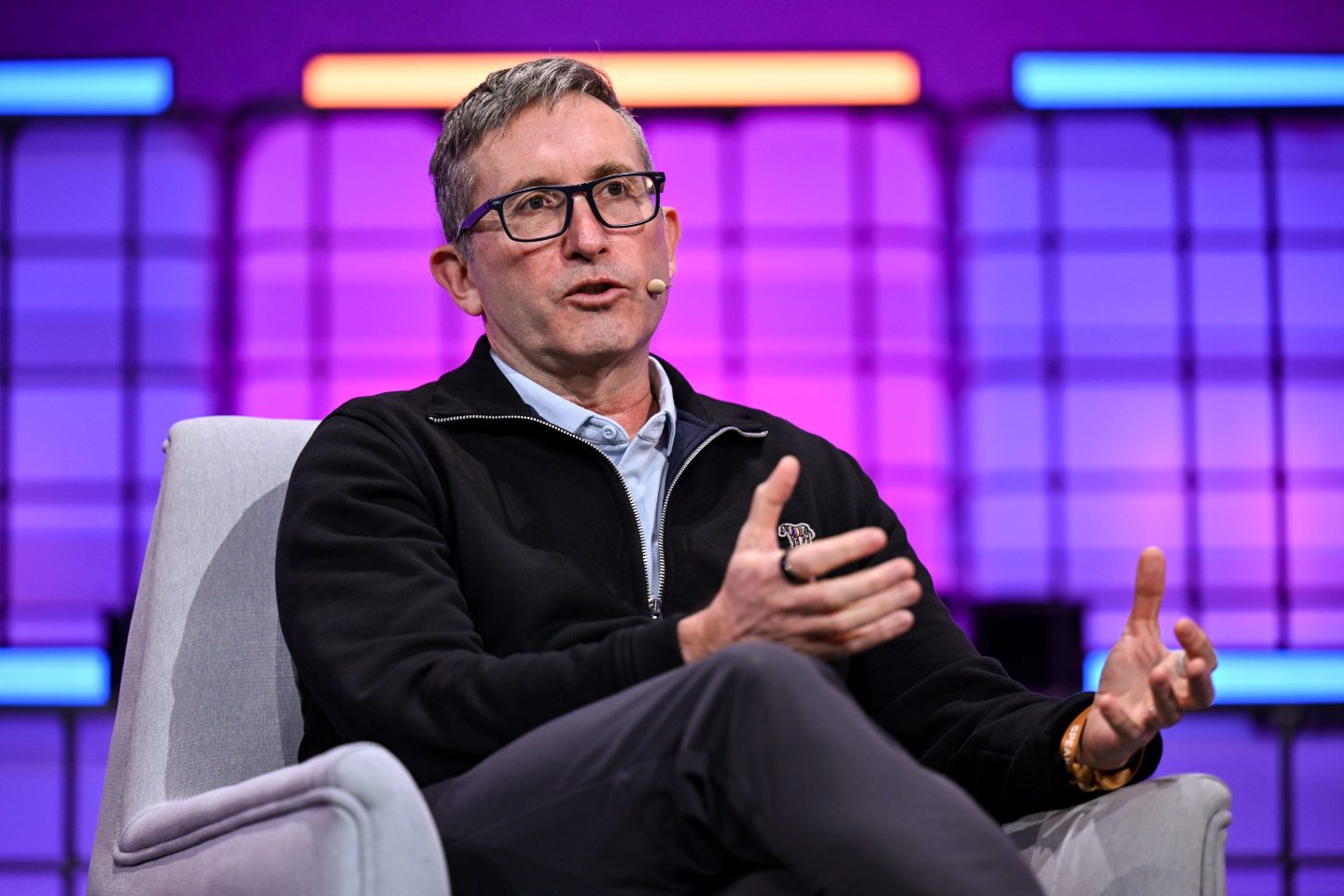
Workers may dream that if they climb the corporate totem pole to CEO, they’ll finally be able to call the shots, set their own schedule, and bask in all the spoils of success. But Oura’s chief executive Tom Hale says the fantasy isn’t all it’s cracked up to be.
Being CEO is “much harder than I thought,” Hale said recently on Sequoia Capital’s Long Strange Trip podcast. “Any CEO in the world will appreciate that. [It’s] much harder, much harder than I thought.”
Hale stepped into the top role of the $11 billion smart ring company nearly four years ago, after high-level stints across technology and consumer product companies like Momentive and HomeAway. With more than 30 years of experience and multiple executive roles under his belt, it would be assumed that he knew exactly what to expect from the top job. Still, nothing quite prepared him for the psychological load of this role.
“It’s not the work that’s harder. It’s the responsibility and the stress,” the CEO continued. “It’s waking up at 4:00 a.m. and being like, ‘Oh my god, is this going to work?’…It’s pressure, it’s stress, it’s responsibility, it’s all the people that you have. They’ve put their faith in you.”
And while professionals may assume that being a CEO means you reap all the glory, Hale explains “it’s really your team, it’s not you, who gets to own that success.” Yet, when an idea or project fails, the consequences are all directed at the top. The Gen X chief executive says CEOs are often found culpable, as they made the decision or set up a system that led to a problem. Plus, people look at being a CEO with rose-colored glasses—Hale says people misunderstand that the job isn’t always as glamorous as it sounds.
“I think they think it’s a lot more fun than it is,” Hale continued. “There is fun. I just think that the ratio of kibble to champagne favors the kibble.”
CEOs who say the top job is lonely, isolating, and complex
Sitting atop the C-suite undeniably comes with major perks, from multimillion-dollar salaries to celebrity status in the business world. But like any role, it also has its downsides—and Hale isn’t the only CEO who hit unexpected hurdles when assuming the top role of a billion-dollar company.
Airbnb’s cofounder and CEO Brian Chesky has said that his mental health took a turn for the worse once he assumed the throne of the $76 billion short-term rental company. At that point in time his other two cofounders—who he called his “family,” spending all their waking hours working, exercising, and hanging out together—were suddenly out of view from the peak of the C-suite. His job became extremely isolating.
“As I became a CEO I started leading from the front, at the top of the mountain, but then the higher you get to the peak, the fewer the people there are with you,” Chesky told Jay Shetty during an episode of the On Purpose podcast in 2023. “No one ever told me how lonely you would get, and I wasn’t prepared for that.”
Another pitfall of being CEO is that it’s harder to vent to peers who may not relate to—or even understand—the trials and tribulations of running a massive company. Indra Nooyi, the former chief executive of $209 billion PepsiCo, said she often felt isolated and struggled to find her confidants.
“You can’t really talk to your spouse all the time. You can’t talk to your friends because it’s confidential stuff about the company. You can’t talk to your board because they are your bosses. You can’t talk to people who work for you because they work for you,” Nooyi told Kellogg Insight last year. “It puts you in a fairly lonely position.”
Michel Doukeris, the CEO of $124 billion business Anheuser-Busch InBev, also pointed out that the top role is very distinct to all other jobs. Leading a business to success sounds like a straightforward plan of action, but there’s a whole host of players and factors to consider. Doukeris said that juggling all these expectations is a part of the job—and it requires a lot of organization to get it done.
“The CEO job is very unique in itself,” Doukeris told Fortune in 2022. “You really have all the stakeholders. You have your own people, you have your customers, you need to listen to your consumers, but then you have your board, and your investors, and you need to balance very well your time.”